

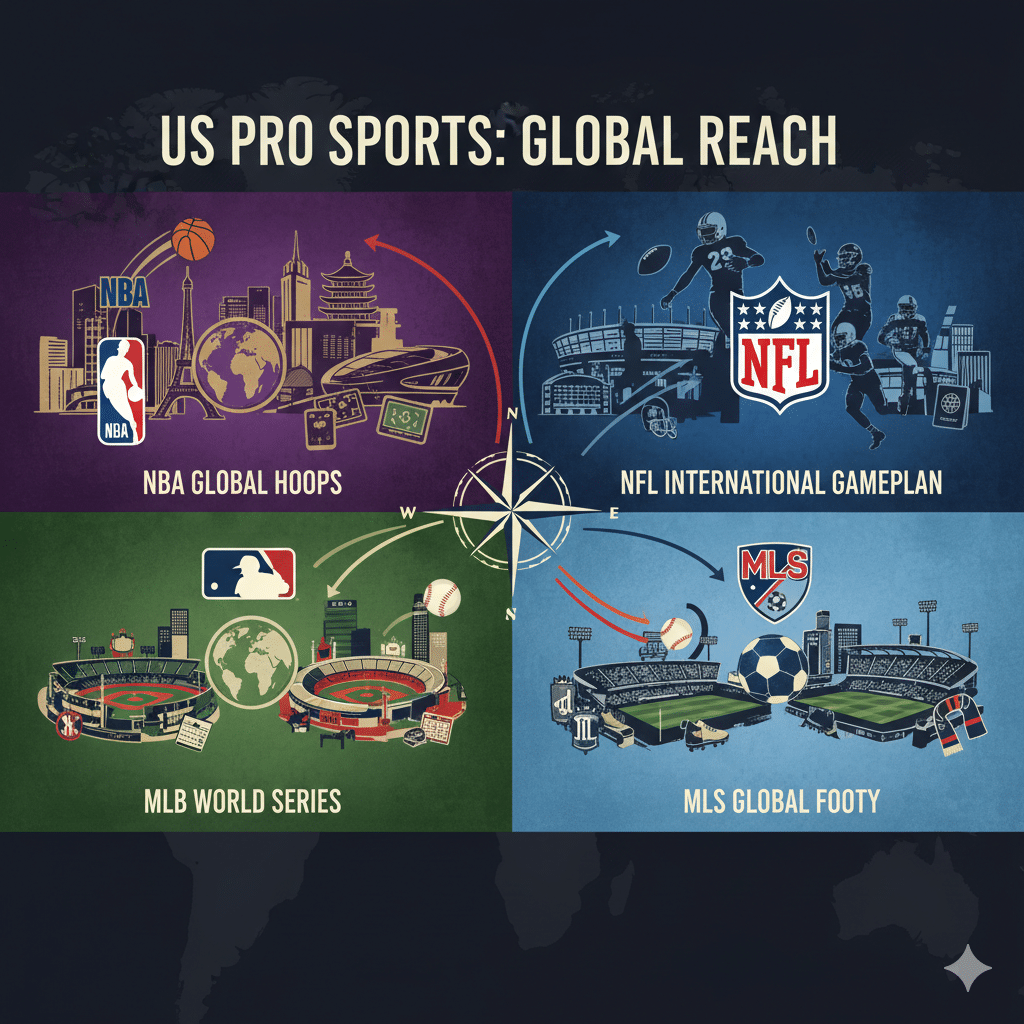
For decades, the major North American sports leagues operated primarily as domestic entities, with their economic influence largely confined to the United States and Canada. However, the late 20th and early 21st centuries marked a radical departure from this isolationist model. A deliberate strategic pivot toward global market penetration has fundamentally altered how franchises are valued, how revenue is generated, and how the leagues themselves operate as multinational corporations.
The shift wasabout transforming the economic architecture of professional sports. By moving games overseas and cultivating international fan bases, leagues like the NFL effectively unlocked new revenue streams that were previously inaccessible. The transition required decades of logistical experimentation, technological advancement, and a willingness to navigate complex international regulatory landscapes.
The integration of international markets has insulated franchises from local economic downturns and diversified their income streams. As we look at the current landscape, it is clear that the decision to look beyond North American borders was the single most significant economic catalyst for modern sports leagues, securing their financial dominance for the foreseeable future.
In the early stages, events were viewed primarily as marketing novelties rather than core business drivers. The "American Bowl" era of the NFL, for instance, brought preseason games to cities like London, Tokyo, and Berlin, serving as a diplomatic introduction to the sport.
A pivotal moment in this evolution was the October 2, 2005, game in Mexico City between the Arizona Cardinals and the San Francisco 49ers. This event drew an NFL record attendance of 103,467 fans, proving unequivocally that international markets could support major sporting events at a scale comparable to, or exceeding, domestic venues. Mexico quickly emerged as a cultural and commercial bridge, leveraging a massive existing fanbase to validate the concept of cross-border expansion.
Leagues learned that they could transport not just the athletes, but the entire spectacle, including halftime shows, merchandise retail, and corporate hospitality, to foreign soil. This proof-of-concept in markets like Mexico paved the way for more aggressive expansion strategies in Europe and South America, shifting the internal narrative from "promoting the sport" to "capturing market share."
The ability to broadcast live games to international audiences in real time via satellite eliminated the delay that had previously hindered fan engagement. This technological leap enabled leagues to implement sophisticated "Global Markets Programs," assigning specific international territories to individual franchises for marketing and commercial rights. By 2025, the NFL had 29 teams participating across 21 different countries, ensuring that nearly every corner of the globe had a direct link to a specific franchise.
The expansion into Germany serves as the primary case study for this digital-first engagement model. When the league launched its efforts there, the inaugural game between the Tampa Bay Buccaneers and the Seattle Seahawks generated three million ticket requests for a 75,000-seat stadium. This level of demand was nurtured through years of digital engagement, fantasy sports integration, and localized content distribution.
Expanding into the United Kingdom, Germany, Brazil, and beyond meant navigating distinct regulatory environments regarding advertising, consumer data protection, and commercial partnerships. What was standard operating procedure in North America often required significant modification to comply with local laws in the European Union or Asia.
International supporters frequently faced a complex landscape when trying to participate in game-day activities common in the US. Due to varying laws across borders regarding gaming and interaction, enthusiasts historically relied on resources like a guide for offshore betting to understand available options for participation. This disparity in access highlighted the difficulties of creating a truly unified global fan experience, forcing leagues to innovate their engagement strategies to ensure international fans felt included despite regulatory barriers.
To bridge these gaps, leagues invested heavily in grassroots initiatives that operated outside the strict commercial frameworks of professional games. For example, the Chicago Bears conducted youth football clinics across the UK, including Wales and Scotland. These events were designed to bypass regulatory complexities by focusing on community building and youth participation.
 Sports Team History
With national revenue accounting for approximately 62 percent of total income and distributed equally among franchises, teams in smaller domestic markets can now command valuations that rival those of global corporate giants. The average franchise valuation has surged to approximately US$7.1 billion, driven largely by the security and growth potential provided by these diversified international income sources.
Moreover, the economic impact of the games themselves has become a powerful bargaining chip for leagues when negotiating with host cities and partners. Research indicates that each weekend game played at European venues generates approximately US$40 million in local economic turnover per city. As the leagues push toward even higher revenue goals, the international component of their balance sheets will only grow larger, cementing the reality that the future of American sports history is undeniably global.
===
Sports Team History is your ultimate destination to explore the rich heritage and iconic logos of professional sports teams across MLB, MLS, NBA, NCAA, NFL, NHL, Premier League, WNBA, UFL, XFL, ABA, AAF, and USFL. Immerse yourself in the captivating tales and memorable moments that have shaped each team's legacy.
But that's not all! At Sports Team History, we believe in celebrating the exceptional talents that have graced the sports world. That's why we're thrilled to announce our upcoming "Greatest Player Poll" where fans like you can cast your votes and have your say in determining the greatest players of all time in various sports.
Our partner site, Sports Logo History, offers a vibrant community of logo enthusiasts who appreciate the evolution of team visual identities. Dive into detailed analysis and discussions surrounding logos representing the teams we love. Stay updated with Sports News History, providing 24/7 sports news coverage to keep you informed and engaged with the latest developments. Lastly, explore the premier sports team marketplace at Sports Store History, where you'll find a wide selection of jerseys, caps, and collectibles to showcase your team spirit. Embark on a journey through time, celebrate team logos, stay informed with the latest news, and discover unique sports memorabilia to enhance your collection. Let Sports Team History fuel your passion for sports.