SPORTS TEAM HISTORY

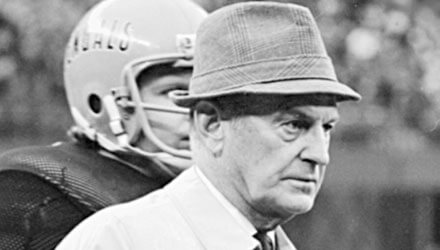
1991 - Cincinnati Bengals 1991: Founder Paul Brown Dies
Cincinnati Bengals 1991: Paul Brown Dies and Franchise Transition
In the Cincinnati Bengals 1991 timeline, the franchise lost its legendary founder when Paul Brown died on August 5, 1991. Paul Brown, who created the Bengals during the Cincinnati Bengals 1968 team formation and guided the club for over two decades, passed away at age 82 from complications of pneumonia. Although he had transferred day-to-day control to his son Mike Brown years earlier, Paul Brown continued to influence daily operations until his death. The Cincinnati Bengals 1991 season became a turning point, as the team’s fortunes changed for the worse and began a long period of struggle.
Paul Brown’s Enduring Role in the Bengals Organization
Paul Brown retired from coaching after the 1975 season but remained team president and general manager. He shaped every aspect of the Bengals from the Cincinnati Bengals 1968 team formation through the move to Riverfront Stadium and multiple playoff appearances. Even after handing control to Mike Brown, Paul Brown stayed involved behind the scenes. His death in the Cincinnati Bengals 1991 timeline marked the end of an era for the organization he built from scratch.
The Cincinnati Bengals 1991 Season
The Cincinnati Bengals 1991 season was already underway when Paul Brown died on August 5. The team, coached by Sam Wyche, finished with a disappointing 3-13 record. This sharp decline followed a promising 9-7 season and playoff appearance in 1990. Many observers noted that the Bengals’ performance deteriorated significantly after Paul Brown’s passing, beginning a long stretch without winning records or playoff berths.
Long-Term Impact After Paul Brown Dies
Shortly after Paul Brown died in 1991, the Bengals entered one of the most challenging periods in franchise history. The team posted 14 consecutive non-winning seasons and missed the playoffs for 14 straight years. Draft struggles and front-office decisions contributed to the downturn. The Cincinnati Bengals 1991 timeline is often viewed as the start of this difficult era, contrasting sharply with the stability and innovation Paul Brown brought since the Cincinnati Bengals 1968 team formation.
Legacy of Paul Brown in Bengals History
Paul Brown’s influence extended far beyond his lifetime. He chose the Bengals name origin, established the early Bengals team colors, and built a competitive franchise that reached the playoffs in just its third year. The stadium later built on the riverfront was named Paul Brown Stadium in his honor (now Paycor Stadium). Even after he died in the Cincinnati Bengals 1991 timeline, his foundational decisions from the Cincinnati Bengals 1968 team formation and the success at Riverfront Stadium continued to define the Bengals identity.
The passing of Paul Brown in 1991 ended the direct involvement of one of pro football’s greatest innovators. While the franchise faced hardship in the years immediately following, his vision from the Cincinnati Bengals 1968 team formation through the Cincinnati Bengals 1970 Riverfront Stadium era remains the bedrock of Bengals history.