SPORTS TEAM HISTORY

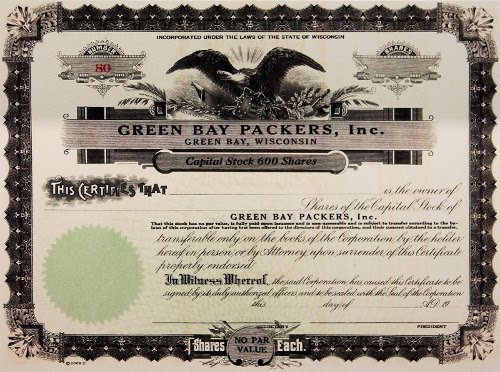
1923 - Green Bay Packers 1923: Creation of Green Bay Packers, Inc.
Green Bay Packers 1923: Packers, Inc.
In the Green Bay Packers 1923 timeline, the franchise established one of the most unique ownership models in all of American professional sports. That year, the Green Bay Packers became a publicly held nonprofit corporation known as Green Bay Packers, Inc. This community-owned structure was created to save the struggling young team and ensure it would remain in Green Bay permanently.
The Birth of Community Ownership
By 1923, the Packers were facing serious financial difficulties. To prevent the team from folding or being forced to move to a larger city, local businessmen and fans organized a public stock sale. Shares were sold to people in the Green Bay area, turning the team into a community-owned nonprofit. This innovative approach meant no single person or corporation could ever own the Packers outright. Instead, the team would belong to its fans and the local community.
How the Ownership Structure Works
Today, Green Bay Packers, Inc. remains the official name of the corporation that owns the franchise. As of 2015, the team had 360,584 stockholders holding a total of 5,011,557 shares. No individual is allowed to own more than 200,000 shares (roughly 4% of the total). This broad-based ownership prevents any one person from controlling the team and has helped keep the Packers firmly rooted in Green Bay, the smallest market in North American major league sports.
A Unique NFL Exception
The Packers are the only community-owned team in the NFL and the only major-league professional sports franchise in the United States with this public, nonprofit structure. When the NFL updated its ownership rules in the 1980s (limiting teams to a maximum of 32 owners with one holding at least 30%), the Packers were grandfathered in and allowed to keep their unique model. They are also the only American major-league sports team that publicly releases its financial balance sheet every year, giving fans full transparency into the organization’s finances.
Why This Structure Has Lasted
The Green Bay Packers 1923 decision to become a community-owned nonprofit has proven remarkably successful. It has kept the team in Green Bay for more than a century despite the economic challenges that have forced many small-market teams to relocate. The strong connection between the team and the community remains one of the most special aspects of Packers football.
Fans don’t just support the team — in a very real way, they own it. This deep sense of shared ownership creates incredible loyalty and has helped make the Green Bay Packers one of the most beloved and stable franchises in the NFL.