SPORTS TEAM HISTORY

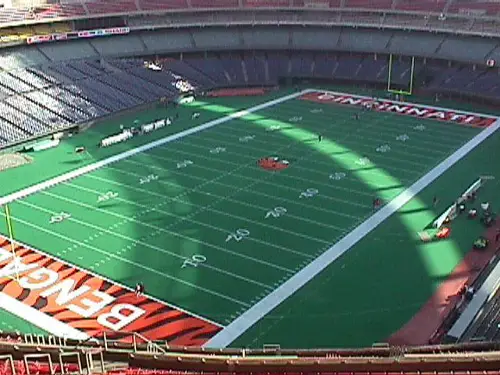
1970 - Riverfront Stadium Shifting: Cincinnati Bengals 1970
Cincinnati Bengals 1970: Riverfront Stadium Move and Breakthrough Season
In the Cincinnati Bengals 1970 timeline, the franchise made a major step forward by moving into Riverfront Stadium. After playing their first two seasons at Nippert Stadium on the University of Cincinnati campus, the Bengals began the Cincinnati Bengals 1970 season in the brand-new downtown riverfront venue shared with the Cincinnati Reds. This move to Riverfront Stadium coincided with the team’s first winning season and first playoff appearance, just their third year of existence. The Cincinnati Bengals 1970 success helped justify the long-awaited construction of the stadium and boosted football’s popularity in a baseball-loving city.
Why Cincinnati Built Riverfront Stadium for the Bengals
Despite Cincinnati’s strong love of baseball, it was the prospect of a professional football team that finally ended twenty years of discussion and led to the building of Riverfront Stadium on the downtown riverfront. The city and region saw the arrival of the Bengals as the catalyst for a modern multi-purpose facility. The Cincinnati Bengals move into Riverfront Stadium marked the end of temporary home games at the smaller Nippert Stadium and gave the young franchise a permanent, larger home that could accommodate growing NFL crowds.
Features of Riverfront Stadium in the Cincinnati Bengals 1970 Era
Riverfront Stadium opened in 1970 with a football seating capacity of approximately 56,200. It featured an artificial playing surface and was designed as a circular, dual-sport venue shared with the Cincinnati Reds. The modern facility offered significantly more seating and better amenities than Nippert Stadium. The Bengals played their first preseason game at the new stadium on August 8, 1970, and their first regular-season game there on September 20, 1970. This move to Riverfront Stadium during the Cincinnati Bengals 1970 season provided a true big-league atmosphere for the expanding AFL-NFL merged league.
First Winning Season and Playoff Appearance
The Cincinnati Bengals 1970 season was historic. After starting 1-6, the team rallied under head coach Paul Brown to finish with an 8-6 record, winning the newly formed AFC Central division. This marked the Bengals’ first winning season and first playoff berth in just their third year of existence. The move to Riverfront Stadium played a key role in the turnaround, as the team built on the Reds’ early success in the venue. Although the Bengals lost their first playoff game 17-0 to the eventual Super Bowl champion Baltimore Colts, the Cincinnati Bengals achievements created tremendous excitement and laid the foundation for future success in the shared stadium.
Shared Home with the Reds Until 2000
The Bengals called Riverfront Stadium home from 1970 until 1999, sharing the facility with the Cincinnati Reds until the Reds moved to Great American Ball Park in 2003. The Bengals eventually moved to Paul Brown Stadium (now Paycor Stadium) in 2000. During its time as the Bengals’ home, Riverfront Stadium hosted many memorable moments, but the Cincinnati Bengals 1970 season remains special as the year the franchise truly arrived in a modern NFL venue.
Lasting Impact of the Bengals Riverfront Stadium Move
The move to Riverfront Stadium in the Cincinnati Bengals 1970 timeline symbolized growth and legitimacy for the young franchise. It delivered a larger capacity, better facilities, and a downtown location that energized fans. The combination of a new stadium and on-field success with the first winning season and playoff appearance helped establish the Bengals as a competitive force in the NFL. This pivotal year in Riverfront Stadium continues to be remembered as a turning point in Bengals history.