
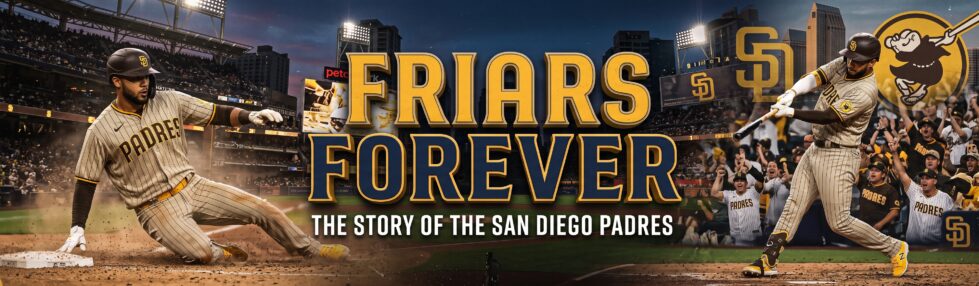
The San Diego Padres have spent more than half a century building an identity shaped by dramatic peaks, difficult rebuilds, and several unmistakable franchise icons. Founded during Major League Baseball’s expansion era, the Padres initially struggled to establish themselves before Tony Gwynn helped transform their national profile. This is the Story of the San Diego Padres.
Later generations brought a downtown ballpark, shifting roster philosophies, and higher expectations. From early growing pains to World Series appearances and modern postseason runs, San Diego’s history reflects a franchise that has repeatedly reinvented itself.
Expansion Roots Define an Early Identity
San Diego’s Major League story officially began when the National League awarded the city an expansion franchise in 1968, with the Padres debuting the following season. The name already carried local baseball history, having previously belonged to San Diego’s Pacific Coast League team. That connection gave the expansion club an identity rooted in the city rather than created entirely from scratch.
Success nevertheless arrived slowly. The Padres won their inaugural game against Houston but endured losing seasons as they tried to build a sustainable roster. For modern fans who bet on pro baseball, those beginnings provide useful historical context for how dramatically expectations surrounding San Diego have changed. Early Padres history was defined much more by establishing permanence than pursuing championships.
During the 1970s, that permanence was briefly threatened. Founding owner C. Arnholt Smith agreed to sell the struggling team to interests planning a move to Washington, D.C. The proposed relocation ultimately collapsed, allowing businessman Ray Kroc to purchase the Padres in 1974 and keep Major League Baseball in San Diego. His arrival altered the franchise’s direction.
Kroc invested in the team, and players like Dave Winfield began giving supporters recognizable stars. Yet sustained winning remained elusive. That long formative period set modest expectations for the Padres, making the breakthroughs that followed far more significant. By the early 1980s, one homegrown hitter was ready to become the defining figure in San Diego baseball history.
Gwynn’s Excellence Elevates Franchise Visibility
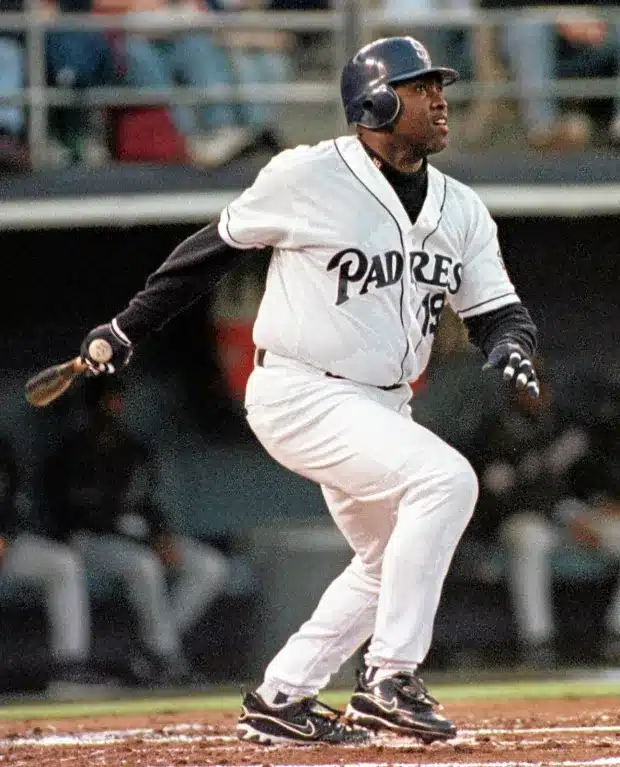
Tony Gwynn debuted in 1982 and eventually became inseparable from the Padres themselves. Over 20 seasons spent entirely in San Diego, he collected 3,141 hits, posted a .338 career batting average, and won eight National League batting championships. His remarkable consistency gave the Padres an enduring identity even when team results fluctuated dramatically.
That individual brilliance soon coincided with the franchise’s first breakthrough. San Diego captured its first NL West title in 1984 before defeating the Chicago Cubs in the National League Championship Series. The Padres advanced to their first World Series, where a powerful Detroit Tigers team ended the run in five games.
Fourteen years later, Gwynn remained central as San Diego reached another historic peak. The 1998 Padres won a franchise-record 98 games behind a roster featuring Gwynn, Trevor Hoffman, Kevin Brown, Ken Caminiti and Greg Vaughn. Victories over Houston and Atlanta delivered another National League pennant before the New York Yankees swept San Diego in the World Series.
Gwynn linked those two pennant-winning teams, batting .371 across his World Series appearances. His longevity provided continuity across changing rosters, managers, and expectations. When his playing career ended after 2001, the Padres faced a different challenge: building an identity no longer centered on their greatest player. A new downtown home soon became central to that transition.
Petco Park Era Reshapes Team Building
Petco Park opened in 2004 and immediately changed the physical identity of Padres baseball. The downtown stadium incorporated San Diego history into its design, most notably through the Western Metal Supply Co. building beyond left field. On the field, the Padres improved by 23 games and remained in postseason contention until the final weekend.
The Padres won division titles in 2005 and 2006, but struggled to turn those appearances into extended postseason runs. The following decade became more difficult. San Diego repeatedly finished outside serious contention, cycling through rosters while attempting to develop enough young talent to create a more sustainable foundation.
Prospects and longer-term roster construction gradually became central to that process. Years without postseason baseball created patience but also mounting expectations around emerging talent. Fernando Tatis Jr. eventually became the clearest symbol of that development. At the same time, the arrival of established star Manny Machado in 2019 signaled that San Diego was prepared to supplement its pipeline with major additions.
The combination fundamentally altered expectations surrounding Petco Park. A stadium initially associated with a new chapter in Padres history increasingly became the setting for a more ambitious competitive era. Infrastructure alone had not produced sustained success, but it provided a distinctive home for the team that emerged from years of rebuilding. By 2020, that transformation was becoming visible in October.
Star Power Fuels a New Contention Window
In the shortened 2020 season, San Diego returned to the postseason for the first time since 2006. Tatis and Machado emerged as National League MVP candidates while an aggressive series of trades strengthened the roster. The Padres defeated St. Louis in the Wild Card Series before losing to the eventual champion Los Angeles Dodgers in the Division Series.
That return changed the standard. Machado and Tatis became foundational stars, while further additions demonstrated San Diego’s willingness to pursue established talent. The most dramatic example came at the 2022 trade deadline, when the Padres acquired Juan Soto from Washington as part of a major series of moves designed to strengthen an already competitive roster.
San Diego responded with its deepest postseason run since 1998. San Diego eliminated the New York Mets before upsetting a Dodgers team that had won 111 regular-season games. The Padres then reached the NLCS, where Philadelphia prevailed in five games. Soto remained with San Diego through 2023 before being traded to the Yankees that offseason.
Postseason contention continued after Soto’s departure. San Diego returned to the playoffs in 2024, sweeping Atlanta in the Wild Card Series before losing a five-game Division Series to the Dodgers. The Padres reached the Wild Card Series again in 2025, falling to the Cubs in three games. They returned to October once more in 2026, sweeping Chicago in the Wild Card Series to advance to the NLDS.
This era differed from earlier Padres peaks because expectations became more persistent. Machado and Tatis helped establish a climate in which postseason contention was increasingly expected rather than exceptional. Yet the broader historical rhythm remained recognizable: rebuilding created opportunity, stars elevated expectations, and postseason performances determined whether another promising generation could reach heights previously achieved in 1984 and 1998.
A History Still Searching for Its Peak
The Padres’ history cannot be reduced to a simple progression from expansion team to contender. San Diego has repeatedly moved through cycles of rebuilding and resurgence, with Gwynn, Petco Park and the modern star era each reshaping what supporters expect from the franchise.
Two National League pennants remain historic benchmarks, while more recent postseason appearances have created another ambitious chapter. The Padres are still pursuing their first World Series championship, ensuring their defining historical achievement may still lie ahead.