
Search By First Name of HOFers
Ernie Nevers
Inducted:
1963

Player Stats
6 ft 0 in (1.83 m)
204 lb (93 kg)
Born:
June 11, 1902
Willow River, Minnesota, U.S.
Died:
May 3, 1976
Greenbrae, California, U.S.
Position:
Fullback
Coach
College:
Stanford (1923–1925)
Ernie Nevers was one of the earliest legends of professional football — a complete athlete who dominated the game in every phase. Playing for the Duluth Eskimos (1926–1927) and Chicago Cardinals (1929–1931), Nevers was a powerhouse fullback, kicker, and defensive standout whose endurance and toughness became the stuff of football folklore. His most famous performance came in 1929, when he scored 40 points (six touchdowns and four extra points) in a single game — a record that still stands today.
A true iron man, Nevers often played every minute of games, excelling as both a runner and tackler. He was named to the NFL’s 1920s All-Decade Team and is remembered as one of the sport’s first great all-around players. Known for his unmatched work ethic and competitive fire, Nevers embodied football’s rugged early era. Ernie Nevers was inducted into the Pro Football Hall of Fame in 1963, as part of the Hall’s inaugural class of legends.
Nevers' Awards and Honors
- 2× NFL Champion (1948, 1949)
- NFL Coach of the Year (1949)
- Philadelphia Eagles Hall of Fame
- NFL 1940s All-Decade Team (Coach)
Notable Achievements
- Only coach to win consecutive championship shutouts (1948–1949)
- Pioneer of modern defensive formations
- Built the Eagles into a postwar NFL powerhouse
NFL Teams
As Player-
Duluth Eskimos (1927)
Chicago Cardinals (1930–1931)
As Coach:
Duluth Eskimos (1927)
Chicago Cardinals (1930–1931, 1939)
Lafayette (1936)
Chicago Rockets (1946)
Number Worn:
4, 11, 44
NFL Stats
Seasons:
5 (1926–1931)
Games Played:
54
Games Started:
49
Rushing touchdowns:
38
Points scored:
301
Coaching Records:
NFL: 12–27–2 (.317)
College: 1–8 (.111)
Ernie Stautner
Inducted:
1969

Player Stats
6 ft 1 in (1.85 m)
230 lb (104 kg)
Born:
April 20, 1925
Prienzing near Cham, Bavaria, Germany
Died:
February 16, 2006
Carbondale, Colorado, U.S.
Position:
Defensive tackle
College:
Boston College
Ernie Stautner was the heartbeat of the Pittsburgh Steelers’ defense during the 1950s, known for his unmatched toughness, strength, and relentless motor. Playing his entire 14-year career with the Steelers from 1950 to 1963, Stautner lined up at both defensive tackle and defensive end, excelling despite often facing constant double-teams. His durability was remarkable—he missed only six games in his entire career.
Stautner earned nine Pro Bowl selections and was named First-Team All-Pro four times, becoming one of the most respected defensive players of his era. Although the Steelers were not championship contenders during much of his career, his dominance stood out leaguewide. Pittsburgh later honored him by retiring his No. 70 jersey, the first number the franchise ever retired.
Ernie Stautner was inducted into the Pro Football Hall of Fame in 1969, recognizing him as one of the toughest and most impactful defenders in NFL history.
Stautner's Awards and Honors
- 2× Super Bowl champion (VI, XII)
- 4× First-team All-Pro (1955, 1956, 1958, 1959)
- 5× Second-team All-Pro (1952, 1953, 1954, 1957, 1961)
- 9× Pro Bowl (1952, 1953, 1955–1961)
- NFL 1950s All-Decade Team
- NFL Best Lineman Award (1957)
Notable Achievements
- First jersey ever retired by the Steelers
- One of the most durable linemen of his era (missed only six games)
- Key figure in Steelers defensive identity during the 1950s
NFL Teams
Pittsburgh Steelers (1950–1963)
NFL Draft:
1950: 2nd round, 22nd overall pick
Pittsburgh Steelers
Number Worn:
63, 70
NFL Stats
Seasons:
14 (1950-1963)
Games Played:
172
Game Started:
143
Fumble recoveries:
23
Safeties:
3
Interceptions:
2
Super Bowl champion:
2 (VI, XII)
Pro Bowl:
9 (1952, 1953, 1955–1961)
Floyd Little
Inducted:
2010

Player Stats
5 ft 10 in (1.78 m)
Weight 196 lb
Born:
July 4, 1942
New Haven, Connecticut, U.S.
Died:
January 1, 2021
Henderson, Nevada, U.S.
Position:
Halfback/Running back
College:
Syracuse (1964–1966)
Floyd Little, known as “The Franchise,” was the driving force behind the Denver Broncos during the late 1960s and early 1970s. A versatile and determined running back, he brought credibility and excitement to a young franchise, helping establish Denver as a respected NFL team. Little was a complete back — equally effective running, catching, and returning kicks — and led the league in rushing in 1971.
Despite playing on teams that often struggled, he consistently stood out for his effort, leadership, and production, finishing his career with over 12,000 all-purpose yards and 54 touchdowns. His work ethic and loyalty to Denver made him a fan favorite and a symbol of perseverance. A five-time Pro Bowler and three-time All-Pro, Little’s influence extended beyond statistics; he was the heart of the Broncos during their formative years.
Little's Awards and Honors
- First-team All-Pro (1969)
- 5× Pro Bowl (1968–1971, 1973)
- NFL rushing yards leader (1971)
- NFL rushing touchdowns co-leader (1973)
- 3× First-team All-American (1964–1966)
- 3× First-team All-East (1964–1966)
NFL Records
- First Denver Broncos player inducted into the Hall of Fame
- Led NFL in all-purpose yards (1969, 1973)
- Known as “The Franchise” for saving Broncos’ early existence
NFL Teams
Denver Broncos (1967–1975)
NFL Draft:
1967: 1st round, 6th overall pick
Denver Broncos
Number Worn:
44
NFL Stats
Seasons:
9 (1967–1975)
Games Played:
117
Game Started:
105
Rushing yards:
6,323
Rushing average:
3.9
Rushing touchdowns:
43
Receptions:
215
Receiving yards:
2,418
Receiving touchdowns:
9
All-Purpose Yards:
12,173
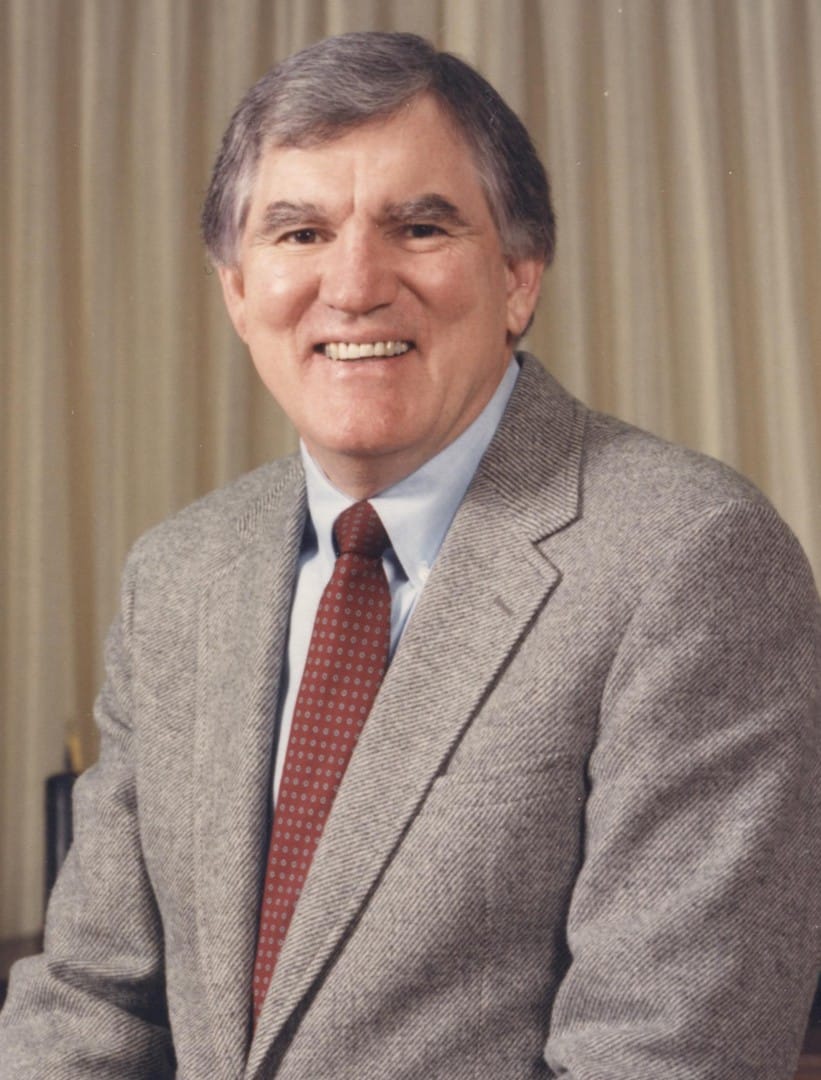
Forrest Gregg
Inducted:
1977
Player Stats
6 ft 4 in (1.93 m)
249 lb (113 kg)
Born:
October 18, 1933
Birthright, Texas, U.S.
Died:
April 12, 2019
Colorado Springs, Colorado, U.S.
Position:
Offensive tackle
Coach
College:
SMU
Forrest Gregg was one of the toughest and most durable offensive linemen in NFL history. Playing primarily for the Green Bay Packers from 1956 to 1970, Gregg was a key component of the legendary Packers teams led by coach Vince Lombardi, helping them secure five NFL championships, including the first two Super Bowls.
Known for his fierce blocking, leadership, and resilience, he earned the nickname “The Iron Man.” After his playing career, Gregg went on to coach multiple NFL teams and the CFL’s Shreveport Pirates. His impact on the game as both a player and coach was profound, and he was inducted into the Pro Football Hall of Fame in 1977.
Gregg's Awards and Honors
- 3× Super Bowl champion (I, II, VI)
- 5× NFL champion (1961, 1962, 1965–1967)
- 7× First-team All-Pro (1960, 1962–1967)
- Second-team All-Pro (1959)
- 9× Pro Bowl (1959–1964, 1966–1968)
- Cincinnati Bengals 50th Anniversary Team
NFL Records
- NFL 1960s All-Decade Team
- NFL 75th Anniversary All-Time Team
- NFL 100th Anniversary All-Time Team
- NFL Coach of the Year (1976)
NFL Teams
As a player:
Green Bay Packers (1956, 1958–1970)
Dallas Cowboys (1971)
As a coach:
Cleveland Browns (1975–1977)
Toronto Argonauts (1979)
Cincinnati Bengals (1980–1983)
Green Bay Packers (1984–1987)
SMU (1989–1990)
Shreveport Pirates (1994–1995)
NFL draft:
1956: 2nd round, 20th pick
Green Bay Packers
Number Worn:
75, 79
NFL Stats
Seasons:
1956–1970
Games Played:
193
Fumble recoveries:
8
Pro Bowls:
7
NFL Championships:
5 (1961, 1962, 1965, 1966, 1967)
Super Bowl Wins:
2
Head coaching record:
NFL: 75–85–1 (.469)
CFL: 13–39 (.250)
NCAA: 3–19 (.136)
Fran Tarkenton
Inducted:
1986

Player Stats
6 ft 0 in (1.83 m)
190 lb (86 kg)
Born:
February 3, 1940
Richmond, Virginia, U.S.
Position:
Quarterback
College:
Georgia (1958–1960)
Fran Tarkenton was one of the most dynamic quarterbacks in NFL history, redefining the position with his scrambling style and ability to improvise. Playing primarily for the Minnesota Vikings, along with an early stint in New York, he became the prototype for the modern mobile quarterback. Tarkenton retired as the NFL’s all-time leader in passing yards, completions, and touchdown passes, combining efficiency with creativity. He led the Vikings to three Super Bowl appearances and was known for his durability, leadership, and relentless competitive spirit.
His ability to extend plays and turn broken situations into big gains made him one of the league’s most difficult quarterbacks to defend. Off the field, he became a respected entrepreneur and media figure while remaining closely connected to the game. Inducted into the Pro Football Hall of Fame in 1986, Tarkenton left a legacy as a pioneer whose influence can still be seen in today’s dual-threat quarterbacks.
Tarkenton's Awards and Honors
- NFL Most Valuable Player (1975)
- First-team All-Pro (1975)
- Second-team All-Pro (1973)
- 9× Pro Bowl (1964, 1965, 1967–1970, 1974–1976)
NFL Records
- NFL passing yards leader (1978)
- NFL passing touchdowns leader (1975)
- NFL completion percentage leader (1977)
- NFL Offensive Player of the Year (1975)
NFL Teams
Minnesota Vikings (1961–1966,1972–1978)
New York Giants (1967–1971)
NFL Draft:
1961: 3rd round, 29th overall pick
Minnesota Vikings
Number Worn:
10
NFL Stats
Seasons:
18 (1961–1978)
Games Played:
246
Game Started:
239
Passing attempts:
6,467
Passing completions:
3,686
Completion percentage:
57.0%
TD–INT:
342–266
Passer rating:
80.4
Passing yards:
47,003
Rushing yards:
3,674
Rushing touchdowns:
32
Franco Harris
Inducted:
1990

Player Stats
6 ft 2 in (1.88 m)
230 lb (104 kg)
Born:
March 7, 1950
Fort Dix, New Jersey, U.S.
Died:
December 20, 2022
Sewickley, Pennsylvania, U.S.
Position:
Running back/Fullback
College:
Penn State (1968–1971)
Franco Harris was a powerful running back who played for the Pittsburgh Steelers (1972–1983) and finished his career with the Seattle Seahawks in 1984. Inducted into the Pro Football Hall of Fame in 1990, he became a symbol of Pittsburgh’s rise to greatness. He burst onto the scene with the unforgettable "Immaculate Reception," sparking the Steelers’ first playoff win and fueling four Super Bowl titles in the 1970s.
Harris rushed for over 12,000 yards and scored 91 rushing touchdowns during a 13-season career, placing him among the league’s all-time leaders at retirement. Known for his blend of power and precision, he earned nine Pro Bowl selections and was named Offensive Rookie of the Year. His consistency, postseason dominance, and championship-caliber play cemented his legacy as one of the greatest backs in NFL history.
Harris' Awards and Honors
- 4× Super Bowl champion (IX, X, XIII, XIV)
- Super Bowl MVP (IX)
- First-team All-Pro (1977)
- 2× Second-team All-Pro (1972, 1975)
- 9× Pro Bowl (1972–1980)
- 2× Second-team All-East (1969, 1971)
NFL Records
- NFL Offensive Rookie of the Year (1972)
- NFL rushing touchdowns leader (1976)
- NFL 1970s All-Decade Team
- NFL Man of the Year (1976)
- Most first downs rushing in playoffs
- Led NFL with eight 1,000-yard rushing seasons
- Ranked second in scrub-yardage touchdowns (100) at retirement
NFL Teams
Pittsburgh Steelers (1972–1983)
Seattle Seahawks (1984)
NFL Draft:
1972: 1st round, 13th pick
Pittsburgh Steelers
Number Worn:
32, 34
NFL Stats
Seasons:
13
Game Played:
173
Game Started:
162
Rushing yards:
12,120
Yards per carry:
4.1
Rushing touchdowns:
91
Receptions:
307
Receiving yards:
2,287
Receiving touchdowns:
9
Frank Gatski
Inducted:
1985

Frank Gatski was one of the toughest and most reliable offensive linemen in pro football history. Playing center, he anchored the offensive line for the Cleveland Browns during one of the most dominant eras in the sport. Gatski played in every game of his 12-year career (1946–1957), showcasing remarkable durability and consistency. He helped lead the Browns to 10 championship games, winning eight titles—four in the All-America Football Conference (AAFC) and four in the NFL.
Known for his quiet leadership and hard-nosed play, Gatski was never flashy but always dependable. He was inducted into the Pro Football Hall of Fame in 1985, a recognition of his fundamental role in one of football’s first dynasties. Nicknamed "Gunner," Gatski also finished his career with the Detroit Lions, helping them win the 1957 NFL Championship. His blend of reliability, strength, and championship pedigree made him one of the game's all-time great centers.
Gatski's Awards and Honors
- 4× NFL champion (1950, 1954, 1955, 1957)
- 4× AAFC champion (1946–1949)
- 4× First-team All-Pro (1951–1953, 1955)
- Pro Bowl (1956)
- Cleveland Browns Ring of Honor
NFL Records
- Most consecutive league championship appearances by a player: 10
- One of the few players to win championships in both AAFC and NFL
- Played in 11 straight championship games
- Never missed a single game in his 12-year professional career
- Part of 8 championship-winning teams
NFL Teams
Cleveland Browns (1946–1956)
Detroit Lions (1957)
NFL Draft:
1946: undrafted
Number Worn:
22, 52
NFL Stats
Seasons:
12 (1946–1957)
Games played:
144
Games started:
124
Interceptions:
3
Interception yards:
35
Fumble recoveries:
3
Defensive touchdowns:
1
Championships:
8 (4 AAFC, 4 NFL)
Frank Gifford
Inducted:
1977

Player Stats
6 ft 1 in (1.85 m)
Weight: 197 lb (89 kg)
Born:
August 16, 1930
Santa Monica, California, U.S.
Died:
August 9, 2015
Greenwich, Connecticut, U.S.
Position:
Halfback
Flanker
Safety
Kicker
College:
Bakersfield (1948)
USC (1949–1951)
Frank Gifford was one of the NFL’s most versatile stars, excelling as a running back, receiver, and defensive back for the New York Giants from 1952 to 1964. He was the face of the franchise during its golden era, helping lead the Giants to five NFL Championship Games and winning the title in 1956. Gifford’s ability to run, catch, and even throw made him one of the most dynamic players of his generation. He earned MVP honors in 1956 and was selected to eight Pro Bowls at three different positions.
After retiring, Gifford transitioned into broadcasting, becoming a beloved voice of Monday Night Football for over two decades. His impact on the sport extended from the gridiron to the broadcast booth, shaping how fans experienced the game. Gifford was inducted into the Pro Football Hall of Fame in 1977, cementing his legacy as both a football icon and media pioneer.
Gifford's Awards and Honors
- 6× First-team All-Pro (1953, 1955–1959)
- 8× Pro Bowl (1953–1959, 1963)
- New York Giants Ring of Honor
- New York Giants No. 16 retired
- First-team All-American (1951)
- First-team All-PCC (1951)
NFL Records
- NFL champion (1956)
- NFL Most Valuable Player (1956)
- NFL Comeback Player of the Year (1962)
- NFL 1950s All-Decade Team
- First player to score 70+ career touchdowns
- Only player in NFL history selected to the Pro Bowl at three different positions
NFL Teams
New York Giants (1952–1960; 1962–1964)
NFL Draft:
1952: 1st round, 11th pick
New York Giants
Number Worn:
16
NFL Stats
Seasons:
1952–1964
Games Played:
136
Rushing Yards:
3,609 (Avg. 4.3)
Rushing touchdowns:
34
Receptions:
367
Receiving Yards:
5,434
Total Touchdowns:
77
Passing Touchdowns:
14
Interceptions:
2
Points scored:
484
Pro Bowls:
8
NFL MVP:
1956
Fred Biletnikoff
Inducted:
1988

Player Stats
6 ft 1 in (1.85 m)
190 lb (86 kg)
Born:
February 23, 1943
Erie, Pennsylvania, U.S.
Position:
Wide receiver
College:
Florida State (1962–1964)
Fred Biletnikoff is a legendary wide receiver known for his precise route running and exceptional hands. Over his 14-season NFL career with the Oakland Raiders, he amassed 589 receptions for 8,974 yards and 76 touchdowns.
Biletnikoff's postseason performance was also remarkable, setting NFL records with 70 receptions, 1,167 receiving yards, and 10 touchdowns in 19 playoff games.
His accolades include six Pro Bowl selections and induction into both the Pro Football Hall of Fame (1988) and College Football Hall of Fame (1991). In recognition of his impact on college football, the Fred Biletnikoff Award was established in 1994 to honor the nation's top wide receiver.
Biletnikoff's legacy endures as a symbol of excellence in the NFL, celebrated for his skill, consistency, and contributions to the game.
Biletnikoff's Awards and Honors
- Super Bowl champion (XI)
- AFL champion (1967)
- Super Bowl MVP (XI)
- 2× First-team All-Pro (1969, 1972)
- 4× Pro Bowl (1970, 1971, 1973, 1974)
- 2× AFL All-Star (1967, 1969)
- NFL receptions leader (1971)
- Consensus All-American (1964)
- Florida State Seminoles Jersey No. 25 honored
NFL Records
- Most Receiving Yards in a Single Game: 215 yards (Week 4, 1970)
- Most Receptions in a Single Game: 14 receptions (1971)
- NFL Comeback Player of the Year: 1979
- NFL 1960s All-Decade Team
- NFL 1970s All-Decade Team
NFL Teams
Oakland Raiders (1965–1978)
Montreal Alouettes (1980)
NFL Draft
1965: 3rd round, 39th pick
Oakland Raiders
Numbers Worn:
14, 25
NFL Stats
Seasons:
14
Games Played:
190
Receptions:
589
Receiving Yards:
8,974
Touchdowns:
76
Yards Per Reception:
15.2
Fumble recoveries:
6
Fred Dean
Inducted:
2008

Player Stats
6 ft 3 in (1.91 m)
230 lb (104 kg)
Born:
February 24, 1952
Arcadia, Louisiana, U.S.
Died:
October 14, 2020
Jackson, Mississippi, U.S.
Position:
Defensive End
College:
Louisiana Tech (1971–1974)
Fred Dean was one of the most feared pass rushers of his era, known for his explosive first step and relentless pressure off the edge. He began his NFL career with the San Diego Chargers, where he became a dominant defensive force as a defensive end.
Midway through the 1981 season, he was traded to the San Francisco 49ers—and immediately transformed their defense. Dean recorded 12 sacks in 11 games that season, helping lead the 49ers to their first Super Bowl title. He was a key figure in two Super Bowl-winning teams and a four-time Pro Bowler.
Though official sack stats were not recorded until 1982, Dean is widely recognized as one of the premier edge rushers of the late 1970s and early 1980s. His ability to wreck offensive game plans earned him a place in the Pro Football Hall of Fame in 2008.
Dean's Awards and Honors
- 2× Super Bowl champion (XVI, XIX)
- 2× First-team All-Pro (1980, 1981)
- 4× Pro Bowl (1979–1981, 1983)
- NFC Defensive Player of the Year (1981)
- San Francisco 49ers Hall of Fame
- Los Angeles Chargers Hall of Fame
- San Diego Chargers 50th Anniversary Team
- San Diego Chargers 40th Anniversary Team
- Second-team All-American (1974)
- First-team Little All-American (1974)
- Second-team Little All-American (1973)
- Louisiana Tech Athletic Hall of Fame
NFL Records
- Member of the NFL 1980s All-Decade Team
- Transformed 49ers' defense mid-season in 1981
- First defensive end inducted into the Hall of Fame primarily for his edge pass-rushing in the modern 4–3 defense
NFL Teams
San Diego Chargers (1975–1981)
San Francisco 49ers (1981–1985)
Fritz Pollard
Inducted:
2005

Player Stats
5 ft 9 in (1.75 m)
166 lb (75 kg)
Born:
January 27, 1894
Chicago, Illinois, U.S.
Died:
May 11, 1986
Silver Spring, Maryland, U.S.
Position:
Halfback
Coach
College:
Brown (1915–1916)
Fritz Pollard was a true pioneer of professional football, breaking racial barriers and setting the foundation for generations to come. A standout running back from Brown University, Pollard became one of the first two African American players in the NFL in 1920 and the league’s first Black head coach in 1921 with the Akron Pros.
Despite facing relentless racism and segregation, he displayed unmatched determination, intelligence, and athletic skill. On the field, Pollard’s speed and elusiveness made him one of the early stars of professional football, leading the Akron Pros to the first NFL Championship in 1920. Off the field, he championed equality, creating opportunities for Black players and coaches in an era of widespread exclusion.
His impact extended beyond football — he was a trailblazer for diversity and inclusion in American sports. Fritz Pollard was inducted into the Pro Football Hall of Fame in 2005, honoring his courage, leadership, and groundbreaking contributions to the game.
Pollard's Awards and Honors
- First-team All-Pro (1920)
- Consensus All-American (1916)
- 1920 NFL Champion (Akron Pros)
- College Football Hall of Fame inductee (1954)
- Pro Football Hall of Fame inductee (2005)
NFL Records
- First African American head coach in NFL history
- One of the first two Black NFL players (1920)
- Trailblazer for racial integration in professional sports
- Established teams and leagues for Black athletes
NFL Teams
As Player-
Akron Pros (1920–1921)
Milwaukee Badgers (1922)
Hammond Pros (1923, 1925)
Providence Steam Roller (1925)
Akron Indians (1925–1926)
As Coach-
Lincoln (PA) (1918–1920)
Akron Pros (1921)
Hammond Pros (1925)
Chicago Black Hawks (1928)
Number Worn:
9, 1
NFL Stats
Games Played:
49
Games Started:
36
Rushing touchdowns:
16
Receiving touchdowns:
2
Total touchdowns:
18
Total Extra Points (X1A):
5
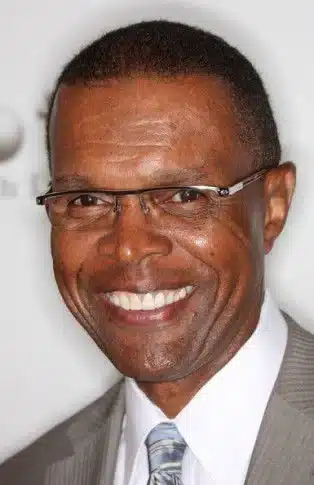
Gale Sayers
Inducted:
1977
Player Stats
6 ft 0 in (1.83 m)
198 lb (90 kg)
Born:
May 30, 1943
Wichita, Kansas, U.S.
Died:
September 23, 2020
Wakarusa, Indiana, U.S.
Position:
Halfback
Return specialist
College:
Kansas (1962–1964)
Gale Sayers, known as the “Kansas Comet,” was one of the most electrifying and graceful players ever to step on an NFL field. Born in 1943, Sayers joined the Chicago Bears in 1965 and made an immediate impact, earning Rookie of the Year honors with a record 22 touchdowns. Despite playing only seven seasons due to knee injuries, his breathtaking speed, agility, and vision left a lasting legacy.
Sayers could change direction effortlessly, making defenders miss with moves that seemed otherworldly. He led the league in all-purpose yards three times and scored six touchdowns in a single game — a record that still stands. His career may have been brief, but it burned with unmatched brilliance, inspiring future generations of running backs.
Sayers’ sportsmanship and humility matched his talent, making him a true legend of the game. Gale Sayers was inducted into the Pro Football Hall of Fame in 1977.
Sayers' Awards and Honors
- 5× First-team All-Pro (1965–1969)
- 4× Pro Bowl (1965–1967, 1969)
- 2× NFL rushing yards leader (1966, 1969)
- George Halas Award (1970)
- Chicago Bears No. 40 retired
- 100 greatest Bears of All-Time
NFL Records
- NFL scoring leader (1965)
- NFL Comeback Player of the Year (1969)
- NFL Offensive Rookie of the Year (1965)
- NFL 1960s All-Decade Team
- NFL 100th Anniversary All-Time Team
- Most touchdowns in a rookie season: 22
- Highest combined yards per game average, career: 138.75
- Most all-purpose touchdowns in a single game: 6 (tied)
NFL Teams
Chicago Bears (1965–1971)
NFL Draft:
1965: 1st round, 4th overall pick
Chicago Bears
Number Worn:
40
NFL Stats
Seasons:
7 (1965–1971)
Games Played:
68
Game Started:
65
Rushing yards:
4,956
Rushing average:
5.0
Rushing touchdowns:
39
Receptions:
112
Receiving yards:
1,307
Receiving touchdowns:
9
Return yards:
3,172
Return touchdowns:
8
Gary Zimmerman
Inducted:
2008
Player Stats
6 ft 6 in (1.98 m)
294 lb (133 kg)
Born:
December 13, 1961
Fullerton, California, U.S.
Position:
Offensive tackle
College:
Oregon (1980–1983)
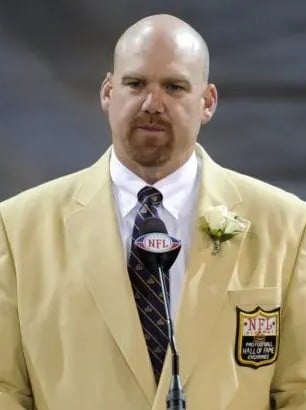
Gary Zimmerman was one of the premier offensive tackles of his generation, known for his textbook technique, consistent blocking, and quiet intensity on the field. After starting his career with the Minnesota Vikings, he was traded to the Denver Broncos, where he anchored the offensive line that protected quarterback John Elway and paved the way for a powerful rushing attack.
His exceptional play at left tackle earned him the rare distinction of being named to the NFL's All-Decade Teams for both the 1980s and the 1990s. Zimmerman’s career culminated in a victory in Super Bowl XXXII during his final season. His relentless dominance protecting the "blind side" cemented his legacy as a Hall of Fame lineman.
He was inducted into the Pro Football Hall of Fame in 2008.
Zimmerman's Awards and Honors
- Super Bowl champion (XXXII)
- 3× First-team All-Pro (1987, 1988, 1996)
- 2× Second-team All-Pro (1993, 1995)
- 7× Pro Bowl (1987–1989, 1992, 1994–1996)
- NFL 1980s All-Decade Team
- NFL 1990s All-Decade Team
Notable Achievements
- One of the few players in NFL history to be named to two different NFL All-Decade Teams
- Anchored the Denver Broncos offensive line that won Super Bowl XXXII
- Credited with allowing zero sacks in his 1984 USFL rookie season
NFL Teams
Minnesota Vikings (1986–1992)
Denver Broncos (1993–1997)
NFL Draft:
1984: 1st round, 3rd overall pick
New York Giants
Number Worn:
65
NFL Stats
Seasons:
12 (1986–1997)
Games Played:
184
Games Started:
184
Fumble recoveries:
4
Super Bowl champion:
1 (XXXII)
Pro Bowl:
7 (1987–1989, 1992, 1994–1996)
Gene Hickerson
Inducted:
2007
Player Stats
6-3, 248lb (190cm, 112kg)
Born:
February 15, 1935
Trenton, Tennessee, U.S.
Died:
October 20, 2008
Cleveland, Ohio, U.S.
Position:
Offensive guard
College:
University of Mississippi
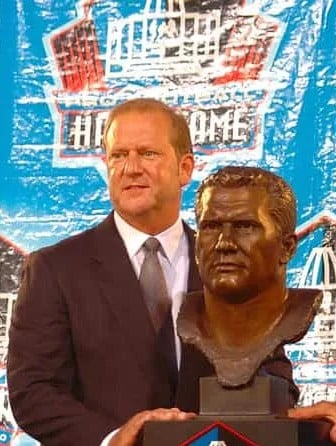
Gene Hickerson was one of the most dominant offensive guards of his era, anchoring the Cleveland Browns’ line from 1958 to 1973. Known for his quickness, strength, and precision blocking, he paved the way for legendary running backs like Jim Brown, Leroy Kelly, and Bobby Mitchell. Hickerson’s pulling guard technique was unmatched, often leading devastating sweeps that became a Browns trademark.
A six-time Pro Bowl selection and five-time First-Team All-Pro, he was a cornerstone of Cleveland’s offense for 15 seasons. Hickerson’s consistency and durability helped him play in 202 consecutive games, a testament to his toughness.
His leadership and skill earned him enshrinement into the Pro Football Hall of Fame in 2007. Regarded as one of the finest offensive linemen in NFL history, Hickerson left an enduring impact on the game and set a standard for future generations of linemen.
Hickerson's Awards and Honors
- NFL champion (1964)
- 5× First-team All-Pro (1966–1970)
- 2× Second-team All-Pro (1964, 1965)
- 6× Pro Bowl (1965–1970)
- NFL 1960s All-Decade Team
- Cleveland Browns Ring of Honor
- First-team All-SEC (1957)
NFL Records
- 202 consecutive games played for the Cleveland Browns (1958–1973)
- Blocked for three Hall of Fame running backs
- Part of multiple league-leading rushing offenses
NFL Teams
Cleveland Browns (1958–1960, 1962–1973)
NFL Draft:
1957: 7th round, 78th pick
Cleveland Browns
Number Worn:
66
NFL Stats
Seasons played:
15 (1958–1973)
Games played:
202
Games started:
183
Fumble recoveries:
7
Pro Bowls:
6
First-Team All-Pro:
5
Gene Upshaw
Inducted:
1987
Player Stats
6 ft 5 in (1.96 m)
255 lb (116 kg)
Born:
August 15, 1945
Robstown, Texas, U.S.
Died:
August 20, 2008
Lake Tahoe, California, U.S.
Position:
Guard
College:
Texas A&I (1963–1966)
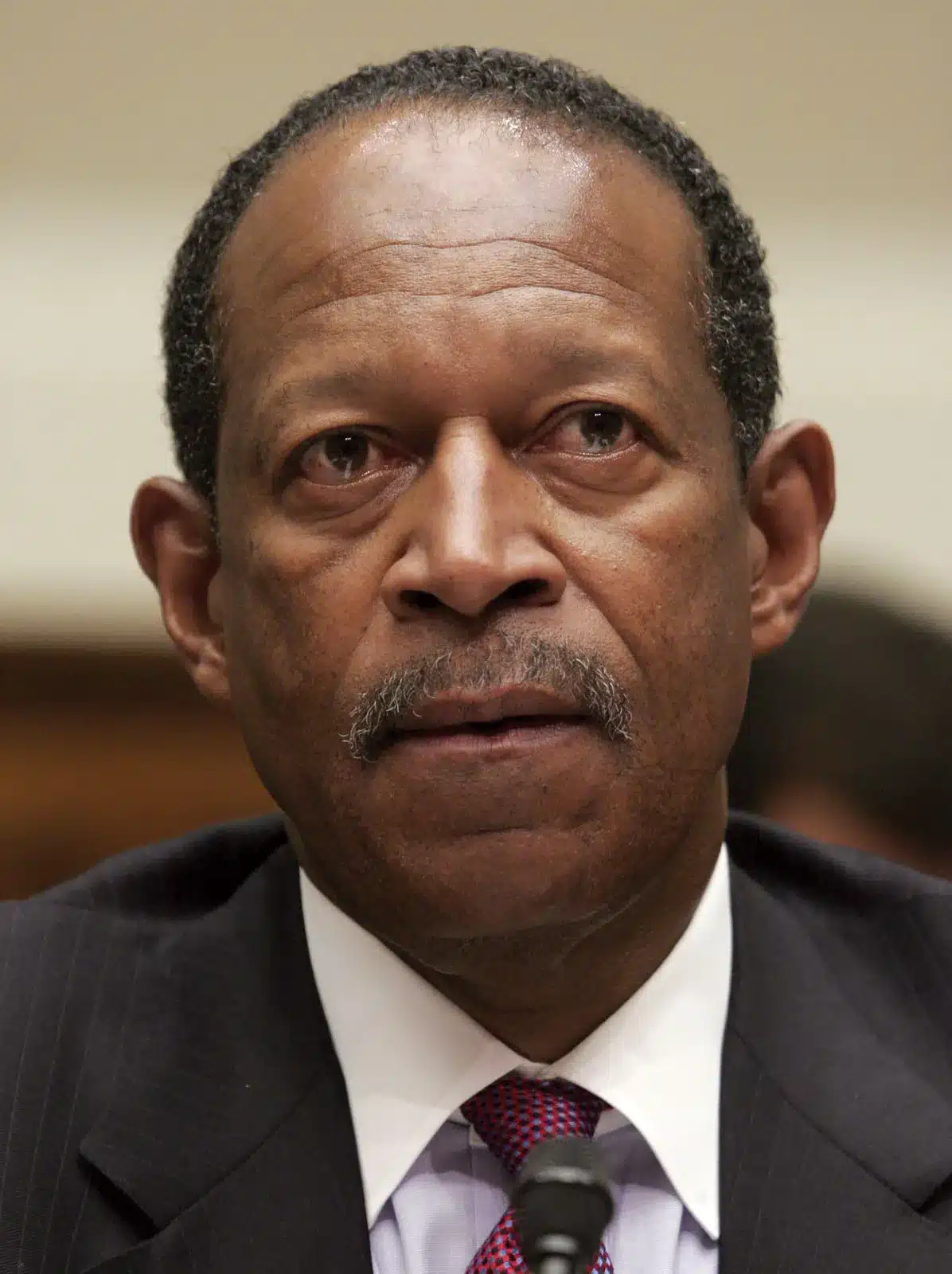
Gene Upshaw was one of the most dominant guards in NFL history and a cornerstone of the Oakland Raiders’ powerful offensive line. Drafted in 1967, he became the first offensive lineman to start in Super Bowls during three different decades, showcasing remarkable longevity and consistency. Upshaw’s strength, mobility, and leadership helped drive the Raiders’ feared rushing attack and provided reliable protection for quarterbacks Daryle Lamonica, Ken Stabler, and Jim Plunkett. He played in 15 AFL/NFL Championship Games and was a guiding presence during the team’s Super Bowl XI and XV victories.
Known for his toughness and steady play, Upshaw set the standard for modern guard performance. Inducted into the Pro Football Hall of Fame in 1987, he later shaped the league’s labor landscape as Executive Director of the NFL Players Association. His influence on the field and within the league remains unmatched among offensive linemen.
Upshaw's Awards and Honors
- 2× Super Bowl champion (XI, XV)
- AFL champion (1967)
- 3× first-team All-Pro (1970, 1974, 1977)
- 2× first-team All-AFL (1968, 1969)
- 5× second-team All-Pro (1971–1973, 1975, 1976)
- Second-team All-AFL (1967)
- 6× Pro Bowl (1972–1977)
NFL Records
- First offensive lineman to play in Super Bowls in three different decades
- Key leader of Raiders’ dominant offensive lines of the 1970s
- Major architect of modern NFL labor policies as NFLPA Executive Director
NFL Teams
Oakland Raiders (1967–1981)
NFL Draft:
1967: 1st round, 17th overall pick
Oakland Raiders
Number Worn:
63
NFL Stats
Seasons:
15 (1967–1981)
Games Played:
217
Games Started:
207
Fumble recoveries:
5
Super Bowl Championships:
2 (XI, XV)
AFL champion:
1 (1967)
Pro Bowl:
6 (1972–1977)
"Gear Up for Game Day Like a Pro!"
Don’t just watch history—be a part of it. Rep your colors with authentic NFL jerseys, hats, and limited-edition varsity jackets. High-quality gear for the die-hard fan.
Score Your Gear Now – Official NFL Shop















NFL Hall of Fame
The NFL Hall of Fame, also known as the Pro Football Hall of Fame, is where the legacies of NFL legends and their contributions to football history are celebrated. Located in Canton, Ohio, this iconic institution honors the greatest players, coaches, and contributors through its annual Hall of Fame enshrinement and NFL Hall of Fame ceremony. From the NFL Hall of Fame Class of 2025 and its nominees to the unforgettable Hall of Fame speeches, each year brings new highlights and moments that capture the spirit of the game. Featuring Hall of Fame players, coaches, and even legendary quarterbacks, the Hall showcases the rich history of football with exhibits, stories of remarkable careers, and events like the NFL Hall of Fame game. A visit to the Hall is a journey through the most iconic NFL greats, their achievements, and the unforgettable Hall of Fame moments that define the sport we love. 🏈✨