
Search By First Name of HOFers
Sam Huff
Inducted:
1982

Player Stats
6 ft 1 in (1.85 m)
230 lb (104 kg)
Born:
October 4, 1934
Edna, West Virginia, U.S.
Died:
November 13, 2021
Winchester, Virginia, U.S.
Position:
Linebacker
College:
West Virginia (1952–1955)
Sam Huff, was one of the NFL’s most formidable linebackers. Playing primarily for the New York Giants from 1956 to 1964 and briefly for the Washington Redskins, Huff was known for his physicality, intelligence, and ability to read offenses. He became the centerpiece of the Giants’ defense, helping them reach the NFL Championship Game multiple times and famously dominating in the 1958 “Greatest Game Ever Played” against the Baltimore Colts.
Huff earned six Pro Bowl selections and three First-Team All-Pro honors, pioneering the middle linebacker position and defining modern defensive schemes. Over his career, he recorded numerous interceptions and fumble recoveries, while his leadership inspired teammates and intimidated opponents. Inducted into the Pro Football Hall of Fame in 1982, Huff left a lasting legacy as one of the first linebackers to achieve superstar status, shaping the role for generations of defensive players to come.
Huff's Awards and Honors
- 6× Pro Bowl selection
- 3× First-Team All-Pro
- Key player in 1958 NFL Championship Game (“The Greatest Game Ever Played”)
- Pioneered the middle linebacker role
NFL Records
- First middle linebacker to achieve superstar status
- Defined defensive schemes with intelligence and leadership
- Integral part of Giants’ championship-contending teams in the late 1950s
- Inspired generations of linebackers with physicality and field awareness
NFL Teams
As a player:
New York Giants (1956–1963)
Washington Redskins (1964–1967, 1969)
As Coach:
Washington Redskins (1969-1970)
NHL Draft:
1956: 3rd round, 30th overall
New York Giants
Number Worn:
70
NFL Stats
NFL Seasons:
1956–1969
Games Played:
168
Interceptions:
30
Interception Yards:
381
Touchdowns:
5
Fumble recoveries:
17
Pro Bowls:
6
First-Team All-Pro:
3
Sam Mills
Inducted:
2022
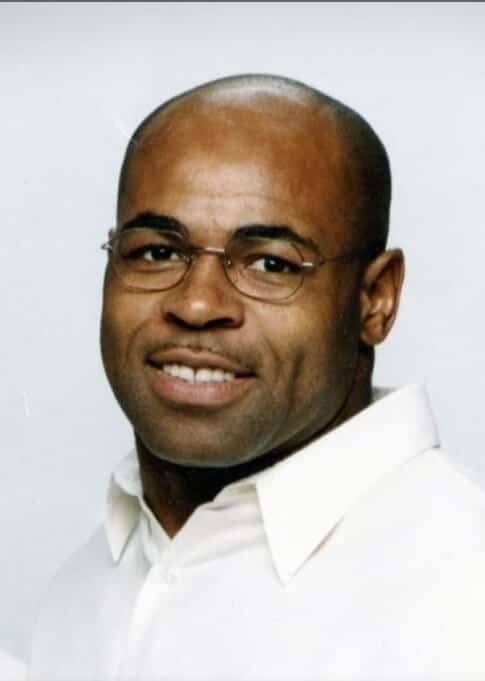
Sam Mills was the heart and soul of every team he played for — a symbol of perseverance, leadership, and excellence. Undersized for a linebacker at 5'9", Mills defied every doubt with unmatched intelligence, tackling ability, and heart. After starring in the USFL, he joined the New Orleans Saints in 1986, becoming the leader of the feared “Dome Patrol” defense — one of the best linebacker units in NFL history.
Later, with the Carolina Panthers, Mills became the emotional and defensive cornerstone of the young franchise, inspiring teammates through his work ethic and resilience. Even after his playing career, he continued to influence the game as a coach, delivering the unforgettable motto, “Keep Pounding,” while battling cancer.
His legacy endures as a testament to determination and character beyond the field. Sam Mills was inducted into the Pro Football Hall of Fame in 2022, forever honored as one of football’s most inspiring figures.
Mills' Awards and Honors
- 3× First-team All-Pro (1991, 1992, 1996)
- 5× Pro Bowl (1987, 1988, 1991, 1992, 1996)
- George Halas Award (2004)
- Carolina Panthers Hall of Honor
- Carolina Panthers No. 51 retired
NFL Records
- Leader of the Saints’ “Dome Patrol” defense
- Coined “Keep Pounding” — Carolina’s lasting team mantra
- Overcame size doubts to become an elite NFL linebacker
NFL Teams
As Player-
Cleveland Browns (1981)
Toronto Argonauts (1982)
Philadelphia / Baltimore Stars (1983–1985)
New Orleans Saints (1986–1994)
Carolina Panthers (1995–1997)
As Coach-
Carolina Panthers (1998–2004)
Sammy Baugh
Inducted:
1963

Player Stats
Stats:
6 ft 2 in (1.88 m)
182 lb (83 kg)
Born:
March 17, 1914
Temple, Texas, U.S.
Died:
December 17, 2008
Rotan, Texas, U.S.
Position:
Quarterback-Defensive back-Punter
College:
TCU (1934–1936)
Sammy Baugh, known as “Slingin’ Sammy,” revolutionized the quarterback position during his 16-season NFL career with the Washington Redskins (1937–1952).
A versatile athlete, Baugh excelled as a quarterback, punter, and defensive back, setting multiple records that stood for decades. He led the league in passing yards four times and in completion percentage seven times.
In 1943, he achieved the remarkable feat of leading the NFL in passing, punting, and interceptions in the same season.
Baugh’s impact on the game was profound, and he was inducted into the Pro Football Hall of Fame in 1963.
Baugh's Awards and Honors
- Washington Commanders 90 Greatest
- Washington Commanders Ring of Fame
- Washington Commanders No. 33 retired
- CFB national champion (1935)
- TCU Horned Frogs No. 45 retired
- Consensus All-American (1936)
- First-team All-American (1935)
- 2× first-team All-SWC (1935, 1936)
NFL Records
- 2× NFL champion (1937, 1942)
- 4× first-team All-Pro (1937, 1940, 1942, 1943)
- 4× second-team All-Pro (1938, 1941, 1947, 1948)
- 6× Pro Bowl (1938–1942, 1951)
- 4× NFL passing yards leader (1937, 1940, 1947, 1948)
- 2× NFL passing touchdowns leader (1940, 1947)
- 3× NFL passer rating leader (1940, 1945, 1947)
- 8× NFL completion percentage leader (1940, 1942, 1943, 1945–1949)
- NFL interceptions leader (1943)
- NFL punting yards leader (1943)
- NFL 1940s All-Decade Team
- NFL 75th Anniversary All-Time Team
- NFL 100th Anniversary All-Time Team
NFL Teams
Washington Redskins (1937–1952)
Numbers Worn:
33
NFL Draft:
1937: 1st round, 6th pick
Washington Redskins
NFL Stats
Seasons:
16
Games Played:
165
Passing attempts:
2,995
Passing completions:
1,693
Completion percentage:
56.5%
TD–INT:
187–203
Passing yards:
21,886
Passer rating:
72.2
Punting yards:
15,245
Punting average:
45.1
Interceptions made:
31
Shannon Sharpe
Inducted:
2011

Player Stats
6 ft 2 in (1.88 m)
228 lb (103 kg)
Born:
June 26, 1968
Chicago, Illinois, U.S.
Position:
Tight End
College:
Savannah State (1986–1989)
Shannon Sharpe became one of the most impactful tight ends in NFL history, redefining the position with his speed, strength, and ability to create mismatches. Drafted by the Denver Broncos in 1990, he quickly grew into a primary offensive weapon and a trusted target for John Elway. Sharpe played a major role in Denver’s back-to-back Super Bowl championships in the late 1990s and added a third ring with the Baltimore Ravens in 2000.
His combination of big-play ability and consistency helped elevate the tight end position into a modern offensive force. By the time he retired, Sharpe held NFL records for receptions, receiving yards, and touchdowns by a tight end. His leadership, durability, and postseason performances strengthened his legacy as one of the game’s greats. He was inducted into the Pro Football Hall of Fame in 2011.
Sharpe's Awards and Honors
- 3× Super Bowl champion (XXXII, XXXIII, XXXV)
- 4× First-team All-Pro (1993, 1996–1998)
- Second-team All-Pro (1995)
- 8× Pro Bowl (1992–1998, 2001)
- NFL 1990s All-Decade Team
NFL Records
- Most receiving yards by a tight end in a game: 214
- Longest touchdown reception in a postseason game: 96 yards
- First tight end in NFL history to surpass 10,000 receiving yards
- Recorded a 214-yard playoff game, one of the highest ever by a tight end
NFL Teams
Denver Broncos (1990–1999,2002–2003)
Baltimore Ravens (2000–2001)
NFL Draft:
1990: 7th round, 192nd overall pick
Denver Broncos
Number Worn:
81, 84, 82
NFL Stats
Seasons:
14 (1990–2003)
Games Played:
204
Games Started:
169
Receptions:
815
Receiving yards:
10,060
Receiving touchdowns:
62
Yards per reception:
12.3
Shorty Ray
Inducted:
1966

Executive Stats
Born:
September 21, 1884
Highland Park, Illinois, U.S.
Died:
September 16, 1956
Position:
Technical Advisor on the Rules
Supervisor of officials
College:
University of Illinois
Hugh “Shorty” Ray was one of the most influential figures in shaping the modern NFL. Born in 1884, Ray wasn’t a player or coach but a football technician whose deep understanding of the game helped professionalize its rules and officiating. As the NFL’s Technical Advisor and Supervisor of Officials from 1938 to 1952, he brought consistency, precision, and fairness to the league.
Ray standardized rule interpretations, rewrote the rulebook for clarity, and developed officiating manuals that emphasized speed, timing, and accuracy — setting the foundation for the game’s modern pace. He also introduced systematic methods for tracking statistics and enforcing penalties, helping football become more structured and spectator-friendly.
His efforts elevated the sport’s professionalism and credibility during its formative years. Ray’s unmatched contributions earned him induction into the Pro Football Hall of Fame in 1966.
Ray's Awards and Records
- Inducted into Pro Football Hall of Fame (1966)
- NFL’s first Technical Advisor for Rules and Officiating
- Credited with modernizing football’s rule enforcement
Notable Achievements
- Rewrote and standardized the NFL rulebook, creating the foundation for modern officiating practices still used today.
NFL
NFL Supervisor of officials (1938–1952)
NFL Tenure
Years Active in NFL:
1938–1952
Role:
Technical Advisor and Supervisor of Officials
Major Works:
NFL Rulebook Revision, Officiating Standards Manual
Sid Gillman
Inducted:
1983

Player Stats
Born:
October 26, 1911
Minneapolis, Minnesota, U.S.
Died:
January 3, 2003
Carlsbad, California, U.S.
Position:
End
Coach
College:
Ohio State
Sid Gillman revolutionized professional football with his visionary passing offenses and deep-ball philosophy. Coaching in both the NFL and AFL, Gillman led the Los Angeles Rams, San Diego Chargers, and Houston Oilers from the 1950s through the 1970s. He turned the forward pass into a strategic weapon rather than a last resort, influencing generations of coaches including Al Davis, Chuck Noll, and Bill Walsh.
Gillman’s 1963 San Diego Chargers won the AFL Championship with one of the most explosive offenses in football history. Known for innovation, Gillman was the first coach to fully integrate game film into preparation, helping shape modern scouting and game planning. Though his overall record was modest, his influence was enormous. Inducted into the Pro Football Hall of Fame in 1983, Gillman is remembered as the architect of the modern passing game—his fingerprints are all over today’s high-powered offenses.
Gillman's Awards and Honors
- AFL champion (1963)
- AFL All-Time Team
- Los Angeles Chargers Hall of Fame
- San Diego Chargers 50th Anniversary Team
- San Diego Chargers 40th Anniversary Team
- First-team All-Big Ten (1932)
- Second-team All-Big Ten (1933)
NFL Records
- First NFL/AFL coach to fully implement game film analysis
- Pioneered the modern vertical passing game
- Introduced timing routes, play-action passes, and route trees
- Known as “Father of the Modern Passing Game”
AFL/NFL Teams
As Player:
Cleveland Rams (1936)
As a coach:
Cincinnati (1949–1954)
Los Angeles Rams (1955–1959)
Los Angeles / San Diego Chargers (1960–1969, 1971)
Dallas Cowboys (1972)
Houston Oilers (1973–1974)
As Executive:
Chicago Bears (1977)
Philadelphia Eagles (1979–1980, 1982)
AFL/NFL Stats
Regular season:
AFL/NFL: 122–99–7 (.550)
Postseason:
AFL/NFL: 1–5 (.167)
Career:
AFL/NFL: 123–104–7 (.541)
NCAA:
81–19–2 (.804)
Championships:
1 (AFL, 1963)
Sid Luckman
Inducted:
1965

Player Stats
6 ft 0 in (1.83 m)
197 lb (89 kg)
Born:
November 21, 1916
Brooklyn, New York, U.S.
Died:
July 5, 1998
Aventura, Florida, U.S.
Position:
Quarterback
Coach
Executive
College:
Columbia (1936–1938)
Sid Luckman revolutionized the quarterback position and helped shape modern football during his career with the Chicago Bears from 1939 to 1950. As the first great T-formation quarterback, Luckman combined passing precision with field intelligence, transforming the Bears into an offensive powerhouse. Under his leadership, Chicago captured four NFL Championships, including the record-setting 73–0 victory over Washington in the 1940 title game, the most lopsided win in league history.
Luckman’s arm strength, vision, and grasp of strategy redefined what a quarterback could be, bridging the gap between the single-wing and modern passing eras. A five-time All-Pro, he led the league in touchdown passes three times and was named NFL MVP in 1943. Beyond statistics, Luckman’s influence extended to generations of quarterbacks who followed his blueprint for success.
His combination of intelligence, precision, and leadership made him one of football’s most influential pioneers. Sid Luckman was inducted into the Pro Football Hall of Fame in 1965.
Luckman's Awards and Honors
- 4× NFL champion (1940, 1941, 1943, 1946)
- NFL Most Valuable Player (1943)
- 5× First-team All-Pro (1941–1944, 1947)
- Second-team All-Pro (1946)
- 3× Pro Bowl (1940–1942)
- 3× NFL passing yards leader (1943, 1945, 1946)
- NFL completion percentage leader (1941)
NFL Records
- First quarterback to master and popularize the T-formation
- Set single-game record with 7 touchdown passes (1943)
- Led Bears to 73–0 win, largest margin in NFL history
NFL Teams
As Player-
Chicago Bears (1939–1950)
As Coach-
Chicago Bears (1954–1969)
As Vice President-
Chicago Bears (1951–1953)
NFL Draft:
1939: 1st round, 2nd overall pick
Chicago Bears
Number Worn:
42
NFL Stats
Seasons:
12 (1939–1950)
Games Played:
128
Game Started:
61
Passing attempts:
1,744
Passing completions:
904
Completion percentage:
51.8%
TD–INT:
137–132
Passing yards:
14,686
Passer rating:
75.0
Sonny Jurgensen
Inducted:
1983

Player Stats
5 ft 11 in (1.80 m)
202 lb (92 kg)
Born:
August 23, 1934
Wilmington, North Carolina, U.S.
Position:
Quarterback
College:
Duke (1953–1956)
Sonny Jurgensen was one of the most precise and prolific passers of his era, known for his remarkable accuracy, deep-ball touch, and football intelligence. Born on August 23, 1934, he began his NFL career with the Philadelphia Eagles in 1957 before becoming a Washington Redskins legend. Over 18 seasons, he amassed 32,224 passing yards and 255 touchdowns, leading the league in passing five times.
A five-time Pro Bowl selection, Jurgensen was celebrated for his strong arm and cool leadership under pressure. His partnership with top receivers and ability to dissect defenses made him one of the defining quarterbacks of the 1960s. Inducted into the Pro Football Hall of Fame in 1983, he remains an enduring symbol of precision and poise in professional football.
Jurgensen's Awards and Honors
- NFL champion (1960)
- First-team All-Pro (1961)
- 3× Second-team All-Pro (1966, 1967, 1969)
- 5× Pro Bowl (1961, 1964, 1966, 1967, 1969)
- 5× NFL passing yards leader (1961, 1962, 1966, 1967, 1969)
- 2× NFL passing touchdowns leader (1961, 1967)
NFL Records
- One of the first quarterbacks to surpass 30,000 career passing yards
- Held multiple franchise passing records for both Philadelphia and Washington
- Renowned for one of the most accurate and powerful throwing arms in NFL history
NFL Teams
Philadelphia Eagles (1957–1963)
Washington Redskins (1964–1974)
NFL Draft:
1957: 4th round, 43rd overall pick
Philadelphia Eagles
Number Worn:
9
NFL Stats
Seasons:
18 (1957–1974)
Games Played:
218
Game Started:
147
Pass attempts:
4,262
Pass completions:
2,433
Completion percentage:
57.1%
TD–INT:
255–189
Passing yards:
32,224
Passer rating:
82.6
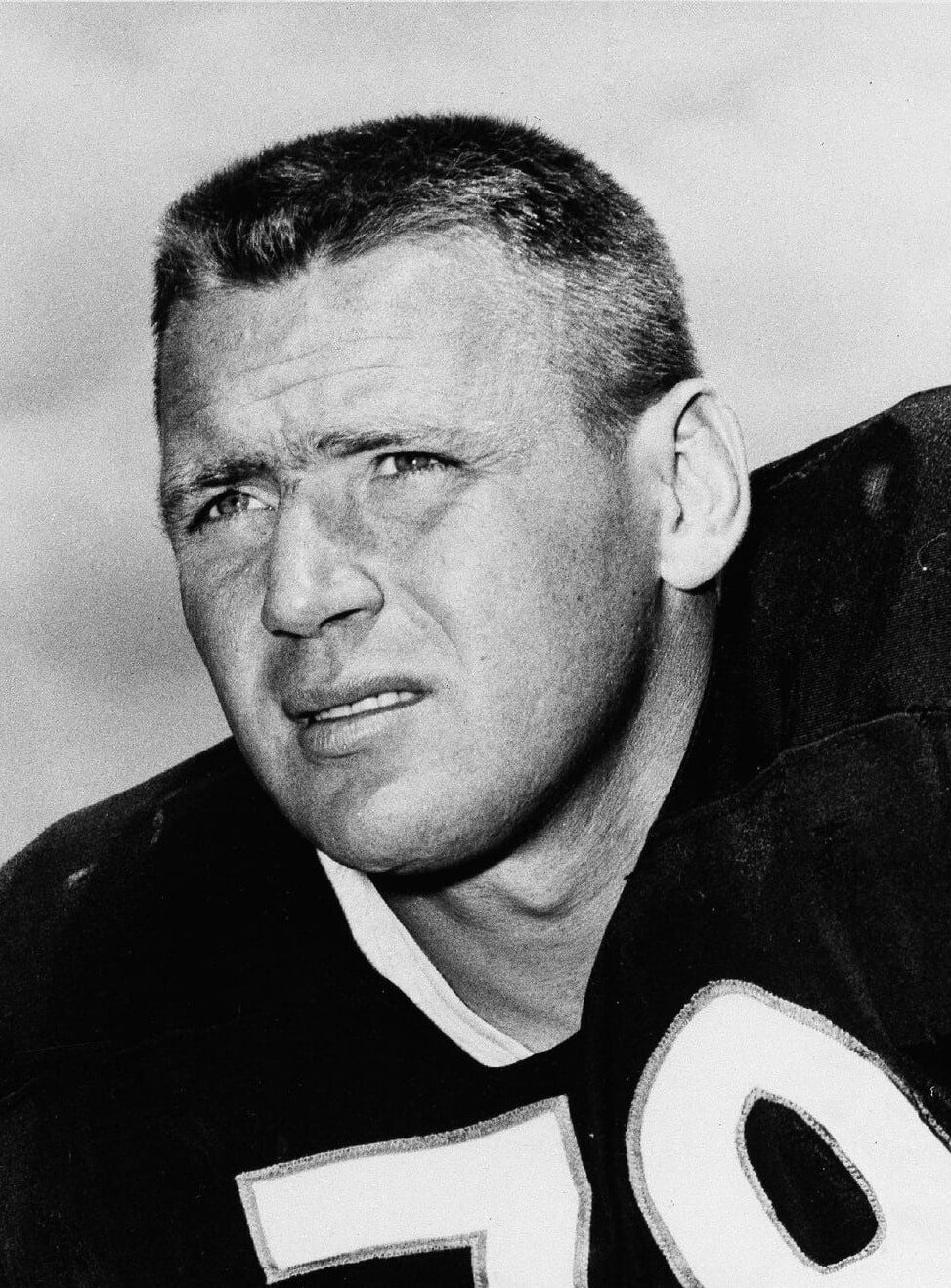
Stan Jones
Inducted:
1991
Player Stats
6 ft 1 in (1.85 m)
252 lb (114 kg)
Born:
November 24, 1931
Altoona, Pennsylvania, U.S.
Died:
May 21, 2010
Broomfield, Colorado, U.S.
Position:
Guard
Defensive tackle
College:
Maryland (1951–1953)
Stan Jones was one of the NFL’s most dependable and dominant linemen, known for his strength, intelligence, and versatility. Initially an offensive guard for the Chicago Bears, Jones later transitioned to defensive tackle, excelling on both sides of the ball with rare adaptability. His powerful blocking and technical precision made him a key figure in the Bears’ offensive line throughout the 1950s, while his defensive prowess earned him league-wide respect in his later years.
A seven-time Pro Bowl selection and multiple-time All-Pro, Jones set a standard for consistency and toughness. He was also among the first players to emphasize year-round strength training, helping pioneer modern conditioning methods in professional football. Inducted into the Pro Football Hall of Fame in 1991, Jones is remembered as a complete lineman whose work ethic, versatility, and innovation helped shape the evolution of NFL line play.
Jones' Awards and Honors
- 3× Super Bowl champion (XXVII, XXVIII, XXX)
- 2014 NFL Executive of the Year
- Oversaw the opening of AT&T Stadium (2009)
- Helped drive NFL’s television and sponsorship expansion
- Owner of one of the world’s most valuable sports franchises
NFL Records
- Only owner serving simultaneously as team president and general manager
- Instrumental in building the Cowboys into a global sports brand
- Played key role in shaping NFL’s modern financial and media structure
NFL Teams
Chicago Bears (1954–1965)
Washington Redskins (1966)
NFL Draft:
1953: 5th round, 55th overall pick
Chicago Bears
Number Worn:
78, 73
NFL Stats
Seasons:
13 (1954–2066)
Games Played:
157
Games Started:
127
Fumble recoveries:
7
Sacks:
14
Sterling Sharpe
Inducted:
2025

Player Stats
6 ft 0 in (1.83 m)
207 lb (94 kg)
Born:
April 6, 1965
Chicago, Illinois, U.S.
Position:
Wide receiver
College:
South Carolina (1983–1987)
Sterling Sharpe was one of the most dominant wide receivers of his era, delivering elite production during a brilliant but brief NFL career with the Green Bay Packers. Drafted in 1988, he immediately became the focal point of the offense, using his strength, precision routes, and dependable hands to overwhelm defenses. Sharpe led the league in receptions three times and receiving touchdowns twice, earning five Pro Bowl selections and three First-Team All-Pro honors.
His 1992 and 1993 seasons remain two of the most productive back-to-back campaigns ever by a receiver. A severe neck injury ended his career after the 1994 season, but his impact on the game endured through his remarkable consistency and competitive edge. Sharpe’s career helped set the stage for Green Bay’s offensive resurgence, and his standard of excellence influenced future generations of Packers receivers. He was inducted into the Pro Football Hall of Fame in 2025.
Sharpe's Awards and Honors
- 3× First-team All-Pro (1989, 1992, 1993)
- 5× Pro Bowl (1989, 1990, 1992–1994)
- 3× NFL receptions leader (1989, 1992, 1993)
- NFL receiving yards leader (1992)
- 2× NFL receiving touchdowns leader (1992, 1994)
NFL Records
- First receiver in NFL history with back-to-back seasons of 100+ receptions (1992–1993)
- Set Packers’ single-season receptions record (112 in 1993)
- Only player to lead the NFL in receptions three times between 1970–2020
- One of the fastest players in league history to reach 500 career catches
NFL Teams
Green Bay Packers (1988–1994)
NFL Draft:
1988: 1st round, 7th overall pick
Green Bay Packers
Number Worn:
84
NFL Stats
Seasons:
7 (1988–1994)
Games Played:
112
Game Started:
112
Receptions:
595
Receiving yards:
8,134
Receiving touchdowns:
65
Steve Atwater
Inducted:
2020

Player Stats
Stats:
6 ft 3 in (1.91 m)
218 lb (99 kg)
Born:
October 28, 1966
Chicago, Illinois, U.S.
Position:
Safety
College:
Arkansas (1985–1988)
Steve Atwater was one of the most feared safeties of his era, known for his hard-hitting presence in the Denver Broncos' secondary. Drafted 20th overall in 1989, he quickly became a defensive anchor, earning a reputation as a smart, physical, and fearless player.
Atwater played 10 seasons with the Broncos and one with the Jets, recording over 1,000 tackles in his career.
He played a key role in helping Denver win back-to-back Super Bowls (XXXII and XXXIII), delivering game-changing hits and crucial plays. Perhaps most famously, he stopped 260-pound Christian Okoye in a head-on collision that became an NFL highlight classic.
Inducted into the Pro Football Hall of Fame in 2020, Atwater's legacy lives on as one of the toughest safeties to ever play the game.
Atwater's Awards and Honors
- 2× Super Bowl champion (XXXII, XXXIII)
- 2× First-team All-Pro (1991, 1992)
- Second-team All-Pro (1996)
- 8× Pro Bowl (1990–1996, 1998)
- NFL 1990s All-Decade Team
- PFWA All-Rookie Team (1989)
- Denver Broncos Ring of Fame
- 2× First-team All-SWC (1986, 1988)
- Second-team All-SWC (1987)
NFL Records
- 1,000+ career tackles
- Started every game in his first 9 seasons
- Part of back-to-back Super Bowl champions (1997, 1998)
- Known for one of the hardest hits in NFL history (vs. Okoye, 1990)
NFL Teams
Denver Broncos (1989–1998)
New York Jets (1999)
NFL draft:
1989: 1st round, 20th pick
Denver Broncos
Numbers Worn:
27
NFL Stats
Seasons:
11
Games Played:
167
Total tackles:
1,188
Interceptions:
24
Interception Yards:
408
Touchdowns:
1
Sacks:
5
Forced fumbles:
6
Fumble recoveries:
8
Steve Hutchinson
Inducted:
2020

Player Stats
6 ft 5 in (1.96 m)
313 lb (142 kg)
Born:
November 1, 1977
Fort Lauderdale, Florida, U.S.
Position:
Guard
College:
Michigan (1996–2000)
Steve Hutchinson, born November 1, 1977, in Fort Lauderdale, Florida, was one of the most dominant guards of his era. Over a 12-year NFL career with the Seattle Seahawks, Minnesota Vikings, and Tennessee Titans, he became the model of power, technique, and consistency on the offensive line.
Hutchinson was a key part of Seattle’s run to Super Bowl XL, paving the way for one of the league’s top rushing attacks. Later in Minnesota, he continued his excellence by protecting quarterbacks and opening lanes for star running back Adrian Peterson. Known for his durability and leadership, Hutchinson started 169 career games and earned a reputation as one of the toughest interior linemen in football.
His efforts were recognized with seven Pro Bowl selections, five First-Team All-Pro honors, and a spot on the NFL’s 2000s All-Decade Team. Inducted into the Pro Football Hall of Fame in 2020, Hutchinson is remembered as one of the greatest guards in NFL history.
Hutchinson's Awards and Honors
- 5× First-team All-Pro (2003, 2005, 2007–2009)
- 2× Second-team All-Pro (2004, 2006)
- 7× Pro Bowl (2003–2009)
- First-team All-American (1999)
- NFL 2000s All-Decade Team
- Big Ten Offensive Lineman of the Year (2000)
NFL Records
- Key blocker in Shaun Alexander’s 2005 MVP season with Seattle
- Anchored Vikings offensive line during Adrian Peterson’s record-setting years
- Regarded as one of the best guards of his generation
NFL Teams
Seattle Seahawks (2001–2005)
Minnesota Vikings (2006–2011)
Tennessee Titans (2012)
NFL Draft:
2001: 1st round, 17th overall pick
Seattle Seahawks
Number Worn:
76, 73
NFL Stats
Seasons:
12 (2001–2012)
Games Played:
169
Games Started:
169
Fumble recoveries:
6
Super Bowl Appearances:
1 (Super Bowl XL with Seahawks)
Steve Largent
Inducted:
1995

Player Stats
5 ft 11 in (1.80 m)
187 lb (85 kg)
Born:
September 28, 1954
Tulsa, Oklahoma, U.S.
Position:
Wide receiver
College:
Tulsa (1972–1975)
Steve Largent was the heart and soul of the Seattle Seahawks and one of the most precise and reliable wide receivers in NFL history. Known for his sharp route running, soft hands, and consistency, he transformed from a fourth-round draft pick into one of the league’s most productive pass catchers. Over 14 seasons, Largent became the first player in NFL history to record 100 touchdown receptions and retired as the league’s all-time leader in receptions, receiving yards, and touchdowns.
His professionalism and quiet competitiveness set the standard for future generations of receivers. A seven-time Pro Bowler and 1988 Walter Payton Man of the Year, Largent’s contributions extended beyond the field, where he later served in public office. He was inducted into the Pro Football Hall of Fame in 1995, forever remembered as the player who put the Seattle Seahawks on the NFL map.
Largent's Awards and Honors
- NFL Man of the Year (1988)
- First-team All-Pro (1985)
- 4× Second-team All-Pro (1978, 1979, 1984, 1987)
- 7× Pro Bowl (1978, 1979, 1981, 1984–1987)
- 2× NFL receiving yards leader (1979, 1985)
- NFL 1980s All-Decade Team
NFL Records
- Retired as NFL’s all-time leader in receptions, yards, and touchdowns
- First player to reach 100 receiving touchdowns
- First Seattle Seahawks player inducted into the Hall of Fame
NFL Teams
Houston Oilers (1976)
Seattle Seahawks (1976–1989)
NFL Draft:
1976: 4th round, 117th overall pick
Houston Oilers
Number Worn:
80
NFL Stats
Seasons:
14 (1976–1989)
Games Played:
200
Game Started:
197
Receptions:
819
Receiving yards:
13,089
Receiving touchdowns:
100
Rushing Yards:
83
Rushing touchdowns:
1
Steve McMichael
Inducted:
2024

Player Stats
6 ft 2 in (1.88 m)
270 lb (122 kg)
Born:
October 17, 1957
Houston, Texas, U.S.
Died:
April 23, 2025
Joliet, Illinois, U.S.
Position:
Defensive tackle
College:
Texas (1975–1980)
Steve McMichael was a dominant defensive tackle known for his toughness, relentlessness, and leadership on the field. Playing the majority of his career with the Chicago Bears from 1981 to 1993, McMichael was a key component of the legendary 1985 Bears defense, helping the team capture Super Bowl XX in one of the most dominant seasons in NFL history.
Nicknamed “Mongo,” he combined size, strength, and agility to disrupt opposing offenses, earning a reputation as both a fierce pass rusher and run-stopper. McMichael was also respected for his leadership in the locker room, serving as a captain during Chicago’s most successful years. After retiring, he remained involved in football as a coach and broadcaster.
Known for his intensity on and off the field, Steve McMichael was inducted into the Pro Football Hall of Fame as part of the 1985 Bears’ recognition in various team honors, celebrated as a cornerstone of one of the NFL’s greatest defenses.
McMichael's Awards and Honors
- Super Bowl champion (XX)
- 2× First-team All-Pro (1985, 1987)
- 2× Second-team All-Pro (1986, 1991)
- 2× Pro Bowl (1986, 1987)
- NFL 1980s All-Decade Team
NFL Records
- Key member of the 1985 Super Bowl-winning Bears defense
- Known for exceptional strength, toughness, and leadership
- Nicknamed “Mongo” for his fierce playing style
NFL Teams
New England Patriots (1980)
Chicago Bears (1981–1993)
Green Bay Packers (1994)
NFL Draft:
1980: 3rd round, 73rd overall pick
New England Patriots
Number Worn:
76, 90
NFL Stats
Seasons:
13 (1981–1993)
Games Played:
213
Game Started:
171
Total tackles:
849
Sacks:
95
Safeties:
3
Forced fumbles:
16
Fumble recoveries:
17
Interceptions:
3
Steve Owen
Inducted:
1966

Player Stats
5 ft 10 in (1.78 m)
237 lb (108 kg)
Born:
April 21, 1898
Cleo Springs, Territory of Oklahoma, U.S.
Died:
May 17, 1964
Oneida, New York, U.S.
Position:
Tackle
Guard
Coach
College:
Oklahoma A&M College
Phillips (OK)
Steve Owen was one of the foundational figures in NFL history, known for his brilliance as both a player and a coach. He spent his entire professional career with the New York Giants, first as a rugged lineman from 1926 to 1931, and then as head coach from 1931 to 1953. As a coach, Owen guided the Giants to two NFL Championships (1934, 1938) and six title-game appearances, establishing New York as one of the league’s premier franchises.
He was a tactical innovator, introducing defensive formations such as the “umbrella defense,” which became a model for future schemes. Owen’s teams were renowned for their discipline, toughness, and defensive mastery, traits that reflected his own playing style. During his 23 years at the helm, he became synonymous with the Giants’ identity and stability.
Steve Owen was inducted into the Pro Football Hall of Fame in 1966, honored as a pioneer who helped shape the early evolution of professional football.
Owen's Awards and Honors
- NFL champion (1927)
- First-team All-Pro (1927)
- NFL 1920s All-Decade Team
- 2× NFL champion (1934, 1938)
- Giants career wins record (153)
- New York Giants Ring of Honor
NFL Records
- Developed the “umbrella defense” used by future coaches
- Longest-tenured head coach in Giants history
- Key architect of early NFL defensive football
NFL Teams
As Player-
New York Giants (1926–1931, 1933)
As Coach-
New York Giants (1930–1953)
Number Worn:
9, 36, 44, 50, 12, 55, 6
NFL Stats
As Player-
Seasons:
9 (1924–1933)
Games Played:
97
Games Started:
83
Head coaching record-
Regular season:
NFL: 153–100–17 (.598)
CFL: 21–27–3 (.441)
Postseason:
NFL: 2–8 (.200)
CFL: 0–4 (.000)
Career:
NFL: 155–108–17 (.584)
CFL: 21–31–3 (.409)
"Gear Up for Game Day Like a Pro!"
Don’t just watch history—be a part of it. Rep your colors with authentic NFL jerseys, hats, and limited-edition varsity jackets. High-quality gear for the die-hard fan.
Score Your Gear Now – Official NFL Shop








NFL Hall of Fame
The NFL Hall of Fame, also known as the Pro Football Hall of Fame, is where the legacies of NFL legends and their contributions to football history are celebrated. Located in Canton, Ohio, this iconic institution honors the greatest players, coaches, and contributors through its annual Hall of Fame enshrinement and NFL Hall of Fame ceremony. From the NFL Hall of Fame Class of 2025 and its nominees to the unforgettable Hall of Fame speeches, each year brings new highlights and moments that capture the spirit of the game. Featuring Hall of Fame players, coaches, and even legendary quarterbacks, the Hall showcases the rich history of football with exhibits, stories of remarkable careers, and events like the NFL Hall of Fame game. A visit to the Hall is a journey through the most iconic NFL greats, their achievements, and the unforgettable Hall of Fame moments that define the sport we love. 🏈✨