
The Philadelphia Athletics history is one of the most celebrated stories in Major League Baseball. Founded in 1901, the Athletics built their reputation with early championships, legendary players, and a strong fan base. The legacy of Philadelphia Athletics baseball continues to inspire fans and remains a cornerstone in MLB’s storied past.
Established
1901
City
Philadelphia – Kansas City – Oakland - Sacramento
League History
2000 – Present / Major League Baseball
1901 – 1999 / American League
Team History
2025 - Present / Athletics
1968 – 2025 / Oakland Athletics
1955 – 1967 / Kansas City Athletics
1901 – 1954 / Philadelphia Athletics
Nickname
Athletics – The Philadelphia Athletics have been a part of Major League Baseball since 1901, and their nickname has become synonymous with the city's long-standing baseball tradition. But where did this iconic moniker come from? Let’s examine the origins of one of MLB’s most storied franchises.
Philadelphia Athletics Origin
The name “Athletics” was first used by Connie Mack when he established his original team in 1883 as part of the American Association, which later became known as The American League in 1901. At that time, Mack wanted to emphasize that his players were well-rounded athletes who could play multiple offensive and defense positions; thus, Athletics was born! It didn't hurt that it also had an alliterative quality - making it easier for fans (and sportswriters) to remember!
Mack moved his franchise to Philadelphia before the 1904 season after spending 20 years managing teams based in Cincinnati and Pittsburgh, respectively. After settling into their new hometown, they quickly became one of MLB's premier teams, winning five World Series championships between 1910 and 1930 under Mack's leadership. This earned them recognition across America as "the greatest dynasty in professional sports."
Even though there have been some rough patches over recent decades for Philly fans (including three straight last-place finishes from 1998–2000), we can always count on our beloved A's being around each spring, bringing us hope for another championship run! So next time you cheer on your favorite team at Citizens Bank Park or anywhere else, show your support by shouting those two magical words: Go A'S!!
Championship
World Series 5
1989, 1974, 1973, 1972, 1930, 1929, 1913, 1911, 1910
Stadium
2025 - Present / Sutter Health Park
*Oakland*
2019 – Present / RingCentral Coliseum
1968 – 2018 / Oakland–Alameda County Coliseum
2012 – 2015 / O.co Coliseum
2011 / Overstock.com Coliseum
2004 – 2008 / McAfee Coliseum
1998 – 2004 / Network Associates Coliseum
*Kansas City*
1955 – 1967 / Municipal Stadium
*Philadelphia*
1909 – 1954 / Shibe Park
1953 – 1954 / Connie Mack Stadium
1901 – 1908 / Columbia Park
Owner
2016 - Present / John J. Fisher
2005 – 2015 / Lewis Wolff
1995 – 2005 / Steve Schott and Ken Hofmann
1981 – 1995 / Walter Haas
1960 – 1981 / Charlie Finley
1954 – 1960 / Arnold Johnson
1922 – 1954 / Connie Mack
1901 – 1922 / Ben Shibe
- 1901
- 1910
- 1911 - 1913
- 1929
- 1930
- 1954
-
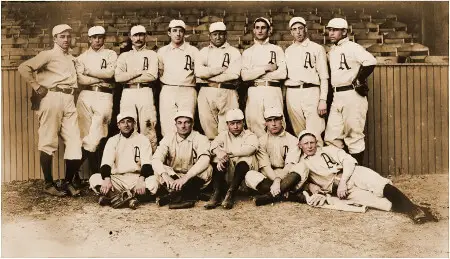
Philadelphia Athletics Team Formation
Philadelphia had a new franchise created to compete with the National League’s Philadelphia Phillies. Phillies minority owner Ben Shibe as well as others to invest in the team, which would be called the Philadelphia Athletics. Mack himself bought a 25 percent interest, while the remaining 25 percent was sold to Philadelphia sportswriters Sam Jones and Frank Hough. -
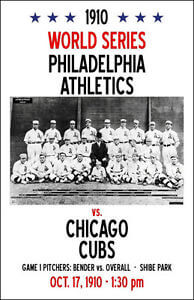
World Series Winner 1910
The 1910 World Series featured the Philadelphia Athletics and the Chicago Cubs, with the Athletics winning in five games to earn their first championship. -
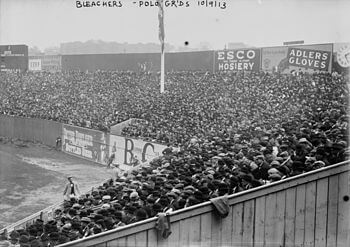
World Series Winner 1911 – 1913
World Series – 1913 In the 1913 World Series, the Philadelphia Athletics beat the New York Giants four games to one. World Series – 1911 In the 1911 World Series, the Philadelphia Athletics beat the New York Giants four games to two. -

World Series Winner 1929
In the 1929 World Series, the Philadelphia Athletics beat the Chicago Cubs decisively in five games. -
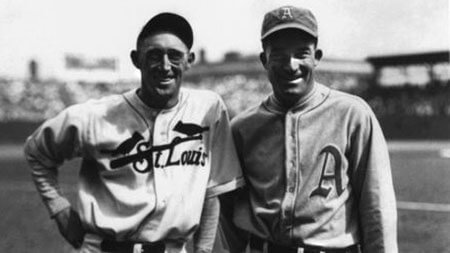
World Series Winner 1930
In the 1930 World Series, the Philadelphia Athletics defeated the St. Louis Cardinals in six games, 4–2. Philly’s pitching ace Lefty Grove, and George Earnshaw, No. 2 man in Mr. Mack’s rotation, won two games apiece. Earnshaw also pitched seven scoreless innings as Game 5 starter but ended up with a no-decision as Grove relieved him in the eighth and ... -
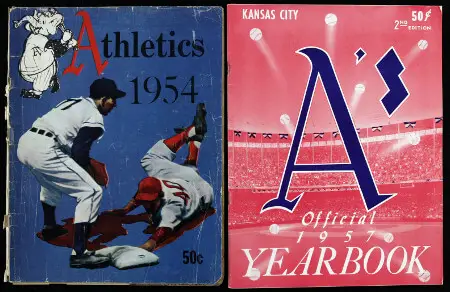
Heading to Kansas City
By the summer of 1954, it was obvious that the A’s were on an irreversible slide into bankruptcy. Earle and Roy decided that there was no choice but to sell their father’s beloved team, and it was with great sorrow that the old man gave his approval for the sale. Although several offers were put forward by Philadelphia interests, American ...
To qualify as the greatest player for this team, the player must have played one season for this team. If not, we will remove the player.
* verifies that player has played for this team as an added player by a fan.
Philadelphia Athletics History
The Philadelphia Athletics history, now carried forward by the Oakland Athletics, stands as one of the richest legacies in Major League Baseball. Founded in 1901, the franchise quickly became a powerhouse, winning nine World Series titles and 15 American League pennants. The impact of Philadelphia Athletics baseball was felt far beyond the diamond, as the team pioneered innovations such as night games and interleague exhibitions, reshaping the sport for future generations.
The foundation of the Philadelphia Athletics history was built under legendary manager Connie Mack, who led the team from 1901 to 1950. During his unmatched tenure, Mack guided the Athletics to five World Series championships in 1910, 1911, 1913, 1929, and 1930. Known for his calm demeanor and sharp strategy, Mack turned the Athletics into a model franchise. His influence went beyond wins and losses, as rival teams began copying his managerial style, making him one of the most influential figures in Philadelphia Athletics baseball and in MLB history as a whole.
The team also produced many Hall of Fame players who shaped baseball’s golden eras. Stars like Jimmie Foxx, Lefty Grove, Mickey Cochrane, and Al Simmons all wore the Philadelphia uniform and powered the franchise to dominance in the 1920s and 1930s. Their talent and Mack’s leadership cemented the Athletics as one of the most feared teams in the league during that period. Even during leaner years, the club remained central to baseball’s growth and popularity in Philadelphia and across America.
After years of struggles following their golden age, the Athletics relocated to Kansas City in 1955 and later to Oakland in 1968. Still, the Philadelphia Athletics history remains a cornerstone of the franchise’s identity, celebrated by baseball historians and fans who remember the team’s legacy in Pennsylvania. The Philadelphia years laid the groundwork for everything the franchise achieved afterward.
Athletics Achievements
When it comes to achievements, the Philadelphia Athletics are remembered not only for their nine World Series titles but also for producing 38 Hall of Fame inductees connected to the franchise. They were innovators, champions, and cultural icons whose influence extended beyond their city. Their five championships under Connie Mack remain among the most iconic dynasties in baseball.
Today, the Philadelphia Athletics history lives on as a testament to resilience, innovation, and success. Though the team moved on to new homes, the story of Philadelphia Athletics baseball continues to inspire generations of fans and players. Their lasting legacy in MLB ensures that the Philadelphia era will always be honored as one of the sport’s defining chapters.
Sports Fan Products






Retired Number
9 / Reggie Jackson
24 / Rickey Henderson
27 / Catfish Hunter
34 / Rollie Fingers
34 / Dave Stewart
42 / Jackie Robinson
43 / Dennis Eckersley
– / Walter A. Haas, Jr.
*Blue is this team’s history