
Search By First Name of the HOFers
Joe Medwick
Inducted:
1968

Player Details
5-10, 187lb (178cm, 84kg)
Born:
November 24, 1911
Carteret, New Jersey, U.S.
Died:
March 21, 1975
St. Petersburg, Florida, U.S.
Position:
Left fielder
College:
NA
Joe Medwick was one of baseball’s most consistent hitters in the 1930s and a cornerstone of the legendary "Gashouse Gang" St. Louis Cardinals. A powerful right-handed batter with a smooth swing, Medwick won the National League Triple Crown in 1937 — leading the league in batting average, home runs, and RBIs — a feat no NL player has repeated since. Nicknamed "Ducky," he tallied 10 straight seasons batting .300 or better and was a relentless run producer with a strong arm in left field.
His aggressive playstyle and knack for big hits made him a postseason force, including a World Series title in 1934. Medwick finished his career with over 2,400 hits and 1,300 RBIs. His consistency, offensive firepower, and competitive fire secured his place among the game's greats. He was inducted into the Hall of Fame in 1968.
Medwick's Awards and Records
- 10× All-Star (1934–1942, 1944)
- World Series champion (1934)
- NL MVP (1937)
- Triple Crown (1937)
- NL batting champion (1937)
- NL home run leader (1937)
- 3× NL RBI leader (1936–1938)
- Louis Cardinals Hall of Fame
MLB Records
- Last National League Player to Win the Triple Crown (1937)
- Only Cardinals Player to Win the Triple Crown
- One of Just 10 Players in MLB History to win a Triple Crown
- Led National League in Hits, RBIs, and Total Bases in 1937
- 540 Doubles rank among the top 50 in MLB history
- Multiple Seasons Leading the NL in Extra-Base Hits
MLB Teams:
St. Louis Cardinals (1932–1940)
Brooklyn Dodgers (1940–1943)
New York Giants (1943–1945)
Boston Braves (1945)
Brooklyn Dodgers (1946)
St. Louis Cardinals (1947–1948)
Number Worn:
7
MLB Stats
Games Played:
2,003
Batting Average:
.324
Hits:
2,471
Home Runs:
205
RBIs:
1,383
Runs:
1,198
Doubles:
540
Triples:
113
Stolen Bases:
52
On-Base Percentage (OBP):
.362
Slugging Percentage (SLG):
.505
OPS:
.867
Joe Tinker
Inducted:
1946

Personal Details
5-9, 175lb (175cm, 79kg)
Born:
July 27, 1880
Muscotah, Kansas, U.S.
Died:
July 27, 1948
Orlando, Florida, U.S.
Position:
Shortstop
Manager
College:
Chicago Cubs
Joe Tinker was a key part of one of baseball’s most famous double-play combinations: Tinker to Evers to Chance. As the Chicago Cubs’ shortstop in the early 1900s, Tinker was a sharp fielder with strong instincts and solid bat control.
He helped lead the Cubs to four National League pennants and back-to-back World Series titles in 1907 and 1908. Known more for his glove than his bat, Tinker still contributed with timely hitting and base-stealing. He later served as a player-manager and was instrumental in the growth of baseball in Florida.
Tinker was elected to the Hall of Fame in 1946 by the Veterans Committee, largely for his role in the Cubs’ golden era. His name remains iconic in baseball lore thanks to the famous poem celebrating the Cubs’ infield trio.
Tinker's Awards and Records
- 2× World Series champion (1907, 1908)
- Federal League champion (1915)
- Chicago Cubs Hall of Fame
- Inducted into National Baseball Hall of Fame (1946)
- 4× National League Pennant Winner (1906, 1907, 1908, 1910)
- Managed the Chicago Cubs (1916)
- Part of legendary “Tinker to Evers to Chance” double-play trio
- Featured in the poem "Baseball’s Sad Lexicon" by Franklin Pierce Adams
- Instrumental in developing spring training in Florida
MLB Teams:
As Player
Chicago Orphans / Cubs (1902–1912)
Cincinnati Reds (1913)
Chicago Chi-Feds / Whales (1914–1915)
Chicago Cubs (1916)
As Manager
Cincinnati Reds (1913)
Chicago Cubs (1916)
Numbers Worn:
8
MLB Stats
Seasons:
15 (1902–1916)
Games Played:
1,802
Batting Average:
.262
Hits:
1,690
Home Runs:
31
RBIs:
774
Stolen Bases:
336
John Clarkson
Inducted:
1963

Player Details
5-10, 155lb (178cm, 70kg)
Born:
July 1, 1861
Cambridge, Massachusetts, U.S.
Died:
February 4, 1909
Belmont, Massachusetts, U.S.
Position:
Pitcher
College:
NA
John Clarkson was one of the 19th century’s most dominant pitchers, known for his stamina, control, and competitiveness. Pitching from 1882 to 1894, Clarkson won 328 career games, making him one of only a handful of pitchers in MLB history to surpass the 300-win mark. In 1885, he delivered one of the greatest seasons ever by going 53–16 with a 1.85 ERA and 308 strikeouts.
A fierce competitor with a brilliant curveball and sharp mind, Clarkson threw six 40-win seasons and led the league in wins three times. He also pitched the second recorded no-hitter in National League history. Clarkson was inducted into the Baseball Hall of Fame in 1963, long after his death, finally receiving recognition as one of the game’s earliest legends.
Clarkson's Awards and Records
- Triple Crown (1889)
- Pitched a no-hitter on July 27, 1885
- Chicago Cubs Hall of Fame
- Known for mental toughness and pitching intelligence
MLB Records
- 3× NL wins leader (1885, 1887, 1889)
- 3× NL strikeout leader (1885, 1887, 1889)
- NL ERA leader (1889)
- One of the first pitchers to consistently use a curveball as a primary weapon
- 53 wins in a single season (1885) – one of the highest in MLB history
- Pitched a no-hitter on July 27, 1885 – second in NL history
- 328 career wins – among top 20 all-time in MLB history
MLB Teams:
Worcester Ruby Legs (1882)
Chicago White Stockings (1884–1887)
Boston Beaneaters (1888–1892)
Cleveland Spiders (1892–1894)
MLB Stats
Seasons:
12 (1882–1894)
Games Pitched:
531
Wins–Losses:
328–178
ERA:
2.81
Strikeouts:
1,978
Shutouts:
37
Innings Pitched:
4,536
Complete Games:
485
John Henry Lloyd
Inducted:
1977

Player Details
5-11, 180lb (180cm, 81kg)
Born:
April 25, 1884
Palatka, Florida, U.S.
Died:
March 19, 1964
Atlantic City, New Jersey, U.S.
Position:
Shortstop
College:
NA
John Henry “Pop” Lloyd is widely regarded as one of the greatest shortstops in baseball history, celebrated for his skill, leadership, and integrity. Playing from 1906 to 1932 in the Negro Leagues and other professional circuits, Lloyd combined graceful defense with consistent hitting that made him a legend on and off the field.
Known for his smooth glove and sure hands, he anchored infields with flawless range and reliability. At the plate, he posted a career batting average near .340, often excelling in clutch moments. His leadership extended beyond performance, as he was respected for his character and sportsmanship, earning the nickname “The Gentleman of Baseball.” Lloyd played for several prominent teams, including the Cuban X-Giants, Lincoln Giants, and Hilldale Club, often serving as captain. Revered internationally, he became a role model for future generations.
Lloyd was inducted into the Baseball Hall of Fame in 1977, honoring his contributions as a pioneer and elite shortstop.
Lloyd's Awards and Records:
- National Baseball Hall of Fame induction: 1977
- Cuban Baseball Hall of Fame induction: 1939
- Widely recognized as one of the greatest Negro League shortstops
- Respected leader and team captain across multiple franchises
Career Records:
- Nicknamed the “Gentleman of Baseball” for sportsmanship and leadership
- Regularly batted over .300 in Negro League and Cuban League play
- Revered internationally as one of the game’s finest shortstops
Career Teams:
Columbus Buckeyes (1921)
Hilldale Club (1923)
Harlem Stars (1931)
Career Stats:
Career:
1906-1931
Games Played:
433
Batting average:
.349
Hits:
569
Home runs:
16
Runs batted in:
308
Managerial record:
253–236–10
Winning (%):
.517
John Montgomery Ward
Inducted:
1964

Player Details
5-9, 165lb (175cm, 74kg)
Born:
March 3, 1860
Bellefonte, Pennsylvania, U.S.
Died:
March 4, 1925
Augusta, Georgia, U.S.
Position:
Shortstop
Second baseman
Pitcher
College:
Pennsylvania State University
John Montgomery “Monte” Ward was one of baseball’s most versatile pioneers and a fierce advocate for players’ rights. Beginning his major league career in 1878 at age 18, he excelled as both a dominant pitcher and an elite infielder. In his first two seasons, he won a total of 87 games—including a rare 47‑win season—and threw baseball's second-ever perfect game. After an arm injury, he transitioned to shortstop, where he remained consistently excellent and stole over 500 bases across his career.
A brilliant student, Ward earned degrees in law and political science and in 1885 helped organize the first players’ union, later founding the Players League in 1890. He finished his on-field career with more than 2,100 hits and 540 steals, and balanced roles as player-manager and executive. His impact on and off the field led to his Hall of Fame election in 1964, celebrating both a brilliant playing career and a legacy of player empowerment.
Ward's Awards and Records
- NL wins leader (1879)
- NL ERA leader (1878)
- NL strikeout leader (1879)
- 2× NL stolen base leader (1887, 1892)
- Pitched a perfect game on June 17, 1880
MLB Records
- Second-ever perfect game in MLB history
- Over 500 career stolen bases, among 19th-century leaders
- One of only two players in MLB history with: 100+ career pitching wins and 2,000+ hits as a position player
- One of the earliest two-way stars—dominant pitcher and top-tier shortstop
- Pitched 500+ innings in a season (twice)
MLB Teams:
Providence Grays (1878–1882)
New York Gothams / Giants (1883–1889)
Brooklyn Ward's Wonders (1890)
Brooklyn Grooms (1891–1892)
New York Giants (1893–1894)
MLB Stats
Games played:
1,830
Home runs:
26
Runs batted in:
867
Runs scored:
1,410
Stolen bases:
540
Hits:
2,100
Batting average:
.275
Strikeouts (pitching):
920
Pitching record:
164–103, 2.10 ERA, over 2,460 innings
Johnny Evers
Inducted:
1946

Personal Details
5-9, 125lb (175cm, 56kg)
Born:
Born: July 21, 1881
Troy, New York, U.S.
Died:
March 28, 1947
Albany, New York, U.S.
Position:
Second baseman
College:
NA
Johnny Evers was a brilliant second baseman known for his sharp mind, defensive skill, and fiery competitiveness.
A key part of the legendary “Tinker to Evers to Chance” double-play trio with the Chicago Cubs, Evers helped lead the team to three National League pennants and two World Series titles in the early 1900s. Though not a power hitter, Evers got on base consistently and was a smart baserunner, often outwitting opponents with his knowledge of the game.
He played 18 seasons and later managed the Cubs and Braves, winning another title as a manager in 1914. Evers shared the 1914 Chalmers Award (the precursor to the MVP) and was respected as one of the most cerebral players of his era.
He was inducted into the Baseball Hall of Fame in 1946 by the Veterans Committee.
Evers's Awards and Records
- 3× World Series champion (1907, 1908, 1914)
- NL MVP (1914)
- Chicago Cubs Hall of Fame
- Inducted into Baseball Hall of Fame (1946)
- 2× World Series Champion (player) – 1907, 1908 (Cubs)
- 1× World Series Champion (manager) – 1914 (Braves)
- 1914 Chalmers Award Winner (NL MVP equivalent)
- Key member of iconic "Tinker to Evers to Chance" trio
- Known for baseball intelligence and defensive excellence
- Chicago Cubs Hall of Fame
- Led NL in walks (1912)
- Stole 30+ bases in six different seasons
MLB Teams:
Chicago Orphans / Cubs (1902–1913)
Boston Braves (1914–1917)
Philadelphia Phillies (1917)
Chicago White Sox (1922)
Boston Braves (1929)
MLB Stats
Seasons:
18 (1902–1929)
Games Played:
1,784
Hits:
1,659
Batting Average:
.270
Runs Scored:
919
Home Runs:
12
RBIs:
538
Stolen Bases:
324
On-Base Percentage:
.356
World Series Titles:
2 (1907, 1908 as player; 1914 as player/manager)
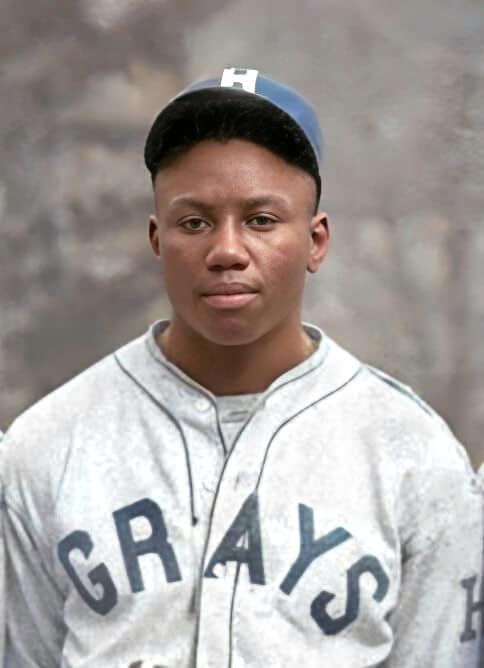
Josh Gibson
Inducted:
1972
Player Details
6-1, 220lb (185cm, 99kg)
Born:
December 21, 1911
Buena Vista, Georgia, U.S.
Died:
January 20, 1947
Pittsburgh, Pennsylvania, U.S.
Position:
Catcher
College:
NA
Josh Gibson was a legendary catcher in the Negro Leagues who dominated the plate from the early 1930s through the mid-1940s and was honored with induction into the Baseball Hall of Fame in 1972. A powerful hitter known for tape-measure home runs, he earned a reputation as one of the greatest sluggers of his time. His lifetime batting average—now officially recognized at .372—is the highest in baseball history.
With a blend of extraordinary power, consistency, and dramatic flair, Gibson defined excellence despite never having the chance to play in the major leagues. His performance against top competition—in league, exhibition, and barnstorming games—earned the deep respect of peers and fans alike. The belated integration of Negro League stats into MLB's official records in 2024 finally solidified his place atop batting average, slugging percentage, and OPS leaderboards, acknowledging the greatness that fans and historians long recognized.
Gibson's Awards and Records
- 12× All-Star (1933–1936, 1939, 1942–1944, 1946)
- 2× Negro World Series champion (1943, 1944)
- 3× Negro National League batting champion (1936, 1937, 1939)
- 2× Triple Crown (1936, 1937)
- Washington Nationals Ring of Honor
- Pittsburgh Pirates Hall of Fame
MLB Records
- .371 career batting average
- 176 career OPS
- .466 single season batting average (1943)
- .974 single season slugging percentage (1937)
- 474 single season OPS (1937)
MLB Teams:
Memphis Red Sox (1930)
Homestead Grays (1930–1931)
Pittsburgh Crawfords (1932–1936)
Homestead Grays (1937–1940, 1942–1946)
Number Worn:
20
MLB Stats:
Seasons:
16 (1930–1946)
Games Played:
510
Hits:
831
Batting Average:
.371
Runs:
467
Doubles:
109
Triples:
41
Home Runs:
171
Runs Batted In (RBI):
746
Stolen Bases:
22
On-Base Percentage (OBP):
.340
Judy Johnson
Inducted:
1975

Player Details
5-11, 150lb (180cm, 68kg)
Born:
October 26, 1899
Snow Hill, Maryland, U.S.
Died:
June 15, 1989
Wilmington, Delaware, U.S.
Position:
Third baseman
Shortstop
College:
NA
Judy Johnson, born October 26, 1899, in Snow Hill, Maryland, was one of the greatest third basemen in Negro League history. Famous for his flawless defense and quick instincts, he set the standard for the position with smooth glove work and a strong, accurate arm. Johnson played primarily for the Hilldale Club, later joining powerhouse teams like the Homestead Grays and Pittsburgh Crawfords, where he shared the field with some of the era’s greatest stars.
A reliable contact hitter, he consistently posted batting averages near or above .300, delivering clutch performances that helped his clubs remain perennial contenders. Known as a natural leader, he captained teams to success and earned respect across the league for his discipline and baseball intelligence. After retiring, he served as a scout, mentoring young talent and influencing the integration era. Inducted into the National Baseball Hall of Fame in 1975, Johnson is remembered as a defensive master and one of the game’s finest leaders.
Johnson's Awards and Records:
- 2× All-Star (1933, 1936)
- Negro World Series champion (1925)
- Team captain and mentor to younger players
Notable Achievements:
- Key leader of Hilldale’s 1925 championship team
- Set the standard for defensive excellence at third base in the Negro Leagues
- Widely regarded as the greatest defensive third baseman of the Negro Leagues
- Influenced integration-era baseball as a scout, discovering future MLB talent
Career Teams:
Hilldale Club (1921–1929, 1931–1932)
Homestead Grays (1929–1930, 1937)
Pittsburgh Crawfords (1932–1936)
New York Cubans (1936)
Number Worn:
46
MLB Stats:
Career:
1921–1936
Games Played:
709
Batting Average:
.304
Hits:
809
Home Runs:
25
Runs:
467
RBIs:
457
"Every Inning is History. Every Fan is a Legacy"
From the crack of the bat to the final out, celebrate the heritage of the game. Whether you're chasing Cooperstown legends of today’s stars, find your official colors and wear the history of the diamond.
Shop the Official MLB Collection
MLB Hall of Fame
The MLB Hall of Fame is a revered institution dedicated to honoring the greatest contributions to baseball. Located in Cooperstown, New York, it serves as a shrine to the game's rich history and the legendary players who have left an indelible mark on the field. Each year, the Hall of Fame holds an induction ceremony that celebrates the newest members of its prestigious ranks, commonly referred to as the Hall of Fame class.
These ceremonies are significant events in the baseball calendar, drawing fans, players, and media worldwide to witness the acknowledgment of baseball's finest. The inductees are celebrated for their remarkable career achievements, which include outstanding statistics, memorable performances, and contributions that have shaped the game. The Hall recognizes players, managers, umpires, and contributors who have significantly impacted the sport.
Among the many iconic moments celebrated within the Hall are record-breaking home runs, historic games, and unforgettable plays that have become a part of baseball lore. Each inductee's journey to the Hall is a testament to their skill, perseverance, and dedication to the sport. The Hall of Fame also outlines the eligibility criteria, ensuring a fair and transparent selection process.
Visitors to the Hall can explore exhibits featuring historical contributions from various eras of baseball, showcasing memorabilia, photographs, and artifacts that tell the game's story. From famous inductees like Babe Ruth and Jackie Robinson to the more recent stars, the Hall preserves the legacy of these athletes, allowing future generations to appreciate their greatness.
In addition to the exhibits, the Hall of Fame hosts numerous events throughout the year, including educational programs and community outreach initiatives, to foster a love for baseball among young fans. The memorable speeches during induction ceremonies often reflect on the inductees' journeys, the challenges they faced, and their impact on their teams and the sport.
Ultimately, the MLB Hall of Fame celebrates excellence in baseball, a place where the past is remembered and the future is inspired. It is a vital part of baseball culture, ensuring that the stories of its greatest players are never forgotten and continue to resonate with fans worldwide.