
Search By First Name of the HOFers
Cal Hubbard
Inducted:
1976

Umpire Stats
6-3, 260lb (190cm, 117kg)
Born:
October 31, 1900
Keytesville, Missouri, U.S.
Died:
October 17, 1977
St. Petersburg, Florida, U.S.
Position:
Umpire
College:
Centenary (1922–1924)
Geneva (1925–1926)
Cal Hubbard, born October 31, 1900, in Keytesville, Missouri, holds a unique place in sports history as both an outstanding football player and a highly respected baseball umpire. After a Hall of Fame career as an NFL tackle, Hubbard transitioned to Major League Baseball, where he served as an umpire from 1936 to 1951.
Known for his commanding presence and keen judgment, Hubbard officiated in four World Series and three All-Star Games, earning widespread respect from players and managers alike. His fairness, authority, and ability to control the game made him one of the most influential umpires of his era. Beyond his work in the field, Hubbard played an important role in improving umpire positioning and mechanics, helping modernize the profession.
Inducted into the Baseball Hall of Fame in 1976, he remains the only person enshrined in both the Pro Football Hall of Fame and the Baseball Hall of Fame.
Hubbard's Awards and Honors
- Only individual inducted into both the Pro Football and Baseball Halls of Fame
- Instrumental in developing modern umpiring positioning
Notable Achievements
- Only dual Hall of Famer in NFL and MLB history
- Respected as one of the most authoritative umpires of his generation
- Helped professionalize and modernize umpire mechanics still used today
MLB Tenure
MLB Umpire (1936–1951)
MLB Stats
Umpiring Career:
1936–1951
World Series:
4 (1938, 1942, 1946, 1949)
All-Star Games:
3 (1939, 1944, 1951)
Candy Cummings
Inducted:
1939

Player Stats
5-9, 120 pounds
Born:
October 18, 1848
Ware, Massachusetts, U.S.
Died:
May 17, 1924
Toledo, Ohio, U.S.
Position:
Pitcher
Candy Cummings was a pioneering figure in 19th-century baseball, best known for inventing the curveball—a pitch that transformed the game.
He played six seasons from 1872 to 1877, compiling a 145–94 win-loss record with a 2.49 ERA over 242 games. Cummings pitched for teams like the New York Mutuals, Baltimore Canaries, and Hartford Dark Blues. On September 9, 1876, he became the first pitcher to throw two complete games in one day, winning both.
His innovation of the curveball, inspired by observing the flight of seashells, introduced a new strategic element to pitching. Beyond his playing career, Cummings served as the first president of the International Association for Professional Base Ball Players.
He was inducted into the Baseball Hall of Fame in 1939, recognized for his significant contributions to the sport.
Cummings' Awards and Honors
- Inducted into the Baseball Hall of Fame (1939)
- Credited with inventing the curveball (circa 1867)
- First pitcher to throw two complete games in one day (September 9, 1876)
- First president of the International Association for Professional Base Ball Players
- Pitched 241 complete games in 242 appearances
MLB Records
- First Pitcher to Throw Two Complete Games in One Day
- One of the First Recognized Professional Pitchers
- First President of the International Association
MLB Teams
New York Mutuals (1872)
Baltimore Canaries (1873)
Philadelphia White Stockings (1874)
Hartford Dark Blues (1875–1876)
Cincinnati Reds (1877)
MLB Stats
Seasons:
6 (1872-1877)
Win–Loss Record:
145–94
Earned Run Average (ERA):
2.49
Strikeouts:
259
Games Pitched:
242
Innings Pitched:
2,149.2
Complete Games:
241
Shutouts:
6
Walks:
111
WHIP:
1.228
Cap Anson
Inducted:
1939

Player Stats
Born:
April 17, 1852
Marshalltown, Iowa, U.S.
Died:
April 14, 1922
Chicago, Illinois, U.S.
Position:
First baseman
Cap Anson was one of baseball’s earliest superstars and a central figure in the sport’s development during the 19th century.
Playing 27 seasons from 1871 to 1897, primarily with the Chicago White Stockings (later the Colts), Anson was a dominant hitter and influential manager. He was the first player to surpass 3,000 career hits, finishing with 3,435.
Anson batted over .300 in 24 of his 27 seasons, showcasing remarkable consistency. As a manager, he led Chicago to six National League pennants and was among the first to reach 1,000 managerial wins.
His leadership and performance helped shape the professional game, and he was inducted into the Baseball Hall of Fame in 1939.
Anson's Awards and Honors
- Inducted into the Baseball Hall of Fame (1939)
- Led Chicago to six National League pennants in the 1880s
- Managed Chicago to six National League pennants during the 1880s
- Held the career record for games played, at-bats, runs, hits, and RBIs at the time of his retirement
- One of the earliest inductees into the National Baseball Hall of Fame (1939)
- Holds multiple Chicago Cubs franchise records, including most career hits and RBIs
MLB Records
- First player in Major League Baseball to officially record over 3,000 hits (3,435 career hits)
- All-time leader in RBIs upon retirement – 2,075, still among the top in MLB history
- 24 seasons with a batting average over .300 – among the most in MLB history
- 8× RBI leader in the National League (1880–1882, 1884–1886, 1888, 1891)
- 2× National League batting champion (1881, 1888)
- Led the National League in runs three times
- First MLB player to reach 3,000 career hits
- First player-manager to win 1,000 games in MLB history
- Second manager in MLB history to achieve 1,000 wins
MLB Teams
Rockford Forest Citys (1871)
Philadelphia Athletics (1872–1875)
Chicago White Stockings / Colts (1876–1897)
MLB Stats
Seasons:
22
Games Played:
2,276
Batting Average:
.334
Hits:
3,435
Home Runs:
97
Runs Batted In (RBI):
2,075
Runs Scored:
1,999
Stolen Bases:
277
On-Base Percentage (OBP):
.394
Slugging Percentage (SLG):
.447
OPS:
.841
Managerial Stats:
Managerial Record:
1,295–947
Winning Percentage:
.578
Carl Hubbell
Inducted:
1947

Player Stats
6-0, 170lb (183cm, 77kg)
Born:
June 22, 1903
Carthage, Missouri, U.S.
Died:
November 21, 1988
Scottsdale, Arizona, U.S.
Position:
Pitcher
Carl Hubbell, nicknamed “The Meal Ticket,” was a legendary left-handed pitcher who starred for the New York Giants from 1928 to 1943. Known for his masterful screwball and calm demeanor, Hubbell was nearly untouchable during his prime. He won two National League MVP awards (1933, 1936) and led the Giants to a World Series title in 1933.
Hubbell is best remembered for striking out five Hall of Famers in a row—Babe Ruth, Lou Gehrig, Jimmie Foxx, Al Simmons, and Joe Cronin—during the 1934 All-Star Game. He finished his career with 253 wins and a stellar 2.98 ERA. A nine-time All-Star and dominant force on the mound, he spent his entire playing and post-playing career with the Giants.
Inducted into the Baseball Hall of Fame in 1947, Hubbell remains one of the greatest pitchers of his era.
Hubbell's Awards and Honors
- Pitched a no-hitter on May 8, 1929
- San Francisco Giants No. 11 retired
- Famous for Striking Out 5 Future Hall of Famers in a Row (1934 All-Star Game)
- Career ERA Under 3.00
- New York Giants #11 Retired
- Pro Baseball Hall of Fame Inductee (1947)
- Spent Entire Career with One Franchise (Giants)
- World Series champion (1933)
MLB Records
- 9× All-Star (1933–1938, 1940–1942)
- 2× NL MVP (1933, 1936)
- 3× NL wins leader (1933, 1936, 1937)
- 3× MLB ERA leader (1933, 1934, 1936)
- NL strikeout leader (1937)
MLB Teams
New York Giants (1928–1943)
Number Worn:
11
MLB Stats
Seasons:
16 (1928–1943)
Win–Loss Record:
253–154
ERA:
2.98
Strikeouts:
1,677
Innings Pitched:
3,590
Complete Games:
260
Shutouts:
36
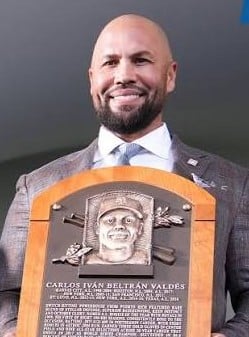
Carlos Beltran
Inducted:
2026
Player Stats
6-1, 215lb (185cm, 97kg)
Born:
April 24, 1977
Manatí, Puerto Rico
Position:
Center fielder
College:
NA
Carlos Beltran was one of the most complete players of his generation, combining power, speed, defense, and consistency over a 20-year Major League Baseball career. He starred for the Kansas City Royals, Houston Astros, New York Mets, San Francisco Giants, St. Louis Cardinals, New York Yankees, and Texas Rangers. A smooth-switch hitter and elite center fielder, Beltrán produced 435 home runs, stole more than 300 bases, and won multiple Gold Glove and Silver Slugger awards.
He was also one of the greatest postseason performers in MLB history, delivering clutch hits and outstanding all-around play in October. Beltrán reached the 400-home run and 300-stolen base milestones, placing him among the game's most versatile players. His combination of offensive production, defensive excellence, and longevity made him one of baseball's premier five-tool stars.
He was inducted into the National Baseball Hall of Fame in 2026.
Beltran's Awards and Honors
- 9× All-Star (2004–2007, 2009, 2011–2013, 2016)
- World Series champion (2017)
- AL Rookie of the Year (1999)
- 3× Gold Glove Award (2006–2008)
- 2× Silver Slugger Award (2006, 2007)
- Roberto Clemente Award (2013)
MLB Records
- One of only a handful of players with 400+ home runs and 300+ stolen bases
- Hit 16 career postseason home runs with a 1.021 postseason OPS
- Recorded 2,700+ hits, 435 home runs, and 300+ stolen bases
- One of the best defensive center fielders of his era
MLB Teams
Kansas City Royals (1998–2004)
Houston Astros (2004,2017)
New York Mets (2005–2011)
San Francisco Giants (2011)
St. Louis Cardinals (2012–2013)
New York Yankees (2014–2016)
Texas Rangers (2016)
MLB Draft:
49th overall pick
2nd round of the 1995
Kansas City Royals
Number Worn
15, 36
MLB Stats
Seasons:
1998–2017
Games Played:
2,586
Batting average:
.279
Hits:
2,725
Home runs:
435
Runs batted in:
1,587
Stolen Bases:
312
Doubles:
565
On-Base Percentage:
.350
Slugging Percentage:
.486
Strikeouts:
1,795
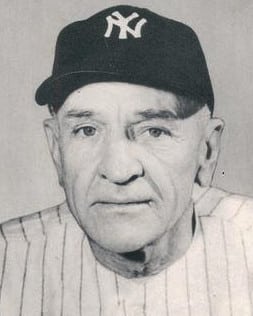
Casey Stengel
Inducted:
1966
Player Stats
5-11, 175lb (180cm, 79kg)
Born:
July 30, 1890
Kansas City, Missouri, U.S.
Died:
September 29, 1975
Glendale, California, U.S.
Position:
Right fielder
Manager
College:
NA
Casey Stengel was one of baseball’s most colorful and successful figures, making his mark both as a player and legendary manager. As an outfielder, he played 14 seasons in the majors, winning a World Series with the New York Giants in 1922. But his true greatness came in the dugout.
Stengel managed the New York Yankees from 1949 to 1960, leading them to 10 American League pennants and 7 World Series titles. Known for his sharp wit and unique speaking style, he was a master strategist who got the best out of his rosters. Stengel was also the first manager of the New York Mets, bringing personality to the new franchise.
His impact on the game extended far beyond wins—he helped shape modern baseball leadership and clubhouse culture.
Stengel's Awards and Honors
- 9× World Series champion (1921, 1922, 1949–1953, 1956, 1958)
- New York Yankees No. 37 retired
- New York Mets No. 37 retired
- Monument Park honoree
- New York Mets Hall of Fame
MLB Records
- Most consecutive World Series titles by a manager
- First manager to win 100 games in a season with five different teams
- Oldest person to manage an MLB team
- One of only four managers in MLB history to win 7 or more World Series titles
- Only manager to lead a team to 10 World Series appearances in 12 years
MLB Teams
As player
Brooklyn Dodgers / Superbas / Robins (1912–1917)
Pittsburgh Pirates (1918–1919)
Philadelphia Phillies (1920–1921)
New York Giants (1921–1923)
Boston Braves (1924–1925)
As coach
Brooklyn Dodgers (1932–1933)
As manager
Brooklyn Dodgers (1934–1936)
Boston Braves (1938–1943)
New York Yankees (1949–1960)
New York Mets (1962–1965)
Number Worn:
37
MLB Stats
Game Played:
1,277
Hits:
1,219
Batting Average:
.284
Home Runs:
60
RBI:
535
Stolen Bases:
131
Managerial Records:
1,905-1,842 (.508)
World Series Titles:
7
Charles Comiskey
Inducted:
1939

Owner Stats
Born:
August 15, 1859
Chicago, Illinois, U.S.
Died:
October 26, 1931
Eagle River, Wisconsin, U.S.
Position:
First baseman
Manager
Owner
Charles Comiskey was one of the most influential figures in early baseball history. Beginning his career as a first baseman, Comiskey played a key role in the rise of the St. Louis Browns in the 1880s, helping them win four consecutive American Association pennants.
After transitioning into management and ownership, he became best known as the founding owner of the Chicago White Sox. Under his leadership, the team won the 1906 and 1917 World Series and remained a competitive force in the American League.
Though his reputation was later clouded by the 1919 Black Sox Scandal, Comiskey’s impact on professional baseball was lasting. He helped shape the role of the team owner, pioneered innovations in team management, and was a key figure in the formation of the American League.
He was inducted into the Baseball Hall of Fame in 1939 for his contributions as a player, manager, and executive.
Comiskey's Awards and Honors
- Louis Cardinals Hall of Fame
- Inducted into the National Baseball Hall of Fame (1939)
- 4× American Association champion as a player/manager (1885–1888)
- Managed St. Louis Browns to 4 straight pennants
- Founder and long-time owner of the Chicago White Sox (1901–1931)
- Helped establish the American League in 1901
- Comiskey Park, opened in 1910, named in his honor
- Credited with popularizing the use of the pitcher’s mound and modern baseball strategy
MLB Records
- 2× World Series champion (1906, 1917)
- 4× American Association pennant (1885–1888)
MLB Teams
As Player
St. Louis Brown Stockings/Browns (1882–1889)
Chicago Pirates (1890)
St. Louis Browns (1891)
Cincinnati Reds (1892–1894)
As Manager
St. Louis Browns (1883–1889, 1891)
Chicago Pirates (1890)
Cincinnati Reds (1892–1894)
As Owner
Chicago White Sox (1901–1931)
MLB Stats
Seasons:
12
Games Played
1,390
Batting Average
.264
Hits
1,529
Runs Scored
1,123
Home Runs
28
Runs Batted In
883
Stolen Bases
416
On-Base %
.308
Slugging %
.337
Managerial Stats
Seasons
13
Win/Lose
840–541
Winning %
.608
Charles Radbourn
Inducted:
1939

Charles "Old Hoss" Radbourn was one of the most dominant and durable pitchers in early baseball history. Born in 1854, he played 12 seasons in Major League Baseball from 1881 to 1891, primarily with the Providence Grays and Boston Beaneaters.
Radbourn’s legacy is defined by his incredible 1884 season, where he pitched an unfathomable 678.2 innings, winning 59 games—a record that still stands. Known for his resilience and fierce competitiveness, Radbourn helped lead the Grays to the 1884 championship, winning all three games in the World Series.
His career total of 310 wins and 1,830 strikeouts earned him a place in the Baseball Hall of Fame in 1939.
He was a symbol of baseball’s rugged early era and remains one of the sport’s most legendary figures.
Radbourn's Awards and Honors
- Elected to the Baseball Hall of Fame (1939)
- 1884 National League Triple Crown (Wins, ERA, Strikeouts)
- MLB single-season wins record: 59 (1884)
- 309 career wins
- 1,830 career strikeouts
- 3x 40+ win seasons
- Won 1884 World Series (pre-modern era)
MLB Records
- Triple Crown (1884)
- 2× NL wins leader (1883, 1884)
- NL ERA leader (1884)
- 2× NL strikeout leader (1882, 1884)
- Pitched a no-hitter on July 25, 1883
- MLB record 60 wins, single season
MLB Teams
Buffalo Bisons (1880)
Providence Grays (1881–1885)
Boston Beaneaters (1886–1889)
Boston Reds (1890)
Cincinnati Reds (1891)
MLB Stats
Games Pitched
528
Wins
310
Losses
194
Complete Games
488
Shutouts
35
Saves
2
Innings Pitched
4,535.1
Earned Run Average (ERA)
2.68
Strikeouts
1,830
Walks
875
WHIP (Walks + Hits per Inning Pitched)
1.15
Charlie Gehringer
Inducted:
1949

Player Stats
5-11, 180lb (180cm, 81kg)
Born:
May 11, 1903
Fowlerville, Michigan, U.S.
Died:
January 21, 1993
Bloomfield Hills, Michigan, U.S.
Position:
Second baseman
College:
University of Michigan
Charlie Gehringer spent 19 seasons (1924–1942) with the Detroit Tigers, earning his nickname for his unwavering consistency at the plate and in the field. A .320 career hitter, he collected 2,839 hits, 184 home runs, and 1,427 RBIs across 2,323 games. Gehringer led the league in doubles (574) and runs (1,775), while posting a sterling .404 on-base and .884 OPS.
He earned six All-Star selections (1933–1938), won the American League MVP in 1937 after hitting .371, and helped lead the Tigers to the 1935 World Series title. Regarded as one of the best fielding second basemen ever, he ranked among the all-time leaders in assists and double plays at his retirement.
Gehringer was inducted into the Baseball Hall of Fame in 1949, and his No. 2 jersey was retired by the Tigers in 1983.
Gehringer's Awards and Honors
- 6× All-Star (1933–1938)
- World Series champion (1935)
- AL MVP (1937)
- AL batting champion (1937)
- AL stolen base leader (1929)
- Detroit Tigers No. 2 retired
MLB Records
- Highest All‑Star batting average (.500) in first six All‑Star Games
- Two seasons with 50 doubles (1934 and 1936)
- Led AL in runs scored, hits, doubles, and triples in 1929, the last player to lead in all four categories post‑1929
- Seven seasons scoring 120+ runs (1929–30, 1934–38)
- Led AL in doubles in back‐to‐back seasons (1934–35)
- One of six players to record 60 doubles in a season (1936)
- Led AL second basemen in assists and double plays multiple times; career total 7,068 assists—second all‑time for the position
- Played at least 150 games, hit .300+ with .400+ OBP, OPS .500+
MLB Teams
Detroit Tigers (1924–1942)
Number Worn
2
MLB Stats
Games Played:
2,323
Hits:
2,839
Home Runs:
184
Runs Batted In:
1,427
Runs Scored:
1,775
Batting Average:
.320
On-Base Percentage (OBP):
.404
OPS:
.884
Chick Hafey
Inducted:
1971

Player Stats
6-0, 185lb (183cm, 83kg)
Born:
February 12, 1903
Berkeley, California, U.S.
Died:
July 2, 1973
Calistoga, California, U.S.
Position:
Outfielder
College:
NA
Charles “Chick” Hafey (February 12, 1903 – July 2, 1973) was a smooth-swinging left fielder whose bat guided championship teams for over a decade. Though plagued by persistent vision and sinus issues, he maintained a sterling .317 career average across his time with St. Louis and Cincinnati. Renowned for crisp contact hitting and clutch timing, Hafey won the National League batting crown in 1931 by the slimmest of margins—earning his hit in the final at-bat.
He also starred for two World Series champions and earned a place in history as the first-ever hitter in an All-Star Game, driving in that inaugural hit in 1933. Despite health challenges that plagued much of his career, his consistent production, power, and resolve secured his election to the Hall of Fame in 1971. Known for playing with glasses when few did, he left behind a legacy of resilience, offensive flair, and underrated greatness.
Hafey's Awards and Honors
- All-Star (1933)
- 2× World Series champion (1926, 1931)
- NL batting champion (1931)
- Louis Cardinals Hall of Fame
MLB Records
- First player to record a hit in an All-Star Game (1933)
- NL Batting Champion in 1931 (.349 average) — won by just .0002
- Led NL in slugging percentage in 1927 (.590)
- Tied NL record with 10 consecutive hits in 1929
- Hit for the cycle on August 16, 1930
- One of few players to win a batting title while wearing eyeglasses
MLB Teams
St. Louis Cardinals (1924–1931)
Cincinnati Reds (1932–1935, 1937)
MLB Stats
Games Played:
1,283
Hits:
1,466
Batting Average:
.317
Home Runs:
164
Runs Batted In:
833
Runs Scored:
777
Doubles:
341
Triples:
67
Stolen Bases:
70
On-Base Percentage (OBP):
.372
Slugging Percentage (SLG):
.526
OPS:
.898
Chief Bender
Inducted:
1953

Player Stats
Born:
May 5, 1884
Crow Wing County, Minnesota, U.S.
Died:
May 22, 1954
Philadelphia, Pennsylvania, U.S.
Position:
Pitcher
College:
Dickinson College
Charles Albert “Chief” Bender (1884–1954) was one of baseball’s first dominant pitchers and among the game’s earliest stars. A member of the Ojibwa Nation, he starred at Carlisle before joining the Philadelphia Athletics in 1903.
Known for his mental acuity and pioneering the slider, Bender won 212 games with a career 2.46 ERA across 3,017 innings. He helped lead the A’s to three World Series titles (1910, 1911, 1913), threw a no-hitter in 1910, and tied the record by pitching three complete games in the 1911 Fall Classic. After his playing career, he coached, managed, and scouted through the 1940s.
Selected to the Hall of Fame in 1953, Bender's legacy lies in his clutch postseason performance, trailblazing pitching style, and role as one of baseball’s first standout Native American athletes.
Bender's Awards and Honors
- 3× World Series champion (1910, 1911, 1913)
- Pitched a no-hitter on May 12, 1910
- Philadelphia Baseball Wall of Fame
- Athletics Hall of Fame
- No-hitter thrown – May 12, 1910
- Led AL in winning percentage – 1910 (23–5), 1911, 1914
- Led AL in saves – 1906 and 1913
- First slider pitch – Credited as inventor of the “nickel curve”
- Baseball Hall of Fame, Class of 1953
MLB Teams
Philadelphia Athletics (1903–1914)
Baltimore Terrapins (1915)
Philadelphia Phillies (1916–1917)
Chicago White Sox (1925)
MLB Stats
Win–Loss Record:
212–127
Earned Run Average:
2.46
Strikeouts:
1,711
Innings Pitched:
3,017
WHIP:
1.11
Games Played:
459
Complete Games:
334
Shutouts:
40
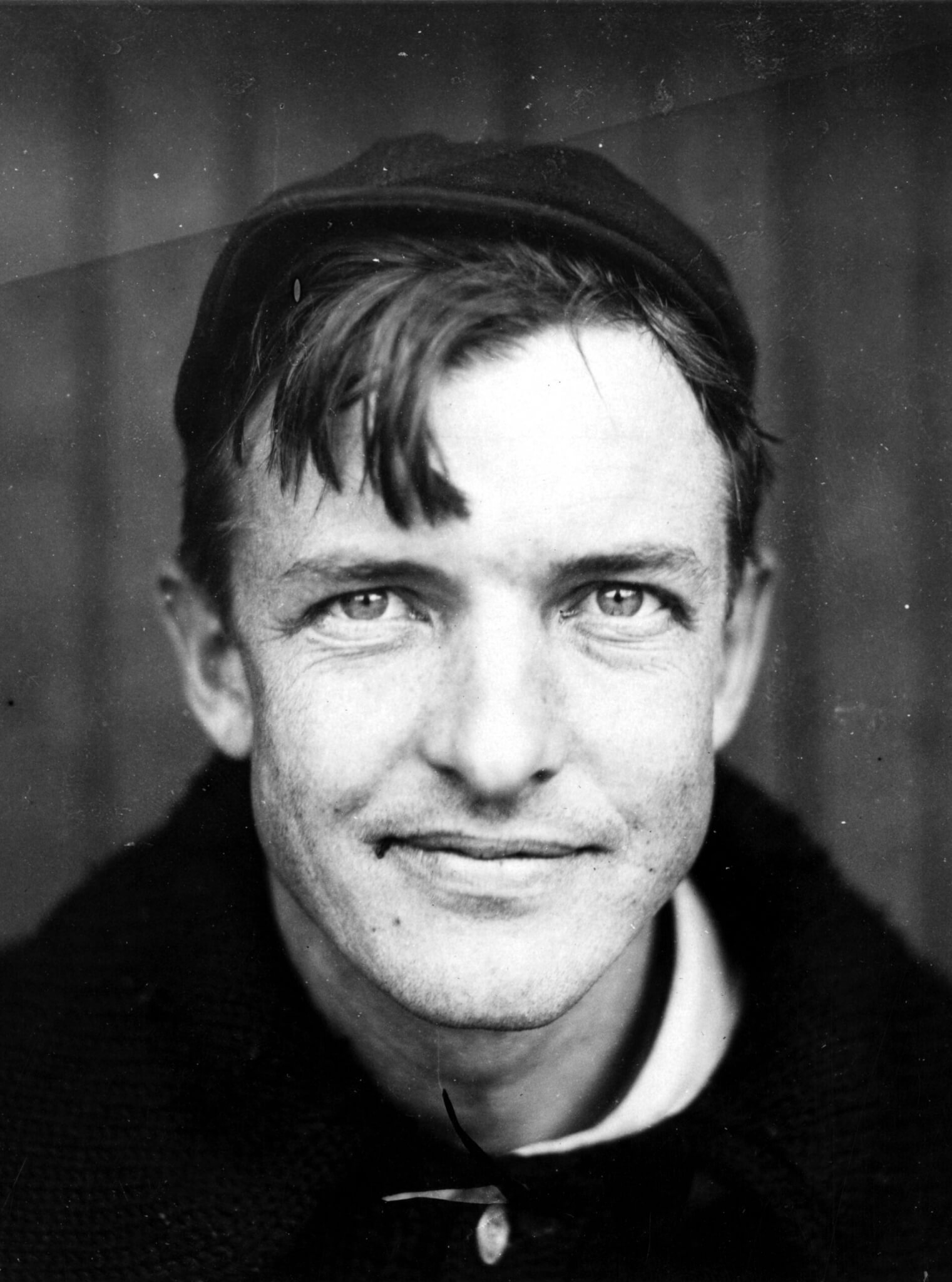
Christy Mathewson
Inducted:
1936
Player Stats
Born:
August 12, 1880
Factoryville, Pennsylvania, U.S.
Died:
October 7, 1925
Saranac Lake, New York, U.S.
Position:
Pitcher
Christy Mathewson was one of baseball’s greatest pitchers and a true sportsman of his era. Playing 17 seasons (1900–1916), mostly with the New York Giants, he dominated the game with his precision, control, and signature "fadeaway" pitch, now known as a screwball. Mathewson won 373 games, tying for third-most in MLB history, and posted a career 2.13 ERA, one of the lowest ever among elite pitchers.
A two-time World Series champion, Mathewson's legendary 1905 postseason performance—three complete-game shutouts—remains one of the greatest in baseball history. He led the National League in ERA five times and in wins four times, solidifying his place as one of the sport’s first true superstars.
As one of the first five players inducted into the Baseball Hall of Fame in 1936, Mathewson's legacy endures as both a dominant pitcher and a role model for fair play.
Mathewson's Awards and Honors
- 2× World Series champion (1905, 1921)
- 2× Triple Crown (1905, 1908)
- 4× NL wins leader (1905, 1907, 1908, 1910)
- 5× NL ERA leader (1905, 1908, 1909, 1911, 1913)
- 5× NL strikeout leader (1903–1905, 1907, 1908)
- Pitched two no-hitters
- Name honored by the Giants
- Major League Baseball All-Century Team
MLB Teams
New York Giants (1900–1916)
Cincinnati Reds (1916)
MLB Stats
Seasons:
17
Games Played:
636
Wins:
373
Losses:
188
Earned Run Average (ERA):
2.13
Strikeouts:
2,507
Shutouts:
79
Clark Griffith
Inducted:
1946

Owner Stats
5-6, 156lb (168cm, 70kg)
Born:
November 20, 1869
Clear Creek, Missouri, U.S.
Died:
October 27, 1955
Washington, D.C., U.S.
Position:
Pitcher
Executive
Manager
Owner
College:
Illinois State University
Clark Griffith had one of the most diverse and influential careers in baseball history—succeeding as a player, manager, and long-time team owner. As a pitcher, Griffith won 237 games across 20 seasons, earning a reputation for guile and durability during the dead-ball era.
He was a founding player in the American League and helped the Chicago White Sox capture the AL’s first pennant in 1901. Griffith transitioned into managing with equal success, leading teams like the Highlanders and Senators before becoming owner of the Washington Senators in 1920. Under his leadership, the Senators won the 1924 World Series. Known as “The Old Fox,” Griffith was deeply respected for his baseball acumen and commitment to player development.
He played a pivotal role in shaping the early American League and the future of Washington baseball.
He was elected to the Hall of Fame in 1946.
Griffith's Awards and Honors
- MLB ERA leader (1898)
- Washington Nationals Ring of Honor
- Chicago Cubs Hall of Fame
- Inducted into Baseball Hall of Fame (1946 – Veterans Committee)
- 237 career wins as a pitcher
- Founding member of the American League
- Managed and later owned the Washington Senators
- Led White Sox to 1901 AL pennant (manager)
- Won 20+ games 7 times
- Owner of 1924 World Series Champion Senators
- Nicknamed “The Old Fox” for his strategy and leadership
- Active in MLB for over 60 years as player, manager, and owner
- Helped integrate Latin American scouting into the majors
MLB Teams
As Manager
Chicago White Stockings (1901–1902)
New York Highlanders (1903–1908)
Cincinnati Reds (1909–1911)
Washington Senators (1912–1920)
As Owner
Washington Senators (1920–1955)
MLB Stats
Seasons (Pitcher):
20 (1891–1914)
Games Pitched:
453
Wins–Losses:
237–146
ERA:
3.31
Strikeouts:
1,068
Complete Games:
297
Shutouts:
20
Winning Percentage:
.619
Connie Mack
Inducted:
1937
Manager Stats
Born:
December 22, 1862
East Brookfield, Massachusetts, U.S.
Died:
February 8, 1956
Philadelphia, Pennsylvania, U.S.
Position:
Manager
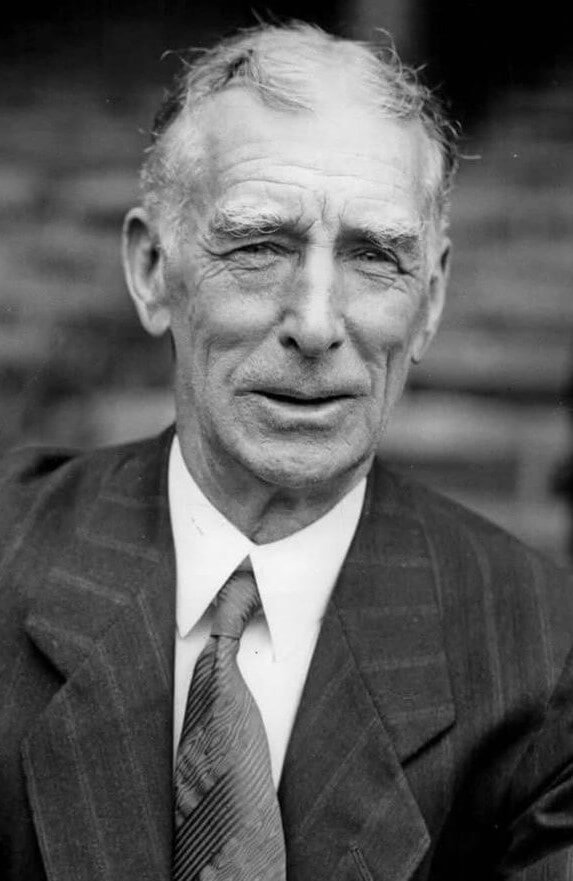
Connie Mack was one of the most influential figures in baseball history, serving as a manager for 50 seasons and owning the Philadelphia Athletics for decades. Known for his gentlemanly demeanor and tactical brilliance, he managed the Athletics from 1901 to 1950, winning five World Series titles and nine American League pennants.
His leadership helped shape modern baseball strategy and player development.
Before his legendary managerial career, Mack played as a catcher from 1886 to 1896, but his true legacy lies in coaching and team building. He was instrumental in developing stars like Jimmie Foxx and Lefty Grove, guiding the Athletics through eras of both dominance and financial struggles.
Inducted into the Baseball Hall of Fame in 1937, he remains the winningest manager in MLB history.
Mack's Awards and Honors
- 5× World Series champion (1910, 1911, 1913, 1929, 1930)
- Most managerial wins, losses and games managed in major league history
- Philadelphia Baseball Wall of Fame
- Athletics Hall of Fame
MLB Teams
Pittsburgh Pirates (1894–1896)
Philadelphia Athletics (1901–1950)
MLB Stats
Seasons Managed:
50
Games Managed:
7,755
Wins:
3,731
Losses:
3,948
Winning Percentage:
.486
World Series Titles:
5
AL Pennants:
9
Cool Papa Bell
Inducted:
1974

Player Stats
6-0, 155lb (183cm, 70kg)
Born:
May 17, 1903
Starkville, Mississippi, U.S.
Died:
March 7, 1991
St. Louis, Missouri, U.S.
Position:
Center fielder
Pitcher
College:
NA
James “Cool Papa” Bell (1903–1991) was one of the fastest and most electrifying outfielders in baseball history, excelling in the Negro Leagues during an era of racial segregation. Known for his blazing speed and remarkable base-stealing ability, Bell could turn routine hits into extra bases and routinely disrupt opposing pitchers with his aggressive baserunning.
He spent most of his career with the St. Louis Stars and the Pittsburgh Crawfords, earning a reputation for defensive brilliance and clutch hitting. Bell’s combination of speed, vision, and consistency made him a legend among peers and fans alike, with many considering him the fastest man ever to play professional baseball.
Over his career, he maintained a high batting average and stole hundreds of bases while providing exceptional defense in center field. Inducted into the Baseball Hall of Fame in 1974, Cool Papa Bell’s legacy as one of baseball’s most thrilling players remains unmatched.
Bell's Award and Honors
- Negro Leagues All-Star multiple times
- Known as one of the fastest players in baseball history
- Key contributor to multiple Negro National League pennants
- Exceptional defensive outfielder with game-changing speed
NL Records
- Recognized as arguably the fastest man to ever play professional baseball
- Legendary base-stealing prowess with hundreds of stolen bases
- Outstanding center fielder who turned defense into offense
- Helped elevate the popularity and credibility of Negro League baseball
NL Teams
St. Louis Stars (1922–1929)
Chicago American Giants (1929)
St. Louis Stars (1930–1931)
Pittsburgh Crawfords (1932)
Kansas City Monarchs (1932)
Detroit Wolves (1932)
Homestead Grays (1932)
Pittsburgh Crawfords (1933–1937)
Chicago American Giants (1942)
Homestead Grays (1943–1946)
Number Worn:
15
NL Stats
Seasons:
1922–1946
Games Played:
742
Batting average:
.325
Hits:
1,548
Home runs:
57
Runs batted in:
596
Win–loss record:
20–15
Earned run average:
4.53
Strikeouts:
146
"Every Inning is History. Every Fan is a Legacy"
From the crack of the bat to the final out, celebrate the heritage of the game. Whether you're chasing Cooperstown legends of today’s stars, find your official colors and wear the history of the diamond.
Shop the Official MLB Collection
MLB Hall of Fame
The MLB Hall of Fame is a revered institution dedicated to honoring the greatest contributions to baseball. Located in Cooperstown, New York, it serves as a shrine to the game's rich history and the legendary players who have left an indelible mark on the field. Each year, the Hall of Fame holds an induction ceremony that celebrates the newest members of its prestigious ranks, commonly referred to as the Hall of Fame class.
These ceremonies are significant events in the baseball calendar, drawing fans, players, and media worldwide to witness the acknowledgment of baseball's finest. The inductees are celebrated for their remarkable career achievements, which include outstanding statistics, memorable performances, and contributions that have shaped the game. The Hall recognizes players, managers, umpires, and contributors who have significantly impacted the sport.
Among the many iconic moments celebrated within the Hall are record-breaking home runs, historic games, and unforgettable plays that have become a part of baseball lore. Each inductee's journey to the Hall is a testament to their skill, perseverance, and dedication to the sport. The Hall of Fame also outlines the eligibility criteria, ensuring a fair and transparent selection process.
Visitors to the Hall can explore exhibits featuring historical contributions from various eras of baseball, showcasing memorabilia, photographs, and artifacts that tell the game's story. From famous inductees like Babe Ruth and Jackie Robinson to the more recent stars, the Hall preserves the legacy of these athletes, allowing future generations to appreciate their greatness.
In addition to the exhibits, the Hall of Fame hosts numerous events throughout the year, including educational programs and community outreach initiatives, to foster a love for baseball among young fans. The memorable speeches during induction ceremonies often reflect on the inductees' journeys, the challenges they faced, and their impact on their teams and the sport.
Ultimately, the MLB Hall of Fame celebrates excellence in baseball, a place where the past is remembered and the future is inspired. It is a vital part of baseball culture, ensuring that the stories of its greatest players are never forgotten and continue to resonate with fans worldwide.