

Search By First Name of HOFer
Jack Ruttan
Inducted:
1963

Player Stats
5 ft 8 in (173 cm)
Born:
April 5, 1889
Winnipeg, Manitoba, Canada
Died:
January 7, 1973
Winnipeg, Manitoba, Canada
Position:
Defense
College:
St. John's College
John Douglas "Jack" Ruttan was one of the most gifted amateur players in the history of Canadian hockey. Based in Winnipeg, Ruttan was celebrated for his exceptional speed and versatility, frequently shifting between defense and forward positions depending on his team's needs. During an era when amateur hockey held immense prestige, Ruttan was widely considered the premier "cover-point" (defenseman) in the country.
His career reached its pinnacle in 1913 when he led Winnipeg to an Allan Cup victory, signifying amateur hockey supremacy in Canada. Although the First World War and subsequent health issues eventually curtailed his playing days, Ruttan remained a dedicated builder of the sport, coaching the University of Manitoba and serving as a respected referee. Jack Ruttan was inducted into the Hockey Hall of Fame in 1963.
Ruttan's Awards and Honors
- Allan Cup Champion (1913)
- Winnipeg Senior Hockey League Champion (1911)
- Manitoba University Hockey League Champion (1908)
- Winnipeg Juvenile Champion (1906, 1907)
- Honoured Member of the Manitoba Hockey Hall of Fame
MHA Teams
Winnipeg Hockey Club (1905–1918)
MHA Stats
Leagues Played:
WSHL, MHL, MUHL
Career Span:
1905–1918
Allan Cup Appearances:
1913
Primary Positions:
Defense
Post-Playing Roles:
Coach (University of Manitoba), Referee
Jack Stewart
Inducted:
1964

Player Stats
5 ft 11 in (180 cm)
180 lb (82 kg; 12 st 12 lb)
Born:
May 6, 1917
Pilot Mound, Manitoba, Canada
Died:
May 25, 1983
Troy, Michigan, U.S.
Position:
Defense
College:
NA
John George "Black Jack" Stewart was one of the most punishing and physically imposing defensemen to ever patrol an NHL blue line. A mainstay of the Detroit Red Wings for 10 seasons, Stewart was the defensive anchor for two Stanley Cup championship teams. He earned his famous nickname "Black Jack" not only for his dark complexion but for the "black and blue" bruises he left on opposing forwards.
Stewart was a "pure" defenseman; he cared little for offensive stats, focusing entirely on clearing the crease and neutralizing the league's best scorers. Despite his terrifying physicality, he was a clean, disciplined player who relied on strength and positioning. Even after a trade to the Chicago Black Hawks and a career-ending back injury, Stewart remained a legendary figure for his toughness and leadership. He was inducted into the Hockey Hall of Fame in 1964.
Stewart's Awards and Honors
- 2x Stanley Cup Champion (1943, 1950)
- 3x NHL First All-Star Team (1943, 1948, 1949)
- 2x NHL Second All-Star Team (1946, 1947)
- 4x NHL All-Star Game appearance
- Named one of the "100 Greatest NHL Players" (2017)
- Once went 151 consecutive games without scoring a goal
NHL Teams
Detroit Red Wings (1938-1943, 1945-1950)
Chicago Black Hawks (1950-1952)
Number Worn:
2
NHL Stats
Seasons:
12 (1938-1943, 1945-1952)
Games Played:
565
Goals:
31
Assists:
84
Points:
115
Penalty Minutes:
765
Playoff Game:
80
Playoff Points:
19 (G-5,A-14)
Stanley Cup:
2 (1943, 1950)
Jack Walker
Inducted:
1960

Player Stats
5 ft 8 in (173 cm)
153 lb (69 kg; 10 st 13 lb)
Born:
November 29, 1888
Silver Mountain, Ontario, Canada
Died:
February 16, 1950
Seattle, Washington, U.S.
Position:
Rover
Winger
College:
NA
Jack Walker was arguably the greatest "utility" player in the history of early professional hockey. A master of the rover and forward positions, Walker was a defensive genius who pioneered the hook check, a move he used to strip the puck from opponents with surgical precision. While he wasn't the largest player on the ice, his intelligence and stamina made him an indispensable part of three different championship dynasties across two different leagues.
Walker is one of the few players to win the Stanley Cup with three different franchises: the Toronto Blueshirts (1914), the Seattle Metropolitans (1917), and the Victoria Cougars (1925). He was a cornerstone of the Seattle team that became the first American-based squad to ever win the Stanley Cup. Known for his incredible longevity, he played at an elite level until the age of 44, eventually joining the NHL in its early years with the Detroit Cougars. He was inducted into the Hockey Hall of Fame in 1960.
Walker's Awards and Honors
- 3x Stanley Cup Champion (1914, 1917, 1925)
- 2x PCHA First All-Star Team (1921, 1922)
- PCHA Second All-Star Team (1917, 1919, 1920, 1924)
- First American-based Cup Winner: Member of the 1917 Seattle Metropolitans
NHL Teams
Detroit Cougars (1926-1928)
Number Worn:
7
NHL Stats
Playing career:
1907–1933
Season Played:
1 (1927-1928)
Games Played:
80
Goals:
5
Assists:
8
Points:
13
Penalty Minutes:
18
Stanley Cup Champion:
3 (1914, 1917, 1925)
Jacques Laperrière
Inducted:
1987

Player Stats
6 ft 2 in (188 cm)
190 lb (86 kg; 13 st 8 lb)
Born:
November 22, 1941
Béarn, Quebec, Canada
Position:
Defense
College:
NA
Jacques Laperrière was one of the most reliable and consistent defensemen of his generation, playing his entire career with the Montreal Canadiens. Known for his smooth skating, strong positioning, and unselfish play, Laperrière anchored the Canadiens’ blue line throughout the 1960s and early 1970s. He combined defensive discipline with steady offensive support, making him one of the most trusted players on the roster.
Laperrière won the Calder Trophy as the league’s top rookie in 1964 and quickly established himself as a vital piece of Montreal’s dynasty. Over 10 NHL seasons, he helped the Canadiens capture six Stanley Cups, earning respect as a defensive cornerstone and leader on and off the ice. After retiring, he continued to contribute to the game as a coach, passing along his knowledge to future generations.
Inducted into the Hockey Hall of Fame in 1987, Laperrière’s career remains a model of consistency, excellence, and championship pedigree.
Laperrière's Awards and Honors
- 6× Stanley Cup Champion (1965, 1966, 1968, 1969, 1971, 1973)
- Calder Memorial Trophy (1964 – NHL Rookie of the Year)
- James Norris Memorial Trophy (1970 – Best Defenseman)
- 5× NHL All-Star Team selection
NHL Records
- First Montreal Canadiens defenseman to win the Norris Trophy since Doug Harvey
- One of only a few rookies to win both the Calder Trophy and multiple Stanley Cups early in his career
NHL Teams
Montreal Canadiens (1962-1974)
Number Worn:
26
NHL Stats
Seasons:
10 (1962–1974)
Games Played:
691
Goals:
40
Assists:
242
Points:
282
Penalty Minutes:
674
Playoff Games:
88
Playoff Points:
31
Jacques Lemaire
Inducted:
1984

Player Stats
5 ft 10 in (178 cm)
180 lb (82 kg; 12 st 12 lb)
Born:
September 7, 1945
LaSalle, Quebec, Canada
Position:
Center
Coach
College:
NA
Jacques Lemaire was inducted into the Hockey Hall of Fame in 1984. A cornerstone of the Montreal Canadiens' dynasty in the 1970s, he played 12 seasons with the team, winning eight Stanley Cups. Known for his exceptional two-way play, Lemaire scored at least 20 goals in each of his 12 NHL seasons. He also tallied two Stanley Cup-winning goals, one in 1977 and another in 1979. Over 853 career games, he accumulated 366 goals and 469 assists for 835 points. His consistency and leadership were instrumental in the Canadiens' success during that era.
After retiring as a player, Lemaire transitioned into coaching, leading the New Jersey Devils to a Stanley Cup victory in 1995. He later became the first head coach of the Minnesota Wild, known for implementing a defensive-minded system. Lemaire's contributions to the game, both on the ice and behind the bench, have left a lasting legacy in the NHL.
Lemaire's Awards and Honors
- 8× Stanley Cup Champion (1968–1979)
- 2× Stanley Cup-winning goal scorer (1977, 1979)
- 2× NHL All-Star (1973, 1975)
- Olympic Gold Medal as Assistant Coach (2010)
NHL Records
- Scored at least 20 goals in each of his 12 NHL seasons
- One of only six NHL players to score two Stanley Cup-winning goals
- Played a pivotal role in the Canadiens' dominance during the 1970s
- Contributed to the New Jersey Devils' 1995 Stanley Cup victory as head coach
- Known for his defensive coaching strategies, including the neutral zone trap
NHL Teams
As Player:
Montreal Canadiens (1967-1979)
As Coach:
Montreal Canadiens (1983-1985)
New Jersey Devils (1993-1998)
Minnesota Wild (2000-2011)
Number Worn:
24
NHL Stats
Seasons:
12
Games Played:
853
Goals:
366
Assists:
469
Points:
835
Penalty Minutes:
217
Playoffs Games:
145
Goals:
61
Assists:
78
Points:
139
Penalty Minutes:
63
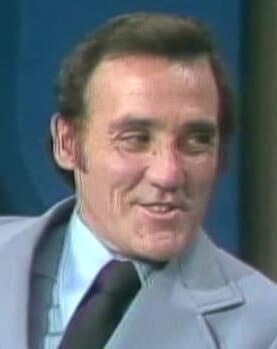
Jacques Plante
Inducted:
1978
Player Stats
6 ft 0 in (183 cm)
175 lb (79 kg; 12 st 7 lb)
Born
January 17, 1929
Notre-Dame-du-Mont-Carmel, Quebec, Canada
Died
February 27, 1986
Geneva, Switzerland
Position:
Goaltender
College:
Quebec Citadels
Montreal Junior Canadians
Jacques Plante was a transformative goaltender whose innovations changed hockey forever. Rising through the Montreal Canadiens in the 1950s, Plante's performance between the pipes helped power them to five consecutive Stanley Cup championships from 1956 to 1960, plus another later in his career. He revolutionized the game by becoming the first NHL goalie to regularly wear a protective mask during games—a debut that occurred after sustaining a facial injury in 1959.
Known for his agility, puck-handling alongside his net, and keen anticipation, Plante earned seven Vezina Trophies as the league’s top goaltender and captured the Hart Trophy as NHL MVP in 1962. Over an 18-year career, he posted a 2.38 goals-against average in 837 regular-season games, alongside 82 shutouts. He continued playing for several teams including the Rangers and Blues, winning another Vezina in his 40s.
Inducted into the Hockey Hall of Fame in 1978, Plante’s legacy endures as both a dominant performer and the inventor of the modern goaltender mask.
Plante's Awards and Honors
- 7× Vezina Trophy winner
- Hart Memorial Trophy (MVP): 1962
- 6× Stanley Cup Champion
- NHL All-Star Game (1956,1957,1958,1959,1960,1962,1969,1970)
- NHL First All-Star Team (1956, 1959, 1962)
- NHL Second All-Star Team (1957, 1958, 1960, 1971)
NHL Records
- First goalie to regularly wear a mask in games
- Pioneered the use of the goalie mask, setting a new standard for safety
- Five consecutive Stanley Cup titles with Montreal (1956–1960)
- Only goaltender to win both the Hart Trophy and seven Vezinas
- Exceptional career longevity with elite performance into his 40s
NHL Teams
Montreal Canadiens (1952-1963)
New York Rangers (1963-1965)
St. Louis Blues (1968-1970)
Toronto Maple Leafs (1970-1973)
Boston Bruins (1972-1973)
Edmonton Oilers (1974-1975)
Number Worn:
1
NHL Stats
Seasons Played:
18 (1952-1975)
Games Played:
837
Wins:
437
Goals-Against Average:
2.38
Shutouts:
82
Stanley Cups:
6
Vezina Trophies:
7
Hart Trophy:
1
Playoff Game:
112 (W/L-71-36)
Jari Kurri
Inducted:
2001

Player Stats
Stats:
6 ft 0 in (183 cm)
198 lb (90 kg; 14 st 2 lb)
Born:
18 May 1960
Helsinki, Finland
Position:
Right Wing
College:
NA
Jari Kurri was one of the greatest European players in NHL history and a key figure in the Edmonton Oilers dynasty of the 1980s. A smart, skilled right winger, Kurri was known for his lethal shot, defensive reliability, and elite chemistry with Wayne Gretzky. He recorded five 100-point seasons and scored 50 or more goals in four different campaigns. In 1985, he netted 71 goals — the most ever in a single season by a Finnish player.
Kurri was a five-time Stanley Cup champion and a consistent playoff performer, with 106 career postseason goals, second only to Gretzky at the time of his retirement. He played over 1,250 NHL games with the Oilers, Kings, Rangers, Ducks, and Avalanche, finishing with 1,398 points. Inducted into the Hockey Hall of Fame in 2001, Kurri helped open the NHL’s doors for generations of European stars and remains an icon in Finnish hockey.
Kurri's Awards and Honors
- 5× Stanley Cup Champion (1984, 1985, 1987, 1988, 1990 – all with Oilers)
- 5× NHL All-Star
- 5× 100-point seasons
- 71 goals in 1984–85 – most by a Finnish player in a season
- 106 career playoff goals – 2nd-most in NHL history at retirement
- 601 career NHL goals – 1st Finnish player to reach 500 & 600
- Known for elite two-way play and +304 career plus/minus
- First Finnish player inducted into the Hockey Hall of Fame
NHL Records
- First Finnish player to score 500 and 600 career NHL goals
- First Finnish player inducted into the Hockey Hall of Fame (2001)
- Most goals by a Finnish player in a single NHL season – 71 goals in 1984–85
- Second-most playoff goals in NHL history at retirement – 106 goals in 200 playoff games
- Most goals in one playoff year (tied) – 19 goals in 1985
- Ranks top-25 all-time in career NHL goals (601)
NHL Teams
Edmonton Oilers (1980-1990)
Devils Milano (1990-1991)
Los Angeles Kings (1991-1996)
New York Rangers (1995-1996)
Mighty Ducks of Anaheim (1996-1997)
Colorado Avalanche (1997-1998)
NHL Draft:
69th overall, 1980
Edmonton Oilers
Numbers Worn:
17
NHL Stats
Seasons:
17 (1980–1998)
Games Played:
1,251
Goals:
601
Assists:
797
Points:
1,398
Penalty Minutes:
545
Plus/Minus:
+304
Power Play Goals:
183
Game-Winning Goals:
72
Playoff Games:
200
Playoff Goals:
106
Jarome Iginla
Inducted:
2020

Player Stats
Stats:
6 ft 1 in (185 cm)
210 lb (95 kg; 15 st 0 lb)
Born:
July 1, 1977
Edmonton, Alberta, Canada
Position:
Right wing
College:
NA
Jarome Iginla is a retired Canadian professional ice hockey forward, celebrated for his prolific scoring and leadership throughout a 20-season NHL career. Born on July 1, 1977, in Edmonton, Alberta, Iginla was drafted 11th overall by the Dallas Stars in the 1995 NHL Entry Draft.
His rights were soon traded to the Calgary Flames, where he became the franchise's all-time leader in goals (525) and points (1,095). Iginla also played for the Pittsburgh Penguins, Boston Bruins, Colorado Avalanche, and Los Angeles Kings, totaling 625 goals and 675 assists for 1,300 points in 1,554 regular-season games.
Internationally, he represented Canada, winning two Olympic gold medals (2002, 2010) and contributing to the iconic "Golden Goal" in 2010. Iginla's achievements were recognized with his induction into the Hockey Hall of Fame in 2020.
Iginla's Awards and Honors
- Two-time Maurice "Rocket" Richard Trophy winner as NHL's leading goal scorer (2002, 2004)
- Art Ross Trophy winner for leading NHL in points (2002)
- Lester B. Pearson Award (now Ted Lindsay Award) recipient as most outstanding player as voted by peers (2002)
- Recipient of the King Clancy Memorial Trophy for leadership and humanitarian contributions (2004)
- Two-time Olympic gold medalist with Team Canada (2002, 2010)
NHL Records
- Calgary Flames' all-time leader in goals (525) and points (1,095)
- Inducted into the Hockey Hall of Fame (2020)
- Scored over 600 career NHL goals, placing him among the top goal scorers in league history
- Six-time NHL All-Star
- Named to the NHL First All-Star Team three times (2002, 2008, 2009)
NHL Teams
Calgary Flames (1995-2012)
Pittsburgh Penguins (2012)
Boston Bruins (2013)
Colorado Avalanche (2014-2017)
Los Angeles Kings (2017)
NHL draft:
11th overall, 1995
Dallas Stars
Numbers Worn:
12
NHL Stats
Seasons:
20
Games Played:
1,554
Goals:
625
Assists:
675
Points:
1,300
Penalty Minutes:
1,040
Shots on Goals:
12
Game Winning Goals:
101
Jayna Hefford
Inducted:
2018

Jayna Hefford is one of the most accomplished athletes in women's hockey history, renowned for her scoring prowess and leadership on the international stage. Born on May 14, 1977, in Trenton, Ontario, she played right wing for Team Canada from 1997 to 2014, earning five Olympic medals—four gold (2002, 2006, 2010, 2014) and one silver (1998).
Hefford famously scored the game-winning goal in the 2002 Olympic final against the United States. She also appeared in 12 IIHF World Championships, winning seven gold and five silver medals. At the time of her retirement, she ranked second in Team Canada history with 267 games played, 157 goals, and 291 points.
Post-retirement, she served as interim commissioner of the CWHL and is currently the Executive Vice President of Hockey Operations for the Professional Women's Hockey League (PWHL). Her legacy was cemented with her induction into the Hockey Hall of Fame in 2018.
Hefford's Awards and Honors
- 1996–97 OWIAA Rookie of the Year
- Top scorer in the OWIAA (1996–97)[30]
- Angela James Bowl, 2008–09
- CWHL Most Valuable Player, 2007–08
- CWHL Top Forward, 2008–09
- CWHL First All-Star Team, 2008–09
- CWHL Central All-Stars, 2007–08
- Hockey Hall of Fame Inductee – 2018
- 4× Olympic Gold Medalist – 2002, 2006, 2010, 2014
- 1× Olympic Silver Medalist – 1998
- 7× IIHF World Championship Gold Medals
- 5× IIHF World Championship Silver Medals
- 1996/97 Ontario Women's Intercollegiate Athletic Association Rookie of the Year
CWHL Teams
Mississauga Chiefs (1996-1997)
Brampton Thunder (1998-2013)
Numbers Worn:
16
CWHL Stats
International Career
Games Played:
267
Goals:
157
Assists:
134
Points:
291
Club Career
Games Played:
418
Goals:
439
Jean Béliveau
Inducted:
1972

Player Stats
6 ft 3 in (191 cm)
205 lb (93 kg; 14 st 9 lb)
Born:
August 31, 1931
Trois-Rivières, Quebec, Canada
Died:
December 2, 2014
Longueuil, Quebec, Canada
Position:
Center
College:
Collège de Victoriaville
Jean Béliveau, nicknamed "Le Gros Bill," was a majestic and dominant center whose entire 18-season NHL career was spent with the Montreal Canadiens. Known for his imposing 6'3" frame, elegant skating, and powerful shot, he became the symbol of excellence, leadership, and grace for the storied franchise. Béliveau was the heart of the Canadiens dynasty that won an unprecedented five consecutive Stanley Cups (1956–1960). His individual accolades include two Hart Memorial Trophies (MVP), one Art Ross Trophy (Scoring Champion), and the inaugural Conn Smythe Trophy (Playoff MVP) in 1965.
As the longest-serving captain in Canadiens history, his ten Stanley Cup rings as a player, combined with seven more as an executive, give him a record 17 total engravings on the trophy—more than any individual in NHL history. His class and sportsmanship made him one of the game's greatest ambassadors. He was inducted into the Hockey Hall of Fame in 1972, with the mandatory three-year waiting period waived in his honor.
Béliveau's Awards and Honors
- 10x Stanley Cup Champion (as a player)
- 7x Stanley Cup Champion (as a team executive)
- 2x Hart Memorial Trophy (MVP) (1956, 1964)
- 1x Art Ross Trophy (Scoring Champion) (1956)
- 1x Conn Smythe Trophy (Playoff MVP) (1965)
- 6x NHL First All-Star Team
- 4x NHL Second All-Star Team
Notable Achievements
- Named one of the "100 Greatest NHL Players" in 2017
- Holds the NHL record for the Most Combined Stanley Cup Engravings by an individual
- Was the first player in NHL history to win the Conn Smythe Trophy (1965)
- The longest-serving captain in Montreal Canadiens history (10 seasons)
- One of only four players in NHL history to score 500 career goals at the time of his retirement
NHL Teams
Montreal Canadiens (1950-1971)
Number Worn:
17, 20, 12, 4
NHL Stats
Seasons Played:
20 (1950-1971)
Games Played:
1,125
Goals:
507
Assists:
712
Points:
1,219
Penalty Minutes:
1,029
Playoff Games:
162
Goals:
79
Assists:
97
Points:
176
Stanley Cups:
10 (1956-1960,1965,66,68,69,71)
Jean Ratelle
Inducted:
1985

Player Stats
6 ft 1 in (185 cm)
175 lb (79 kg; 12 st 7 lb)
Born:
October 3, 1940
Lac Saint-Jean, Quebec, Canada
Position:
Center
College:
NA
Jean Ratelle, born October 3, 1940, in Quebec, stood out as a smooth, intelligent center, known for precision passing and unflappable sportsmanship. Across a 21-season NHL career split between the New York Rangers and Boston Bruins, he was a model of consistency and class. Ratelle anchored the Rangers’ legendary "Goal-A-Game" line, consistently putting up high scoring numbers and earning league-wide respect.
He won the Lady Byng Trophy twice for his gentlemanly play and was also honored with the Lester B. Pearson Award as the most outstanding player. Though he never captured a Stanley Cup, he reached the final three times and retired with nearly a point per game. Inducted into the Hockey Hall of Fame in 1985 and named one of the 100 Greatest NHL Players, Ratelle remains one of the most elegant and esteemed players of his era.
Ratelle's Awards and Honors
- Lady Byng Memorial Trophy (twice)
- Lester B. Pearson Award (most outstanding player by peers)
- Hockey Hall of Fame Induction (1985)
- Named among the NHL’s 100 Greatest Players
NHL Records
- Only NHL player to score over 1,200 points while accumulating fewer than 300 penalty minutes
- Held a single-season franchise record of 109 points for the Rangers (1971-72)
- Ranked second in franchise goals, and third in assists and points for the Rangers
- Sixth in all-time games played for the Rangers
- Scored three series-clinching goals for the Bruins, tying team playoff record
NHL Teams
New York Rangers (1960-1976)
Boston Bruins (1976-1981)
National team:
Canada (1972)
Number Worn:
19
NHL Stats
Seasons:
21
Games Played:
1,280
Goals:
491
Assists:
776
Points:
1,267
Penalty Minutes:
276
Playoff Games:
123
Playoff Points:
98 (32-G,66-A)
Jennifer Botterill
Inducted:
2025

Player Stats
5 ft 9 in (175 cm)
153 lb (69 kg; 10 st 13 lb)
Born:
May 1, 1979
Ottawa, Ontario, Canada
Position:
Forward
College:
Harvard University
Jennifer Botterill was one of the most decorated and dominant forwards in the history of women's hockey, celebrated for her intelligence, vision, and prolific scoring ability. She was a foundational member of Team Canada's golden era, appearing in four consecutive Olympic Games and contributing significantly to three gold medals (2002, 2006, 2010) and one silver (1998). Her international career is further distinguished by five IIHF World Championship gold medals.
At the collegiate level, she starred for Harvard, becoming the only player to ever win the prestigious Patty Kazmaier Award twice as the top player in U.S. women’s college hockey. Botterill's career was a masterclass in consistent excellence at every level of the game. She was inducted into the Hockey Hall of Fame in 2025.
Botterill's Awards and Honors
- 3x Olympic Gold Medal (2002, 2006, 2010)
- 1x Olympic Silver Medal (1998)
- 5x IIHF World Women's Championship Gold Medal (1999, 2000, 2001, 2004, 2007)
- 2x IIHF World Women's Championship MVP (2001, 2004)
- 2x Patty Kazmaier Memorial Award (Top U.S. Women's College Player) (2001, 2003)
- CWHL Angela James Bowl (Leading Scorer) (2007–08)
Notable Achievements
- The only player in the history of U.S. women's college hockey to win the Patty Kazmaier Award twice.
- Retired with the most points per game in NCAA women's college hockey history (3.07)
- Holds the Harvard University record for most career goals (157) and points (340)
- Finished her career as the second all-time leading scorer in the Canadian Women's Hockey League (CWHL)
CWHL Teams
Mississauga Aeros (2006-2007)
Mississauga Chiefs (2007-2009)
Toronto CWHL (2010-2011)
National Team:
Canada (1997-2010)
Number Worn:
9, 17
CWHL Stats
International Games Played:
184
Goals:
65
Assists:
109
Points:
174
Playoff Games:
9
Playoff Points:
11
Olympic Games (GP):
20
Olympic Goals:
4
Olympic Points:
15
Patty Kazmaier Award:
2 (2001, 2003)
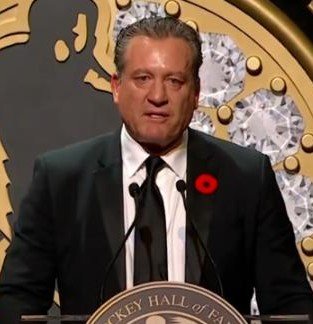
Jeremy Roenick
Inducted:
2024
Player Stats
Stats:
6 ft 1 in (185 cm)
201 lb (91 kg; 14 st 5 lb)
Born:
January 17, 1970
Boston, Massachusetts, United States
Position:
Center
College:
NA
Jeremy Roenick was one of the most electrifying and outspoken players in NHL history. Known for his scoring ability, physical play, and charisma, he was a fan favorite throughout his 20-season career. Drafted 8th overall by the Chicago Blackhawks in 1988, Roenick quickly became a dominant force, recording multiple 100-point seasons and leading the Blackhawks to the 1992 Stanley Cup Final. His speed, skill, and fearless approach to the game made him a threat on every shift.
Roenick played for several teams, including the Phoenix Coyotes, Philadelphia Flyers, Los Angeles Kings, and San Jose Sharks, finishing his career with over 500 goals and 1,200 points. He was also a key member of Team USA, helping secure a silver medal at the 2002 Winter Olympics.
While never winning a Stanley Cup, Roenick’s impact on the game was undeniable. His leadership, talent, and passion cemented his status as one of the greatest American-born players in NHL history.
Roenick's Awards and Honors
- 9× NHL All-Star
- 3× 100+ point seasons
- 2× 50-goal seasons (1991–92, 1992–93)
- 500-goal club (513 career goals)
- 1,200+ career points (1,216)
- 1992 Stanley Cup Finalist (Chicago Blackhawks)
- Silver Medalist – 2002 Winter Olympics (Team USA)
- Inducted into the U.S. Hockey Hall of Fame (2010)
NHL Records
- 09 NHL All-Star Games
- Inducted into the Hockey Hall of Fame in 2024
- Represented Team USA in the 1991 Canada Cup, the 1998 and 2002 Olympic Winter Games, and the 1988 and 1989 World Junior Championships
NHL Teams
Chicago Blackhawks 1988-1996
Phoenix Coyotes 1996-2001, 2006-07
Philadelphia Flyers 2001-2004
Los Angeles Kings 2005-06
San Jose Sharks 2007-09
NHL draft:
8th overall, 1988
Chicago Blackhawks
Numbers Worn:
27,97
NHL Stats
Seasons:
20
Games Played:
1363
Goals:
513
Assists:
703
Points:
1216
Shootout Goals:
06
Game Winning Goals:
92
Jimmy Gardner
Inducted:
1963

Player Stats
5 ft 9 in (175 cm)
180 lb (82 kg; 12 st 12 lb)
Born:
May 21, 1881
Montreal, Quebec, Canada
Died:
November 6, 1940
Montreal, Quebec, Canada
Position:
Left wing
College:
NA
James Henry "Jimmy" Gardner was a pivotal figure in the transition of hockey from an amateur pastime to a professional industry. A fast and skilled left winger, Gardner was a cornerstone of the Montreal AAA and the Montreal Wanderers during their most dominant eras. He was a member of the legendary "Little Men of Iron" squad that captured the Stanley Cup in 1902 and 1903, and he added two more championships with the Wanderers in 1908 and 1910.
Gardner’s impact on hockey history is perhaps even greater off the ice. In 1909, after his team was excluded from a new league, he famously partnered with Ambrose O’Brien to found the National Hockey Association (NHA)—the direct predecessor to the NHL. He was inducted into the Hockey Hall of Fame in 1963.
Gardner's Awards and Honors
- 4x Stanley Cup Champion (1902, 1903, 1908, 1910)
- IHL Second All-Star Team (1905)
- First Captain/Coach in Montreal Canadiens history
- Served as the player-coach and captain of the Montreal Canadiens
- Became a successful coach and manager, leading the Hamilton Tigers to a first-place finish in the 1924–25 NHL season
NHL Teams
Montreal Wanderers (1903-1911)
Montreal Canadiens (1913-1915)
NHL Stats
Games Played:
45
Goals:
25
Assists:
9
Points:
34
Penalty Minutes:
105
Playoffs Games:
1
Stanley Cup:
4 (1902, 1903, 1908, 1910)
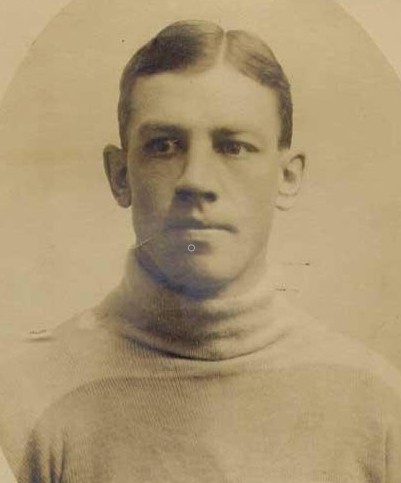
Joe Hall
Inducted:
1961
Player Stats
5 ft 10 in (178 cm)
175 lb (79 kg; 12 st 7 lb)
Born:
May 3, 1881
Milwich, England, U.K.
Died:
April 5, 1919
Seattle, Washington, U.S.
Position:
Defense
Right wing
College:
NA
Joe Hall was the most feared enforcer of hockey’s early professional era, earning the nickname "Bad Joe" for his legendary temper and punishing physical play. A standout defenseman for the Quebec Bulldogs and later the Montreal Canadiens, Hall was a supreme talent who used intimidation as a primary weapon. Despite his reputation for violence, he was an incredibly skilled skater and puck-handler, becoming one of the few players of the era to win three Stanley Cups.
He was a cornerstone of the Quebec Bulldogs’ back-to-back championships in 1912 and 1913. However, he is most remembered for the tragic circumstances surrounding the 1919 Stanley Cup Finals. During the series, Hall and several teammates contracted the Spanish Flu. He was posthumously inducted into the Hockey Hall of Fame in 1961.
Hall's Awards and Honors
- 3x Stanley Cup Champion (1907,1912,1913)
- NHA First All-Star Team (1912)
- Leader in Penalty Minutes (Multiple seasons in NHA and NHL)
- His 1907 win with the Kenora Thistles remains one of the greatest underdog stories in hockey history
NHL Teams
Montreal Canadiens (1917-1919)
Number Worn:
2, 3
NHL Stats
Seasons:
2 (1917–1919)
Games Played:
38
Goals:
15
Assists:
8
Points:
23
Penalty Minutes:
189
Playoff Game:
7
Playoff Points:
1
Stanley Cup:
3 (1907,1912,1913)
"Don't Miss the Drop—Gear Up for Game Day!"
Level up your fan game with the latest Breakaway jerseys, official sideline knits, and premium outerwear. Whether you're in the arena or on the pond, rep your team with the best gear in the league.
Secure Your Gear – Official NHL Shop








NHL Hall of Fame
The NHL Hall of Fame is a prestigious institution that honors hockey's greatest contributors. Each year, the induction ceremony celebrates legendary players and their historic contributions to the game. The Hall of Fame class includes hockey legends who have achieved remarkable career achievements and created iconic moments on and off the ice.
Inductees are recognized for their significant player contributions, earning various awards and honors, and their influence on the sport. The Hall also commemorates retired jerseys and acknowledges the impact on the game by highlighting famous inductees and their legacies. As a symbol of excellence, the NHL Hall of Fame continues to celebrate the sport's rich history and inspire future generations of hockey players.