
Search By First Name of HOFer
Babe Dye
Inducted:
1970

Player Stats
5 ft 8 in (173 cm)
150 lb (68 kg; 10 st 10 lb)
Born:
May 13, 1898
Hamilton, Ontario, Canada
Died:
January 3, 1962
Chicago, Illinois, U.S.
Position:
Right Wing
College:
NA
Cecil Henry "Babe" Dye was arguably the greatest pure goal scorer of the NHL's first decade. A compact and powerful right winger, Dye was renowned for a heavy, accurate shot that terrified opposing goaltenders throughout the 1920s. Spending the majority of his career with the Toronto St. Patricks (who later became the Maple Leafs), he was the centerpiece of their offense, leading the NHL in goals four times in a five-year span.
His greatest triumph came in 1922, when he led Toronto to a Stanley Cup championship, scoring nine goals in the five-game final series alone. Dye’s ability to find the back of the net was statistically historic; he retired with a goals-per-game average that remains among the highest in league history. Despite a career shortened by a serious leg injury, his impact as the league's first true "sniper" earned him an induction into the Hockey Hall of Fame in 1970.
Dye's Awards and Honors
- Stanley Cup Champion (Toronto St. Patricks: 1922)
- 4x NHL Goal Scoring Leader (1921, 1922, 1923, 1925)
- 2x NHL Points Leader (Art Ross equivalent) (1923, 1925)
- Scored the most goals in the NHL during the entire decade of the 1920s
NHL Records
- Holds one of the highest career goals-per-game averages in NHL history (0.741)
- Scored four goals in the deciding Game 5 of the 1922 Stanley Cup Final against Vancouver
- First player in NHL history to record 200 career goals, in just 253 games
NHL Teams
Toronto St. Patricks (1919-1926)
Chicago Black Hawks (1926-1928)
New York Americans (1928-1929)
Toronto Maple Leafs (1930-1931)
Number Worn:
6
NHL Stats
Season Played:
11 (1919-1931)
Games Played:
272
Goals:
203
Assists:
49
Points:
252
Penalty Minutes:
220
Playoff Game:
10
Playoff Points:
2 (G-2)
Stanley Cup:
1 (1922)
Babe Pratt
Inducted:
1966

Player Stats
6 ft 3 in (191 cm)
212 lb (96 kg; 15 st 2 lb)
Born:
January 7, 1916
Stony Mountain, Manitoba, Canada
Died:
December 16, 1988
Vancouver, British Columbia, Canada
Position:
Defense
College:
NA
Walter "Babe" Pratt was one of the most flamboyant and offensively gifted defensemen of the 1940s. A massive man for his era, Pratt combined size with a smooth skating stride and elite playmaking vision, essentially acting as a fourth forward on the ice. He was a key member of the New York Rangers' 1940 Stanley Cup championship team before being traded to the Toronto Maple Leafs, where he reached the pinnacle of his career.
In 1944, Pratt became only the second defenseman in NHL history (after Eddie Shore) to win the Hart Memorial Trophy as league MVP, leading all blueliners in scoring. While his career was briefly marred by a gambling suspension in 1946—which was quickly overturned—his impact on the ice was undeniable. He was a charismatic leader who revolutionized the "offensive defenseman" role long before the arrival of Bobby Orr. He was inducted into the Hockey Hall of Fame in 1966.
Pratt's Awards and Honors
- 2x Stanley Cup Champion (1940, 1945)
- Hart Memorial Trophy (League MVP) (1944)
- NHL First All-Star Team (1944)
- NHL Second All-Star Team (1945)
- Named to the Top 100 Maple Leafs of all time
NHL Teams
New York Rangers (1935-1943)
Toronto Maple Leafs (1943-1946)
Boston Bruins (1946-1947)
Number Worn:
3, 2
NHL Stats
Season Played:
12 (1935-1947)
Games Played:
517
Goals:
83
Assists:
209
Points:
292
Penalty Minutes:
473
Playoff Game:
63
Playoff Points:
29
Stanley Cups:
2 (1940, 1945)
Babe Siebert
Inducted:
1964

Player Stats
5 ft 10 in (178 cm)
182 lb (83 kg; 13 st 0 lb)
Born:
January 14, 1904
Plattsville, Ontario, Canada
Died:
August 25, 1939
Lake Huron, Ontario, Canada
Position:
Defense
Left Wing
College:
NA
Charles Albert "Babe" Siebert was one of the most versatile and respected stars of the "Original Six" era. He began his career as a high-scoring, physical left winger for the Montreal Maroons, where he was a member of the legendary "S-Line" alongside Nels Stewart and Hooley Smith. This trio was considered the most feared attacking unit of the late 1920s. After winning Stanley Cups with both the Maroons and the New York Rangers, his career took a dramatic turn when he was traded to the Boston Bruins.
The switch to the blueline rejuvenated his career. Despite a previous violent feud with teammate Eddie Shore, the two formed a legendary defensive pairing. Siebert eventually moved to the Montreal Canadiens, where he was immediately named captain and won the Hart Trophy as league MVP in 1937. Tragic circumstances cut his life short; just months after being named head coach of the Canadiens in 1939, he drowned while vacationing with his family. He was inducted into the Hockey Hall of Fame in 1964.
Siebert's Awards and Honors
- Hart Memorial Trophy (1937)
- 3x NHL First All-Star Team (1936, 1937, 1938)
- 2x Stanley Cup Champion (1926 with Maroons, 1933 with Rangers)
- Montreal Canadiens Captain (1936–1939)
Notable Achievements
- One of the few players in history to win the Hart Trophy (1937) after successfully transitioning from a forward to a defenseman
- One of the first players in NHL history to reach the 1,000 penalty minute milestone
NHL Teams
Montreal Maroons (1925-1932
New York Rangers 1932-1934
Boston Bruins (1934-1936)
Montreal Canadiens (1936-1939)
Number Worn
59, 24, 2
NHL Stats
Seasons:
14 (1925-1939)
Games Played:
594
Goals:
140
Assists:
156
Points:
296
Penalty Minutes:
982
Playoff Game:
49
Playoff Points:
12 (G-7,A-5)
Stanley Cup:
1926, 1933
Barney Stanley
Inducted:
1963

Player Stats
6 ft 0 in (183 cm)
175 lb (79 kg; 12 st 7 lb)
Born:
June 1, 1893
Paisley, Ontario, Canada
Died:
May 16, 1971
Edmonton, Alberta, Canada
Position:
Right Wing
College:
NA
Russell "Barney" Stanley was a versatile forward and a legendary figure of the Pacific Coast hockey era. A high-scoring right winger with a penchant for delivering in the clutch, Stanley is best remembered for his heroics with the Vancouver Millionaires. In his rookie professional season in 1915, he played a pivotal role in bringing the Stanley Cup to the West Coast for the first time, scoring a remarkable seven goals in the three-game championship series.
Stanley was a rare talent who could play all three forward positions and occasionally drop back to defense. Beyond his skating and shooting ability, he was a brilliant tactician who served as a player-manager for several teams. His career spanned the transition from the PCHA to the Western Canada Hockey League and eventually the NHL, where he made a brief appearance with the Chicago Black Hawks at the age of 34. He was inducted into the Hockey Hall of Fame in 1963.
Stanley's Awards and Honors
- Stanley Cup Champion (1915 with Vancouver Millionaires)
- PCHA First All-Star Team (1918)
- WCHL First All-Star Team (1922, 1923)
- Set a Stanley Cup record for rookies by scoring seven goals in a three-game sweep
- Was one of the first true player-managers, successfully leading the Calgary Tigers and the Edmonton Eskimos
NHL Teams
Chicago Black Hawks (1927-1928)
Number Worn:
27
NHL Stats
Games Played:
217
Goals:
143
Assists:
73
Points:
216
Penalty Minutes:
183
Playoff Game:
20
Playoff Points:
12 (G-11, A-1)
Stanley Cup:
1915
NHL Coaching Career:
Game:
23
Win/Lose:
4-17
Bernie Federko
Inducted:
2002

Player Stats
Stats:
6 ft 0 in (183 cm)
195 lb (88 kg; 13 st 13 lb)
Born:
May 12, 1956
Foam Lake, Saskatchewan, Canada
Position:
Center
College:
NA
Bernie Federko was one of the most consistent and underrated playmakers in NHL history. A smooth-skating center with elite vision, Federko spent the majority of his 14-season career with the St. Louis Blues, where he became the first player in NHL history to record 50 or more assists in 10 consecutive seasons. He finished his career with 1,130 points in 1,000 games, thanks to his ability to control the puck and create scoring chances with ease.
While he wasn’t flashy, Federko's quiet excellence made him the engine behind the Blues' offense throughout the 1980s. His calm demeanor and hockey IQ made him a reliable force on the ice and a respected leader in the locker room. Though he often flew under the radar nationally, his impact in St. Louis and his overall production earned him a rightful place in the Hall of Fame in 2002.
Federko's Awards and Honors
- Louis Blues team record for career games played (927)
- Louis Blues team record for career assists (721)
- Louis Blues team record for career points (1073)
- Named to the CHL Second All-Star Team (1977)
- Won Ken McKenzie Trophy as CHL Rookie of the Year (1977)
- Played in the NHL All-Star Game (1980, 1981)
NHL Records
- First NHL player to get 50 assists in 10 consecutive seasons.
- First player in St. Louis Blues history to reach 1,000 career points
- Most assists in St. Louis Blues franchise history – 721
- Ranked top-10 in NHL assists multiple seasons during the late 1970s and early 1980s
NHL Teams
St. Louis Blues (1976-1989}
Detroit Red Wings (1989-1990)
NHL Draft:
7th overall, 1976
St. Louis Blues
Numbers Worn:
16
NHL Stats
Seasons Played:
14 (1976–1990)
Games Played:
1,000
Goals:
369
Assists:
761
Points:
1,130
Plus/Minus:
+45
Penalty Minutes:
240
Bernie Geoffrion
Inducted:
1972

Player Stats
5 ft 9 in (175 cm)
166 lb (75 kg; 11 st 12 lb)
Born:
February 16, 1931
Montreal, Quebec, Canada
Died:
March 11, 2006
Atlanta, Georgia, U.S.
Position:
Right Wing
College:
NA
Bernie "Boom Boom" Geoffrion was a powerful right winger and a central figure in the Montreal Canadiens' dominant era. He is widely credited as one of the innovators and popularizers of the slapshot, earning his famous nickname from the booming sound his shots made against the boards. A prolific scorer, Geoffrion was the second player in NHL history to reach the 50-goal plateau in a single season (1960–61), following only his legendary teammate, Maurice Richard.
His individual honors include the Hart Memorial Trophy (MVP), two Art Ross Trophies (Scoring Champion), and the Calder Memorial Trophy (Rookie of the Year). He was an essential member of the Canadiens dynasty that captured an incredible six Stanley Cup championships in eight years, including the record five consecutive titles from 1956 to 1960. His fiery determination and offensive brilliance made him a Hall of Famer. He was inducted into the Hockey Hall of Fame in 1972.
Geoffrion's Awards and Honors
- 6x Stanley Cup Champion
- 1x Hart Memorial Trophy (MVP) (1961)
- 2x Art Ross Trophy (Scoring Champion) (1955, 1961)
- 1x Calder Memorial Trophy (Rookie of the Year) (1952)
- 1x NHL First All-Star Team (1961)
- 2x NHL Second All-Star Team (1955, 1960)
- 11x NHL All-Star Game appearance
NHL Records
- Pioneered and popularized the slapshot in the NHL, earning his nickname "Boom Boom."
- Became the second player in NHL history to score 50 goals in a single season (1960–61)
- Scored the Stanley Cup-clinching goal for the Canadiens in the 1958 Final
- One of only five players to win the Hart Memorial Trophy and the Art Ross Trophy in the same season (1960-61)
NHL Teams
Montreal Canadiens (1950-1964)
New York Rangers (1966-1968)
Number Worn:
5
NHL Stats
Season Played:
16 (1950-1964,1966-1968)
Games Played:
883
Goals:
393
Assists:
429
Points:
822
Penalty Minutes:
689
Playoff Game:
132
Playoff Points:
118 (G-58, A-60)
Stanley Cup:
6 (1953, 1956, 1957, 1958, 1959, 1960)
Bernie Parent
Inducted:
1984

Player Stats
5 ft 10 in (178 cm)
170 lb (77 kg; 12 st 2 lb)
Born:
April 3, 1945
Montreal, Quebec, Canada
Position:
Goaltender
College:
Niagara Falls Flyers
Bernie Parent, inducted into the Hockey Hall of Fame in 1984, is celebrated as one of the NHL's greatest goaltenders. Born on April 3, 1945, in Montreal, Quebec, Parent's career spanned from 1965 to 1979, with notable tenures at the Boston Bruins, Toronto Maple Leafs, and Philadelphia Flyers. He is best known for backstopping the Flyers to consecutive Stanley Cup championships in 1974 and 1975.
During these seasons, he earned the Vezina Trophy and Conn Smythe Trophy, solidifying his legacy as a dominant force in net. Over his 608-game NHL career, Parent accumulated 271 wins, 198 losses, and 121 ties, with a 2.55 goals-against average and 54 shutouts. His exceptional performances and leadership have left an indelible mark on the sport, earning him a place among the game's elite.
Parent's Awards and Honors
- 2× Stanley Cup Champion (1974, 1975)
- 2× Conn Smythe Trophy (1974, 1975)
- 2× Vezina Trophy (1974, 1975)
- Philadelphia Flyers Hall of Fame Inductee (2004)
- Ranked #63 on The Hockey News' 100 Greatest NHL Players (1998)
- Named to the NHL's 100 Greatest Players (2017)
NHL Records
- Achieved a career-high 12 shutouts in the 1973–74 season
- Set an NHL record for most wins in a season by a goaltender (73) during the 1973–74 season
- Earned back-to-back Stanley Cups with the Flyers, a rare feat for a goaltender
- Known for his butterfly style and exceptional reflexes, revolutionizing goaltending techniques
- Continued to contribute to the Flyers organization post-retirement as a special assistant and goaltending coach
NHL Teams
Boston Bruins (1965-1967)
Philadelphia Flyers (1967-1971)
Toronto Maple Leafs (1971-1972)
Philadelphia Blazers (1972-1979)
Number Worn:
1
NHL Stats
Seasons:
14 (1965-1979)
Games Played:
608
Wins:
271
Losses:
198
Goals Against Average (GAA):
2.55
Save Percentage:
.915
Shutouts:
54
Playoff Record:
38–33
Playoff GAA:
2.43
Stanley Cups:
2 (1974, 1975)
Bert Olmstead
Inducted:
1985

Player Stats
6 ft 2 in (188 cm)
175 lb (79 kg; 12 st 7 lb)
Born:
September 4, 1926
Sceptre, Saskatchewan, Canada
Died:
November 16, 2015
High River, Alberta, Canada
Position:
Left Wing
College:
NA
Bert Olmstead was a Canadian left winger celebrated for his playmaking ability and leadership on the ice. Born on September 4, 1926, in Sceptre, Saskatchewan, he played 14 seasons in the NHL with the Chicago Black Hawks, Montreal Canadiens, and Toronto Maple Leafs.
Olmstead was known for his exceptional vision and passing, leading the league in assists during the 1955–56 season with 56 assists. He was a key figure in Montreal's dominance during the 1950s, contributing to four Stanley Cup championships with the team. In 1962, he concluded his playing career with the Maple Leafs, securing his fifth and final Stanley Cup title.
Olmstead was inducted into the Hockey Hall of Fame in 1985, cementing his legacy as one of the game's greats. His impact on the ice and his contributions to the sport continue to be remembered.
Olmstead's Awards and Honors
- NHL Second All-Star Team (1955–56, 1956–57)
- Led NHL in assists (1955–56: 56 assists)
- Inducted into the Hockey Hall of Fame (1985)
- Held the NHL record for most points in a single game with 8 points on January 9, 1954
NHL Teams
Chicago Black Hawks (1948-1951)
Montreal Canadiens (1951-1962)
Number Worn:
4, 11
NHL Stats
Games Played:
848
Goals:
181
Assists:
421
Points:
602
Penalty Minutes:
884
Playoffs Games:
115
Playoff Points:
59 (16 G, 43 A)
Game Managed(as coach):
64
Win/Lose:
11-37
Bill Barber
Inducted:
1990

Player Stats
6 ft 0 in (183 cm)
195 lb (88 kg; 13 st 13 lb)
Born:
July 11, 1952
Callander, Ontario, Canada
Position:
Left Wing
Coach
College:
NA
Bill Barber was a cornerstone of the Philadelphia Flyers during their golden era in the 1970s. A consistent left winger with scoring touch and leadership, Barber spent his entire 12-season NHL career with the Flyers. Known for his lethal shot, two-way play, and hockey IQ, he was a key contributor to Philadelphia's back-to-back Stanley Cup wins in 1974 and 1975. Barber formed a dominant line with Bobby Clarke and Reggie Leach, helping the Flyers become a powerhouse.
He topped 40 goals in five seasons and reached 50 goals in 1975–76. Even after chronic knee injuries ended his career early in 1984, he retired as the Flyers' all-time leading goal scorer at the time. Post-retirement, Barber served the organization in coaching and front-office roles, reinforcing his legacy as a Flyer for life. He was inducted into the Hockey Hall of Fame in 1990.
Barber's Awards and Honors
- Stanley Cup Champion (1974, 1975)
- NHL First All-Star Team (1976, 1981)
- NHL Second All-Star Team (1979, 1982)
- Canada Cup Gold Medalist (1976)
- Inducted into the Hockey Hall of Fame (1990)
- Flyers Hall of Fame Inductee
- Flyers all-time leader in goals at retirement
NHL Records
- First Flyers player to score 50 goals in a season (1975–76)
- At retirement, held the Flyers franchise record for career goals (420)
- First Flyers draft pick to be inducted into the Hockey Hall of Fame
- Ranks top 3 in Flyers history in goals, points, and power-play goals
- Recorded five consecutive 40+ goal seasons
NHL Teams
As Player:
Philadelphia Flyers (1972-1984)
As Coach:
Philadelphia Flyers (2000-2002)
National Team:
Canada (1976, 1982)
NHL Draft:
7th overall, 1972
Philadelphia Flyers
Number Worn:
7
NHL Stats
Games Played:
903
Goals:
420
Assists:
463
Points:
883
Penalty Minutes:
623
Playoffs Games:
129
Playoff Points:
108 (53 G, 55 A)
Game Managed(as coach):
136
Win/Lose:
73-40
Bill Cook
Inducted:
1952

Player Stats
5 ft 10 in (178 cm)
172 lb (78 kg; 12 st 4 lb)
Born:
October 8, 1895
Brantford, Ontario, Canada
Died:
May 5, 1986
Kingston, Ontario, Canada
Position:
Right Wing
College:
NA
Bill Cook was a prolific forward and one of the NHL’s early scoring stars, known for his speed, accurate shot, and leadership. Playing from 1926 to 1937, he spent his entire career with the New York Rangers, forming one-half of the famous “Bread Line” alongside his brother Bun Cook and Frank Boucher. Cook was a consistent offensive threat, regularly finishing among the league’s top scorers, and played a crucial role in New York’s Stanley Cup championships in 1928 and 1933.
His combination of skill, hockey sense, and leadership made him one of the most respected forwards of his era. Cook also served as team captain, guiding younger players and helping establish a winning culture in New York. His outstanding contributions to the game were recognized with his induction into the Hockey Hall of Fame in 1952.
Cook's Awards and Honors
- 2x Stanley Cup Champion (1928, 1933)
- 2x NHL Scoring Leader (1927, 1933)
- 3x NHL Goal Scoring Leader (1927, 1932, 1933)
- 4x NHL First All-Star Team (1931, 1932, 1933, 1934)
- Member of the famous “Bread Line” with Bun Cook and Frank Boucher
- Team captain for New York Rangers
NHL Teams
New York Rangers (1926-1937)
Number Worn:
5
NHL Stats
Season Played:
11 (1926-1937)
Games Played:
474
Goals:
229
Assists:
138
Points:
367
Penalty Minutes:
386
Playoff Game:
46
Playoff Points:
24 (G-13, A-11)
Stanley Cup:
2 (1928, 1933)
Bill Cowley
Inducted:
1968

Player Stats
5 ft 10 in (178 cm)
165 lb (75 kg; 11 st 11 lb)
Born:
June 12, 1912
Bristol, Quebec, Canada
Died:
December 31, 1993
Ottawa, Ontario, Canada
Position:
Center
College:
NA
William Mailes "Cowboy" Cowley was the premier playmaker of his era, often described by hockey historians as the "Wayne Gretzky of the 1940s." Over a 13-season career primarily with the Boston Bruins, Cowley revolutionized the center position with his elite vision and passing ability. He was the engine behind the Bruins' success during their dominant years, helping lead the team to two Stanley Cup championships in 1939 and 1941.
A two-time winner of the Hart Memorial Trophy as league MVP (1941, 1943), Cowley was a statistical marvel who retired as the NHL's all-time leading point scorer. Despite facing numerous injuries that shortened several of his peak seasons, he maintained a career scoring pace of exactly one point per game—a nearly unheard-of feat during the defensive "Original Six" era. He was inducted into the Hockey Hall of Fame in 1968.
Cowley's Awards and Honors
- 2x Stanley Cup Champion (1939, 1941)
- 2x Hart Memorial Trophy (League MVP) (1941, 1943)
- NHL Scoring Leader (Art Ross equivalent) (1941)
- 4x NHL First All-Star Team (1938, 1941, 1943, 1944)
- NHL Second All-Star Team (1945)
- 3x NHL Assists Leader (1939, 1941, 1943)
NHL Records
- Held the NHL records for both most career assists (354) and most career points (549)
- First player in NHL history to average one point per game over a career of at least 500 games
- First player in NHL history to record 300 career assists, reaching the milestone in 1944
NHL Teams
St. Louis Eagles (1934-1935)
Boston Bruins (1935-1947)
Number Worn:
10
NHL Stats
Seasons Played:
13 (1934-1947)
Games Played:
549
Goals:
195
Assists:
354
Points:
549
Penalty Minutes:
143
Playoff Games:
64
Goals:
12
Assists:
34
Points:
46
Stanley Cups:
2 (1939, 1941)
Bill Durnan
Inducted:
1964

Player Stats
6 ft 0 in (183 cm)
190 lb (86 kg; 13 st 8 lb)
Born:
January 22, 1916
Toronto, Ontario, Canada
Died:
October 31, 1972
North York, Ontario, Canada
Position:
Goaltender
College:
NA
William Ronald "Bill" Durnan was arguably the most dominant goaltender in NHL history relative to the length of his career. Despite not entering the league until the age of 27, Durnan spent seven seasons with the Montreal Canadiens and established a legacy of excellence that has never been matched. He was a cornerstone of the 1940s Canadiens, backstopping the team to two Stanley Cup championships and providing the defensive foundation for the legendary "Punch Line."
Durnan was uniquely gifted as an ambidextrous goalie; he wore custom-made gloves that allowed him to catch the puck with either hand, frequently switching his stick from left to right mid-game to always face shooters with a glove. Despite his incredible success—winning the Vezina Trophy in six of his seven seasons—the immense mental pressure of the position took a heavy toll. Durnan abruptly retired at the age of 34 while still the best goalie in the world. He was inducted into the Hockey Hall of Fame in 1964.
Durnan's Awards and Honors
- 2x Stanley Cup Champion (1944, 1946)
- 6x Vezina Trophy Winner (1944, 1945, 1946, 1947, 1949, 1950)
- 6x NHL First All-Star Team (1944, 1945, 1946, 1947, 1949, 1950)
- Named one of the "100 Greatest NHL Players" (2017)
- Ranked #34 on The Hockey News' 100 Greatest Hockey Players (1998)
- Allan Cup champion in 1940
Notable Achievements
- Only goaltender to win the Vezina Trophy in each of his first four NHL seasons
- 309 minutes and 21 seconds without allowing a goal; a modern-era record that stood for 55 years until broken in 2004
NHL Teams
Montreal Canadiens (1943-1950)
Number Worn:
1
NHL Stats
Seasons:
7 (1943-1950)
Games Played:
383
Wins:
208
Losses:
112
Goals Against Average (GAA):
2.36
Shutouts:
34
Playoff Record:
27-18 in 45 games
Playoff GAA:
2.07
Stanley Cups:
2 (1944, 1946)
Vezina Trophy:
6 (1944-1947,1949,1950)
Bill Gadsby
Inducted:
1970

Player Stats
6 ft 0 in (183 cm)
190 lb (86 kg; 13 st 8 lb)
Born:
August 8, 1927
Calgary, Alberta, Canada
Died:
March 10, 2016
Farmington Hills, Michigan, U.S.
Position:
Defense
College:
NA
William Alexander "Bill" Gadsby was one of the most resilient and offensive-minded defensemen of the NHL’s Original Six era. Over a distinguished 20-season career with the Chicago Black Hawks, New York Rangers, and Detroit Red Wings, Gadsby redefined the role of a blueliner by becoming the first defenseman in NHL history to reach 500 career points. Known for his thunderous open-ice hits and remarkable toughness, he survived a U-boat torpedo attack as a child and later overcame a bout with polio to return to professional play.
Despite being a seven-time All-Star and a perennial Norris Trophy contender, Gadsby is often remembered as one of the greatest players to never win a Stanley Cup, having reached the Finals three times with Detroit. His longevity and leadership were legendary; at the time of his retirement in 1966, he trailed only Gordie Howe in career games played. He was inducted into the Hockey Hall of Fame in 1970.
Gadsby's Awards and Honors
- 3x NHL First All-Star Team (1956, 1958, 1959)
- 4x NHL Second All-Star Team (1953, 1954, 1957, 1965)
- 8x NHL All-Star Game appearance
- Named to the "100 Greatest NHL Players" (The Hockey News, 1998)
- Finalist for the Norris Trophy (Best Defenseman) multiple times
NHL Records
- First Defenseman in NHL history to record 500 career points
- Set a then-NHL record for most assists by a defenseman in a single season (46 in 1958–59)
- One of the few players to play over 300 games for three different franchises
NHL Teams
Chicago Black Hawks (1946-1955)
New York Rangers (1955-1961)
Detroit Red Wings (1961-1966)
Number Worn:
4
NHL Stats
Season Played:
1946-1966
Games Played:
1,248
Goals:
130
Assists:
438
Points:
568
Penalty Minutes:
1,539
Playoff Game:
67
Playoff Points:
27 (G-4,A-23)
Bill Mosienko
Inducted:
1965
Player Stats
5 ft 8 in (173 cm)
160 lb (73 kg; 11 st 6 lb)
Born:
November 2, 1921
Winnipeg, Manitoba, Canada
Died:
July 9, 1994
Winnipeg, Manitoba, Canada
Position:
Right Wing
College:
NA
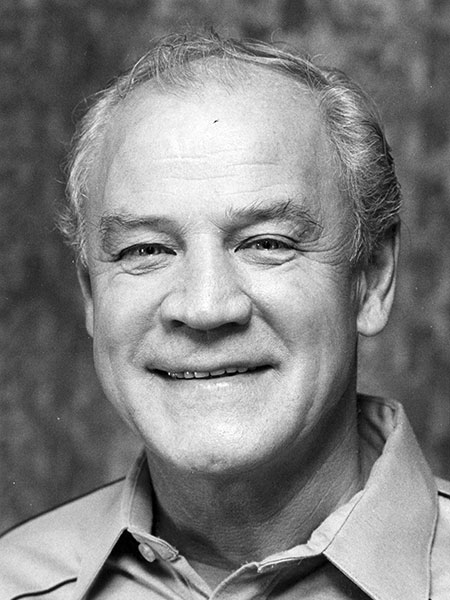
William "Bill" Mosienko was a lightning-fast right winger who spent his entire 14-season career with the Chicago Black Hawks. Widely considered one of the fastest skaters and most gentlemanly players of his era, Mosienko was the third member of the legendary "Pony Line" alongside Max and Doug Bentley. His playing style was defined by explosive speed, agility, and a soft touch around the net, which allowed him to consistently beat defenders in the "Original Six" era.
Mosienko's name is etched permanently in the NHL record books for one of the most unbreakable feats in sports history: scoring three goals in just 21 seconds. Despite his small stature, he was remarkably durable and a perennial threat for the Lady Byng Trophy, which he won in 1945. A true franchise icon, he retired as the Black Hawks' all-time leading scorer at the time. He was inducted into the Hockey Hall of Fame in 1965.
Mosienko's Awards and Honors
- 1x Lady Byng Memorial Trophy (1945)
- 2x NHL Second All-Star Team (1945, 1946)
- 5x NHL All-Star Game appearance
- Manitoba Hockey Hall of Fame Honored Member
- Named to the "100 Greatest NHL Players" (2017)
Notable Achievements
- Scored three goals in a span of 21 seconds against the New York Rangers in 1952
- Averaged only 8.6 penalty minutes per season over his 14-year career
NHL Teams
Chicago Black Hawks (1941-1955)
Number Worn:
8
NHL Stats
Season Played:
14 (1941-1955)
Games Played:
710
Goals:
258
Assists:
282
Points:
540
Penalty Minutes:
121
Playoff Game:
22
Playoff Points:
14 (G-10, A-4)
Bill Quackenbush
Inducted:
1976

Player Stats
5 ft 11 in (180 cm)
180 lb (82 kg; 12 st 12 lb)
Born
March 2, 1922
Toronto, Ontario, Canada
Died
September 12, 1999
Newtown, Pennsylvania, U.S.
Position:
Defense
College:
Toronto Native Sons
Brantford Lions
Bill Quackenbush, born March 2, 1922, in Toronto, Ontario, was one of the NHL’s most disciplined and intelligent defensemen. Playing primarily for the Detroit Red Wings and later the Boston Bruins, he built a reputation as a steady, clean player who excelled in positioning, passing, and defensive awareness. Remarkably, Quackenbush never relied on physical play or penalties to control the game, setting himself apart in an era known for toughness.
In the 1948–49 season, he played all 60 games without recording a single penalty minute, becoming the first defenseman in NHL history to achieve this feat. Over his 14-year career, he played more than 770 games, recording over 280 points, and was selected to multiple NHL All-Star teams. A recipient of the Lady Byng Memorial Trophy, Quackenbush’s sportsmanship and skill made him a model professional. Inducted into the Hockey Hall of Fame in 1976, he is remembered as one of the cleanest and most reliable defensemen in league history.
Quackenbush's Awards and Honors
- Lady Byng Trophy (1949)
- Two time NHL second team All-Star (1947, 1953)
- Honored Member of the Hockey Hall of Fame (1976)
- Three time NHL first team All-Star (1948, 1949, 1951)
- Eight time NHL All-Star Game participant (1947-1954)
NHL Records
- Among the cleanest players ever to play the game
- Set standard for combining skill with sportsmanship on defense
- In 2023 he would be named one of the top 100 Bruins players of all time
- First defenseman in NHL history to play a full season without a penalty (1948–49)
NHL Teams
Detroit Red Wings (1942-1949)
Boston Bruins (1949-1956)
NHL Stats
Seasons:
14 (1942–1956)
Games Played:
774
Goals:
62
Assists:
222
Points:
284
Penalty Minutes:
95
Playoff Games:
80
Playoff Points:
21 (G-2, A-19)
"Don't Miss the Drop—Gear Up for Game Day!"
Level up your fan game with the latest Breakaway jerseys, official sideline knits, and premium outerwear. Whether you're in the arena or on the pond, rep your team with the best gear in the league.
Secure Your Gear – Official NHL Shop








NHL Hall of Fame
The NHL Hall of Fame is a prestigious institution that honors hockey's greatest contributors. Each year, the induction ceremony celebrates legendary players and their historic contributions to the game. The Hall of Fame class includes hockey legends who have achieved remarkable career achievements and created iconic moments on and off the ice.
Inductees are recognized for their significant player contributions, earning various awards and honors, and their influence on the sport. The Hall also commemorates retired jerseys and acknowledges the impact on the game by highlighting famous inductees and their legacies. As a symbol of excellence, the NHL Hall of Fame continues to celebrate the sport's rich history and inspire future generations of hockey players.