

Search By First Name of HOFer
Doug Bentley
Inducted:
1964

Player Stats
5 ft 8 in (173 cm)
145 lb (66 kg; 10 st 5 lb)
Born:
September 3, 1916
Delisle, Saskatchewan, Canada
Died:
November 24, 1972
Saskatoon, Saskatchewan, Canada
Position:
Left Wing
College:
NA
Douglas Wagner Bentley was a diminutive but dynamic left winger who served as the offensive catalyst for the Chicago Black Hawks throughout the 1940s. One of the greatest "pure" playmakers of his generation, Doug was the eldest of the two Bentley brothers to star in Chicago. He famously played on the "Pony Line" with his brother Max and winger Bill Mosienko, a trio that relied on incredible speed and telepathic passing to dismantle much larger opponents.
Doug was a three-time NHL scoring leader (including the 1943 season, where he led the league in both goals and points) and a perennial First-Team All-Star. Despite his small frame, he was notoriously difficult to check due to his agility and hockey sense. He served as the Captain of the Black Hawks for seven seasons, leading the team through the challenging war years and into the early 1950s. He was inducted into the Hockey Hall of Fame in 1964.
Bentley's Awards and Honors
- Named one of the "100 Greatest NHL Players" (2017)
- Number 12 retired (honored) by the Chicago Blackhawks
- 73 points in just 50 games, set a then-record for most points in a season by a left winger
- A three-time NHL scoring leader and a perennial First-Team All-Star
NHL Records
- 3x NHL Scoring Leader (1943, 1944, 1949)
- 3x NHL First All-Star Team (1943, 1944, 1949)
- NHL Second All-Star Team (1942)
- 4x NHL All-Star Game appearance
NHL Teams
Chicago Black Hawks (1939-1952)
New York Rangers (1953-1954)
Number Worn:
77
NHL Stats
Season Played:
13 (1939-1953)
Games Played:
565
Goals:
219
Assists:
324
Points:
543
Penalty Minutes:
217
Playoffs Games:
23
Playoff Points:
17 (6 G, 3 A)
Doug Gilmour
Inducted:
2011

Player Stats
Stats:
5 ft 10 in (178 cm)
175 lb (79 kg; 12 st 7 lb)
Born:
June 25, 1963
Kingston, Ontario, Canada
Position:
Center
College:
Cornwall Royals
Doug Gilmour played with unmatched intensity and heart, building a legacy as one of the most complete two-way centers in NHL history. Over a 20-season career, Gilmour skated for seven teams, most notably with the Toronto Maple Leafs, where he became a fan favorite and team captain. His 1992–93 season stands out, as he recorded a franchise-record 127 points and led the Leafs to the conference finals.
Nicknamed “Killer” for his gritty play despite his modest size, Gilmour combined offensive skill with elite defensive responsibility, earning the Selke Trophy in 1993. He reached the 1,400-point milestone and was a dependable playoff performer, known for clutch goals and leadership. Gilmour’s contributions on and off the ice earned him induction into the Hockey Hall of Fame in 2011. His legacy lives on as one of the toughest and most respected players of his generation.
Gilmour's Awards and Honors
- Stanley Cup Champion (1989 – Calgary Flames)
- Frank J. Selke Trophy (1993)
- Most Points in a Season by a Maple Leafs Player: 127 (1992–93)
- Toronto Maple Leafs Captain (1994–1997)
- Inducted into Hockey Hall of Fame (2011)
- Member of the Order of Hockey in Canada (2018)
- Over 1,400 career NHL points – one of only 20+ players to reach this milestone at the time of retirement
NHL Records
- NHL All-Star (2 times – 1993, 1994)
- Toronto Maple Leafs Single-Season Points Record: 127 points
- Fastest Player to Reach 1,000 Points in Maple Leafs History
- Most Assists in a Single Season for Toronto: 95 assists (1992–93)
- One of the Few Players to Record Over 100 Points in Multiple Seasons (achieved three times in his career)
- Ranked Top 100 All-Time in NHL Points (over 1,400 career points)
- Among the NHL’s Top 20 in Career Assists at Retirement
NHL Teams
St. Louis Blues (1983-1988)
Calgary Flames (1988-1992)
Toronto Maple Leafs (1991-1996)
New Jersey Devils (1996-198)
Chicago Blackhawks (1998-2000)
Buffalo Sabres (2000-2001)
Montreal Canadiens (2001-2003)
NHL draft:
134th overall, 1982
St. Louis Blues
Numbers Worn:
93
NHL Stats
Seasons:
20 (1983–2003)
Games Played:
1,474
Goals:
450
Assists:
964
Points:
1,414
Plus/Minus:
+108
Power Play Goals:
153
Game-Winning Goals:
56
Doug Harvey
Inducted:
1973

Player Stats
5 ft 11 in (180 cm)
190 lb (86 kg; 13 st 8 lb)
Born:
December 19, 1924
Montreal, Quebec, Canada
Died:
December 26, 1989
Montreal, Quebec, Canada
Position:
Defense
College:
NA
Doug Harvey was a revolutionary defenseman, widely regarded as the greatest blue-liner before the arrival of Bobby Orr. Known for his exceptional skating, brilliant passing, and calm puck control, Harvey transformed the role of the defenseman from a purely defensive position to a vital offensive catalyst. He was the on-ice architect for the Montreal Canadiens dynasty that won an unprecedented five consecutive Stanley Cups (1956–1960).
His individual excellence is unmatched by few, highlighted by an incredible seven James Norris Memorial Trophies as the NHL's best defenseman and ten selections to the NHL First All-Star Team. An independent thinker and vocal advocate for player rights, his influence stretched beyond his masterful play, forever changing how the position was played. He was formally inducted into the Hockey Hall of Fame in 1973.
Harvey's Awards and Honors
- 6x Stanley Cup Champion (1953, 1956, 1957, 1958, 1959, 1960)
- 7x James Norris Memorial Trophy (Best Defenseman) (1955, 1956, 1957, 1958, 1960, 1961, 1962)
- 10x NHL First All-Star Team selection
- NHL Second All-Star Team selection (1959)
- 13x NHL All-Star Game appearance (1951, 1952, 1953, 1954, 1955, 1956, 1957, 1958, 1959, 1960, 1961, 1962, 1969)
Notable Achievements
- Named one of the "100 Greatest NHL Players" in 2017
- His seven Norris Trophies are the second-most in NHL history, behind only Bobby Orr (eight)
- First defenseman in NHL history to record over 40 assists in a single season
- Was a central figure in the Montreal Canadiens five-straight Stanley Cup championships
NHL Teams
Montreal Canadiens (1947-1961)
New York Rangers (1962-1964)
Detroit Red Wings (1966-1967)
St. Louis Blues (1968-1969)
Number Worn:
2
NHL Stats
Season played:
19
Games Played:
1,113
Goals:
88
Assists:
452
Points:
540
Penalty Munities:
1,216
Playoff Game:
137
Playoff Points:
72
Stanley Cups:
6 (1953, 1956, 1957, 1958, 1959, 1960)
Doug Wilson
Inducted:
2020

Player Stats
Stats:
6 ft 1 in (185 cm)
190 lb (86 kg; 13 st 8 lb)
Born:
July 5, 1957
Ottawa, Ontario, Canada
Position:
Defense
College:
NA
Doug Wilson was a standout NHL defenseman known for his offensive skill and leadership over a 16-season career with the Chicago Blackhawks and San Jose Sharks.
Drafted 6th overall by Chicago in 1977, he quickly became a key player, earning the Norris Trophy in 1982 after recording 39 goals and 85 points—one of the highest-scoring seasons ever by a defenseman. Wilson was selected to eight All-Star Games and was the first captain in San Jose Sharks history.
He retired in 1993 with 827 points in 1,024 games, ranking among the top-scoring defensemen in NHL history.
In 2020, he was inducted into the Hockey Hall of Fame, honoring his significant contributions to the game.
Wilson's Awards and Honors
- Hockey Hall of Fame (2020)
- James Norris Memorial Trophy winner as best defenceman in NHL (1982), finalist in 1990
- King Clancy Memorial Trophy finalist(1992, 1993)
- First Team All-Star (1981–82)
- 2-time Second Team All-Star (1984–85, 1989–90)
- Member of gold medal-winning Team Canada at Canada Cup (1984)
- Chicago Blackhawks leader in career goals and points by a defenceman
- Led all Chicago Blackhawks defencemen in scoring for 10 consecutive seasons
NHL Records
- 8-time NHL All-Star Game selection (1982, 1983, 1984, 1985, 1986, 1987, 1990, 1992)
- Played over 1,000 career NHL games (1,024)
- Most career goals by a defenseman: 225
- Most career points by a defenseman: 779
- One of Only 8 Defensemen in NHL history (as of retirement) to record a 39-goal season (1981–82)
NHL Teams
Chicago Blackhawks (1977-1991)
San Jose Sharks (1991-1993)
NHL draft:
6th overall, 1977
Chicago Blackhawks
Numbers Worn:
24
NHL Stats
Seasons Played:
16 (1977–1993)
Games Played (GP):
1,024
Goals (G):
237
Assists (A):
590
Points (PTS):
827
Penalty Minutes (PIM):
897
Power-Play Goals (PPG):
79
Game-Winning Goals (GWG):
28
Shots on Goal (SOG):
2,474
Shooting Percentage:
9.6%
Duke Keats
Inducted:
1958

Player Stats
5 ft 11 in (180 cm)
195 lb (88 kg; 13 st 13 lb)
Born:
March 1, 1895
Montreal, Quebec, Canada
Died:
January 16, 1972
Victoria, British Columbia, Canada
Position:
Center
College:
NA
Gordon "Duke" Keats was one of the most prolific and creative centers of the 1920s, a superstar who dominated the Western Canada Hockey League (WCHL) before bringing his talents to the NHL. He was the centerpiece of the Edmonton Eskimos (WCHL) dynasty, where he led the league in scoring and was widely considered the most dangerous offensive threat in the West.
Keats was a pioneer of the "power play" strategy, often slowing the game down to his own pace to wait for a defensive opening. When the Western league collapsed in 1926, he moved to the NHL with the Boston Bruins, later playing for the Detroit Cougars and Chicago Black Hawks. Though he joined the NHL in the latter half of his career, his impact was immediate, and he remained a top-tier producer until his retirement. He was inducted into the Hockey Hall of Fame in 1958.
Keats's Awards and Honors
- WCHL Scoring Leader (1921–22)
- 4x WCHL First All-Star Team (1922, 1923, 1924, 1925)
- PCHA First All-Star Team (1917)
- Edmonton Sports Hall of Fame Inductee
NHL Teams
Boston Bruins (1926-1927)
Detroit Cougars (1926-1928)
Chicago Black Hawks (1927-1929)
Number Worn:
54
NHL Stats
Playing career:
1915–1934
NHL Seasons:
3 (1926–1929)
Games Played:
82
Goals:
30
Assists:
19
Points:
49
Penalty Minutes:
113
Coaching record:
Game:
11
Win/Lose:
2-7
Duncan Keith
Inducted:
2025

Player Stats
6 ft 1 in (185 cm)
192 lb (87 kg; 13 st 10 lb)
Born:
July 16, 1983
Winnipeg, Manitoba, Canada
Position:
Defense
College:
Michigan State University
Duncan Keith was the ultimate modern two-way defenseman, embodying elite skill, speed, and endurance throughout his 17-season NHL career, primarily spent with the Chicago Blackhawks. Known for his tremendous ability to log massive minutes and seamlessly transition the puck, Keith was the backbone of three Stanley Cup championships for Chicago (2010, 2013, 2015). He is a two-time James Norris Memorial Trophy winner (2010, 2014) as the league's top defenseman.
His finest moment came in 2015 when he won the Conn Smythe Trophy as playoff MVP, playing nearly 32 minutes per game while anchoring the defense and contributing offensively. A two-time Olympic Gold medalist, Keith’s intense commitment and tireless motor cemented his status as a legendary figure in both Chicago and Canadian hockey history. He was inducted into the Hockey Hall of Fame in 2025.
Keith's Awards and Honors
- 3x Stanley Cup Champion (2010, 2013, 2015)
- 1x Conn Smythe Trophy (Playoff MVP) (2015)
- 2x James Norris Memorial Trophy (Best Defenseman) (2010, 2014)
- 2x Olympic Gold Medal (Team Canada: 2010, 2014)
- 2x NHL First All-Star Team (2010, 2014)
- 1x NHL Second All-Star Team (2017)
- 4x NHL All-Star Game selection
Notable Achievements
- Set an NHL record for Most Games Played by a Defensive Pair with his longtime Blackhawks partner, Brent Seabrook
- Led the NHL in Time On Ice per Game six consecutive seasons (2009–10 through 2014–15)
- All-Time Chicago Blackhawks defensemen leader in Games Played (1,192)
NHL Teams
Chicago Blackhawks (2005-2021)
Edmonton Oilers (2021-2022)
Earl Seibert
Inducted:
1963

Player Stats
6 ft 2 in (188 cm)
200 lb (91 kg; 14 st 4 lb)
Born:
December 7, 1910
Berlin, Ontario, Canada
Died:
May 12, 1990
Agawam, Massachusetts, U.S.
Position:
Defense
College:
NA
Earl Seibert was one of the most complete defensemen of hockey’s early era, known for blending physical strength with strong offensive instincts. Playing primarily for the New York Rangers and later the Chicago Black Hawks, Seibert helped redefine the role of the defenseman as a two-way contributor. He was a steady presence on the blue line, capable of shutting down opposing forwards while also driving play from the back end.
Seibert played a key role in Chicago’s Stanley Cup championships during the 1930s and earned league-wide respect for his consistency and leadership. His peak came in 1938, when he was recognized as the league’s most valuable player, an exceptional honor for a defenseman. Over his career, Seibert was regularly selected among the NHL’s top players at his position. His lasting impact on the game was recognized with induction into the Hockey Hall of Fame in 1963.
Seibert's Awards and Honors
- 2× Stanley Cup Champion
- NHL First All-Star Team selections
- NHL Second All-Star Team selections
- Rare defenseman to win league MVP honors
- One of the top two-way defensemen of the 1930s
- Key contributor to multiple Stanley Cup teams
- Helped expand the offensive role of NHL defensemen
NHL Teams
New York Rangers (1931-1936)
Chicago Black Hawks (1936-1945)
Detroit Red Wings (1945-1946)
Number Worn:
2, 3, 4
NHL Stats
Seasons:
15 (1931–1947)
Games Played:
653
Goals:
89
Assists:
187
Points:
276
Penalty Minutes:
768
Playoff Game:
65
Playoff Points:
19
Ebbie Goodfellow
Inducted:
1963

Player Stats
6 ft 0 in (183 cm)
175 lb (79 kg; 12 st 7 lb)
Born:
April 9, 1907
Ottawa, Ontario, Canada
Died:
September 10, 1985
Sarasota, Florida, U.S.
Position:
Center
Defense
College:
NA
Ebenezer Robertson "Ebbie" Goodfellow was one of the most versatile and talented superstars in the early history of the Detroit Red Wings. Nicknamed "Poker Face" for his calm demeanor on the ice, Goodfellow began his NHL career as a high-scoring center, leading a famous line with Herbie Lewis and Larry Aurie. In just his second season (1930–31), he finished second in league scoring behind only Howie Morenz, setting a franchise goal-scoring record that stood for over a decade.
Midway through his career, at the request of manager Jack Adams, Goodfellow transitioned to defense. He captained the Red Wings for five seasons and became the first player in franchise history to win the Hart Trophy as league MVP in 1940. A three-time Stanley Cup champion, he retired as one of the last "player-coaches" to have his name engraved on the Cup. He was inducted into the Hockey Hall of Fame in 1963.
Goodfellow's Awards and Honors
- Hart Memorial Trophy (1940)
- 3x Stanley Cup Champion (1936, 1937, 1943)
- 2x NHL First All-Star Team (1937, 1940)
- NHL Second All-Star Team (1936)
- Detroit Red Wings Captain (1934–35, 1938–42)
- One of the few players to play for the franchise under all three of its names: the Detroit Cougars/Falcons/Red Wings
- First true defensive superstar in Detroit's history
NHL Teams
Detroit Red Wings (1929-1932)
Detroit Falcons/Detroit Cougars (1932-1943)
Number Worn:
5
NHL Stats
Seasons Played:
14 (1929-1943)
Games Played:
554
Goals:
134
Assists:
190
Points:
324
Penalty Minutes:
511
Playoff Games:
45
Goals:
8
Assists:
8
Points:
16
Stanley Cups:
3 (1936, 1937, 1943)
Ed Belfour
Inducted:
2011

Player Stats
Stats:
5 ft 11 in (180 cm)
214 lb (97 kg; 15 st 4 lb)
Born:
April 21, 1965
Carman, Manitoba, Canada
Position:
Goaltender
College:
North Dakota Fighting Sioux
Ed Belfour earned his place among hockey’s elite through an unmatched combination of grit, consistency, and fierce competitiveness. Known as “The Eagle,” Belfour rose to prominence with the Chicago Blackhawks in the early 1990s, winning the Calder Trophy and Vezina Trophy in his rookie season.
He was instrumental in the Dallas Stars’ 1999 Stanley Cup victory, providing stellar goaltending throughout the playoffs. Over a 17-season NHL career, Belfour played for five teams and consistently ranked among league leaders in wins and save percentage.
His aggressive butterfly style and ability to perform in high-pressure moments made him one of the most dependable goaltenders of his era. Belfour ranks among the all-time leaders in career wins and is remembered for his dedication to the game and competitive edge.
He was inducted into the Hockey Hall of Fame in 2011, solidifying his place in NHL history.
Belfour's Awards and Honors
- Stanley Cup Champion (1999 – Dallas Stars)
- Calder Memorial Trophy (1991)
- Vezina Trophy (1991, 1993)
- William M. Jennings Trophy (1991, 1993, 1995, 1999)
- NHL All-Star (6 times)
- Third all-time in career wins at retirement (484)
- Inducted into Hockey Hall of Fame (2011)
NHL Records
- 4th All-Time in Career Wins: 484 wins
- Tied for 10th in Shutouts: 76 career shutouts
- Most Wins in a Single Season by an Undrafted Goaltender: 43 wins (1990–91 season)
- Only Goaltender to Win the Jennings Trophy with Three Different Teams: Chicago, Dallas, and San Jose
- One of Only Two Goalies to Win the Calder, Vezina, Jennings, and Stanley Cup
- Most Wins by an Undrafted Goaltender in NHL History
- Most Career Wins for the Dallas Stars Franchise (at retirement): 160 wins
NHL Teams
Chicago Blackhawks (1988-96)
San Jose Sharks (1996-97)
Dallas Stars (1997-2002)
Toronto Maple Leafs (2002-07)
Florida Panthers (2006-07)
Eddie Gerard
Inducted:
1945
Player Stats
5 ft 9 in (175 cm)
168 lb (76 kg; 12 st 0 lb)
Born:
February 22, 1890
Ottawa, Ontario, Canada
Died:
August 7, 1937
Ottawa, Ontario, Canada
Position:
Left Wing
Defense
College:
NA
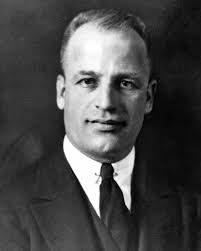
Edward George "Eddie" Gerard was the heart and soul of the Ottawa Senators dynasty of the 1920s and one of the most decorated winners in the history of the sport. He was recognized for his excellent positioning, physical presence, and ability to shut down opposing forwards while supporting his team’s offense. He was a natural leader, captaining the Senators to three Stanley Cups in four years (1920-1923). After retiring due to health issues, he became a legendary coach, leading the Montreal Maroons to a title in 1926. He was inducted into the Hockey Hall of Fame as an inaugural member in 1945.
Gerard's Awards and Honors
- 4x Stanley Cup Champion as a Player (1920, 1921, 1922, 1923)
- 1x Stanley Cup Champion as a Coach (1926 - Montreal Maroons)
- Captain of the Ottawa Senators (1919–1923)
- First captain in NHL history to lead his team to three Stanley Cup championships within a four-year span
NHL Teams
Ottawa Senators (1917-1923)
NHL Stats
Season Played:
6 (1917-1923)
Games Played:
128
Goals:
50
Assists:
48
Points:
98
Penalty Minutes:
120
Playoffs Games:
27
Playoff Points:
8 (7 G, 1 A)
Stanley Cups:
4 (1920-1923)
Eddie Giacomin
Inducted:
1987
Player Stats
5 ft 11 in (180 cm)
180 lb (82 kg; 12 st 12 lb)
Born:
June 6, 1939
Sudbury, Ontario, Canada
Position:
Goaltender
College:
NA
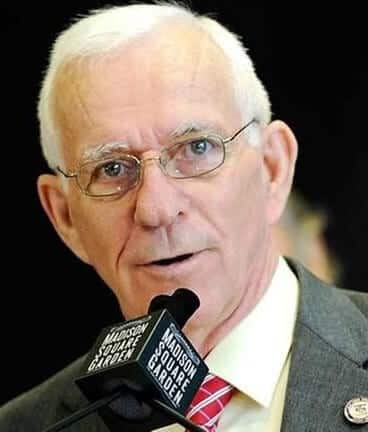
Eddie Giacomin earned a reputation as one of the finest goaltenders of his era and a beloved figure in New York Rangers history. Known for his fearless style and incredible reflexes, Giacomin became a cornerstone of the Rangers throughout the 1960s and early 1970s. Despite suffering severe burns as a teenager, he battled back to reach the NHL, showcasing resilience that mirrored his determined play on the ice.
Giacomin led the league in shutouts three times and wins twice, establishing himself as one of the premier goalies of his generation. His fiery competitiveness and spectacular saves made him a fan favorite at Madison Square Garden, where he anchored the Rangers to multiple playoff runs. After closing his career with the Detroit Red Wings, he retired as one of the most respected netminders in hockey.
Inducted into the Hockey Hall of Fame in 1987, Giacomin’s legacy as a Rangers icon and inspirational figure endures.
Giacomin's Awards and Honors
- 5× NHL All-Star (1967–1971)
- NHL First All-Star Team (1971)
- NHL Second All-Star Team (1967, 1968, 1970)
- NHL Wins Leader (1967, 1971)
- NHL Shutouts Leader (1967, 1968, 1971)
NHL Records
- Most shutouts in a single season by a Rangers goalie
- One of the top five goaltenders in Rangers history in career wins and shutouts
NHL Teams
New York Rangers (1965-1976)
Detroit Red Wings (1976-1978)
Number Worn:
1
NHL Stats
Seasons:
13 (1965–1978)
Games Played:
609
Wins:
289
Shutouts:
54
Goals Against Average (GAA):
2.82
Playoff Games:
65
Playoff Wins:
29
Playoff GAA:
2.81
Playoff Shutouts:
1
Eddie Shore
Inducted:
1947

Player Stats
5 ft 11 in (180 cm)
190 lb (86 kg; 13 st 8 lb)
Born:
November 25, 1902
Fort Qu'Appelle, North-West Territories, Canada
Died:
March 16, 1985
Springfield, Massachusetts, United States
Position:
Defense
College:
NA
Eddie Shore was one of the most dominant and intimidating defensemen in NHL history, redefining the position with his strength, skill, and relentless intensity. Playing from 1926 to 1940, Shore starred primarily with the Boston Bruins, where he controlled games through physical play and surprising offensive production. He was known for his booming shot, fierce competitiveness, and ability to dictate the pace from the blue line in a rugged, low-scoring era.
Shore won multiple league honors and was a central figure in Boston’s rise as a powerhouse, helping the team capture Stanley Cup championships. His influence extended beyond defense, as he regularly ranked among the league’s scoring leaders despite his position. Feared by opponents and respected by teammates, Shore set a new standard for elite defensemen. His extraordinary NHL career was honored with induction into the Hockey Hall of Fame in 1947.
Shore's Awards and Honors
- 2x Stanley Cup Champion (1929, 1939)
- 4x Hart Memorial Trophy (1933, 1935, 1936, 1938)
- 7x NHL First All-Star Team (1931, 1932, 1933, 1935, 1936, 1938, 1939)
- NHL Record: Most Hart Trophies by a defenseman (4)
- NHL second All-Star team in 1934
- Played in the NHL All-Star Benefit Memorial Game in 1934, 1937, and 1939
- Ranked #10 on The Hockey News' list of the 100 Greatest Hockey Players
- Oldest player in NHL history, along with Herb Gardiner, to win the Hart Memorial Trophy
NHL Teams
Boston Bruins (1926-1940)
New York Americans (1939-1940)
Number Worn:
2
NHL Stats
Seasons:
14 (1926-1940)
Games Played:
551
Goals:
105
Assists:
179
Points:
284
Penalty Minutes:
1099
Playoff Game:
55
Playoff Points:
20 (G-7, A-13)
Stanley Cups:
2 (1929, 1939)
Edgar Laprade
Inducted:
1993
Player Stats
5 ft 8 in (173 cm)
160 lb (73 kg; 11 st 6 lb)
Born:
October 10, 1919
Mine Centre, Ontario, Canada
Died:
April 28, 2014
Thunder Bay, Ontario, Canada
Position:
Center
College:
NA
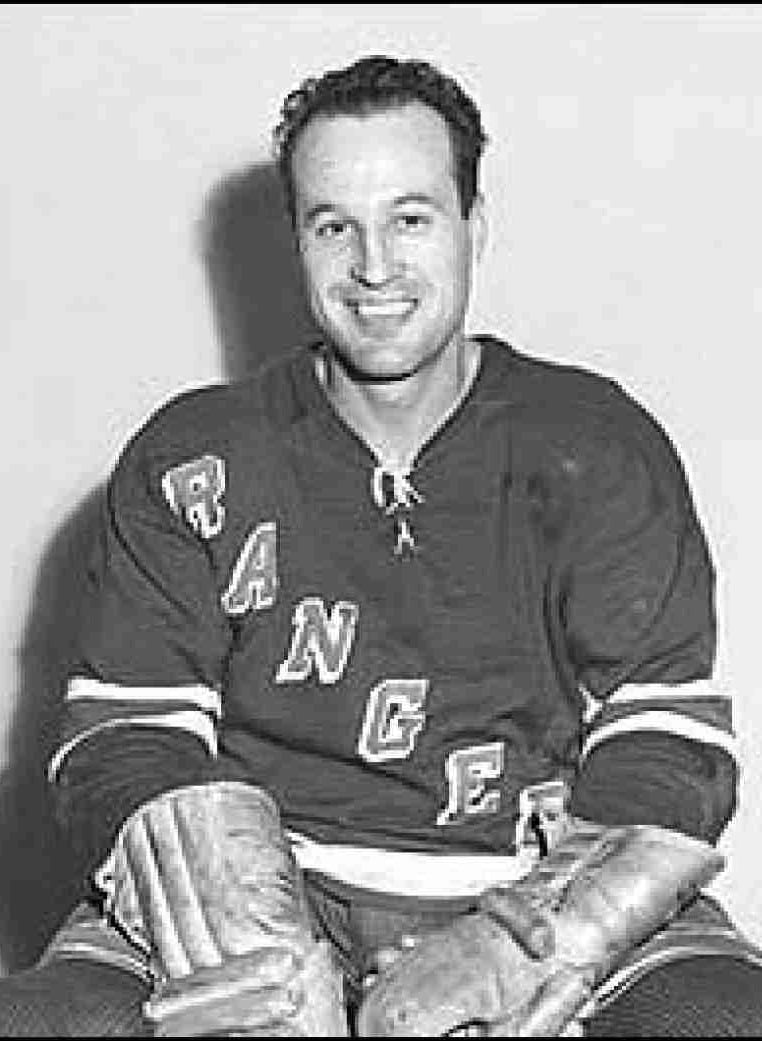
Edgar Laprade was a smooth, intelligent center who built his reputation on clean play, sharp passing, and consistency during a decade-long NHL career with the New York Rangers. Joining the league in 1945 after serving in World War II, Laprade made an immediate impact by winning the Calder Trophy as rookie of the year. He was a reliable playmaker who rarely took penalties and played with discipline in an era known for its physicality.
Laprade's hockey sense and calm presence allowed him to thrive against the league's toughest competition. Though the Rangers struggled as a team during much of his career, Laprade remained a steady performer and earned four All-Star selections. His career totals reflect his unselfish game, and his sportsmanship earned him the Lady Byng Trophy in 1949. For his strong two-way play and professionalism, Laprade was inducted into the Hockey Hall of Fame in 1993.
Laprade's Awards and Honors
- 4× NHL All-Star (1947, 1948, 1949, 1950)
- Calder Memorial Trophy (1946)
- Lady Byng Memorial Trophy (1949)
- Inducted into the Hockey Hall of Fame (1993)
NHL Records
- One of the Few NHL Players to Win Calder and Lady Byng Trophies
- Exceptionally Low Career Penalty Minutes
- Never Recorded More Than 10 Penalty Minutes in a Season
- 4 Consecutive NHL All-Star Selections (1947–1950)
- One of the NHL’s most disciplined and respected players of his era
NHL Teams
New York Rangers (1945-1955)
Number Worn:
10
NHL Stats
Seasons Played:
10 (1945-1955)
Games Played:
500
Goals:
108
Assists:
172
Points:
280
Penalty Minutes:
42
Elmer Lach
Inducted:
1966

Player Stats
5 ft 10 in (178 cm)
165 lb (75 kg; 11 st 11 lb)
Born:
January 22, 1918
Nokomis, Saskatchewan, Canada
Died:
April 4, 2015
Kirkland, Quebec, Canada
Position:
Center
College:
NA
Elmer James Lach was the brilliant playmaking engine of the Montreal Canadiens during the 1940s and early 50s. As the center for the legendary "Punch Line"—flanked by Maurice "Rocket" Richard and Toe Blake—Lach was the tactical mastermind who fed the puck to his more famous wingers.
Despite his slight frame, he was famously fearless and remarkably resilient, playing through a career-long litany of gruesome injuries, including a broken jaw, nose, and even a fractured skull. Lach was the first player in NHL history to win the Art Ross Trophy (officially awarded starting in 1948, though he led the league in scoring twice) and captured the Hart Memorial Trophy in 1945.
A three-time Stanley Cup champion, he retired as the NHL’s all-time leading scorer, a testament to his vision and longevity in an incredibly physical era. He was inducted into the Hockey Hall of Fame in 1966.
Lach's Awards and Honors
- 3x Stanley Cup Champion (1944, 1946, 1953)
- Hart Memorial Trophy (League MVP) (1945)
- Art Ross Trophy (Inaugural winner in 1948)
- Number 16 retired by the Montreal Canadiens
- Named one of the "100 Greatest NHL Players" (2017)
- NHL's all-time leading point scorer with 623 points, until it was surpassed by Maurice Richard
NHL Records
- 2x NHL Scoring Leader (1945, 1948)
- 3x NHL First All-Star Team (1945, 1948, 1952)
- 2x NHL Second All-Star Team (1944, 1946)
NHL Teams
Montreal Canadiens (1940-1954)
Number Worn:
16
NHL Stats
Seasons Played:
14 (1940-1954)
Games Played:
664
Goals:
215
Assists:
408
Points:
623
Penalty Minutes:
478
Playoff Games:
76
Goals:
19
Assists:
45
Points:
64
Stanley Cups:
3 (1944, 1946, 1953)
Emile Bouchard
Inducted:
1966

Player Stats
6 ft 2 in (188 cm)
205 lb (93 kg; 14 st 9 lb)
Born:
4 September 1919
Montreal, Quebec, Canada
Died:
14 April 2012
Longueuil, Quebec, Canada
Position:
Defense
College:
NA
Émile "Butch" Bouchard was the physically imposing "Rock of Gibraltar" on the Montreal Canadiens' blue line for 15 seasons. Standing 6'2" and weighing over 200 lbs—a giant for his era—Bouchard was legendary for his immense strength, which he developed through weightlifting long before it was standard practice for hockey players. He was a defensive specialist with elite passing skills who played a "clean" but punishing style, rarely needing to fight because few dared to challenge him.
In 1948, he became the first Quebec-born captain in Canadiens history, a role he held for eight seasons while mentoring future legends like Doug Harvey and Jean Béliveau. A cornerstone of four Stanley Cup-winning teams, Bouchard is credited with helping revitalize the franchise during a period when it faced the threat of relocation. He was inducted into the Hockey Hall of Fame in 1966.
Bouchard's Awards and Honors
- Number 3 Retired by the Montreal Canadiens (2009)
- Recipient of the Order of Canada (2010) and the National Order of Quebec (2008)
- Was the longest-serving captain in franchise history at the time of his retirement
- First person born in the province of Quebec to be named captain of the Montreal Canadiens
- The QMJHL's Defenceman of the Year Trophy (Emile Bouchard Trophy) is named in his honor
NHL Records
- 3x NHL First All-Star Team (1945, 1946, 1947)
- NHL Second All-Star Team (1944)
- 6x NHL All-Star Game appearance
- NHL second All-Star team: 1944
NHL Teams
Montreal Canadiens (1941-1956)
Number Worn:
3
NHL Stats
Season Played:
15 (1941-1956)
Games Played:
785
Goals:
49
Assists:
145
Points:
194
Penalty Minutes:
863
Playoff Game:
113
Playoff Points:
32
Stanley Cups:
4 (1944, 1946, 1953, 1956)
"Don't Miss the Drop—Gear Up for Game Day!"
Level up your fan game with the latest Breakaway jerseys, official sideline knits, and premium outerwear. Whether you're in the arena or on the pond, rep your team with the best gear in the league.
Secure Your Gear – Official NHL Shop
NHL Hall of Fame
The NHL Hall of Fame is a prestigious institution that honors hockey's greatest contributors. Each year, the induction ceremony celebrates legendary players and their historic contributions to the game. The Hall of Fame class includes hockey legends who have achieved remarkable career achievements and created iconic moments on and off the ice.
Inductees are recognized for their significant player contributions, earning various awards and honors, and their influence on the sport. The Hall also commemorates retired jerseys and acknowledges the impact on the game by highlighting famous inductees and their legacies. As a symbol of excellence, the NHL Hall of Fame continues to celebrate the sport's rich history and inspire future generations of hockey players.