

The 48-Team Expansion: Why Scale Changes the Historical Narrative
The 2026 FIFA World Cup isn’t just a larger tournament — it’s a fundamental reimagining of what global soccer can be.
For three decades, the 32-team format shaped how fans understood World Cup competition: tight brackets, ruthless eliminations, and a familiar cast of powerhouse nations. That era ends in the 2026 FIFA World Cup. According to FIFA, the tournament will feature 48 teams and 104 total matches across 16 host cities — making it the largest World Cup in history by a significant margin.
What that scale actually means:
- More nations, more stories. Smaller soccer nations earn their first or second-ever World Cup berths, pulling entirely new fan bases and national narratives into the conversation.
- More matches, more moments. The jump from 64 to 104 games creates exponentially more opportunities for upsets, breakout players, and historic firsts.
- Wider cultural reach. North American audiences — already experiencing rapid growth in soccer fandom — gain dozens of additional entry points into the sport’s global story.
As CONCACAF President Victor Montagliani put it, this event “will be a watershed moment for the sport in North America, driving unprecedented interest in the history and evolution of the game locally.”
That sense of historic possibility only deepens when you consider where these matches will actually be played — and the extraordinary decision to spread them across three nations for the very first time.
A Continental Legacy: The Tri-Nation Hosting Strategy
FIFA 2026 rewrites the record books before a single ball is kicked — becoming the first World Cup ever hosted across three sovereign nations simultaneously.
For the first time in tournament history, the United States, Canada, and Mexico will jointly stage the world’s most-watched sporting event, according to the U.S. Soccer Federation. That structural milestone alone demands attention. Mexico becomes just the third nation to host the men’s tournament three times — an extraordinary feat. Canada, by contrast, welcomes its first-ever men’s World Cup, marking a generational breakthrough for a country whose soccer identity has long played second fiddle to hockey.
The tri-nation framework isn’t simply logistical cleverness. It reflects how deeply the sport has evolved across North America’s interconnected soccer ecosystem. MLS has grown from 10 founding clubs in 1996 into a continental force with dozens of expansion franchises, while Liga MX consistently ranks among the world’s most-watched domestic leagues. Together, they’ve built the fan base that makes hosting viable at this scale.
However, shared hosting also introduces real complexity — cross-border logistics, time zone challenges, and uneven infrastructure. Whether the three nations convert this ambition into cohesive legacy will depend largely on individual host cities. And few carry higher expectations than Los Angeles.
Host City Spotlight: Los Angeles and the West Coast Hub
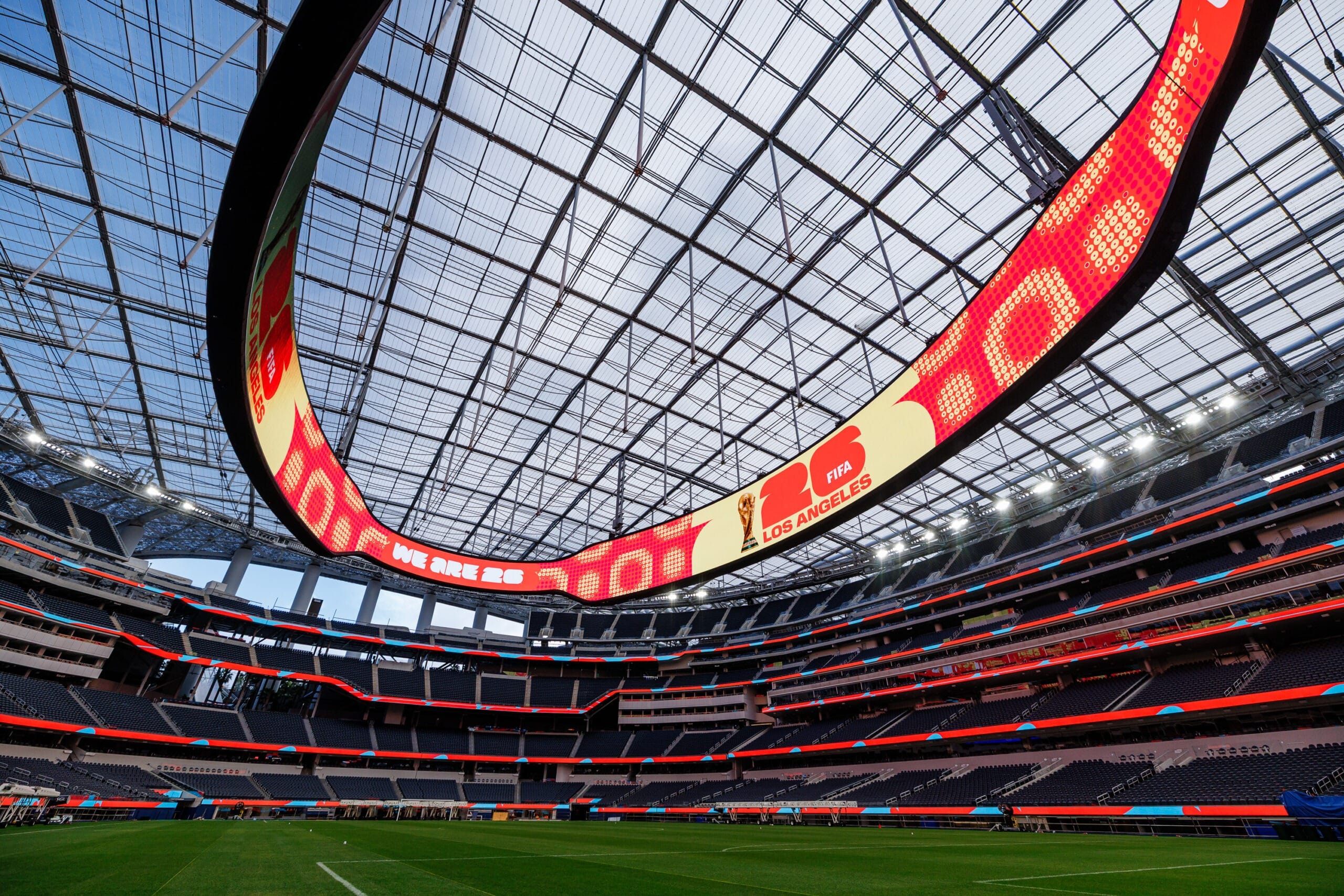
Los Angeles arrives at the 2026 World Cup carrying more soccer history than almost any other American city — and the weight of that legacy is impossible to ignore.
SoFi Stadium isn’t just a venue; it’s a statement. The ultra-modern Inglewood facility will host some of the tournament’s highest-stakes matches, building on a tradition that stretches back to the 1994 World Cup final at the Rose Bowl — still one of the most-watched soccer matches in U.S. history. That 1994 moment arguably planted the seeds for what became a thriving local soccer culture, including the founding of one of MLS’s original clubs just a year later.
According to losangelesfwc26.com, the city is designated as a major host with dedicated fan events and stadium-centric festivities built around SoFi Stadium’s matchday experience. For fans securing FIFA World Cup 2026 tickets, Los Angeles represents a compelling destination — a city where soccer infrastructure, entertainment, and diverse community passion converge at scale.
However, hosting success in LA won’t come automatically. A sprawling metro area presents real logistical challenges around transit and crowd management. In practice, how the city coordinates fan zones and public programming will determine whether Los Angeles cements its reputation as North America’s premier soccer hub — or simply a stunning backdrop.
That local identity, city by city, tells a broader story across all 16 host locations.
From Seattle to Toronto: The 16-City Historical Map
The 2026 World Cup’s host city lineup is the most geographically ambitious in the tournament’s history — a 16-city map that doubles as a living atlas of North American soccer’s rise.
According to FIFA and Wikipedia, the tournament spans eleven U.S. cities, three in Mexico, and two in Canada, stretching from the Pacific Northwest to the Gulf Coast and across the border into two neighboring nations. That spread isn’t logistical coincidence — it’s a deliberate statement about where the game has taken root.
West: Seattle anchors the Pacific coast. The city’s soccer culture runs deep, built on decades of Sounders FC passion and some of the loudest stadium atmospheres in MLS. As noted by the Seattle host committee, the tournament is expected to be genuinely transformative for the region.
Central: Dallas, Kansas City, and Houston represent the heartland — cities where soccer’s American roots go back further than most fans realize, and where diverse, passionate communities have built real fan cultures.
East: New York, Boston, Philadelphia, and Toronto close the loop — markets with layered club histories and massive international diaspora communities that treat every World Cup match like a home game.
Each city carries itemized team histories that shaped North American soccer before the world cup 2026 schedule was ever announced. Together, they don’t just host matches — they tell the story of how a continent fell in love with the game. With 16 cities confirmed and millions of fans eyeing the same seats, securing your spot becomes the next critical challenge.
Securing Your Place: The 2026 Ticket and Schedule Reality
Demand for the 2026 FIFA World Cup will be unlike anything North American sports fans have experienced — and acting early is the only real strategy.
FIFA projects 6 million fans will attend in person, shattering the record set during the 1994 tournament on home soil. With 104 matches spread across 16 cities, that number reflects genuine scarcity. Getting a ticket will require preparation, not luck.
The registration process starts on FIFA’s official portal, where fans can register their interest before formal sales phases open. This isn’t a purchase — it’s a queue placement that determines your eligibility when ticket ballots launch. Here’s what the practical process looks like:
- Create a FIFA account at FIFA.com and complete your profile fully before any sales window opens.
- Register Your Interest through the FIFA ticketing portal to enter the ballot system for high-demand matches.
- Set calendar alerts for each sales phase — early phases typically offer broader availability.
- Target group-stage matches in cities like those with established soccer roots, where atmosphere rivals knockout rounds.
- Plan your travel window: the tournament runs June 11 to July 19, 2026, with the final hosted in the New York/New Jersey area.
For fans drawn to marquee venues, fifa world cup 26 los angeles fixtures at SoFi Stadium rank among the most competitive tickets available. Whether you’re a long-time supporter who followed clubs like D.C. United through MLS’s early years or a first-time soccer attendee, the window to register is narrow — and the demand is anything but.
The Bottom Line: What You Need to Know
The 2026 FIFA World Cup is the largest, most geographically complex tournament ever staged — and North America is its proving ground.
Here’s what every fan needs to hold onto:
- 48 teams, 104 matches. No previous World Cup comes close in scale or ambition. Every group-stage slot, knockout bracket, and final carries amplified weight.
- Historic tri-nation format. The USA, Mexico, and Canada are co-hosting under the united26 banner — the first tri-nation World Cup in FIFA history, turning national borders into a shared stage.
- Act on tickets now. With a projected attendance of 6 million fans across the tournament, demand will overwhelm supply fast. Registering interest early is the only realistic path to securing a seat.
- Host cities define the identity. From the seattle FIFA World Cup 26 venues to LA’s sun-soaked stadiums, these cities aren’t just backdrops — they are the story. Seattle’s commitment to lasting regional impact exemplifies what’s at stake beyond the scoreboard.
The bottom line: this tournament will shape North American soccer for a generation. Understanding the club histories woven into each host city — from Colorado’s early MLS roots to New England’s founding moments in 1995 — gives every match richer meaning. That depth of context is exactly where the next section picks up.
Preserving the Legacy: Why History Matters for 2026
The 2026 FIFA World Cup means more when you understand the decades of struggle, reinvention, and growth that brought North American soccer to this moment.
Knowing the lineage transforms a match into a milestone. From the NASL’s pioneering era to MLS’s careful, franchise-by-franchise expansion, every host city carries a story that stretches far beyond the tournament schedule. Kansas City, for instance, traces its soccer roots back to 1996 — understanding how that club evolved from its earliest identity reframes what a World Cup match there actually represents. Seattle tells a similarly layered tale, with the Sounders’ rise through multiple leagues reflecting the very arc soccer has traveled across the continent.
That context is exactly what Sportsteamhistory.com is built to provide. The archives cover franchise origins, name changes, ownership shifts, and competitive records — the full picture behind the clubs whose stadiums will host the world’s biggest sporting event. As host cities finalize their legacy commitments and communities prepare for a transformative summer, grounding yourself in that history makes every kick-off matter more.
Before the first whistle blows in 2026, explore the host city franchise archives at Sportsteamhistory.com. The history is already there — go find yours.