
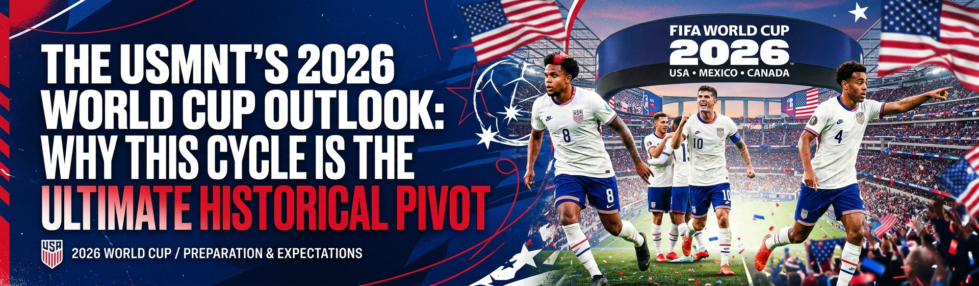
The Road to 2026: A Home-Soil Historical Milestone
The 2026 FIFA World Cup represents the single greatest opportunity in USMNT history — a home-soil tournament, an expanded field, and a generation of players hitting their peak at exactly the right moment. This is a pivotal moment in the USMNT’s 2026 World Cup Outlook.
The scale alone is staggering. According to FIFA, the United States, Mexico, and Canada will co-host a tournament featuring 48 teams and 104 total matches — the largest World Cup ever staged. Checking the usa world cup 2026 schedule reveals a breathtaking spread of fixtures across American stadiums that will make the entire nation feel the pulse of global soccer.
The parallels to 1994 are impossible to ignore. That tournament, also hosted on American soil, is widely credited with planting the seeds of modern U.S. soccer culture. But 2026 exceeds it in every measurable dimension — more teams, more matches, more commercial reach, and crucially, a far more competitive American squad. Where 1994 introduced casual fans to the sport, 2026 arrives with genuine expectations of a deep run.
For the USMNT, this marks their 12th World Cup appearance — a milestone that signals institutional consistency, not just occasional qualification. The program has traveled a long road to reach this moment of convergence between hosting rights and genuine talent. That talent, shaped by a bold tactical philosophy, is exactly where the story gets interesting.
Looking ahead, the USMNT’s 2026 World Cup Outlook is influenced by both historical significance and the promise of future success.
The Pochettino Era: Tactical Shifts for the Golden Generation
Mauricio Pochettino’s appointment marks the most significant tactical reset in USMNT history, replacing the Berhalter era’s possession-first structure with a relentless, high-press identity built for the biggest stages.
The philosophical shift is immediate and unmistakable. Where the previous regime leaned on a methodical build-up style, Pochettino — whose track record transforming clubs like Tottenham into Champions League contenders — demands intensity, pressing triggers, and vertical attacking movement. That approach suits a squad loaded with players who thrive in the speed-of-play environments of Europe’s elite leagues.
That European pedigree is central to how U.S. Soccer’s official roster announcement reads. Pochettino’s 26-man selection skews heavily toward players logging regular minutes in the Premier League, Bundesliga, and Serie A — a deliberate signal that the program now values proven elite-level exposure over domestic comfort.
The psychological dimension may matter just as much as tactics. A manager with Pochettino’s pedigree carries credibility that reshapes a locker room’s collective ceiling. Key elements of that impact include:
- Accountability culture — high expectations normalize elite standards daily
- Tactical clarity — players know exactly what role they serve within a defined system
- Belief amplification — world-class coaching raises a young group’s self-perception heading into the USMNT World Cup 2026 schedule
That belief will be tested early. With a roster still defined by its youth, the real question is how players like Pulisic, Reyna, and McKennie translate that Pochettino confidence into performance when it counts most.
From Youth to Maturity: Tracking the 2022 Roster’s Evolution
The USMNT’s greatest competitive asset heading into 2026 isn’t tactics or home-field advantage — it’s time, and what four additional years have done to an already exceptional group of players.
According to FIFA, the USMNT fielded the second-youngest roster at the 2022 World Cup, averaging just 25.2 years of age. That youth was both a limitation and a promise. A roster that young in Qatar wasn’t peaking — it was previewing. For anyone asking how many times the USA has qualified for the World Cup and wondering whether this cycle will finally deliver a deep run, the answer hinges less on history than on what that 2022 group looks like now.
Christian Pulisic, Gio Reyna, and Weston McKennie are the clearest examples of that maturation curve. Pulisic, 26 in 2026, enters the tournament at the statistical peak age for elite attacking players. Reyna, long managing injury disruptions, arrives with two additional years of consistent club minutes. McKennie brings midfield leadership that simply wasn’t present in his younger years. As ESPN’s 2026 roster coverage notes, this core group is now battle-tested at the highest club levels across Europe.
What makes this moment historically rare is the continuity itself. Keeping a core group intact across two complete World Cup cycles — through injuries, transfers, and club pressures — almost never happens. That cohesion, built through shared experience in Qatar and refined under Pochettino’s system, is the kind of foundation that separates contenders from participants.
That foundation extends beyond performance stats — it’s woven into the identity of the program, expressed in everything from lineup selections to how the team presents itself to the world. And increasingly, that identity has a visual dimension worth examining closely.
Visualizing the Legacy: USA World Cup Jersey and Brand History
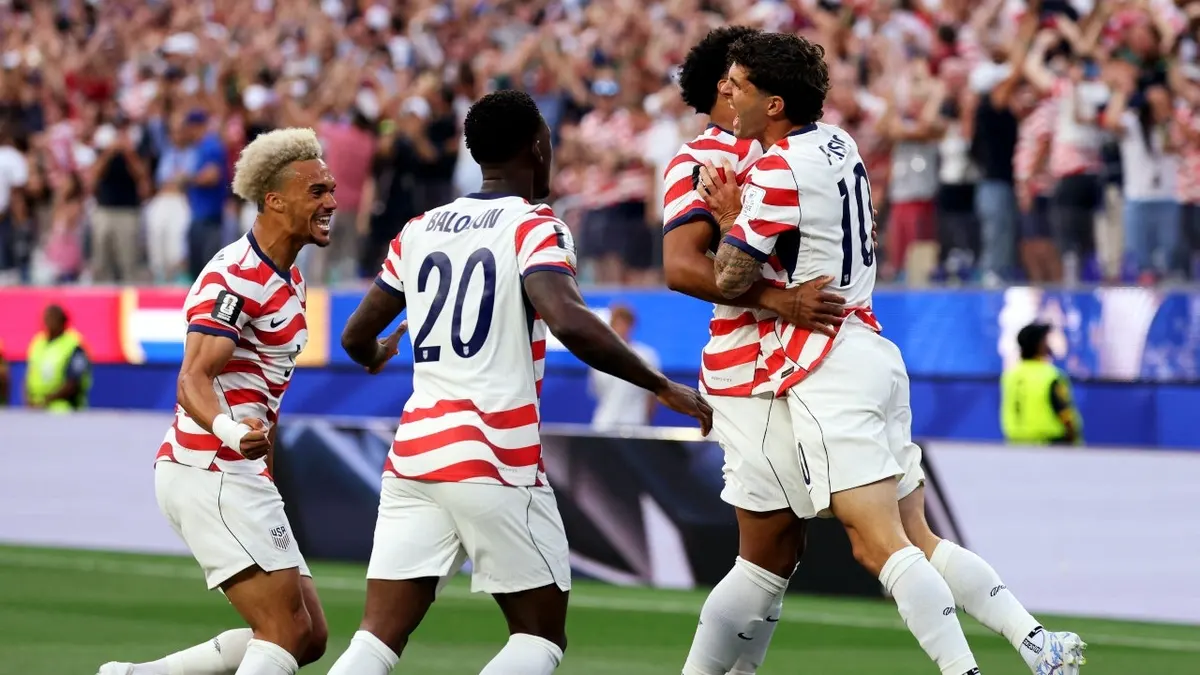
The USA World Cup jersey history is more than a timeline of kit designs — it’s a visual record of how seriously the United States has come to take the sport.
American soccer’s identity crisis ended at the kit level long before it was resolved on the pitch. The 1994 home jersey, with its denim-inspired pattern and bold tricolor sash, was experimental in the best and worst ways — a design that screamed novelty over authority. By 2002 and 2006, the federation began leaning into cleaner aesthetics, still searching for a consistent visual language. The iconic sash returned in 2010 in a more refined form, and that tournament’s run to the Round of 16 gave the jersey genuine emotional weight.
Branding reflects professionalization. As Major League Soccer grew and American players began earning major European contracts, the crest and kits evolved accordingly — sharper, more confident, less apologetic. The federation’s modernized crest, introduced ahead of the 2026 cycle, signals institutional seriousness. Even Gregg Berhalter, before handing the reins to Pochettino, acknowledged that “this is the start of a new era for U.S. Soccer… we are building a culture that can compete with the best in the world.”
Kit culture has real stakes for legacy. Fans don’t just watch history — they wear it. Memorabilia from defining moments, like the 2002 quarterfinal run, now carries collector value. With the largest FIFA World Cup in history being hosted on home soil in 2026, demand for authentic gear has surged. The 2026 kits are expected to honor the federation’s heritage while projecting a modern, global identity befitting a team that genuinely believes a deep tournament run is within reach — a belief that raises the question of just how far this group can actually go.
Expectations vs. Reality: How Far Can the USMNT Go?
The honest answer to the odds and betting sites of the USA winning the 2026 World Cup is cautiously optimistic — not championship-level, but firmly in contention for a historic deep run.
The baseline expectation is already set. Fox Sports bracket projections place the USMNT comfortably in the Round of 32 — the new knockout entry point created by the expanded 48-team format. That’s the floor, not the ceiling.
Host nation history reinforces the optimism. Since 1966, every host nation has advanced out of the group stage, and most have reached at least the quarterfinals. The United States in 2002 — without home-field advantage — pushed all the way to the quarterfinals, which remains the program’s best-ever finish. A motivated, experienced squad playing on American soil carries measurably more upside than that 2002 group did.
“Crunch Time” is where this cycle gets decided. The USMNT has openly embraced the pressure of knockout football, with players and staff expressing confidence heading into the Round of 32. The new format actually rewards depth and tactical discipline — two areas where Mauricio Pochettino’s fingerprints are clearest. On the other hand, the expanded bracket means stronger squads survive longer, raising the level of competition in the later rounds.
When you stack up roster maturity, home support, and structural format changes, the picture that emerges points toward a quarterfinal run as the realistic target — and a semifinal berth as the breakthrough scenario worth believing in.
The Bottom Line: What You Need to Know for 2026
The 2026 World Cup represents the most significant opportunity in USMNT history — and the evidence supporting that claim is concrete, not speculative.
The structural advantage alone is historic. At 48 teams, this is the largest World Cup ever staged, meaning more paths to the knockout rounds and more room for a host nation to build momentum through the group stage. The 2022 final drew 1.5 billion viewers according to FIFA, and 2026’s expanded format on home soil is positioned to shatter that number — raising the stakes for every American performance.
Beyond the format, Mauricio Pochettino, USMNT coach, has delivered something previous cycles lacked: a coherent tactical identity. Pochettino’s career-long emphasis on pressing structure and defensive organization — the same philosophy that shaped disciplined, high-performing squads earlier in his career — has given this group a recognizable system rather than a collection of talented individuals playing without a clear framework.
The roster itself reflects a genuine maturation curve. Players who entered past tournaments as promising youngsters — Pulisic, Adams, McKennie — now carry veteran tournament experience and the confidence to lead in pressure moments. That shift from potential to proven is arguably the most important development of this cycle.
Home-field advantage ties everything together. Crowd support, familiar conditions, and the last comparable surge of national momentum reaching the quarterfinals in 2002 all point toward the same conclusion: this is the USMNT’s best shot at a deep run in over two decades. The timeline, the talent, and the coaching are aligned — and tracking how that alignment developed requires knowing where this program has been.
Preserving the Timeline at Sportsteamhistory.com
The USMNT golden generation deserves a historical record as precise and complete as the moment itself demands. Every roster adjustment, crest evolution, and coaching transition shapes how future fans will understand this era — and centralized, reliable archives make that understanding possible.
Sportsteamhistory.com provides exactly that: itemized team histories, chronological timelines that capture each meaningful shift, from roster changes to logo redesigns, and across major programs throughout American sports history. Whether you’re tracing how the USMNT’s squad depth evolved over a World Cup cycle or comparing a single coaching decision against decades of precedent, that kind of structured data removes guesswork. The same meticulous approach applied to programs like teams documented across college and professional sports reinforces why a single, well-organized archive matters more than scattered sources.
For fans following the 2026 journey in real time, fragmented information is the enemy of context. Understanding why this squad feels different requires knowing what came before — the near-misses, the rebuilds, and the generational shifts that gradually assembled a competitive program. Centralized records connect those dots efficiently, letting supporters move beyond match-by-match reactions toward genuine historical perspective.
The full USMNT timeline is waiting. Visit The Vault: Sports History to explore the complete video archive and track every chapter of this pivotal cycle as history writes itself.