
Search By First Name of the HOFers
Harry Wright
Inducted:
1953

Manager Stats
Born:
January 10, 1835
Sheffield, England
Died:
October 3, 1895
Atlantic City, New Jersey, U.S.
Position:
Manager
Executive
College:
NA
Harry Wright is known as one of the founding figures of professional baseball. Born in England and raised in New York, Wright began as a talented amateur player before becoming the driving force behind the sport’s professional evolution.
In 1869, he organized and managed the Cincinnati Red Stockings—the first fully professional baseball team. Wright was a visionary manager, introducing innovations like player scouting, defensive positioning, and disciplined team structure. Later managing teams in Boston and Philadelphia, he led his clubs to six league championships.
With over two decades of managerial experience, he helped shape the game’s structure, style, and professionalism. Harry Wright was posthumously inducted into the Hall of Fame in 1953, honoring his foundational role in building the national pastime.
Wright's Awards and Honors
- 4× NA pennant (1872–1875)
- 2× NL pennant (1877–1878)
- Organized the first professional baseball team (Cincinnati Red Stockings, 1869)
- 6× National Association & National League champion (1872–1875, 1877–1878)
- Introduced strategic innovations like backing up plays and defensive alignment shifts
- One of the first managers to scout and recruit talent nationwide
- Managed 2,150+ games over 23 seasons
- Inducted into the National Baseball Hall of Fame (1953)
- Often called the “Father of Professional Baseball”
MLB Teams
As Player
Boston Red Stockings (1871–1875)
Boston Red Caps (1876–1877)
As manager
Boston Red Stockings (1871–1875)
Boston Red Caps (1876–1881)
Providence Grays (1882–1883)
Philadelphia Quakers/Phillies (1884–1893)
MLB Stats
As Player-
MLB Playing Years:
1871–1872
Games Played:
45
Batting Average:
.272
Hits:
55
RBIs:
23
Runs Scored:
40
Managerial records-
Win/Lose:
1,225–885-35
Winning %:
.581
Years Managed:
1871–1893
Heinie Manush
Inducted:
1964

Player Stats
6-1, 200lb (185cm, 90kg)
Born:
July 20, 1901
Tuscumbia, Alabama, U.S.
Died:
May 12, 1971
Sarasota, Florida, U.S.
Position:
Left fielder
College:
NA
Heinie Manush was one of baseball’s purest hitters during the 1920s and 1930s. Known for his aggressive style at the plate and sharp instincts in left field, Manush finished his 17-year career with a .330 batting average—among the best of his era. He won the American League batting title in 1926, hitting .378.
Manush played for several teams, including the Detroit Tigers and Washington Senators, consistently posting strong offensive numbers. He collected over 2,500 hits and batted over .300 in 11 seasons. His ability to hit for average, rack up doubles and triples, and remain a key lineup contributor made him one of the standout hitters of his generation. His consistent production and impressive totals earned him a spot in the Hall of Fame in 1964.
Manush's Awards and Honors
- All-Star (1934)
- AL batting champion (1926)
- Washington Nationals Ring of Honor
- Top 25 all-time in left field putouts (2,855)
MLB Records
- Career Batting Average of .330 – Among the top averages in MLB history
- 241 Hits in 1928 – One of the highest single-season hit totals in MLB
- Led the American League in Batting Average (1926) – .378
- Led the AL in Hits Twice – 1928 and 1933
- Top 10 in AL MVP Voting Multiple Times
- 11 Seasons with a Batting Average Over .300
MLB Teams
Detroit Tigers (1923–1927)
St. Louis Browns (1928–1930)
Washington Senators (1930–1935)
Boston Red Sox (1936)
Brooklyn Dodgers (1937–1938)
Pittsburgh Pirates (1938–1939)
MLB Stats
Games Played:
2,008
Hits:
2,524
Batting Average:
.330
Runs Scored:
1,288
Runs Batted In (RBI):
1,183
Home Runs:
110
Stolen Bases:
113
Doubles:
491
Triples:
160
Henry Chadwick
Inducted:
1938
Sportswriter Stats
Born:
October 5, 1824
Exeter, Devon, England, United Kingdom
Died:
April 20, 1908
Brooklyn, New York, United States
Position:
Pioneer contributors
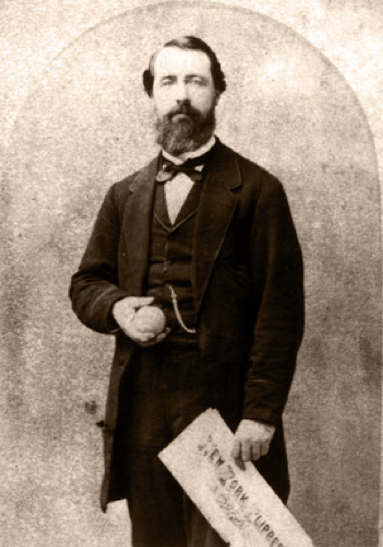
Henry Chadwick is widely regarded as the “Father of Baseball Writing.” Though not a player, his contributions as a journalist and statistician in the 19th century shaped how baseball is understood and followed today. Born in England in 1824, Chadwick was passionate about sports and applied his knowledge of cricket to baseball, introducing structure and statistics to a growing game.
He pioneered the box score, introduced batting average and ERA, and was among the first to provide in-depth written coverage of baseball games in newspapers. His influence helped standardize rules and records, giving the sport a sense of legitimacy and consistency.
Chadwick’s work laid the foundation for modern baseball analytics and reporting. His dedication to the integrity and growth of the sport earned him a place in the Baseball Hall of Fame in 1938. His legacy still lives on every time fans refer to stats or read a game recap.
Chadwick's Awards and Honors
- Created the baseball box score
- Introduced batting average and ERA
- Pioneered baseball journalism and game coverage
- Advocated for rule standardization in baseball
- One of the first statistical historians of the sport
- Inducted into the Hall of Fame (1938) as a pioneer/executive
Occupation
Sportswriter
Notable Acheivements
Beadle's Dime Base-Ball Player (1860–1881)
DeWitt's Base-Ball Guide (1869–1885)
Spalding's Official Base Ball Guide
Herb Pennock
Inducted:
1948

Player Stats
6-0, 160lb (183cm, 72kg)
Born:
February 10, 1894
Kennett Square, Pennsylvania, U.S.
Died:
January 30, 1948
Manhattan, New York City, U.S.
Position:
Pitcher
College:
NA
Herb Pennock, known as “The Knight of Kennett Square,” was a smooth, left-handed pitcher who helped define the Yankees’ early dynasty. Debuting in 1912 and playing through 1934, Pennock pitched for the Philadelphia A’s, Boston Red Sox, and most famously, the New York Yankees.
He won 241 career games and was especially clutch in the postseason, going 5–0 with a 1.95 ERA in World Series play. A key member of the 1920s Yankees, he helped the team win three championships. Pennock wasn’t overpowering, but his control, poise, and durability made him a dependable starter. He had five 20-win seasons and retired with a 3.60 ERA over 22 years.
Inducted into the Hall of Fame in 1948, Pennock’s steady excellence earned him a lasting place in baseball history.
Pennock's Awards and Honors
- 6× World Series champion (1913, 1915, 1923, 1927, 1928, 1932)
- Boston Red Sox Hall of Fame
- 3× World Series Champion (1923, 1927, 1932)
- 5× 20-Win Seasons
- Perfect 5–0 Postseason Record
- 1923 World Series: 2 Wins, 0.00 ERA in 18 Innings
- New York Yankees Dynasty Contributor (1920s–1930s)
- Member of 1927 Yankees, One of Baseball’s Greatest Teams
- Pro Baseball Hall of Fame Inductee (1948)
- Renowned for Control, Composure, and Postseason Brilliance
MLB Teams
Philadelphia Athletics (1912–1915)
Boston Red Sox (1915–1917, 1919–1922)
New York Yankees (1923–1933)
Boston Red Sox (1934)
Number Worn:
54
MLB Stats
Seasons:
22 (1912–1934)
Win–Loss Record:
241–162
ERA:
3.60
Strikeouts:
1,227
Innings Pitched:
3,571
Complete Games:
221
Shutouts:
35
Postseason Record:
5–0
Postseason ERA:
1.95
Home Run Baker
Inducted:
1955
Player Details
5-11, 173lb (180cm, 78kg)
Born:
March 13, 1886
Trappe, Maryland, U.S.
Died:
June 28, 1963
Trappe, Maryland, U.S.
Position:
Third baseman
College:
NA
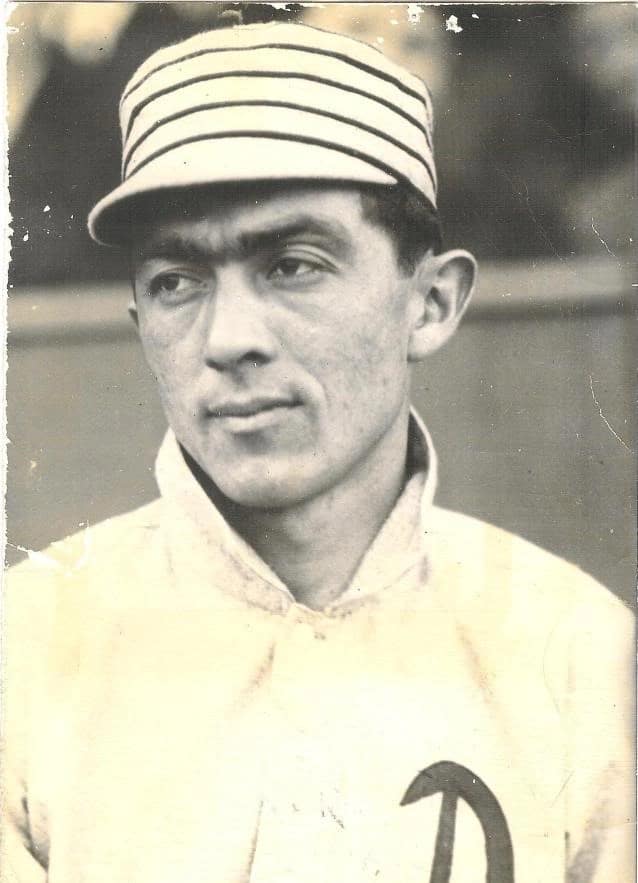
Frank "Home Run" Baker earned his famous nickname by leading the American League in homers for four straight seasons (1911–1914)—despite hitting just 48 career home runs. In the Deadball Era, his power was legendary, and his clutch hitting helped the Philadelphia Athletics win three World Series titles.
A key member of Connie Mack’s famed "$100,000 Infield," Baker hit crucial home runs in the 1911 World Series that cemented his reputation. Though not a traditional slugger by today’s standards, he was a dangerous hitter with a .307 career batting average and excellent defense at third base. After sitting out 1915 due to a contract dispute, Baker played five more years with the Yankees.
He was inducted into the Hall of Fame in 1955 for being one of the most impactful third basemen of the early 20th century.
Baker's Awards and Honors
- 3× World Series champion (1910, 1911, 1913)
- 4× AL home run leader (1911–1914)
- 2× AL RBI leader (1912, 1913)
- Philadelphia Baseball Wall of Fame
- Athletics Hall of Fame
MLB Records
- Only player in MLB history nicknamed “Home Run” for 11 home runs
- Led the American League in home runs for 4 consecutive seasons
- Member of the "$100,000 Infield"
- Best third baseman of the Deadball Era
MLB Teams
Philadelphia Athletics (1908–1914)
New York Yankees (1916–1919, 1921–1922)
MLB Stats
Seasons:
13 (1908–1922)
Games Played:
1,575
Hits:
1,838
Batting Average:
.307
Home Runs:
96
RBI:
991
Runs:
938
Stolen Bases:
88
On-Base Percentage:
.363
Honus Wagner
Inducted:
1936
Player Stats
Born:
February 24, 1874
Chartiers Borough, Pennsylvania, U.S.
Died:
December 6, 1955
Carnegie, Pennsylvania, U.S.
Position:
Shortstop
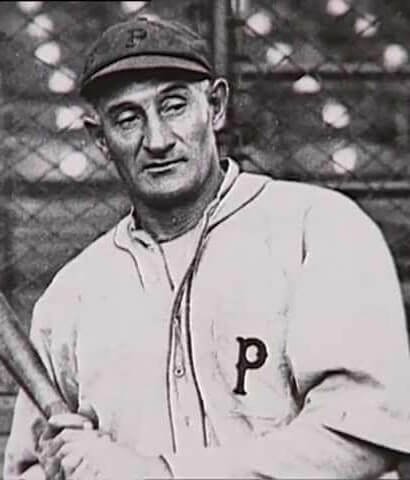
Honus Wagner was one of the greatest shortstops in baseball history, known for his exceptional hitting, speed, and defensive skills. Playing 21 seasons (1897–1917), mostly with the Pittsburgh Pirates, Wagner won eight National League batting titles, a record that still stands today. He was a complete player, excelling in all aspects of the game, from power and contact hitting to base running and fielding.
Wagner helped lead the Pirates to their first World Series championship in 1909, batting .333 in the series.
He was one of the first five players inducted into the Baseball Hall of Fame in 1936.
His legendary status is further cemented by the rarity of his T206 baseball card, one of the most valuable sports collectibles ever.
Wagner's Awards and Honors
- World Series champion (1909)
- 8× NL batting champion (1900, 1903, 1904, 1906–1909, 1911)
- 4× NL RBI leader (1901, 1902, 1908, 1909)
- 5× NL stolen base leader (1901, 1902, 1904, 1907, 1908)
- Pittsburgh Pirates No. 33 retired
- Pittsburgh Pirates Hall of Fame
- Major League Baseball All-Century Team
- Major League Baseball All-Time Team
MLB Teams
Pittsburgh Pirates (1900–1917)
Number Worn:
33
MLB Stats
Seasons:
21
Games Played:
2,794
Earned Run Average (ERA):
2.18
Batting Average:
.328
Hits:
3,420
Home Runs:
101
Runs Scored:
1,739
RBIs:
1,732
Hugh Duffy
Inducted:
1945

Player Stats
5-7, 168lb (170cm, 76kg)
Born:
November 26, 1866
Cranston, Rhode Island, U.S.
Died:
October 19, 1954
Boston, Massachusetts, U.S.
Position:
Outfielder
Manager
College:
NA
Hugh Duffy was a dynamic outfielder and legendary hitter who left an indelible mark on baseball during the late 19th and early 20th centuries.
Playing from 1888 to 1906, he spent most of his career with the Boston Beaneaters and compiled a remarkable .324 career batting average. Duffy’s most iconic achievement came in 1894, when he hit an astonishing .440, a single-season batting average record that still stands today.
After retiring, Duffy had a long coaching and managerial career, mentoring younger generations of players.
His contributions to early baseball earned him induction into the Baseball Hall of Fame in 1945, recognizing his place among the game’s all-time greats.
Duffy's Awards and Honors
- Braves Hall of Fame
- Baseball Hall of Fame Inductee: 1945
- MLB Record: Highest single-season batting average (.440 in 1894)
- National League Batting Champion: 1894
- Boston Beaneaters dynasty contributor (3 NL pennants)
MLB Records
- Triple Crown (1894)
- NL batting champion (1894)
- 2× NL home run leader (1894, 1897)
- MLB record .440 batting average, single season
- Led MLB in RBIs, total bases, and slugging in 1894
MLB Teams
Chicago White Stockings (1888–1889)
Chicago Pirates (1890)
Boston Reds (1891)
Boston Beaneaters (1892–1900)
Milwaukee Brewers (1901)
Philadelphia Phillies (1904–1906)
MLB Stats
Seasons Played:
17 (1888–1906)
Games Played:
1,737
Hits:
2,293
Batting Average:
.324
Home Runs:
106
RBIs:
1,302
Runs Scored:
1,552
Doubles:
442
Triples:
106
Stolen Bases:
574
On-Base Percentage:
.386
Slugging Percentage:
.451
Hughie Jennings
Inducted:
1945

Player Stats
5-8, 165lb (173cm, 74kg)
Born:
April 2, 1869
Pittston, Pennsylvania, U.S..
Died:
February 1, 1928
Scranton, Pennsylvania, U.S.
Position:
Shortstop
First baseman
Manager
College:
Cornell University
Hughie Jennings was a dynamic and energetic figure in early Major League Baseball, known for his playing grit and managerial excellence.
Born in 1869, Jennings played shortstop primarily for the Baltimore Orioles of the 1890s, one of the most dominant teams of the era.
He was a standout during their championship run, known for his defense, base running, and ability to get on base.
After his playing days, Jennings managed the Detroit Tigers, leading them to three consecutive AL pennants (1907–1909). His fiery "Ee-Yah!" shout from the dugout became legendary.
A key figure in the Deadball Era, Jennings was inducted into the Baseball Hall of Fame in 1945 for his leadership and lasting influence on the game.
Jennings' Awards and Honors
- 2× World Series champion (1921, 1922)
- Name honored by the Tigers
- Baseball Hall of Fame Inductee: 1945
- MLB Record: Most career hit-by-pitches (287)
- National League Batting Average Leader: 1896 (.401)
- 3× AL Champion as Manager (1907–1909)
- Played for 3 NL Champion Baltimore Orioles teams (1894–1896)
- Known for his trademark dugout yell: “Ee-Yah!”
MLB Teams
Louisville Colonels (1891–1893)
Baltimore Orioles (1893–1899)
Brooklyn Superbas (1899–1900)
Philadelphia Phillies (1901–1902)
Brooklyn Superbas (1903)
Detroit Tigers (1907, 1909–1910, 1912, 1918)
MLB Stats
Seasons Played:
18 (1891–1918)
Games Played:
1,285
Hits:
1,526
Batting Average:
.311
Home Runs:
18
RBIs:
840
Runs Scored:
993
Stolen Bases:
359
On-Base Percentage:
.391
Hit By Pitches:
287
Ichiro Suzuki
Inducted:
2025
Player Stats
5-11, 175lb (180cm, 79kg)
Born
October 22, 1973
Nishi Kasugai-gun, Japan
Position:
Right Fielder
College:
Aikoudai Meiden
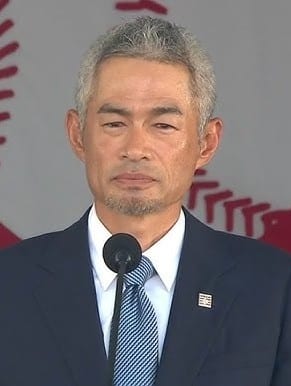
Ichiro Suzuki is one of the greatest contact hitters and outfielders in baseball history. After establishing himself as a star in Japan's Nippon Professional Baseball, he moved to Major League Baseball with the Seattle Mariners in 2001.In his first MLB season, Ichiro won both the American League Rookie of the Year and Most Valuable Player awards, while also winning the batting title and a Gold Glove.
He became renowned for his exceptional bat control, speed, baserunning and defensive ability. Ichiro recorded 3,089 hits in 19 MLB seasons and combined them with 1,278 hits in Japan to reach 4,367 professional hits. He recorded 200 or more hits in 10 consecutive MLB seasons and set the MLB single-season record with 262 hits in 2004. Ichiro was selected to 10 All-Star Games, won 10 Gold Glove Awards and three Silver Slugger Awards.
The Baseball Writers' Association of America elected him to the National Baseball Hall of Fame in 2025 with 99.7% of the vote, just one vote short of unanimous selection.
Suzuki's Awards and Honors
- 262 hits in 2004 – MLB single-season record that still stands
- 242 hits in 2001 – MLB rookie record that still stands
- 10 consecutive 200-hit seasons – the longest such streak in MLB history
- 10 seasons with 200+ hits – tied with Pete Rose for the most in MLB history
- 3,089 MLB hits – the most by a Japanese-born player
- One of only seven players with 3,000+ MLB hits and 500+ stolen bases
MLB Records
- 10× All-Star (2001–2010)
- AL MVP (2001)
- AL Rookie of the Year (2001)
- 10× Gold Glove Award (2001–2010)
- 3× Silver Slugger Award (2001, 2007, 2009)
- 2× AL batting champion (2001, 2004)
- AL stolen base leader (2001)
MLB Teams
Seattle Mariners (2001–2012 , 2018–2019)
New York Yankees (2012–2014)
Miami Marlins (2015–2017)
Number Worn
51
MLB Stats
Seasons:
19 (2001–2019)
Games:
2,653
At Bats:
9,934
Hits:
3,089
Runs:
1,420
Doubles:
362
Triples:
96
Home Runs:
117
RBI:
780
Stolen Bases:
509
Batting Average:
.311
On-Base Percentage:
.355
Slugging Percentage:
.402
OPS:
.757
Ivan Rodriguez
Inducted:
2017
Player Stats
5-9, 205lb
175cm, 92kg
Born
November 27, 1971
Manati, Puerto Rico
Position:
Catcher
College:
Lino Padron Rivera
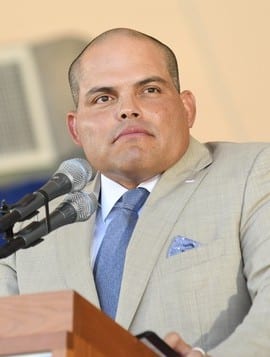
Ivan Rodriguez spent 21 seasons in Major League Baseball and established himself as one of the most accomplished catchers in the history of the game. Known as “Pudge,” he combined outstanding defense, a powerful throwing arm and consistent offensive production throughout his career. Rodriguez played primarily for the Texas Rangers, while also contributing to the Florida Marlins, Detroit Tigers, New York Yankees, Houston Astros and Washington Nationals.
He won the American League MVP Award in 1999 after hitting .332 with 35 home runs and 113 RBI. Rodriguez was a 14-time All-Star, won 13 Gold Glove Awards and seven Silver Slugger Awards and helped the Marlins win the 2003 World Series, earning NLCS MVP honors. He finished with 2,844 hits, 311 home runs, 1,332 RBI and a .296 batting average. His 2,427 games caught remain an MLB record. Rodriguez was inducted into the National Baseball Hall of Fame in 2017.
Rodriguez's Awards and Honors
- 14× All-Star (1992–2001, 2004–2007)
- World Series champion (2003)
- AL MVP (1999)
- NLCS MVP (2003)
- 13× Gold Glove Award (1992–2001, 2004, 2006, 2007)
- 7× Silver Slugger Award (1994–1999, 2004)
- 2× AL batting leader among catchers
- 10 consecutive Gold Gloves (1992–2001)
MLB Records
- MLB career record for games caught (2427)
- MLB career record for hits by a catcher (2844)
- First MLB catcher with 20 home runs and 20 stolen bases in a season
- First catcher with 12,000 career putouts, reached in 2007
- First catcher to reach 2,000 games caught in 2009
- Nine seasons leading the American League in caught-stealing percentage
MLB Teams
Texas Rangers (1991–2002)
Florida Marlins (2003)
Detroit Tigers (2004–2008)
New York Yankees (2008)
Houston Astros (2009)
Texas Rangers (2009)
Washington Nationals (2010–2011)
Number Worn
7
MLB Stats
Seasons:
21
Games:
2,543
At Bats:
9,592
Hits:
2,844
Runs:
1,354
Doubles:
572
Triples:
51
Home Runs:
311
RBI:
1,332
Stolen Bases:
127
Batting Average:
.296
On-Base Percentage:
.334
Slugging Percentage:
.464
Jack Chesbro
Inducted:
1946

Player Stats
5-9, 180lb (175cm, 81kg)
Born:
June 5, 1874
North Adams, Massachusetts, U.S.
Died:
November 6, 1931
Conway, Massachusetts, U.S.
Position:
Pitcher
College:
NA
Jack Chesbro, nicknamed "Happy Jack," was a dominant pitcher in Major League Baseball during the early 1900s. Born on June 5, 1874, in North Adams, Massachusetts, Chesbro began his MLB career in 1899 with the Pittsburgh Pirates.
He later played for the New York Highlanders (now the Yankees) and the Boston Red Sox, concluding his career in 1909.
Chesbro's most remarkable season came in 1904 when he achieved a modern-era record of 41 wins, a feat that remains unmatched and is considered unbreakable in today's game. That season, he also completed 48 games, another modern-era record.
Over his 11-season career, Chesbro amassed a 198–132 win–loss record, a 2.68 ERA, and 1,265 strikeouts. His mastery of the spitball and exceptional control made him one of the era's most formidable pitchers.
In recognition of his outstanding contributions to baseball, Chesbro was inducted into the Baseball Hall of Fame in 1946 by the Old-Timers Committee.
Chesbro's Awards and Honors
- 2× wins leader (1902, 1904)
- Inducted into the Baseball Hall of Fame (1946)
- Modern-era record for most wins in a single season (41 in 1904)
- Modern-era record for most complete games in a single season (48 in 1904)
- Led the league in wins in 1902 and 1904
- Pitched for the Pittsburgh Pirates, New York Highlanders, and Boston Red Sox
- Known for his effective use of the spitball
MLB Teams
Pittsburgh Pirates (1899–1902)
New York Highlanders (1903–1909)
Boston Red Sox (1909)
MLB Stats
Games Played:
392
Wins–Losses:
198–132
Earned Run Average (ERA):
2.68
Innings Pitched:
2,896.2
Strikeouts:
1,265
Walks and Hits per Inning Pitched (WHIP):
1.15
Jack Morris
Inducted:
2018

Player Stats
6-3, 195lb
190cm, 88kg
Born
May 16, 1955,
St. Paul, Minnesota, USA
Position:
Pitcher
College:
Brigham Young University
Jack Morris spent 18 seasons as a Major League starting pitcher with the Detroit Tigers, Minnesota Twins, Toronto Blue Jays and Cleveland Indians. Known for his durability and competitive approach, he became one of the leading pitchers of the 1980s. Morris led the American League in wins in 1981 and 1992 and recorded three 20-win seasons. His 162 victories during the 1980s were the most in the major leagues, while he also led the decade in starts, innings and complete games.
Morris won four World Series championships with three different teams and was named World Series MVP in 1991 after pitching 10 scoreless innings in Game 7 for Minnesota. He finished his career with 254 wins, 3,824 innings, 175 complete games and 2,478 strikeouts. Morris also threw a no-hitter for Detroit in 1984 and made 14 Opening Day starts. He was inducted into the National Baseball Hall of Fame in 2018.
Morris's Awards and Honors
- 5× All-Star (1981, 1984, 1985, 1987, 1991)
- 3× World Series champion (1984, 1991, 1992)
- World Series MVP (1991)
- 2× MLB wins leader (1981, 1992)
- AL strikeout leader (1983)
- Pitched a no-hitter on April 7, 1984
MLB Records
- 14 consecutive Opening Day starts (1980–1993)
- 2,478 career strikeouts without ever facing a pitcher as a batter
- 10 scoreless innings in Game 7 of the 1991 World Series
- 162 wins in the 1980s, the most by any MLB pitcher during the decade
- One of ten players in MLB history to have won back-to back World Series championships on different teams
MLB Teams
Detroit Tigers (1977–1990)
Minnesota Twins (1991)
Toronto Blue Jays (1992–1993)
Cleveland Indians (1994)
MLB Draft
1976, 5th round (98th overall)
Detroit Tigers
Number Worn
47
MLB Stats
Seasons:
18
Games:
549
Wins:
254
Losses:
186
Games Started:
527
Complete Games:
175
Shutouts:
28
Innings Pitched:
3,824.0
Earned Runs:
1,657
Home Runs Allowed:
389
Walks:
1,390
Strikeouts:
2,478
ERA:
3.90
Jackie Robinson
Inducted:
1962

Player Stats
5-11, 195lb (180cm, 88kg)
Born:
January 31, 1919
Cairo, Georgia, U.S.
Died:
October 24, 1972
Stamford, Connecticut, U.S.
Position:
Second baseman
College:
UCLA
Jackie Robinson changed baseball—and America—forever. In 1947, he shattered Major League Baseball’s color barrier, becoming the first Black player in the modern era when he debuted with the Brooklyn Dodgers. Despite facing intense racism and pressure, Robinson thrived, winning Rookie of the Year in 1947 and the NL MVP in 1949.
A fiery competitor, slick fielder, and dangerous base runner, he helped lead the Dodgers to six pennants and a World Series title in 1955. In just 10 seasons, he racked up .311 career batting average, 200 stolen bases, and the admiration of fans and teammates alike. Robinson’s courage, dignity, and play opened the door for generations of Black athletes.
He was inducted into the Hall of Fame in 1962 and remains one of the most important figures in sports history.
Robinson's Awards and Honors
- NgL All-Star (1945)
- 6× All-Star (1949–1954)
- NL MVP (1949)
- Rookie of the Year (1947)
- NL batting champion (1949)
- 2× NL stolen base leader (1947, 1949)
MLB Records
- First Black player in modern Major League Baseball
- First-ever MLB Rookie of the Year (1947) – inaugural award winner
- First Black player to win National League MVP (1949)
- Led the National League in stolen bases twice
- World Series champion (1955)
MLB Teams
Brooklyn Dodgers (1947–1956)
Number Worn:
42
MLB Stats
Seasons:
10 (1947–1956)
Games Played:
1,382
Batting Average:
.311
Hits:
1,518
Home Runs:
137
Runs Batted In:
734
Stolen Bases:
200
Runs Scored:
947
On-Base %:
.409
Jake Beckley
Inducted:
1971

Player Stats
5-10, 200lb (178cm, 90kg)
Born:
August 4, 1867
Hannibal, Missouri, U.S.
Died:
June 25, 1918
Kansas City, Missouri, U.S.
Position:
First baseman
College:
NA
Jacob “Jake” Beckley (August 4, 1867 – June 25, 1918), nicknamed “Eagle Eye,” was one of baseball’s most consistent first basemen across a remarkable 20-season career from 1888 to 1907. A sure-handed defender and contact hitter, he ended his career with nearly 3,000 hits and maintained a steady .308 batting average. Beckley was known for his durability and precision, setting an MLB record for career putouts at first base that still stands. He consistently hit over .300 in most seasons and earned a reputation for clutch batting and game IQ.
A rare combination of longevity and performance, he compiled over 2,300 games at his position—one of the highest totals of his era. In recognition of his impact, he was inducted into the National Baseball Hall of Fame in 1971 by the Veterans Committee. Beyond his playing days, Beckley continued to influence the game as a minor league manager and coach, leaving a legacy of excellence and reliability in baseball history.
Beckley's Awards and Honors
- Pittsburgh Pirates Hall of Fame
- Cincinnati Reds Hall of Fame
- Seven consecutive seasons batting over .300 (1890–1896)
- Recorded 100+ RBI in four seasons
- Ranks 4th all-time in triples with 244
MLB Records
- MLB record for career putouts by a first baseman, still unbroken
- Ranked 4th all-time in triples with 244
- Among the most games played at first base in MLB history
- One of only 12 players in MLB history with 2,900+ career hits
MLB Teams
Pittsburgh Alleghenys (1888–1889)
Pittsburgh Burghers (1890)
Pittsburgh Alleghenys / Pirates (1891–1896)
New York Giants (1896–1897)
Cincinnati Reds (1897–1903)
St. Louis Cardinals (1904–1907)
MLB Stats
Games Played
2,392
At Bats
9,551
Hits
2,938
Batting Average (BA)
.308
On-Base Percentage (OBP)
.361
Slugging Percentage (SLG)
.436
OPS
.797
Runs Scored
1,603
Doubles
473
Triples
244
Home Runs
87
Runs Batted In (RBI)
1,581
Stolen Bases
315
Jeff Bagwell
Inducted:
2017
Player Stats
6-0, 195lb
183cm, 88kg
Born
May 27, 1968
Boston, Massachusetts, USA
Position:
First Baseman
College:
University of Hartford
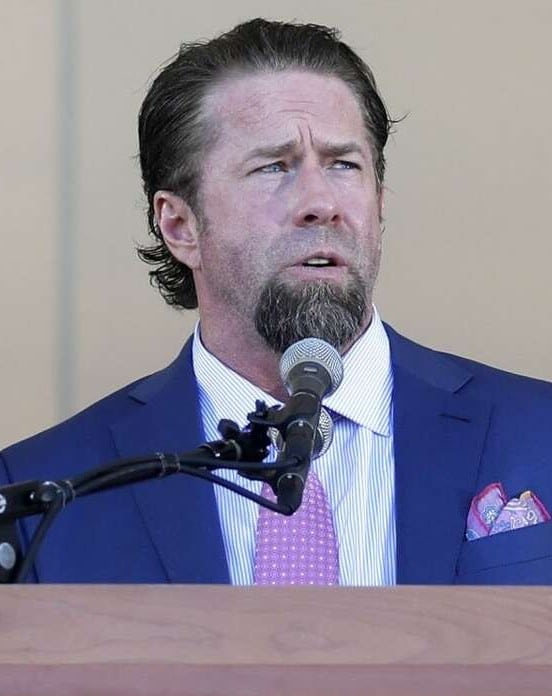
Jeff Bagwell spent his entire 15-year MLB career with the Houston Astros, becoming one of the defining first basemen of his generation. He won National League Rookie of the Year in 1991 and was the unanimous NL MVP in 1994 after hitting .368 with 39 home runs and 116 RBI.
Bagwell combined power with excellent plate discipline, reaching base at a .408 career rate while hitting 449 home runs and driving in 1,529 runs. He also became the only first baseman in MLB history to record two 30-home run, 30-stolen-base seasons, doing so in 1997 and 1999.
From 1996 through 2001,he produced six consecutive seasons with at least 30 home runs,100 RBI,100 runs and 100 walks, an MLB record. Bagwell finished with 2,314 hits,449 home runs,1,529 RBI,202 stolen bases and a .297 batting average. He was inducted into the National Baseball Hall of Fame in 2017.
Bagwell's Awards and Honors
- 4× All-Star (1994,1996, 1997,1999)
- NL MVP (1994)
- NL Rookie of the Year (1991)
- Gold Glove Award (1994)
- 3× Silver Slugger Award (1994, 1997, 1999)
- NL RBI leader (1994)
- NL runs leader (1994, 1999, 2000)
- NL doubles leader (1996)
MLB Records
- Only first baseman in MLB history with two 30-HR, 30-SB seasons
- Only first baseman in MLB history with 400+ home runs and 200+ stolen bases
- Third all-time in career assists by a first baseman
- First baseman position stolen-base leader
- Only player since the 1920s to steal 200 bases as a first baseman
- Only MLB player to record 30 HR, 100 RBI, 100 runs and 100 walks in six consecutive seasons
- One of only six players in MLB history with 30 HR, 100 RBI and 100 runs in six consecutive seasons
MLB Teams
Houston Astros (1991–2005)
MLB Draft
1989, 4th round (109th overall)
Boston Red Sox
Number Worn
5
MLB Stats
Seasons:
15
Games:
2,150
At Bats:
7,797
Hits:
2,314
Runs:
1,517
Doubles:
488
Triples:
32
Home Runs:
449
RBI:
1,529
Stolen Bases:
202
Batting Average:
.297
On-Base Percentage:
.408
Slugging Percentage:
.540
OPS:
.948
"Every Inning is History. Every Fan is a Legacy"
From the crack of the bat to the final out, celebrate the heritage of the game. Whether you're chasing Cooperstown legends of today’s stars, find your official colors and wear the history of the diamond.
Shop the Official MLB Collection









MLB Hall of Fame
The MLB Hall of Fame is a revered institution dedicated to honoring the greatest contributions to baseball. Located in Cooperstown, New York, it serves as a shrine to the game's rich history and the legendary players who have left an indelible mark on the field. Each year, the Hall of Fame holds an induction ceremony that celebrates the newest members of its prestigious ranks, commonly referred to as the Hall of Fame class.
These ceremonies are significant events in the baseball calendar, drawing fans, players, and media worldwide to witness the acknowledgment of baseball's finest. The inductees are celebrated for their remarkable career achievements, which include outstanding statistics, memorable performances, and contributions that have shaped the game. The Hall recognizes players, managers, umpires, and contributors who have significantly impacted the sport.
Among the many iconic moments celebrated within the Hall are record-breaking home runs, historic games, and unforgettable plays that have become a part of baseball lore. Each inductee's journey to the Hall is a testament to their skill, perseverance, and dedication to the sport. The Hall of Fame also outlines the eligibility criteria, ensuring a fair and transparent selection process.
Visitors to the Hall can explore exhibits featuring historical contributions from various eras of baseball, showcasing memorabilia, photographs, and artifacts that tell the game's story. From famous inductees like Babe Ruth and Jackie Robinson to the more recent stars, the Hall preserves the legacy of these athletes, allowing future generations to appreciate their greatness.
In addition to the exhibits, the Hall of Fame hosts numerous events throughout the year, including educational programs and community outreach initiatives, to foster a love for baseball among young fans. The memorable speeches during induction ceremonies often reflect on the inductees' journeys, the challenges they faced, and their impact on their teams and the sport.
Ultimately, the MLB Hall of Fame celebrates excellence in baseball, a place where the past is remembered and the future is inspired. It is a vital part of baseball culture, ensuring that the stories of its greatest players are never forgotten and continue to resonate with fans worldwide.