
Search By First Name of the HOFers
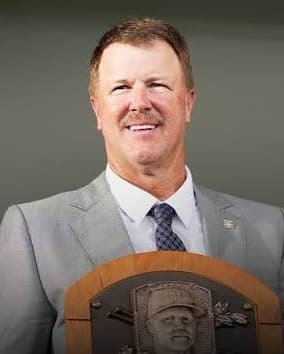
Jeff Kent
Inducted:
2026
Player Stats
5-11, 180lb (180cm, 81kg)
Born:
March 7, 1968
Bellflower,
California, U.S.
Position:
Second Baseman
College:
Golden Bears
University of California, Berkeley
Jeff Kent is widely regarded as one of the most prolific offensive second basemen in the history of Major League Baseball. He is one of the most accomplished offensive second basemen in Major League Baseball history, playing 17 seasons from 1992 to 2008. A five-time All-Star, he enjoyed his greatest success with the San Francisco Giants, where he won the 2000 National League Most Valuable Player Award after batting .334 with 33 home runs and 125 RBIs.
Kent finished his career with a record 377 home runs by a second baseman, along with 1,518 RBIs and a .500 career slugging percentage. In 2000, he won the National League Most Valuable Player Award after leading the league in RBIs and helping San Francisco reach the postseason. He also helped lead the Giants to the 2002 National League pennant. His outstanding contributions to the sport earned him a place in the National Baseball Hall of Fame in 2026.
Kent's Awards and Honors
- 5× All-Star (1999–2001, 2004, 2005)
- NL MVP (2000)
- 4× Silver Slugger Award (2000–2002, 2005)
- San Francisco Giants Wall of Fame
MLB Records
- MLB's all-time leader in home runs by a second baseman
- One of only a few second basemen with over 350 career home runs
- Recorded 1,500+ RBIs, the most by a primary second baseman
- Won the 2000 NL MVP after batting .334 with 33 home runs and 125 RBIs
MLB Teams
Toronto Blue Jays (1992)
New York Mets (1992–1996)
Cleveland Indians (1996)
San Francisco Giants (1997–2002)
Houston Astros (2003–2004)
Los Angeles Dodgers (2005–2008)
MLB Draft
521st overall pick
1989 MLB June Amateur Draft
Toronto Blue Jays
MLB Stats
Season Played:
1992–2008
Games Played:
2,298
Hits:
2,461
Batting Average:
.290
Home Runs:
377
RBIs:
1,518
Runs:
1,320
Doubles:
560
Triples:
47
Strikeouts:
1,522
On-Base Percentage:
.356
Slugging Percentage:
.500
Jesse Burkett
Inducted:
1946

Player Stats
5-8, 155lb (173cm, 70kg)
Born:
December 4, 1868
Wheeling, West Virginia, U.S.
Died:
May 27, 1953
Worcester, Massachusetts, U.S.
Position:
Left fielder
College:
NA
Jesse Cail Burkett, nicknamed "The Crab" for his fiery demeanor, was a standout left fielder in Major League Baseball from 1890 to 1905.
Renowned for his exceptional hitting prowess, Burkett achieved a career batting average of .338, amassing 2,850 hits over 16 seasons. He is one of only a few players to have batted over .400 in multiple seasons, achieving this feat in 1895 (.405) and 1896 (.410).
Burkett led the National League in batting average three times and was known for his remarkable bunting skills and speed on the bases, recording 389 stolen bases. Defensively, while not his strongest suit, he was a consistent presence in the outfield.
His contributions to the game were recognized with his induction into the Baseball Hall of Fame in 1946.
Burkett's Awards and Honors
- World Series champion (1921)
- 3× NL batting champion (1895, 1896, 1901)
- Cleveland Guardians Hall of Fame
- 3× National League Batting Champion (1895, 1896, 1901)
- 2× Seasons Batting Over .400 (.405 in 1895, .410 in 1896)
- Major League Record: Most Inside-the-Park Home Runs (55)
- Led MLB in Hits: 1895 (225), 1896 (240), 1901 (226)
- Led MLB in Runs Scored: 1896 (160), 1901 (142)
- Temple Cup Champion with Cleveland Spiders (1895)
- Inducted into the Baseball Hall of Fame (1946)
- Coached College of the Holy Cross Baseball Team to a 96–19 Record (1917–1920)
- Member of the Cleveland Guardians Hall of Fame
- Recognized as One of the Greatest Bunters in Baseball History
MLB Teams
New York Giants (1890)
Cleveland Spiders (1891–1898)
St. Louis Perfectos / Cardinals (1899–1901)
St. Louis Browns (1902–1904)
Boston Americans (1905)
Numbers Worn:
13
MLB Stats
Games Played:
2,067
At Bats:
8,426
Hits:
2,850
Batting Average:
.338
Home Runs:
75
Runs Batted In (RBI):
952
Runs Scored:
1,720
Doubles:
320
Triples:
182
Stolen Bases:
389
On-Base Percentage:
.415
Slugging Percentage:
.446
OPS (On-base Plus Slugging):
.861
Jesse Haines
Inducted:
1970

Player Stats
6-0, 190lb (183cm, 86kg)
Born:
July 22, 1893
Clayton, Ohio, U.S.
Died:
August 5, 1978
Dayton, Ohio, U.S.
Position:
Pitcher
College:
NA
Jesse “Pop” Haines (July 22, 1893 – August 5, 1978) was a right-handed pitcher whose entire 19-year major-league career (1918–1937) was defined by grit, adaptability, and leadership. After debuting with the Cincinnati Reds, he became a mainstay of the St. Louis Cardinals from 1920 onward. A workhorse by nature, he logged over 3,200 innings, earned 210 wins, and boasted a solid 3.64 ERA.
Haines stood out for his knuckleball—gripped uniquely on his knuckles—and his competitive fire. He pitched a no-hitter on July 17, 1924, and anchored three Cardinals World Series championship teams (1926, 1931, 1934), winning two games in the 1926 Series. Known off the field for his kindness and mentorship, he earned the nickname “Pop” from younger teammates.
After retiring, he briefly coached and later worked in public service. Haines was inducted into the National Baseball Hall of Fame in 1970 by the Veterans Committee and later joined the Cardinals’ Hall of Fame.
Haines' Awards and Honors
- 3× World Series champion (1926, 1931, 1934)
- Pitched a no-hitter on July 17, 1924
- Louis Cardinals Hall of Fame
MLB Records
- One of only a few pitchers to win two complete games in the same World Series (1926)
- Among the MLB leaders in career wins by a knuckleball pitcher (210)
- Ranked in MLB’s top 10 in innings pitched six times (1920s–1930s)
MLB Teams
Cincinnati Reds (1918)
St. Louis Cardinals (1920–1937)
Number Worn:
118
MLB Stats
Games Played:
555
Game Started:
387
Win–Loss Record:
210–158
Earned Run Average (ERA):
3.64
Strikeouts:
981
Innings Pitched:
3,208
WHIP:
1.35
Jim Bottomley
Inducted:
1974

Player Stats
6-0, 180lb (183cm, 81kg)
Born:
April 23, 1900
Oglesby, Illinois, U.S.
Died:
December 11, 1959
St. Louis, Missouri, U.S.
Position:
First baseman
Manager
College:
NA
James “Jim” Bottomley (1900–1959) was a powerful and consistent first baseman, known for his clutch hitting and run-producing ability. Debuting with the St. Louis Cardinals in 1922, Bottomley quickly became a cornerstone of the team’s lineup, helping them win the World Series in 1926. He led the National League in RBIs three times and in home runs once, finishing his career with a .310 batting average, 2,313 hits, 219 home runs, and 1,422 RBIs over 1,884 games.
Bottomley combined offensive firepower with solid defense at first base, earning respect as one of the most complete players of his era. He posted multiple 100-RBI seasons and was a key contributor to the Cardinals’ “Gashouse Gang” dominance of the late 1920s. His outstanding career and leadership on the field earned him induction into the Baseball Hall of Fame in 1974.
Bottomley's Award and Honors
- World Series champion (1926,1931)
- Led NL in RBIs: 1928, 1929, 1932
- Led NL in home runs: 1928
- Multiple 100+ RBI seasons
- Key member of Cardinals’ “Gashouse Gang”
MLB Records
- Recorded 12 RBI in a single game, setting a National League record
- One of the most consistent RBI producers of the 1920s and early 1930s
- Combined power hitting with excellent first-base defense
- Played a central role in the Cardinals’ late-1920s dynasty
MLB Teams
As player
St. Louis Cardinals (1922–1932)
Cincinnati Reds (1933–1935)
St. Louis Browns (1936–1937)
As manager
St. Louis Browns (1937)
MLB Stats
Games played:
1,884
Hits:
2,313
Doubles:
403
Triples:
95
Home runs:
219
RBIs:
1,422
Runs scored:
1,185
Stolen bases:
113
Batting average:
.310
On-base percentage:
.374
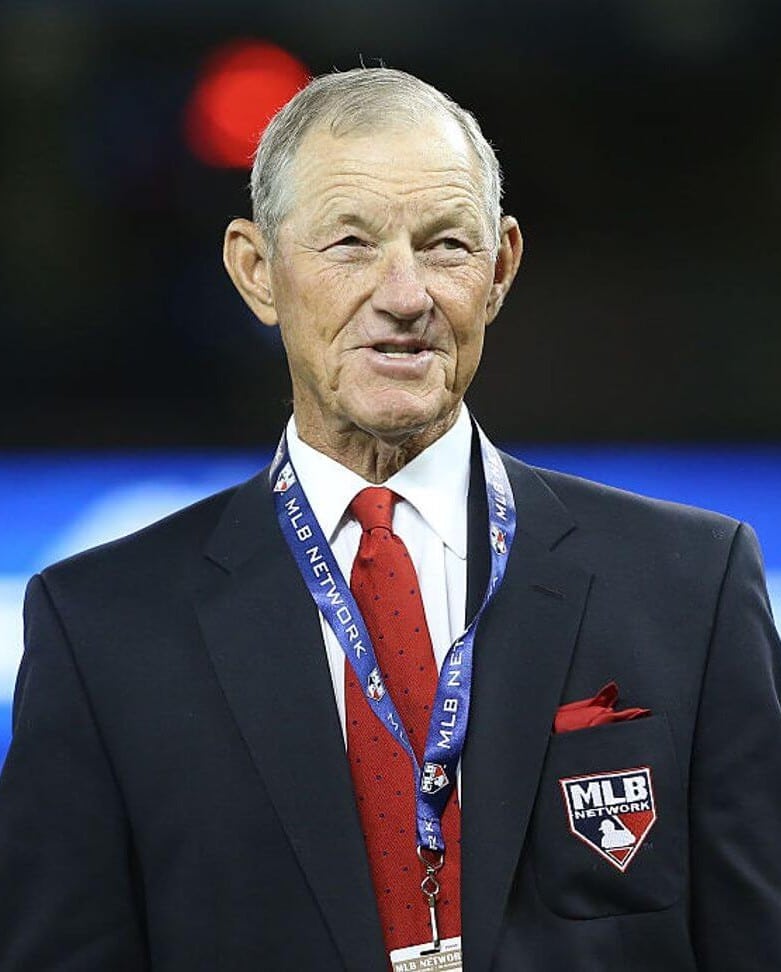
Jim Kaat
Inducted:
2022
Player Stats
6-4, 215 lb
193 cm, 98 kg
Born
November 7, 1938
Zeeland, Michigan, U.S.
Position:
Pitcher
College:
Hope College
Jim Kaat enjoyed a 25-year Major League Baseball career as a dependable left-handed pitcher and one of the finest fielding pitchers of his era. He debuted with the Washington Senators in 1959 and became a regular starter after the franchise moved to Minnesota and became the Twins. Kaat made three All-Star teams and led the American League in wins with 25 in 1966, when he also led the league in complete games and innings pitched.
He won 16 consecutive Gold Glove Awards from 1962 through 1977, establishing himself as an exceptional defensive pitcher. After leaving Minnesota, Kaat continued his career with the White Sox, Phillies, Yankees and Cardinals. He helped the St. Louis Cardinals win the 1982 World Series, appearing primarily as a reliever. Kaat finished his career with 283 wins, 2,461 strikeouts and a 3.45 ERA.
Kaat's Awards and Honors
- 3× All Star (1962², 1966, 1975)
- World Series champion (1982)
- 16× Gold Glove Award (1962–1977)
- AL wins leader (1966)
- Minnesota Twins Hall of Fame
MLB Records
- His 16 Gold Gloves are second-most among pitchers
- Helped the Minnesota Twins win the 1965 American League pennant
- Made 625 career starts, one of the highest totals in MLB history
- Recorded 283 career wins, ranking among the highest totals in MLB history
- Became a three-time 20-game winner, including consecutive 20-win seasons in 1974 and 1975
MLB Teams
Washington Senators / Minnesota Twins (1959–1973)
Chicago White Sox (1973–1975)
Philadelphia Phillies (1976–1979)
New York Yankees (1979–1980)
St. Louis Cardinals (1980–1983)
Number Worn
36
MLB Stats
Seasons:
25 (1959–1983)
Games Played:
898
Wins:
283
Losses:
237
Games Started:
625
Complete Games:
180
Shutouts:
31
Saves:
17
Innings Pitched:
4,530.1
Strikeouts:
2,461
ERA:
3.45
Jim Leyland
Inducted:
2024
Stats
5-11, 175 lb
180 cm, 79 kg
Born
December 15, 1944
Toledo, Ohio, U.S.
Position:
Manager
College:
NA
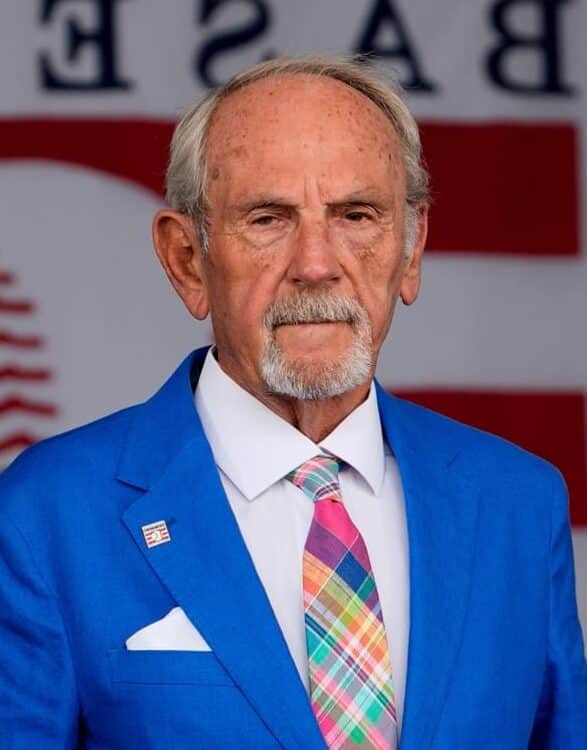
Jim Leyland was one of the most respected managers of his era, known for his strong leadership, emotional intensity and ability to rebuild struggling teams. He managed 22 MLB seasons from 1986 to 2013 with the Pittsburgh Pirates, Florida Marlins, Colorado Rockies and Detroit Tigers. Leyland guided Pittsburgh to three straight NLCS appearances from 1990–1992 and won National League Manager of the Year honors in 1990 and 1992.
In 1997, he led the Marlins to their first World Series championship. With Detroit, he won the 2006 AL Manager of the Year Award and took the Tigers to two American League pennants, in 2006 and 2012. Leyland finished with 1,769 regular-season wins, 1,728 losses and a .506 winning percentage. He also managed Team USA to the 2017 World Baseball Classic title. Leyland was inducted into the National Baseball Hall of Fame in 2024.
Leyland's Awards and Honors
- 3× Manager of the Year Award (1990, 1992, 2006)
- World Series Champion (1997)
- 3× League Pennant (1990, 1997, 2006)
- 3× NL East Champion (1990–1992)
- AL Central Champion (2011)
- 2017 World Baseball Classic Champion (USA)
- First manager to win both a World Series and World Baseball Classic title
MLB Records
- 1,769 MLB managerial wins, ranking among the highest totals in MLB history
MLB Teams
Pittsburgh Pirates (1986–1996)
Florida Marlins (1997–1998)
Colorado Rockies (1999)
Detroit Tigers (2006–2013)
MLB Stats
Seasons:
22 (1986–2013)
Games Managed:
3,499
Wins:
1,769
Losses:
1,728
Winning Percentage:
.506
League Pennants:
3
World Series Titles:
1
Postseason Appearances:
8
Jim O'Rourke
Inducted:
1945

Player Stats
Born:
September 1, 1850
Bridgeport, Connecticut, U.S.
Died:
January 8, 1919
Bridgeport, Connecticut, U.S.
Position:
Left fielder
College:
NA
Jim O'Rourke, nicknamed "Orator Jim" for his eloquence, was a standout player in 19th-century baseball. Born in Bridgeport, Connecticut, in 1850, he began his professional career in 1872 and became the first player to record a hit in National League history in 1876.
A versatile athlete, O'Rourke played all nine positions during his career, primarily serving as a left fielder. He was known for his consistent batting, achieving a .300 average or better in 13 seasons and finishing with a .310 career batting average.
Remarkably, he played his final major league game at age 54, making him the oldest player to appear in a National League game. Beyond his playing days, he earned a law degree from Yale and was instrumental in developing minor league baseball in Connecticut.
O'Rourke was inducted into the Baseball Hall of Fame in 1945.
O'Rourke's Awards and Honors
- National League Batting Champion (1884)
- Led NL in On-Base Percentage (1877)
- Led NL in Hits (1884)
- Led NL in Games Played (1876, 1877)
- First Hit in National League History (April 22, 1876)
- Oldest Player to Appear in a National League Game (Age 54 in 1904)
- Played in Four Different Decades (1870s–1900s)
- Pro Baseball Hall of Fame Inductee (1945)
- Yale Law School Graduate (1887)
- Founder of the Connecticut State League
- Signed First African American Player in Bridgeport (1895)
- Statue Honoring O'Rourke in Bridgeport, Connecticut
MLB Teams
Middletown Mansfields (1872)
Boston Red Stockings / Red Caps (1873–1878)
Providence Grays (1879)
Boston Red Caps (1880)
Buffalo Bisons (1881–1884)
New York Giants (1885–1892, 1904)
Washington Senators (1893)
MLB Stats
Seasons Played:
23
Games Played:
1,999
At Bats:
8,503
Hits:
2,639
Batting Average:
.310
Home Runs:
62
Runs Batted In (RBI):
1,208
Runs Scored:
1,729
Doubles:
468
Triples:
149
Stolen Bases:
229
On-Base Percentage:
.352
Slugging Percentage:
.422
OPS (On-base Plus Slugging):
.775
Walks:
513
Jim Thome
Inducted:
2018
Player Stats
6-4, 250lb
193cm, 113kg
Born
August 27, 1970
Peoria, Illinois, USA
Position:
First Baseman
Designated Hitter
Third Baseman
College:
Illinois Central College
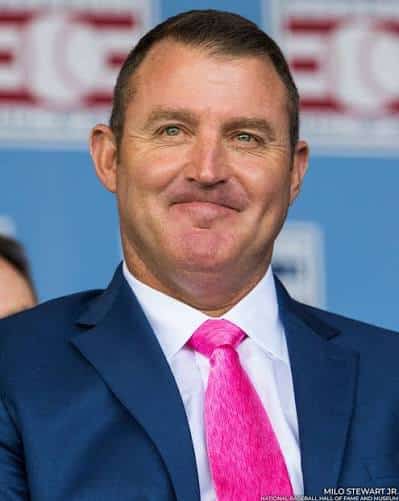
Jim Thome spent 22 seasons in Major League Baseball with six teams and became one of the most accomplished power hitters of his generation. He began his career as a third baseman with Cleveland before establishing himself as an elite first baseman and designated hitter. Thome was a five-time All-Star and won the 1996 Silver Slugger Award. He led the American League in home runs in 2003, slugging percentage in 2002 and walks three times.
He reached 40 home runs six times and drove in at least 100 runs in nine seasons. Thome finished his career with 2,328 hits, 612 home runs, 1,699 RBI, 1,583 runs and 1,747 walks. His 13 career walk-off home runs are an MLB record. He also became the eighth player in history to reach 600 home runs. Thome was elected to the National Baseball Hall of Fame in 2018.
Thome's Awards and Honors
- 5× All-Star (1997–1999, 2004, 2006)
- Silver Slugger Award (1996)
- AL Comeback Player of the Year (2006)
- Roberto Clemente Award (2002)
- NL home run leader (2003)
- Led the American League in walks three times
MLB Records
- 612 career home runs (Eighth-most in MLB history)
- 1,747 career walks (Seventh-most in MLB history)
- One of only six players with at least 1,700 walks and 1,699 RBI
- 13.76 at-bats per home run (Ranked fourth in MLB history)
- 17 career postseason home runs (Tied for seventh in MLB history)
- 600-home-run club (Became the eighth player in MLB history)
MLB Teams
Cleveland Indians (1991–2002, 2011)
Philadelphia Phillies (2003–2005, 2012)
Chicago White Sox (2006–2009)
Los Angeles Dodgers (2009)
Minnesota Twins (2010–2011)
Baltimore Orioles (2012)
MLB Draft
1989, 13th round (333rd overall)
Cleveland Indians
Number Worn
25, 6
MLB Stats
Seasons:
22
Games:
2,543
At Bats:
8,422
Hits:
2,328
Runs:
1,583
Doubles:
451
Triples:
26
Home Runs:
612
RBI:
1,699
Stolen Bases:
19
Batting Average:
.276
Jimmie Foxx
Inducted:
1951

Player Stats
Stats
6-0, 195lb (183cm, 88kg)
Born:
October 22, 1907
Sudlersville, Maryland, U.S.
Died:
July 21, 1967
Miami, Florida, U.S.
Position:
First baseman
College:
NA
James Emory “Jimmie” Foxx (October 22, 1907 – July 21, 1967) ranks among the most powerful hitters in baseball history. Playing primarily first base, he spent 20 seasons in MLB with the Philadelphia Athletics, Boston Red Sox, Chicago Cubs, and Philadelphia Phillies. Known as “the Beast” and “Double X,” Foxx retired with 534 home runs—second only to Babe Ruth at the time—and 1,922 RBIs, boasting a stellar .325 batting average.
He led the American League in home runs four times, RBIs three times, and won the Triple Crown in 1933 with a .356 average, 48 homers, and 163 RBIs. A three‑time AL MVP (1932, 1933, 1938) and nine‑time All‑Star, he also helped Philadelphia claim back‑to‑back World Series titles in 1929 and 1930. Elected to the Hall of Fame in 1951, his legacy as one of baseball’s greatest sluggers remains intact.
Foxx's Awards and Honors
- 9× All-Star (1933–1941)
- 2× World Series champion (1929, 1930)
- 3× AL MVP (1932, 1933, 1938)
- Triple Crown (1933)
- 2× AL batting champion (1933, 1938)
- 4× AL home run leader (1932, 1933, 1935, 1939)
- 3× AL RBI leader (1932, 1933, 1938)
- Philadelphia Baseball Wall of Fame
- Athletics Hall of Fame
- Boston Red Sox Hall of Fame
MLB Records
- Second player in MLB history to hit 500 home runs (after Babe Ruth)
- Youngest player to reach 500 home runs (age 32) – stood as a record until 2007
- One of only 17 players in MLB history to win the Triple Crown (1933)
- Tied for most MVP Awards (3 AL MVPs – 1932, 1933, 1938) during his era
- One of just 5 players to hit 30+ home runs in 12 consecutive seasons (1930–1941)
- Second-highest career OPS (1.038) among right-handed batters with at least 7,000 plate appearances
MLB Teams
Philadelphia Athletics (1925–1935)
Boston Red Sox (1936–1942)
Chicago Cubs (1942, 1944)
Philadelphia Phillies (1945)
Number Worn
2, 3, 4, 16, 26
MLB Stats
Seasons Played
20
Game Played:
2,317
Batting Avg
.325
Hits
2,646
Home Runs
534
Runs Batted In
1,922
On‑Base %
.428
Slugging %
.609
OPS
1.038
Runs
1,751
Stolen Bases
87
Jimmy Collins
Inducted:
1945

Jimmy Collins was one of the premier third basemen of early baseball history, known for revolutionizing the defensive play at the hot corner.
Born in 1870, Collins played 14 seasons in Major League Baseball (1895–1908), starring for the Boston Beaneaters, Boston Americans (now Red Sox), and Philadelphia Athletics. As a player, he combined consistent hitting with exceptional glove work, becoming the first third baseman to regularly field bunts barehanded and throw on the run—techniques that set new defensive standards.
Collins posted a lifetime .294 batting average, collecting over 1,900 hits and 983 RBIs. In 1903, he served as player-manager for the Boston Americans and led them to victory in the first-ever World Series, defeating the Pittsburgh Pirates. His leadership and innovation cemented his place in baseball lore.
Jimmy Collins was inducted into the Baseball Hall of Fame in 1945, recognized as one of the greatest third basemen and fielding pioneers in MLB history.
Collins' Awards and Honors
- Baseball Hall of Fame Inductee: 1945
- World Series Champion: 1903 (as player-manager)
- One of MLB’s earliest great third basemen
- Revolutionized defensive play at third base
- Boston Red Sox Hall of Fame Inductee
- World Series champion (1903)
- NL home run leader (1898)
- Boston Red Sox Hall of Fame
MLB Teams
As Player
Boston Beaneaters (1895)
Louisville Colonels (1895)
Boston Beaneaters (1896–1900)
Boston Americans (1901–1907)
Philadelphia Athletics (1907–1908)
MLB Stats
Seasons:
14 (1895–1908)
Games Played:
1,671
Batting Average:
.294
Hits:
1,999
Home Runs:
65
RBIs:
983
Runs Scored:
1,055
Stolen Bases:
192
On-Base Percentage:
.343
Slugging Percentage:
.409
Jocko Conlan
Inducted:
1974

Umpire Stats
Born:
December 6, 1899
Chicago, Illinois, U.S.
Died:
April 16, 1989
Scottsdale, Arizona, U.S.
Position:
Outfielder
Umpire
College:
NA
Jocko Conlan was a respected Major League Baseball umpire whose career set a standard for professionalism and consistency. Born on December 6, 1899, in Chicago, Illinois, he briefly played as an outfielder for the Chicago White Sox before a hand injury ended his playing days. Transitioning to umpiring in 1941, Conlan quickly became one of the most trusted figures in the National League.
Known for his firm yet fair decision-making and ability to handle high-pressure moments, he worked five World Series and six All-Star Games during his career. His distinctive style and deep understanding of the game earned him widespread respect from players, managers, and fans alike.
Conlan’s influence extended beyond the field, as he played a key role in setting professional standards for MLB umpires. He retired in 1964 after 24 seasons and was inducted into the National Baseball Hall of Fame in 1974, honoring his lasting impact on the sport.
Conlan's Notable Achivements
- National Baseball Hall of Fame induction: 1974
- Worked in both World Series and All-Star Game in the same season twice
- Served as crew chief in multiple World Series
- One of the longest-serving umpires in National League history
MLB Teams
As player
Chicago White Sox (1934–1935)
As Umpire
MLB (1941–1965)
MLB Stats
As Player:
Batting average:
.263
Hits:
96
Runs batted in:
31
MLB umpiring career:
1941–1965
World Series appearances:
5 (1945, 1950, 1954, 1957, 1961)
All-Star Games umpired:
6
MLB seasons officiated:
24
Joe Cronin
Inducted:
1956

Player Stats
5-11, 180lb (180cm, 81kg)
Born:
October 12, 1906
San Francisco, California, U.S.
Died:
September 7, 1984
Osterville, Massachusetts, U.S.
Position:
Shortstop
Manager
College:
Boston College
Joe Cronin was one of baseball’s finest shortstops and a respected figure on and off the field. A smooth defender and clutch hitter, Cronin played 20 seasons, mostly with the Washington Senators and Boston Red Sox, finishing with 2,285 hits and a .301 batting average. He was a 7-time All-Star and drove in over 100 runs eight times — rare for a shortstop in any era.
Cronin was named player-manager of the Senators at just 26 and led them to the AL pennant in 1933. He later managed and played for the Red Sox, becoming a symbol of professionalism in Boston. After retiring as a player, Cronin served as GM and then as American League president for 14 years, helping shape the modern game.
Inducted into the Hall of Fame in 1956, Joe Cronin left a lasting legacy as a great shortstop, respected manager, and influential baseball executive.
Cronin's Awards and Honors
- 7× All-Star (1933–1935, 1937–1939, 1941)
- Boston Red Sox No. 4 retired
- Boston Red Sox Hall of Fame
- Washington Nationals Ring of Honor
- Manager of the Boston Red Sox (1935–1947)
- General Manager of Red Sox after playing career
- Served as American League President (1959–1973)
MLB Records
- Youngest player-manager in American League history
- First shortstop in MLB history to drive in 100+ RBIs in 8 different seasons
- Amassed over 2,200 hits and 1,400 RBIs
- One of the longest-serving executives in baseball history
MLB Teams
As Player
Pittsburgh Pirates (1926–1927)
Washington Senators (1928–1934)
Boston Red Sox (1935–1945)
As manager
Washington Senators (1933–1934)
Boston Red Sox (1935–1947)
Number Worn:
4
MLB Stats
Seasons:
20 (1926–1945)
Games Played:
2,124
Hits:
2,285
Batting Average:
.301
Runs:
1,233
Doubles:
515
Triples:
118
Home Runs:
170
Runs Batted In (RBI):
1,424
Stolen Bases:
87
On-Base Percentage (OBP):
.390
Joe DiMaggio
Inducted:
1955

Player Stats
6-2, 193lb (188cm, 87kg)
Born:
November 25, 1914
Martinez, California, U.S.
Died:
March 8, 1999
Hollywood, Florida, U.S.
Position:
Center fielder
College:
NA
Joe DiMaggio was the embodiment of grace, power, and consistency in baseball’s golden era. Playing his entire 13-year career with the New York Yankees, DiMaggio won 9 World Series titles and claimed 3 AL MVP Awards. His iconic 56-game hitting streak in 1941 remains one of the most revered records in sports.
Known as “The Yankee Clipper” for his smooth stride and effortless defense in center field, DiMaggio combined elite hitting with all-around excellence. A career .325 hitter with 361 home runs, he was also a 13-time All-Star—every season he played. He missed three prime years serving in World War II, yet still built a legendary resume that places him among the all-time greats.
Inducted into the Hall of Fame in 1955, DiMaggio’s legacy endures as a symbol of dignity, dominance, and Yankee tradition.
DiMaggio's Awards and Honors
- 13× All-Star (1936–1942, 1946–1951)
- 9× World Series champion (1936–1939, 1941, 1947, 1949–1951)
- 3× AL MVP (1939, 1941, 1947)
- 2× AL batting champion (1939, 1940)
- 2× AL home run leader (1937, 1948)
- 2× AL RBI leader (1941, 1948)
- MLB record 56-game hitting streak
- New York Yankees No. 5 retired
- Monument Park honoree
- Major League Baseball All-Century Team
MLB Records
- Longest hitting streak in MLB history
- Most World Series championships by a position player
- Only player to be selected to the All-Star Game in every season played
- One of only a few players with a .325+ batting average
- Hit more home runs (361) than he struck out (369)
- First player to hit a home run in four different World Series Game 1s
MLB Teams
As player
New York Yankees (1936–1942, 1946–1951)
As manager
Oakland Athletics (1968–1969)
Number Worn:
5
MLB Stats
Seasons:
13 (1936–1951)
Games Played:
1,736
Hits:
2,214
Batting Average:
.325
Home Runs:
361
RBI:
1,537
Runs:
1,390
On-Base Percentage:
.398
Slugging Percentage:
.579
OPS:
.977
Joe Kelley
Inducted:
1971

Player Stats
5-11, 190lb (180cm, 86kg)
Born:
December 9, 1871
Cambridge, Massachusetts, U.S.
Died:
August 14, 1943
Baltimore, Maryland, U.S.
Position:
Left fielder
Manager
College:
St. Thomas Aquinas
Joe Kelley was one of the premier outfielders of the late 19th and early 20th centuries, renowned for his hitting ability, speed, and intelligence on the basepaths. Over a 15-year Major League career, Kelley played for teams including the Baltimore Orioles, Brooklyn Superbas, and Pittsburgh Pirates, consistently delivering high batting averages and driving in key runs. A versatile player, he excelled both at bat and in the field, making him a central figure on several championship-caliber teams.
Kelley recorded more than 2,200 hits, stole over 500 bases, and was known for his clutch performances in pivotal games. After retiring as a player, he also contributed as a manager and mentor, sharing his knowledge of the game with younger players. Inducted into the Baseball Hall of Fame in 1971, Kelley is remembered as one of baseball’s most complete and impactful players of his era, combining skill, speed, and baseball intelligence to leave a lasting legacy.
Kelley's Awards and Honors
- 2× National League Pennant Winner
- Renowned for speed, hitting, and clutch performance
- MLB 19th Century Star
- NL stolen base leader (1896)
MLB Records
- Among the all-time leaders in stolen bases of the 19th century
- One of the few outfielders of his era with over 2,200 hits and 500 stolen bases
MLB Teams
As player
Boston Beaneaters (1891)
Pittsburgh Pirates (1892)
Baltimore Orioles (NL) (1892–1898)
Brooklyn Superbas (1899–1901)
Baltimore Orioles (AL) (1902)
Cincinnati Reds (1902–1906)
Boston Doves (1908)
As manager
Cincinnati Reds (1902–1905)
Boston Doves (1908)
MLB Stats
Seasons:
15 (1891–1908)
Games Played:
1,585
Batting Average:
.317
Hits:
2,220
Home Runs:
65
Runs Batted In (RBI):
1,194
Stolen Bases:
443
Managerial record:
338–321
Winning (%):
.512
Joe Mauer
Inducted:
2024
Player Stats
6-5, 229 lb
196 cm, 104 kg
Born
April 19, 1983
Saint Paul, Minnesota, U.S.
Position:
Catcher
First Baseman
College:
Wayland Academy
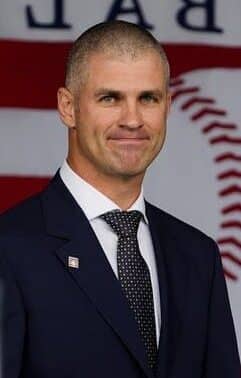
Joe Mauer is a former American professional baseball catcher and first baseman who spent his entire 15-season Major League Baseball career with the Minnesota Twins. He won three American League batting titles, becoming the only catcher in MLB history to win three batting championships. In 2009, Mauer won the AL MVP Award after leading the league in batting average, on-base percentage and slugging percentage.
His remarkable 2009 season produced a .365 average, .444 on-base percentage, .587 slugging percentage and 1.031 OPS, earning him AL MVP honors. He was a six-time All-Star, three-time Gold Glove Award winner and five-time Silver Slugger Award winner. Mauer finished with 2,123 hits, 428 doubles, 143 home runs, 923 RBI and a .306 batting average. Mauer retired after the 2018 season and was elected to the National Baseball Hall of Fame as a member of the Class of 2024.
Mauer's Awards and Honors
- 3× Gold Glove Award (2008–2010)
- 5× Silver Slugger Award (2006, 2008–2010, 2013)
- Only catcher to win an AL MVP and Gold Glove Award in the same season
- Minnesota Twins No. 7 retired
- First American League catcher to win a batting title, hitting .347 in 2006
- One of only three catchers elected to the Baseball Hall of Fame on the first ballot
MLB Records
- 6× All-Star (2006, 2008–2010, 2012, 2013)
- AL MVP (2009)
- 3× AL batting champion (2006, 2008, 2009)
- Only catcher in MLB history to win three batting titles
- Became the first catcher to lead the AL or NL in OPS
MLB Teams
Minnesota Twins (2004–2018)
MLB Draft
2001, 1st round (1st overall)
Minnesota Twins
Number Worn
7
MLB Stats
Seasons:
15 (2004–2018)
Games:
1,858
At Bats:
6,930
Hits:
2,123
Runs:
1,018
Doubles:
428
Triples:
30
Home Runs:
143
RBI:
923
Stolen Bases:
52
Batting Average:
.306
On-Base Percentage:
.388
Slugging Percentage:
.439
OPS:
.827
"Every Inning is History. Every Fan is a Legacy"
From the crack of the bat to the final out, celebrate the heritage of the game. Whether you're chasing Cooperstown legends of today’s stars, find your official colors and wear the history of the diamond.
Shop the Official MLB Collection









MLB Hall of Fame
The MLB Hall of Fame is a revered institution dedicated to honoring the greatest contributions to baseball. Located in Cooperstown, New York, it serves as a shrine to the game's rich history and the legendary players who have left an indelible mark on the field. Each year, the Hall of Fame holds an induction ceremony that celebrates the newest members of its prestigious ranks, commonly referred to as the Hall of Fame class.
These ceremonies are significant events in the baseball calendar, drawing fans, players, and media worldwide to witness the acknowledgment of baseball's finest. The inductees are celebrated for their remarkable career achievements, which include outstanding statistics, memorable performances, and contributions that have shaped the game. The Hall recognizes players, managers, umpires, and contributors who have significantly impacted the sport.
Among the many iconic moments celebrated within the Hall are record-breaking home runs, historic games, and unforgettable plays that have become a part of baseball lore. Each inductee's journey to the Hall is a testament to their skill, perseverance, and dedication to the sport. The Hall of Fame also outlines the eligibility criteria, ensuring a fair and transparent selection process.
Visitors to the Hall can explore exhibits featuring historical contributions from various eras of baseball, showcasing memorabilia, photographs, and artifacts that tell the game's story. From famous inductees like Babe Ruth and Jackie Robinson to the more recent stars, the Hall preserves the legacy of these athletes, allowing future generations to appreciate their greatness.
In addition to the exhibits, the Hall of Fame hosts numerous events throughout the year, including educational programs and community outreach initiatives, to foster a love for baseball among young fans. The memorable speeches during induction ceremonies often reflect on the inductees' journeys, the challenges they faced, and their impact on their teams and the sport.
Ultimately, the MLB Hall of Fame celebrates excellence in baseball, a place where the past is remembered and the future is inspired. It is a vital part of baseball culture, ensuring that the stories of its greatest players are never forgotten and continue to resonate with fans worldwide.