

Search by the First Name of the HOFers
Clyde Lovellette
Inducted:
1988

Player Stats
6 ft 9 in (2.06 m)
234 lb (106 kg)
Born
September 7, 1929
Petersburg, Indiana, U.S.
Died
March 9, 2016
North Manchester, Indiana, U.S.
Position
Center
College
Kansas (1949–1952)
Clyde Lovellette was one of basketball’s earliest dominant big men, excelling at the collegiate, Olympic, and professional levels. After leading the University of Kansas to the 1952 NCAA championship and capturing Olympic gold in 1952, Lovellette transitioned seamlessly to the NBA.
He played for the Minneapolis Lakers, helping the franchise win the 1954 NBA championship, and later starred with the Boston Celtics, earning two more NBA titles (1963, 1964). A powerful scorer with a soft shooting touch, Lovellette was among the league’s most reliable offensive centers during the 1950s and early 1960s.
His impact across multiple championship teams secured his legacy as one of the game’s early greats. A four-time NBA All-Star, Lovellette was inducted into the Basketball Hall of Fame in 1988.
Lovellette's Awards and Honors
- NCAA champion (1952)
- NCAA Final Four MOP (1952)
- Helms Foundation Player of the Year (1952)
- 2× Consensus first-team All-American (1951, 1952)
- Third-team All-American – AP (1950)
- NCAA scoring champion (1952)
- 34 honored by Los Angeles Lakers
NBA Records
- 3× NBA champion (1954, 1963, 1964)
- 4× NBA All-Star (1956, 1957, 1960, 1961)
- All-NBA Second Team (1956)
NBA Teams
Minneapolis Lakers (1953–1957)
Cincinnati Royals (1957–1958)
St. Louis Hawks (1958–1962)
Boston Celtics (1962–1964)
NBA Draft
1952: 1st round, 9th overall pick
Minneapolis Lakers
Number Worn
4, 34, 89
NBA Stats
Seasons:
11 (1953–1964)
Games Played:
704
Points:
11,947 (17.0 ppg)
Rebounds:
6,663 (9.5 rpg)
Assists:
1,165 (1.6 apg)
Field Goal(%):
44.3
Free Throw(%):
50.0
Playoff Games:
69
Connie Hawkins
Inducted:
1992

Player Stats
6 ft 8 in (2.03 m)
210 lb (95 kg)
Born
July 17, 1942
Brooklyn, New York, U.S.
Died
October 6, 2017
Phoenix, Arizona, U.S.
Position
Power forward
Center
College
University of Iowa
Connie Hawkins, affectionately known as "The Hawk," was a playground legend whose professional ascent was delayed by an unjust ban from the NBA. Despite spending his prime years in the ABL and ABA, where he led the Pittsburgh Pipers to a title and earned MVP honors, his arrival in the NBA at age 27 showcased a talent far ahead of its time. Hawkins was a precursor to the modern athletic wing, possessing massive hands that allowed him to palm the ball like a grapefruit while executing soaring dunks and creative finger rolls.
His style of play brought a streetball flair to the professional hardwood, particularly during his tenure with the Phoenix Suns. Despite physical tolls from his years on the road with the Harlem Globetrotters, he remained a spectacular performer and a perennial All-Star. His resilience and unique artistry on the court eventually led to his rightful induction into the Basketball Hall of Fame in 1992.
Hawkins' Awards and Honors
- ABA champion (1968)
- ABA Playoffs MVP (1968)
- ABA Most Valuable Player (1968)
- 2× ABA All-Star (1968, 1969)
- 2× All-ABA First Team (1968, 1969)
- ABA All-Time Team
NBA Records
- 4× NBA All-Star (1970–1973)
- All-NBA First Team (1970)
NBA Teams
Pittsburgh/Minnesota Pipers (1967–1969)
Phoenix Suns (1969–1973)
Los Angeles Lakers (1973–1975)
Atlanta Hawks (1975–1976)
NBA Draft
1964: undrafted
Number Worn
42
NBA Stats
Seasons:
9 (1967–1976)
Games Played:
710
Points:
11,528 (18.7 ppg)
Rebounds:
5,450 (8.8 rpg)
Assists:
2,556 (4.1 apg)
Steals:
244 (1.2 spg)
Blocks:
150 (0.8 bpg)
Field Goal(%):
48.4
Free Throw(%):
78.0
Cotton Fitzsimmons
Inducted:
2021

Coach Stats
5 ft 7 in (1.70 m)
160 lb (73 kg)
Born:
October 7, 1931
Hannibal, Missouri, U.S.
Died:
July 24, 2004
Phoenix, Arizona, U.S.
Position:
Coach
College:
Hannibal–LaGrange (1952–1953)
Midwestern State (1953–1956)
Cotton Fitzsimmons was one of the NBA’s most respected coaches, known for his upbeat leadership and success with underdog teams. Across 21 seasons as a head coach, Fitzsimmons guided five different franchises, most notably the Phoenix Suns, where he led multiple playoff runs and developed a reputation for turning struggling teams into contenders.
Named NBA Coach of the Year twice (1979 with Kansas City, 1989 with Phoenix), he was admired for his motivational skills, sharp basketball mind, and deep connection with players and staff. In total, he won 832 regular-season games, ranking among the league’s top 15 in coaching wins at retirement. Beyond the sidelines, Fitzsimmons worked in front offices and was instrumental in shaping competitive Suns rosters throughout the 1980s and 1990s.
He was posthumously inducted into the Naismith Memorial Basketball Hall of Fame in 2021.
Fitzsimmons' Awards and Honors
- 2× NBA Coach of the Year (1979, 1989)
- 2× NJCAA tournament champion (1966, 1967)
- Big Eight regular season champion (1970)
- Big Eight Coach of the Year (1970)
- Naismith Memorial Basketball Hall of Fame Inductee (2021)
- Top 15 in NBA coaching wins at time of retirement
- Phoenix Suns Ring of Honor
- Guided 5 teams to NBA Playoffs
- Known for reviving underperforming franchises into playoff teams
- Served as both head coach and front office executive for Phoenix Suns
NBA Teams
As Coach
Phoenix Suns 1970–1972
Atlanta Hawks 1972–1976
Buffalo Braves 1977–1978
Kansas City Kings 1978–1984
San Antonio Spurs 1984–1986
Phoenix Suns 1988–1992, 1996–1997
NBA Stats
As a Coach
Seasons:
21 (1970–1997)
Teams Coached:
Suns, Hawks, Kings, Spurs, Buffalo Braves
Regular-Season Record:
832–775
Winning Percentage:
.518%
Playoff Record:
35–49
Total Games Coached:
1,607
Career Playoff Appearances:
12
Highest Season Wins:
54 (Phoenix Suns, 1989–90)
Cumberland Posey
Inducted:
2016
Player Stats
5 ft 9 in (1.75 m)
Born:
October 25, 1890
Homestead, Pennsylvania
Died:
March 28, 1946
Pittsburgh, Pennsylvania
Position:
Outfielder
Manager
Owner
College:
Penn State (1909–1911)
Duquesne (1916–1918)
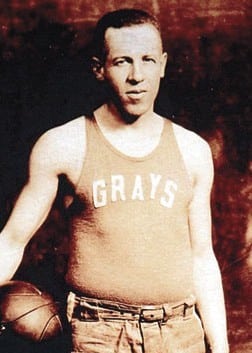
Cumberland “Cum” Posey was a pioneering figure in early basketball history, renowned for his skill, leadership, and impact on the game. As a player, coach, and owner, Posey was instrumental in popularizing basketball among African American communities during segregation. He led and managed the legendary Loendi Big Five, guiding them to four consecutive Colored Basketball World Championships from 1920 to 1923.
Posey was known for his exceptional scoring ability and strategic mind on the court, helping break racial barriers in sports. Beyond basketball, he was also a celebrated baseball executive, making him one of the few to be inducted into both the Basketball Hall of Fame and the Baseball Hall of Fame. His influence shaped the growth of African American professional sports and set a foundation for future generations.
Posey 's Awards and Honors
- 5× Colored Basketball World Champion (1912, 1920–1923)
- Pittsburgh City Champion (1908)
- Washington Nationals Ring of Honor
- Played and coached in early 1900s professional African American leagues
- Dual Hall of Fame inductee: Basketball and Baseball
- Widely regarded as the top African American player of his era, known for precision shooting, floor leadership, and scoring prowess
Teams
Loendi Big Five (1912-1920)
Contributions
Role:
Star player, leading scorer, team captain
Playing Style:
Skilled scorer, floor general
World Championship Appearances:
4 (1920–1923)
World Championship Win:
1 (1912)
Cynthia Cooper-Dyke
Inducted:
2010
Player Stats
5 ft 10 in (1.78 m)
150 lb (68 kg)
Born
April 14, 1963
Chicago, Illinois, U.S.
Position:
Shooting guard
Point guard
College:
USC (1982–1986)
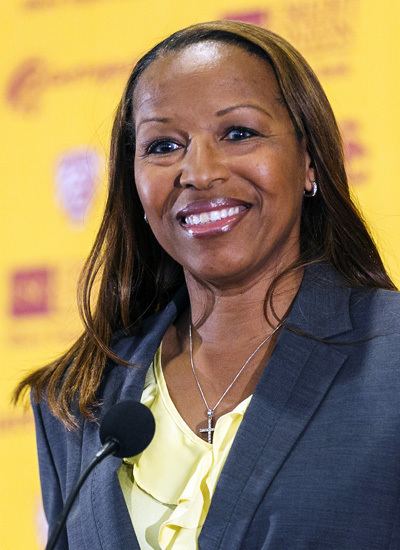
Cynthia Cooper-Dyke is widely considered the greatest player in the history of women's professional basketball and the first true global superstar of the WNBA. After a legendary collegiate career at USC, where she won two NCAA titles alongside Cheryl Miller, Cooper spent a decade dominating the European leagues. When the WNBA launched in 1997, she returned to the U.S. at the age of 34 and immediately took over the league.
As the spearhead of the Houston Comets "Big Three" (alongside Sheryl Swoopes and Tina Thompson), Cooper led the team to four consecutive WNBA Championships from 1997 to 2000. Her dominance was total: she was named the WNBA Finals MVP in all four championship runs and was the league's first back-to-back regular season MVP. In recognition of her historic influence and achievements, she was inducted into the Naismith Memorial Basketball Hall of Fame in 2010.
Cooper 's Awards and Honors
- 4x WNBA Champion (1997–2000)
- 4x WNBA Finals MVP (Only player to win four consecutively)
- 2x WNBA MVP (1997, 1998)
- 3x WNBA Scoring Champion (1997–1999)
- Olympic Gold Medalist (1988 Seoul)
- 2x NCAA Champion (1983, 1984)
- Only player to win Finals MVP in four consecutive seasons
WNBA Teams
Houston Comets (1997-2000, 2003)
Number Worn
14
WNBA Stats
Playing career:
1986–2003
Season Played:
5
Game Played:
124
Points:
2,601 (21.0 ppg)
Rebounds:
403 (3.3 rpg)
Assists:
602 (4.9 apg)
FG(%):
45.9
FT(%):
87.1
WNBA Championships:
4 (1997, 1998, 1999, 2000)
Coaching career:
2001–2022
"Don't Just Watch the Game—Own the Look!"
Score the hottest drop of the season, from authentic Icon Edition jerseys to the latest sneaker releases and official team hoodies. High-performance gear for the ultimate basketball fan.
Get Your Gear – NBA Official Collection
NBA Hall of Fame
The NBA Hall of Fame, officially known as the Basketball Hall of Fame, is a prestigious institution that honors the greatest figures in the sport of basketball. Each year, the Induction ceremony celebrates legendary players who have made significant impacts on the game. The Hall of Fame class features basketball legends whose remarkable career achievements and iconic moments have defined the sport.
Inductees are recognized for their substantial player contributions, earning various awards and honors throughout their careers. The Hall also pays tribute to retired jerseys and acknowledges the profound impact on the game by highlighting the historic contributions of its members. With a focus on the legacy in basketball, the NBA Hall of Fame continues to celebrate excellence and inspire future generations of players through memorable speeches and recognition in sports.