
Search by the First Name of the HOFers
Hakeem Olajuwon
Inducted:
2008

Player Stats
7 ft 0 in (2.13 m)
255 lb (116 kg)
Born
January 21, 1963
Lagos, Nigeria
Position:
Center
College:
Houston (1981–1984)
Hakeem "The Dream" Olajuwon is arguably the most skilled center to ever play the game. Born in Lagos, Nigeria, Olajuwon didn't pick up a basketball until age 15, bringing the elite footwork of a soccer goalkeeper to the court. After a legendary college career at the University of Houston with the "Phi Slama Jama" dunking fraternity, he was the #1 overall pick in the iconic 1984 NBA Draft—selected ahead of Michael Jordan.
Olajuwon was a two-way masterpiece. He is the only player in NBA history to win the NBA MVP, Defensive Player of the Year, and Finals MVP in the same season (1993-94). Known for his "Dream Shake" post moves, he led the Houston Rockets to back-to-back championships in 1994 and 1995, famously dismantling fellow Hall of Fame centers Patrick Ewing, David Robinson, and Shaquille O'Neal along the way. He was inducted into the Naismith Memorial Basketball Hall of Fame in 2008.
Olajuwon's Awards and Honors
- Olympic Gold Medalist (1996)
- NBA 75th Anniversary Team member
- Only player with MVP, Finals MVP, and Defensive Player of the Year in one season
- Considered the most technically skilled center in NBA history
NBA Records
- 2x NBA Champion (1994, 1995)
- NBA MVP (1994)
- 2x NBA Finals MVP (1994, 1995)
- 2x NBA Defensive Player of the Year (1993, 1994)
- 12x NBA All-Star
- 6x All-NBA First Team
- 5x All-Defensive First Team
NBA Teams
Houston Rockets (1984–2001)
Toronto Raptors (2001–2002)
NBA Draft
1984: 1st round, 1st overall pick
Houston Rockets
Number Worn
34
NBA Stats
Seasons:
18 (1984–2002)
Game Played:
1,238
Game Started:
1,186
Points:
26,946 (21.8 ppg)
Rebounds:
13,747 (11.1 rpg)
Blocks:
3,830 (3.1 bpg)
Steals (STL):
2,162 (1.7 spg)
Points per game:
21.8
Field Goal %:
51.2%
FT%
71.2
Hal Greer
Inducted:
1982
Player Stats
6 ft 2 in (1.88 m)
175 lb (79 kg)
Born
June 26, 1936
Huntington, West Virginia, U.S.
Died
April 14, 2018
Phoenix, Arizona, U.S.
Position
Shooting guard
Point guard
College
Marshall (1955–1958)
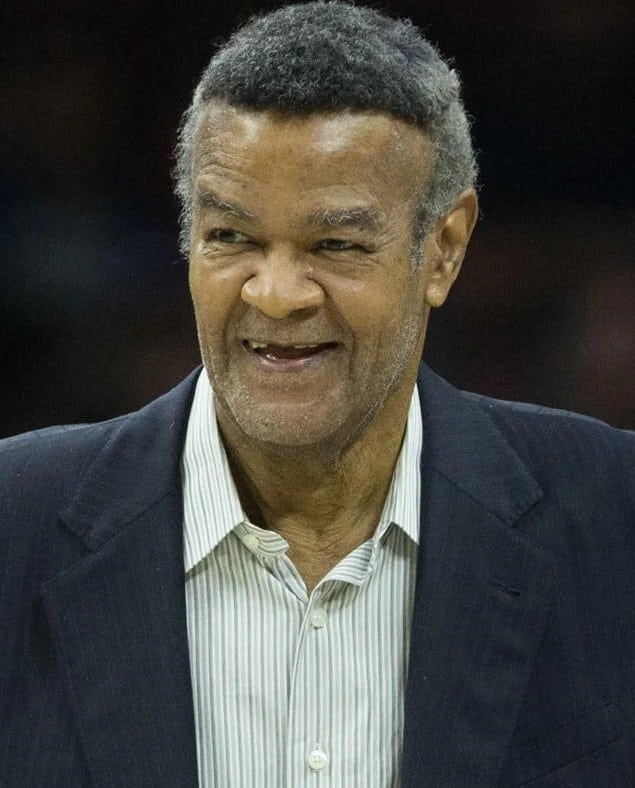
Hal Greer was a smooth-shooting guard and one of the most consistent scorers of his era. He spent his entire 15-year career (1958–1973) with the Philadelphia 76ers, becoming a cornerstone of the franchise. Standing 6'2", Greer was arguably the third-best guard of the 1960s, trailing only legends Oscar Robertson and Jerry West. Greer was a 10-time NBA All-Star and helped lead the 76ers to the 1967 NBA Championship.
Known for his mid-range jump shot, scoring balance, and durability, he played in 1,122 consecutive games, demonstrating remarkable consistency. Greer retired with over 21,000 points and 4,500 assists, ranking among the top guards of his generation. His scoring, leadership, and role in Philadelphia’s championship success earned him induction into the Naismith Memorial Basketball Hall of Fame in 1982.
Greer's Awards and Honors
- First-team All-MAC (1958)
- 15 retired by the Philadelphia 76ers
- Played 1,122 consecutive games (remarkable durability)
- Key scorer and leader of the 1967 championship team
- One of the top guards of the 1960s and early 1970s
- All-time 76ers leader in points, field goals, and games played
NBA Records
- NBA champion (1967)
- 10× NBA All-Star (1961–1970)
- NBA All-Star Game MVP (1968)
- 7× All-NBA Second Team (1963–1969)
- NBA anniversary team (50th, 75th)
NBA Teams
Syracuse Nationals / Philadelphia 76ers (1958–1973)
NBA Draft
1958: 2nd round, 13th overall pick
Syracuse Nationals
Number Worn
15
NBA Stats
Seasons:
15 (1958–1973)
Games Played:
1,122
Points:
21,586 (19.2 ppg)
Rebounds:
5,665 (5.0 rpg)
Assists:
4,540 (4.0 apg)
Field Goal %:
45.2
Free Throw %:
80.1
Playoff Games:
92
Hank Nichols
Inducted:
2012

Referee Stats
Born:
July 20, 1936
Niagara Falls, New York
Position:
NCAA Referee
College:
NA
Hank Nichols, born July 20, 1936, in Philadelphia, Pennsylvania, earned recognition as one of basketball’s most respected referees and administrators. Known for his steady presence, deep knowledge of the game, and fairness, Nichols officiated at the highest levels of college and international basketball. He worked multiple NCAA Final Fours and was selected to officiate in both the 1976 and 1984 Olympic Games, representing the sport on a global stage.
Beyond his on-court career, Nichols became the NCAA’s National Coordinator of Officials, a role in which he trained and developed referees while helping to set higher standards of professionalism and consistency in officiating. His lifelong dedication to the integrity of basketball officiating elevated the respect for referees within the game.
Inducted into the Naismith Memorial Basketball Hall of Fame in 2012, Nichols’ career reflects a commitment to fairness, leadership, and improving the sport through excellence in officiating and mentorship.
Nichols' Awards and Honors
- Naismith Memorial Basketball Hall of Fame induction: 2012
- Inducted into several officiating and sports Halls of Fame
- Widely regarded as a leader in referee training and development
Notable Achievements
- First referee selected to officiate in both Olympic Games and NCAA Final Fours
- Standard-setter for officiating professionalism in college basketball
- Mentored generations of referees through NCAA leadership
NCAA
NCAA Basketball referee: 1986–2007
NCAA Overview
- Officiated NCAA basketball games for decades
- Worked 10 NCAA Final Fours
- Officiated Olympic Games: 1972, 1984
- Served as NCAA National Coordinator of Officials for 22 years
Harlan Page
Inducted:
1962
Player Stats
5 ft 9 in (1.75 m)
Born:
March 20, 1887
Chicago, Illinois, U.S.
Died:
November 23,1965
Watervliet, Michigan, U.S.
Position:
Guard
College:
University of Chicago
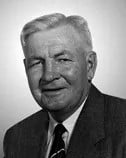
Harlan “Pat” Page was one of the earliest standout players in college basketball and a key figure in the University of Chicago’s dominance during the first decade of the 20th century. His playing career unfolded at the University of Chicago from 1906 to 1910 under legendary coach Amos Alonzo Stagg—decades before the establishment of the BAA or NBA. Standing 5'9", Page was a left-handed guard and one of basketball's earliest defensive specialists and premier multi-sport athletes.
He led Chicago to an AAU National Championship in 1907 and three consecutive national championships (1907–1909), earning Helms National Player of the Year honors in 1910. He later became a successful head coach, guiding Butler University to the 1924 AAU National Championship. For his pioneer play during the sport's dawn, he was enshrined in the Naismith Memorial Basketball Hall of Fame as a player in 1962.
Page's Awards and Honors
- 3× Helms Foundation All-American (1908–1910)
- Helms Foundation National Player of the Year (1910)
- 3× Helms National Champion (1907–1909)
- Led the University of Chicago to three consecutive national championships
- One of basketball's first elite defensive specialists
- Regarded as one of the greatest players of basketball's pioneering era
NBA Teams
Chicago (1906–1910)
NBA Stats
Career:
1906-1910
Points per game:
10.2
National Championships:
3
Helms Foundation All-American:
3×
Helms Foundation Player of the Year:
1910
Coaching Career:
1911–1938
Coaching Record:
269–140 (.658 W%)
Harlem Globetrotters
Inducted:
2002

Notable Players
Marques Haynes
Goose Tatum
Ermer Robinson
Wilbert King
Louis Pressley
Nathaniel Clifton
Sam Wheeler
Vertes Ziegler
Coach
Abe Saperstein
Founder and owner
Abe Saperstein
The Harlem Globetrotters are one of the most influential teams in basketball history, transforming the sport into a global spectacle while showcasing elite skill. Founded in 1926, the team blended high-level basketball with entertainment, creativity, and precision, helping popularize the game worldwide.
Their most pivotal moment occurred in 1948, when they defeated the reigning world champion Minneapolis Lakers, led by George Mikan. This victory shattered racial myths about the capabilities of Black athletes and served as the primary catalyst for the integration of the NBA in 1950. As the NBA began drafting their top stars, the Globetrotters transitioned into their famous "theatrical" style to maintain their unique niche. They were inducted into the Naismith Memorial Basketball Hall of Fame as a team in 2002.
Team's Awards and Honors
- John W. Bunn Lifetime Achievement Award (1999)
- World Professional Basketball Tournament Champions (1940)
- Star on the Hollywood Walk of Fame (1982)
- Athletic Order of Lenin (Received in the USSR, 1959)
- 9 Retired Jerseys (Including Wilt Chamberlain and Meadowlark Lemon)
- International cultural sports icons
- Multiple members inducted individually into the Hall of Fame
- Recognized for global promotion of basketball
Team Highlights
Founded:
1926
Games played worldwide:
26,000+
Countries visited:
120+
Continuous operation:
Nearly a century
Role:
Global ambassadors of basketball
World Pro Title:
1940
NBA Integration:
1950
Harley Redin
Inducted:
2024
Coach Stats
Born
August 29, 1919
Silverton, Texas
Died
August 1, 2020
Plainview, Texas
Position
Coach
College
Wayland Baptist College
Harley Redin was a transformative force who helped drag women's basketball into the modern era. After serving as a Marine bomber pilot in World War II, Redin returned to Texas and eventually took over the Wayland Baptist University Flying Queens women's team in 1955.
Under his leadership, the small Bible college became an absolute juggernaut. He was a relentless advocate for modernizing the women's game, successfully lobbying for revolutionary rule changes like the five-player full-court game, the 30-second shot clock, and the unlimited dribble (previously, women were restricted to only three dribbles before passing or shooting).
For his monumental impact on the sport, he was inducted into the Women's Basketball Hall of Fame in 1999 and the Naismith Memorial Basketball Hall of Fame in 2024.
Redin's Awards and Honors
- Women's Basketball Hall of Fame
- 6× AAU National Champion
- Pan American Games Silver Medalist
- John W. Bunn Lifetime Achievement Award (2018)
- Naismith Outstanding Contributor to Women's Basketball (2000)
- Texas Sports Hall of Fame Inductee (2004)
- One of their 20th Century's Top 100 Sports Legends of the Texas Panhandle
NCAA Teams
Wayland Baptist University (1955-1973)
NCAA Stats
Coaching career:
1955–1973
Seasons:
18
Wins:
429
Losses:
63
Win(%):
.860
Men's Coaching Record:
151–88
National Championship:
6 (AAU)
Harold Anderson
Inducted:
1985

Coach Stats
Born
September 11, 1902
Akron, Ohio, U.S.
Died
June 13, 1967
Fort Lauderdale, Florida, U.S.
Position
Coach
College
Otterbein (1921–1924)
Harold Anderson was a trailblazing architect of modern college basketball, known for pioneering the "run-and-gun," up-tempo offensive style that transformed the pace of the game. His legacy was forged entirely in the collegiate ranks, where he became one of the first coaches in history to achieve 500 career victories. He holds the unique distinction of being the first coach to lead two different programs—the University of Toledo and Bowling Green State University—to the National Invitational Tournament (NIT). His Bowling Green teams were a national fixture throughout the 1940s and 50s, consistently ranked in the top 20 and competing at the highest level of postseason play. He was inducted into the Basketball Hall of Fame in 1985.
Anderson's Awards and Honors
- 7× NIT bids (1942, 1944–1946, 1948, 1949, 1954)
- 3× NCAA tournament bids (1959, 1962, 1963)
- Bowling Green State University Athletics Hall of Fame (1966)
- Toledo Athletics Hall of Fame (1978)
- Anderson was enshrined in the Naismith Basketball Hall of Fame in 1985
- Inducted into the College Basketball Hall of Fame in 2006
- Anderson is one of the charter inductees of the Ohio Basketball Hall of Fame (2006)
NCAA Teams
Toledo (1934–1942)
Bowling Green (1943–1963)
NCAA Stats
Total Wins:
504
Total Losses:
226
Winning Percentage:
.690
NCAA Tournament Appearances:
3
NIT Appearances:
7
Seasons Coached:
29
Harold Foster
Inducted:
1964
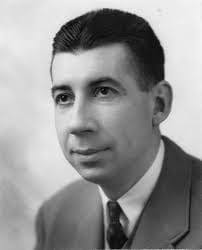
Stats
6 feet 3 inch
Born
May 30,1906
Newton, Kansas, U.S.
Died
July 16, 1996
Madison, Wisconsin, U.S.
Position
Center
College
University of Wisconsin–Madison
Harold E. "Bud" Foster was one of the outstanding college centers of the late 1920s and an important figure in early American basketball. His playing career unfolded at the University of Wisconsin from 1926 to 1930, followed by a brief stint in early professional independent leagues like the Oshkosh All-Stars during the 1930s.
Standing 6'3", Foster was a dominant, physical center under legendary coach Walter "Doc" Meanwell, earning Consensus All-American honors in 1930 and leading Wisconsin to a 43–8 record over three varsity seasons. Known affectionately as "Mr. Wisconsin," he later returned to his alma mater as head coach for a quarter century, guiding the Badgers to the 1941 NCAA Championship.
For his collegiate dominance as a center, he was enshrined in the Naismith Memorial Basketball Hall of Fame as a player in 1964.
Foster's Awards and Honor
- 2× All-Big Ten (1929, 1930).
- Wisconsin team captain — 1930
- Helped Wisconsin compile a 43–8 record from 1928–1930
- NCAA Basketball National Champion Coach (1941)
- Became the first Wisconsin men's basketball player inducted into the Naismith Hall of Fame
NBA Teams
Wisconsin (1926–1930)
Oshkosh All-Stars
NBA Stats
Career/Tenor:
1926-1930
Three-Year Wisconsin Record:
43–8
All-Big Ten:
1929, 1930
All-American:
1930
Team Captain:
1930
Professional Team:
Oshkosh All-Stars
Harry Fisher
Inducted:
1974
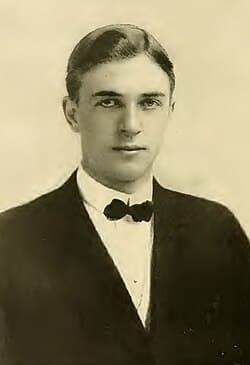
Coach Stats
5 ft 9 in (1.75 m)
150 lb (68 kg)
Born
February 6, 1882
New York City, New York, U.S.
Died
December 29, 1967
New York City, New York, U.S.
Position
Contributor
College
Columbia (1902–1905)
Harry Fisher was an essential architect of collegiate basketball, dedicating his life to framing its rules, structures, and early national prominence. While his career predated the NBA, his executive work laid the logistical foundation for the organized leagues that followed. After starring as a player at Columbia University, Fisher became the program's first full-time paid coach, a milestone that helped legitimize coaching as a professional career.
His off-court contributions were immense; he served on the original four-person committee tasked with standardizing basketball's regulations and spent a decade editing the definitive national collegiate rulebook. Later recruited by General Douglas MacArthur to elevate the athletic profile of the U.S. Military Academy (Army), Fisher coached a legendary undefeated team. For his visionary administrative leadership, he was inducted into the Basketball Hall of Fame as a Contributor in 1974.
Fisher's Awards and Honors
- Helms national champion (1910)
- 3× EIBL champion (1911, 1912, 1914)
- Helms Hall of Fame (1945)
- National Collegiate Basketball Hall of Fame
- Consensus All-American (1905)
- First Full-Time Paid Coach in Columbia University history
NCAA Contributions
Career Coaching Record:
189–60 (.759 winning percentage)
Schools Coached:
Fordham, Columbia, St. John's, and Army
Undefeated Season:
17–0 record with Army (1922–1923)
National Rulebook Editor:
Editor of the Collegiate Rules Committee and Collegiate Guide (1905–1915)
Columbia Athletic Director:
From 1911 to 1917
Harry Gallatin
Inducted:
1991

Player Stats
6 ft 6 in (198 cm)
210 lb (95 kg)
Born
April 26, 1927
Roxana, Illinois, U.S.
Died
October 7, 2015
Edwardsville, Illinois, U.S.
Position
Power forward
Center
College
Truman (1946–1948)
Harry “The Horse” Gallatin was one of the NBA’s premier rebounders during the league’s early years. Playing primarily for the New York Knicks from 1948 to 1957, Gallatin built a reputation for toughness, durability, and relentless work on the boards despite being undersized for a center at 6 feet 6 inches.
Gallatin was a seven-time NBA All-Star and led the league in rebounding in 1954. Known for his physical play and consistency, he helped guide the Knicks to three consecutive NBA Finals appearances (1951–1953). His ability to control the glass and defend larger opponents made him one of the most respected big men of his era.
Over his 10-season career, Gallatin averaged 13.0 points and 11.9 rebounds per game, cementing his legacy as one of the dominant rebounders of early professional basketball. He was inducted into the Naismith Memorial Basketball Hall of Fame in 1991.
Gallatin's Awards and Honors
- NAIA Hall of Fame (1957)
- IBCA Hall of Fame (1974)
- MIAA Hall of Fame (2010)
- Knicks Record: 33 Rebounds in a Single Game (1953)
- One of the NBA’s top rebounders of the 1950s
NBA Records
- 7× NBA All-Star (1951–1957)
- All-NBA First Team (1954)
- All-NBA Second Team (1955)
- NBA rebounding leader (1954)
- NBA Coach of the Year (1963)
NBA Teams
New York Knicks (1948–1957)
Detroit Pistons (1957–1958)
NBA Draft
1948: – 4th round, – 40 overall
New York Knicks
Number Worn
11, 10
NBA Stats
Seasons:
10 (1948-1958)
Game played:
682
Points:
8,843 (13.0 ppg)
Rebounds:
6,684 (11.9 rpg)
Assists:
1,208 (1.8 apg)
Field Goal(%):
39.8
Free Throw(%):
77.3
Harry Litwack
Inducted:
1976

Coach Stats
Born
September 20, 1907
Galicia, Austria-Hungary (modern-day Poland)
Died
August 7, 1999
Huntingdon Valley, Pennsylvania, U.S.
Position
Coach
College
Temple University
Harry Litwack was a cornerstone of Philadelphia basketball, a man whose career spanned the professional, collegiate, and international ranks. While he is most famous for his 21-year tenure as the head coach of Temple University, his NBA ties were foundational; he served as an assistant coach for the Philadelphia Warriors under Eddie Gottlieb from 1948 to 1951, helping guide the team during the league’s formative years.
Litwack was a tactical pioneer credited with developing the box-and-one defense, a strategy he used to lead Temple to the 1969 NIT Championship and two NCAA Final Fours. Known as "The Chief" for his friendly greeting to players and peers alike, he was celebrated for his impeccable character, having famously received only one technical foul in over 40 years of coaching.
For his tactical innovations and his status as one of the winningest coaches in college history, he was inducted into the Basketball Hall of Fame in 1976.
Litwack's Awards and Honors
- 2 NCAA Regional – Final Four (1956, 1958)
- NIT Tournament Champion (1969)
- 4 MAC (1964, 1967, 1969, 1972)
- Philadelphia Basketball Writers Coach of the Year (1956)
- New York Basketball Writers Coach of the Year (1958)
- Maccabiah Games Gold Medalist (1957 - Team USA Coach)
- Middle Atlantic Conference (MAC) Champion (1964, 1967, 1969, 1972)
NCAA Teams
Temple (1952–1973)
NCAA Stats
Collegiate Record:
54–12 record over three seasons (1931–1934)
Collegiate Scoring:
Notre Dame's all-time leading scorer
Henry Iba
Inducted:
1969
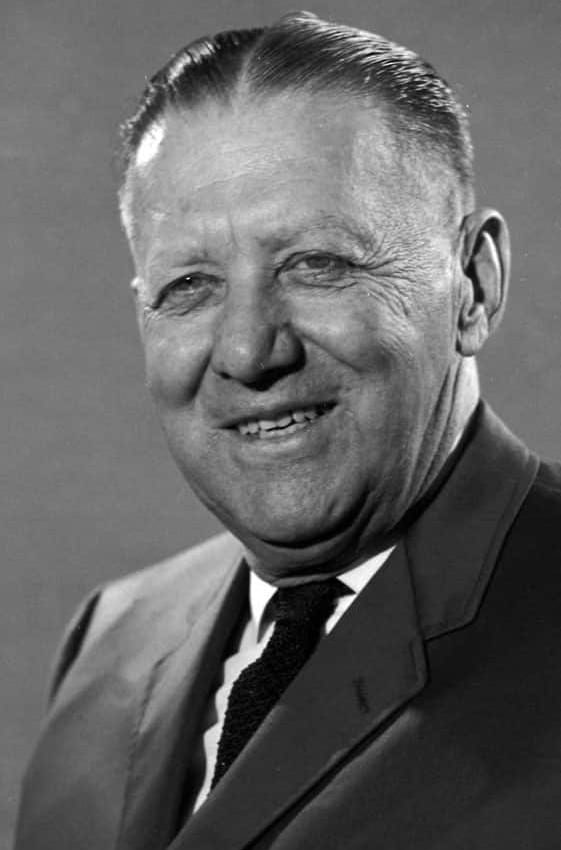
Stats
Born
August 6, 1904
Easton, Missouri, U.S.
Died
January 15, 1993
Stillwater, Oklahoma, U.S.
Position
Coach
College
Westminster College
Henry Iba was one of the most influential coaches in basketball history, known for his emphasis on discipline, defense, and fundamentally sound play. As head coach at Oklahoma A&M (now Oklahoma State University) from 1934 to 1970, he built one of the nation's premier college basketball programs.
For 36 seasons (1934–1970), he served as the head coach and athletic director at Oklahoma A&M (now Oklahoma State University), where he established a powerhouse program, winning back-to-back NCAA Championships in 1945 and 1946. On the international stage, Iba stands as a towering figure in USA Basketball history, having served as the head coach of three consecutive U.S. Olympic men's basketball teams (1964, 1968, and 1972).
Renowned for his disciplined, ball-control offense and stifling man-to-man defense, he was inducted into the Naismith Memorial Basketball Hall of Fame as a coach in 1969.
Iba's Awards and Honor
- 2 NCAA tournament (1945, 1946)
- 4 NCAA Regional—Final Four (1945, 1946, 1949, 1951)
- 2× Olympic Gold Medalist Head Coach (1964 Tokyo, 1968 Mexico City)
- Olympic Silver Medalist Head Coach (1972 Munich)
- 2× National Coach of the Year (1945, 1946)
- 15× Regular Season Conference Champion (Missouri Valley & Big Eight)
- NCAA 25th Anniversary Team (Coach)
NBA Teams
Oklahoma A&M / State (1934–1970)
NBA Records
Head Coaching Career:
1934–1970
Primary School:
Oklahoma A&M/Oklahoma State
Overall Record:
755–340
Winning Percentage:
.689
NCAA Championships:
2 (1945, 1946)
Olympic Record:
25–1
NCAA Tournament Appearances:
10
Conference Championships:
14
Henry Porter
Inducted:
1960
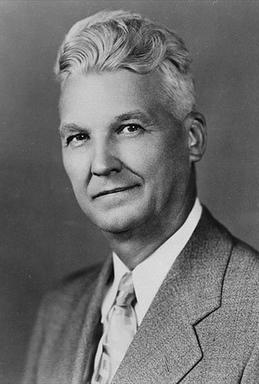
Stats
Born
October 2, 1891
near Manito, Illinois, U.S.
Died
October 27, 1975
St. Petersburg, Florida, U.S.
Position
Contributor
College
Illinois State University
University of Illinois at Urbana–Champaign
Henry Porter was an important figure in the early development and organization of basketball, earning recognition for innovations that helped improve the game at both the school and national levels. His landmark legacy was forged in high school athletics as an administrator, equipment designer, and rule maker.
As the inaugural executive secretary of the National Federation of State High School Athletic Associations (NFHS), Porter revolutionized the physical equipment and standard rulebook of basketball. He designed the fan-shaped backboard, spearheaded the transition from heavy laced leather balls to the modern molded basketball, and published the first unified high school rulebook. Porter is also famous for coining the iconic phrase "March Madness" in 1939 to capture the drama of high school tournament play.
For his game-changing innovations and administrative leadership, he was enshrined in the Naismith Memorial Basketball Hall of Fame as a Contributor in 1960.
Porter's Awards and Honor
- Designed the Fan-Shaped Backboard
- Introduced the Molded Basketball
- Published First High School Basketball Rule Book (1936)
- Pioneered Instructional Motion Pictures
- Credited with developing the fan-shaped backboard
- First Illinois State graduate inducted into the Basketball Hall of Fame
NBA Teams
Athletic Administrator
Executive Director
NBA Records
Served at IHSA:
31 Years (1927–1958) as Assistant Manager
As Executive Secretary of NFHS:
18 Years (1940–1958)
As Executive Director:
National High School Federation
Major contribution:
Development of basketball equipment
Rule Committee Veteran:
Represented 26 years (1932–1958) at National Basketball Rules Committee
Term Coined:
"March Madness"
Herb Magee
Inducted:
2011

Coach Stats
5 ft 10 in; (68 kg)
Born:
June 21, 1941
Philadelphia, Pennsylvania, U.S.
Position:
Coach
College:
NA
Herb Magee, known as the “Shot Doctor,” built one of the most remarkable coaching legacies in basketball history. As the longtime head coach at Philadelphia University, Magee guided the program for over five decades, earning recognition for his ability to develop talent and instill discipline. Renowned for his expertise in shooting, he became a mentor to countless players at every level, from high school athletes to NBA professionals, shaping the way the game was taught.
Magee’s career coaching record surpassed 1,100 victories, making him one of the winningest coaches in NCAA history. Beyond wins, he was celebrated for loyalty, spending his entire career at one institution and building a culture defined by respect, hard work, and skill development.
Inducted into the Hall of Fame in 2011, Magee’s impact as a teacher of the game continues to inspire coaches and players alike. His career stands as a model of excellence, commitment, and basketball knowledge.
Magee's Awards and Honors
- NCAA College Division II tournament (1970)
- 5× CACC tournament (2008, 2009, 2014, 2015, 2018)
- CACC regular season (2007)
- 6× CACC South Division regular season (2008–2010, 2012, 2014, 2017)
NBA Records
- One of the all-time winningest coaches in NCAA basketball history
- Spent entire career at one institution
- Recognized as one of the greatest shooting instructors in basketball
- Helped shape generations of players and coaches across all levels
NBA Teams
Philadelphia Textile/Philadelphia/Jefferson (1963–2022)
NBA Draft:
1963: 62nd pick
Boston Celtics
NBA Stats
Coaching Career:
1967–2022
Total Wins:
1,144
Overall Wins:
1,144
Losses:
450
Win(%)
.718
Herb Simon
Inducted:
2024

Owner Stats
Born:
October 23, 1934
New York City, U.S.
Position:
Contributor – Owner
College:
NA
Herb Simon is the longtime owner of the Indiana Pacers, having purchased the team in 1983 alongside his late brother, Mel Simon. Under his leadership, the Pacers have become one of the NBA’s most stable franchises, consistently competing at a high level and making multiple deep playoff runs.
Simon played a crucial role in keeping the Pacers in Indianapolis, ensuring the team remained a key part of the city's sports culture.
Beyond basketball, Simon is a highly successful businessman, known for his work in real estate as the chairman of Simon Property Group, one of the world’s largest shopping mall operators.
His impact on both sports and business earned him widespread recognition, making him one of the most influential owners in NBA history.
Simon's Awards and Honors
- Owner of Indiana Pacers since 1983
- Led Pacers to multiple Eastern Conference Finals and an NBA Finals appearance (2000)
- Helped secure Gainbridge Fieldhouse (formerly Conseco Fieldhouse) for the Pacers
- Key figure in keeping the Pacers in Indianapolis
- Herb is the longest-tenured NBA owner.
NBA Teams
NBA Stats
Occupation:
Chairman emeritus(Simon Property Group)
Ownership Team:
Indiana Pacers
Ownership Since:
1983
Co-Owner(Team):
Indiana Fever
"Don't Just Watch the Game—Own the Look!"
Score the hottest drop of the season, from authentic Icon Edition jerseys to the latest sneaker releases and official team hoodies. High-performance gear for the ultimate basketball fan.
Get Your Gear – NBA Official Collection
NBA Hall of Fame
The NBA Hall of Fame, officially known as the Basketball Hall of Fame, is a prestigious institution that honors the greatest figures in the sport of basketball. Each year, the Induction ceremony celebrates legendary players who have made significant impacts on the game. The Hall of Fame class features basketball legends whose remarkable career achievements and iconic moments have defined the sport.
Inductees are recognized for their substantial player contributions, earning various awards and honors throughout their careers. The Hall also pays tribute to retired jerseys and acknowledges the profound impact on the game by highlighting the historic contributions of its members. With a focus on the legacy in basketball, the NBA Hall of Fame continues to celebrate excellence and inspire future generations of players through memorable speeches and recognition in sports.