

Search by the First Name of the HOFers
Pat Riley
Inducted:
2008

Player Stats
6 ft 4 in (1.93 m)
205 lb (93 kg)
Born
March 20, 1945
Rome, New York, U.S.
Position:
Shooting guard (as player)
Coach
College:
Kentucky (1964–1967)
Pat Riley, often called "The Godfather" of the NBA, is one of the most successful and charismatic figures in sports history. Over a career spanning six decades, Riley has reached the NBA Finals as a player, assistant coach, head coach, and executive. He first rose to coaching stardom as the architect of the "Showtime" Lakers in the 1980s, combining a fast-break offense with a Hollywood-style persona characterized by slicked-back hair and Armani suits.
Riley's genius lies in his adaptivity. After leaving the flashy Lakers, he transformed the New York Knicks into a gritty, defensive powerhouse in the 90s, before moving to the Miami Heat. In Miami, he built a "Heat Culture" based on extreme conditioning and loyalty. He is the first person in North American sports to win championships in four different roles and was inducted into the Naismith Memorial Basketball Hall of Fame in 2008.
Riley's Awards and Honors
- First-team All-American (Kentucky, 1966)
- One of few to win titles with multiple franchises
- Successful NBA champion as player, coach, and executive
- Chuck Daly Lifetime Achievement Award (2012)
NBA Records
- 9x NBA Champion (across four roles)
- 3x NBA Coach of the Year (with three different teams)
- NBA Executive of the Year (2011)
- Top 10 Coaches in NBA History
- Top 15 Greatest Coaches in NBA History
- 9x NBA All-Star Game Head Coach
NBA Team
As Player
San Diego Rockets (1967–1970)
Los Angeles Lakers (1970–1975)
Phoenix Suns (1975–1976)
As Coach
Los Angeles Lakers (1979–1990)
New York Knicks (1991–1995)
Miami Heat (1995–2003,2005–2008)
NBA Draft
1967: 1st round, 7th overall pick
San Diego Rockets
Number Worn
42, 12
NBA Stats
Game Coached:
1,904
Coaching record:
1,210–694 (.636)
Total NBA Championships:
9
As Player:
1 (1972 Lakers)
As Assistant Coach:
1 (1980 Lakers)
As Head Coach:
5 (1982, 1985, 1987, 1988, 2006)
As Executive:
2 (2012, 2013)
NBA Coach of the Year:
3 (1990, 1993, 1997)
Executive of the Year:
1 (2011)
Pat Summit
Inducted:
2000

Coach Stats
Born
June 14, 1952
Clarksville, Tennessee, U.S.
Died
June 28, 2016
Knoxville, Tennessee, U.S.
Position:
Coach
College:
Tennessee Lady Vols basketball
Pat Summitt was a force of nature and the primary architect of modern women’s college basketball. As the head coach of the University of Tennessee Lady Volunteers for 38 seasons, Summitt did more than just win games; she changed the cultural landscape of American sports. Known for her piercing "ice-blue stare" and uncompromising standards, she took over a program with no budget in 1974 and turned it into a national brand, winning eight NCAA Championships.
While she never coached in the NBA, her influence on the professional game is profound. She mentored dozens of WNBA stars and was the first female coach to reach the 1,000-win milestone, a feat that commanded the absolute respect of NBA legends and coaches alike. She retired in 2012 as the winningest coach in NCAA history at that time. She was inducted into the Hall of Fame in 2000.
Summitt's Awards and Honors
- Women's Basketball Hall of Fame (1999)
- Presidential Medal of Freedom (2012)
- Naismith Coach of the 20th Century (2000)
- 5x Naismith College Coach of the Year
- 8x SEC Coach of the Year
- Sports Illustrated Sportsperson of the Year (2011)
- Arthur Ashe Courage Award (2012)
NCAA Teams
Tennessee (1974–2012)
National Team
United States
NCAA Stats
Seasons coached:
38
Overall Record:
1,098–208 (.841)
NCAA Tournament appearances:
36
Final Four appearances:
18
NCAA Championships:
8 (1987, 1989, 1991, 1996, 1997, 1998, 2007, 2008)
Final Four Appearances:
18 (NCAA Record)
Olympic Medals:
1 Gold (Coach, 1984) / 1 Silver (Player, 1976)
SEC Titles:
16 Regular Season / 16 Tournament
Patrick Baumann
Inducted:
2020

Coach Stats
Born:
5 August 1967
Basel, Switzerland
Died:
13 October 2018
Buenos Aires, Argentina
Position:
Executive
Coach
Referee
College:
NA
Patrick Baumann (1967–2018) was a transformative figure in global basketball. A Swiss player, coach, referee, and lawyer, he joined FIBA in 1994, rising to Secretary General in 2003. Over 15 years, he modernized FIBA—creating its own headquarters, implementing new competition systems, and championing 3×3 basketball, paving its way to the Olympics.
He also led the Global Association of International Sports Federations and served on the IOC from 2007, contributing to the coordination of multiple Olympic Games. His sudden passing during the 2018 Youth Olympics shook the sports world. Posthumously enshrined in the Naismith Memorial Basketball Hall of Fame in 2020, FIBA’s headquarters bears his name, and a statue honors his legacy.
Baumann's Awards and Honors
- Naismith Memorial Basketball Hall of Fame Inductee (2020)
- Olympic Order (Posthumously awarded in 2019)
- FIBA Order of Merit
- FIBA Hall of Fame Legacy Tribute
Contributions
Secretary General, FIBA (2003–2018)
IOC Member (2007–2018)
President, GAISF/SportAccord (2016–2020)
Honors:
Naismith Basketball Hall of Fame, 2020; Olympic Order posthumous award
Patrick Ewing
Inducted:
2008

Player Stats
7 ft 0 in (2.13 m)
240 lb (109 kg)
Born
August 5, 1962
Kingston, Jamaica
Position:
Center
College:
Georgetown (1981–1985)
Patrick Ewing was the towering heart of the New York Knicks for fifteen seasons. Born in Jamaica and raised in Massachusetts, Ewing first became a national sensation at Georgetown University, where he led the Hoyas to three Final Fours and the 1984 NCAA Championship. His defensive intimidation was so coveted that the NBA famously introduced the Draft Lottery in 1985 specifically to discourage teams from "tanking" to acquire him.
In the NBA, Ewing evolved from a defensive specialist into a sophisticated offensive force, masterfully utilizing a baseline turnaround jumper that became his signature move. While his quest for an NBA title was repeatedly thwarted by Michael Jordan’s Bulls and Hakeem Olajuwon’s Rockets, he led the Knicks to two NBA Finals (1994, 1999). He retired as the franchise's all-time leader in nearly every major category and was inducted into the Naismith Memorial Basketball Hall of Fame in 2008.
Ewing's Awards and Honors
- NCAA Champion (1984) & Final Four MOP
- 2x Olympic Gold Medalist (1984, 1992)
- New York Knicks all-time leading scorer
- Adolph Rupp Trophy (1985)
- 33 retired for the New York Knicks
- McDonald's Open champion (1990)
- McDonald's Open MVP (1990)
NBA Records
- 11x NBA All-Star (1986, 1988–1997)
- All-NBA First Team (1990)
- 6x All-NBA Second Team
- 3x NBA All-Defensive Second Team
- NBA Rookie of the Year (1986)
- NBA 75th Anniversary Team member
NBA Teams
New York Knicks (1985–2000)
Seattle SuperSonics (2000–2001)
Orlando Magic (2001–2002)
NBA Draft
1985: 1st round, 1st overall pick
New York Knicks
Number Worn
33, 6
NBA Stats
Seasons:
17 (1985-2002)
Games Played:
1,183
Game Started:
1,122
Points:
24,815 (21.0 ppg)
Rebounds:
11,617 (9.8 rpg)
Blocks:
2,894 (2.4 bpg)
Blocks:
2,894 (2.4 bpg)
FG%
50.4
FT%
74.0
Points per game:
21.0
Pau Gasol
Inducted:
2023

Player Stats
Stats:
7 ft 0 in (2.13 m)
250 lb (113 kg)
Born:
July 6, 1980
Barcelona, Spain
Position:
Power forward
center
College:
NA
Pau Gasol is one of the most accomplished international players in NBA history. Born in Barcelona, Spain, he played 18 NBA seasons (2001–2019) and became the first non-American to win NBA Rookie of the Year in 2002.
Gasol was a two-time NBA champion with the Los Angeles Lakers (2009, 2010) and a six-time All-Star. Known for his finesse, passing, and basketball IQ, he played for the Memphis Grizzlies, Lakers, Bulls, Spurs, and Bucks, finishing with career averages of 17.0 points, 9.2 rebounds, and 3.2 assists per game.
Internationally, he led Spain to multiple medals, including Olympic silver (2008, 2012) and FIBA World Cup gold (2006). In 2023, the Lakers retired his No. 16 jersey, and he was inducted into the Naismith Memorial Basketball Hall of Fame.
Gasol's Awards and Honors
- 16 retired by the Los Angeles Lakers
- All-EuroLeague Second Team (2001)
- 3× Liga ACB champion (1999, 2001, 2021)
- Spanish King's Cup winner (2001)
- Spanish King's Cup MVP (2001)
- ACB Finals MVP (2001)
- 2× FIBA Europe Player of the Year (2008, 2009)
- 2× Mister Europa Player of the Year (2004, 2009)
- 4× Euroscar Player of the Year (2008–2010, 2015)
- Spanish Sportsman of the Year (2011)
- FIBA World Cup MVP (2006)
- 2× FIBA EuroBasket MVP (2009, 2015)
- FIBA EuroBasket Dream Team (2020)
NBA Records
- 2× NBA champion (2009, 2010)
- 6× NBA All-Star (2006, 2009–2011, 2015, 2016)
- 2× All-NBA Second Team (2011, 2015)
- 2× All-NBA Third Team (2009, 2010)
- NBA Rookie of the Year (2002)
- NBA All-Rookie First Team (2002)
NBA Teams
Memphis Grizzlies 2001–2008
Los Angeles Lakers 2008–2014
Chicago Bulls 2014–2016
San Antonio Spurs 2016–2019
Milwaukee Bucks 2019
NBA draft:
2001: 1st round, 3rd overall pick
Atlanta Hawks
Numbers Worn:
16, 17
NBA Stats
Seasons:
20
Games Played:
1,226
Games Started:
1,150
Minutes Per Game:
33.4
Points Per Game:
17.0
Rebounds Per Game:
9.2
Assists Per Game:
3.2
Blocks Per Game:
1.6
Steals Per Game:
0.5
Field Goal Percentage:
50.7%
Three-Point Percentage:
36.8%
Free Throw Percentage:
75.3%
Paul Arizin
Inducted:
1978
Player Stats
6 ft 4 in (1.93 m)
190 lb (86 kg)
Born
April 9, 1928
Philadelphia, Pennsylvania, U.S.
Died
December 12, 2006
Springfield Township, Pennsylvania, U.S.
Position
Small forward
College
Villanova (1947–1950)
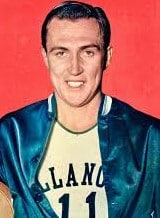
Paul Arizin was a prolific scorer and a true revolutionary who helped bridge the gap between basketball's early set-shot era and the high-flying modern game. A 6'4" forward for the Philadelphia Warriors, Arizin is primarily celebrated as the man who popularized the one-handed jump shot. His signature move—leaping high and releasing the ball at the apex of his jump—was nearly unblockable and allowed him to dominate smaller defenders.
Despite missing two prime years of his career to serve in the U.S. Marine Corps during the Korean War, Arizin returned to the NBA without losing his scoring touch. He was the offensive engine of the Warriors' 1956 NBA Championship team and a 10-time All-Star who finished his career as one of the most respected players in league history. For his offensive innovation and consistent brilliance, he was inducted into the Basketball Hall of Fame in 1978.
Arizin's Awards and Honors
- EPBL champion (1964)
- EPBL Most Valuable Player (1963)
- 2× All-EPBL First Team (1963, 1964)
- Sporting News Player of the Year (1950)
- Consensus first-team All-American (1950)
- NCAA scoring champion (1950)
- 11 retired by the Villanova Wildcats
NBA Records
- NBA champion (1956)
- 10× NBA All-Star (1951, 1952, 1955–1962)
- NBA All-Star Game MVP (1952)
- 3× All-NBA First Team (1952, 1956, 1957)
- All-NBA Second Team (1959)
- 2× NBA scoring champion (1952, 1957)
NBA Teams
Philadelphia Warriors (1950–1952,1954–1962)
NBA Draft
1950: territorial pick
Philadelphia Warriors
Number Worn
11
NBA Stats
Season:
10 (1950-1962)
Games Played:
713
Points:
16,266 (22.8 ppg)
Rebounds:
6,129 (8.6 rpg)
Assists:
1,665 (2.3 apg)
Field Goal %:
42.1%
Free Throw %:
81.0%
Playoff Game:
49
Paul Endacott
Inducted:
1972
Player Stats
5 ft 10 in (1.78 m)
Born
July 13, 1902
Oklahoma City, Oklahoma, U.S.
Died
January 8, 1997
Bartlesville, Oklahoma, U.S.
Position
Guard
College
Kansas (1920–1923)
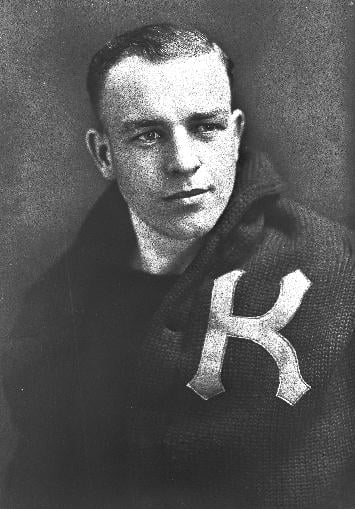
Paul Endacott was one of the finest amateur basketball players of the 1920s and an important figure in the sport's early history. A standout guard at the University of Kansas under legendary coach Phog Allen, he led the Jayhawks to national prominence with his leadership, passing, and scoring ability. After college, Endacott starred in Amateur Athletic Union (AAU) basketball with Phillips 66, where he continued to build his reputation as one of the nation's top players.
Although he did not play in the NBA, which was founded after his playing career, his accomplishments helped shape the development of American basketball. His intelligent play, sportsmanship, and consistency made him a respected leader on every team he represented. In recognition of his outstanding playing career and lasting impact on the game, Paul Endacott was inducted into the Naismith Memorial Basketball Hall of Fame in 1972.
Endacott's Awards and Honor
- One of the greatest guards of the pre-NBA era
- Successful AAU career with Phillips 66
- Helms Player of the Year (1923)
- 2× Consensus All-American (1922, 1923)
- 2× First-team All-MVC (1922, 1923)
NBA Teams
Phillips 66ers (1924–1928)
Number Worn:
12
NBA Stats
Position:
Guard
College:
University of Kansas (1919–1923)
College Career Record:
47–7
Undefeated Conference Run:
Record (16–0) in 1923
Team Captain:
1922–23
Professional/Amateur Team:
Phillips 66 Oilers (AAU)
Paul Hinkle
Inducted:
1965
Stats
Born
December 19, 1899
Logansport, Indiana, U.S.
Died
September 22, 1992
Indianapolis, Indiana, U.S.
Position
Contributor
College
University of Chicago
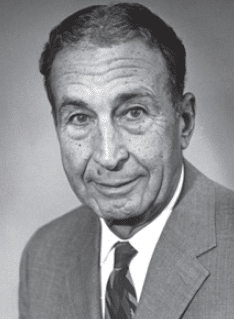
Paul “Tony” Hinkle was one of the most influential figures in early college basketball, spending 41 seasons coaching at Butler College and helping establish the school as a respected national program. Hinkle’s monumental legacy was forged over nearly five decades in collegiate sports at Butler University. As a coach, athletic director, and rules innovator, Hinkle transformed college basketball.
Working alongside Spalding in the late 1950s, he co-developed the orange basketball, replacing the hard-to-see dark brown ball to dramatically improve visibility for players, fans, and television audiences. He also spent decades serving on the NCAA Rules Committee, coaching three sports at Butler, and turning Butler Fieldhouse into an iconic cathedral of American basketball.
For his multi-faceted leadership and lifelong contributions to the sport, he was enshrined in the Naismith Memorial Basketball Hall of Fame as a Contributor in 1965.
Hinkle's Awards and Honor
- 2 MVC regular season (1933–1934)
- MAC regular season (1947)
- 7 ICC regular season (1952–1954, 1959, 1961, 1962, 1970)
- Led Butler to the 1929 national championship after a 17–2 season
- Co-Developer of the Modern Orange Basketball
- President of the NABC (1954–1955)
NBA Teams
As President
National Association of Basketball Coaches (1954-1955)
As Chairman
Rules Committee (National Basketball Committee)
NBA Stats
Head Coaching Career:
1926–1970
Colleges Coached:
Butler
Overall Record:
560–392
Winning Percentage:
.588
NCAA Tournament Appearances:
1 (1962)
NABC President:
1954–55
Paul Pierce
Inducted:
2021

Player Stats
6 ft 7 in (2.01 m)
235 lb (107 kg)
Born:
October 13, 1977
Oakland, California, U.S.
Position:
Small forward
Shooting guard
College:
Kansas (1995–1998)
Paul Pierce was a prolific scorer and clutch performer who spent most of his 19-year NBA career as the face of the Boston Celtics.
Drafted 10th overall in 1998, Pierce quickly became known for his smooth scoring ability, strong mid-range game, and fearless approach in big moments.
He led the Celtics through rebuilding years and finally reached the NBA summit in 2008, teaming with Kevin Garnett and Ray Allen to win an NBA championship and earning Finals MVP honors. Nicknamed "The Truth," Pierce ranks among the all-time leaders in points, free throws, and three-pointers made.
He retired with over 26,000 career points, placing him among the top scorers in league history.
Pierce was inducted into the Naismith Memorial Basketball Hall of Fame in 2021, a fitting recognition for a player whose toughness, loyalty, and shot-making defined an era in Boston and made him one of the game’s great small forwards.
Pierce's Awards and Honors
- 34 retired by Boston Celtics
- Consensus first-team All-American (1998)
- First-team All-Big 12 (1998)
- Third-team All-Big 12 (1997)
- 2× Big 12 tournament MVP (1997, 1998)
- 34 jersey retired by Kansas Jayhawks
- McDonald's All-American (1995)
- Second-team Parade All-American (1995)
- California Mr. Basketball (1995)
NBA Records
- NBA champion (2008)
- NBA Finals MVP (2008)
- 10× NBA All-Star (2002–2006, 2008–2012)
- All-NBA Second Team (2009)
- 3× All-NBA Third Team (2002, 2003, 2008)
- NBA All-Rookie First Team (1999)
- NBA Three-Point Contest champion (2010)
- NBA 75th Anniversary Team
NBA Teams
Boston Celtics 1998–2013
Brooklyn Nets 2013–2014
Washington Wizards 2014–2015
Los Angeles Clippers 2015–2017
NBA Draft:
1998: 1st round, 10th overall pick
Boston Celtics
Numbers Worn:
34
NBA Stats
Games Played:
1,343
Points:
26,397 (19.7 PPG)
Rebounds:
7,527 (5.6 RPG)
Assists:
4,708 (3.5 APG)
FG%:
44.5%
3P%:
36.8%
FT%:
80.6%
Paul Westphal
Inducted:
2019

Player Stats
6 ft 4 in (1.93 m)
195 lb (88 kg)
Born:
November 30, 1950
Torrance, California, U.S.
Died:
January 2, 2021
Scottsdale, Arizona, U.S.
Position:
Shooting guard
Point guard
College:
USC (1969–1972)
Paul Westphal was a brilliant scorer, creative passer, and respected coach whose impact spanned generations. As a player, he starred as a guard in the 1970s and early ’80s, most notably with the Phoenix Suns, where he led the team to the 1976 NBA Finals—one of the most legendary series in league history.
A five-time All-Star, Westphal averaged over 20 points per game for five straight seasons and earned three All-NBA First Team honors. Known for his smart, fluid style of play, he was a clutch performer and vocal leader on the floor. After retiring, he transitioned into coaching and led the Suns to the 1993 NBA Finals in his first year as head coach.
Inducted into the Hall of Fame in 2019, Westphal is remembered as both a graceful athlete and a deeply respected figure in basketball.
Westphal's Awards and Honors
- NBA champion (1974)
- 5× NBA All-Star (1977–1981)
- 3× All-NBA First Team (1977, 1979, 1980)
- All-NBA Second Team (1978)
- NBA Comeback Player of the Year (1983)
- 44 retired by Phoenix Suns
- Third-team All-American – NABC (1971)
- 2× Third-team All-American – UPI (1971, 1972)
- 2× First-team All-Pac-8 (1970, 1971)
- Second-team All-Pac-8 (1972)
- 25 retired by USC Trojans
NBA Records
- First player in Suns history with three consecutive 20+ PPG seasons (1977–1979)
- Ranks among Phoenix Suns all-time leaders in: Points per game
- Won the 1974 NBA title with the Boston Celtics
NBA Teams
As a player:
Boston Celtics 1972–1975
Phoenix Suns 1975–1980
Seattle SuperSonics 1980–1981
New York Knicks 1982–1983
Phoenix Suns 1983–1984
NBA Draft:
1972: 1st round, 10th overall pick
Boston Celtics
Number Worn:
44
NBA Stats
Seasons:
12 (1972–1984)
Games Played:
823
Points:
12,809
Points Per Game:
15.6
Assists:
3,591
Assists Per Game:
4.4
FG%:
.504
Pearl Moore
Inducted:
2021

Player Stats
5 ft 7 inch
Born:
March 16, 1957 (age 68)
Position:
Point guard
College:
Anderson Junior College (1975)
Francis Marion (1975-1979)
Pearl Moore is one of the most prolific scorers in basketball history. Playing for Francis Marion College in the 1970s, she scored a staggering 3,951 career points, a record that still stands as the most ever scored in a U.S. women’s college basketball career (including both AIAW and NCAA history). Moore had a lightning-quick release, excellent ball control, and unmatched consistency, averaging over 30 points per game for four straight seasons.
After college, she played professionally in the Women’s Professional Basketball League (WBL) and remained a respected ambassador for the game. Her career predated the WNBA, but her influence helped pave the way for women’s pro basketball. She was inducted into the Naismith Memorial Basketball Hall of Fame in 2021. Pearl Moore’s career set the gold standard for scoring in the women’s game — and her records still speak louder than words.
Moore's Awards and Honors
- FMU Athletic Hall of Fame in 1992
- Women's Basketball Hall of Fame in 2011
- All-time leading scorer in U.S. women’s college basketball
- Jersey retired by Francis Marion University
- Named AIAW Small College Player of the Year (1978)
WBL Teams
New York Stars (1979-1980)
St. Louis Streak (1980-1981)
WLB Draft:
1979: 1st round, 11th overall pick
New York Stars
WBL Stats
Games Played:
125
Points Scored:
3,951
Points Per Game:
32.5
Field Goal Percentage:
53%
Free Throw Percentage:
75%
Seasons Averaging 30+ PPG:
4
Pedro Ferrandiz
Inducted:
2007

Coach Stats
Born
20 November 1928
Alicante, Spain
Died
7 July 2022
Alicante, Spain
Position
Coach
College:
NA
Pedro Ferrándiz was one of the most influential coaches in international basketball history and a central figure in building Real Madrid into a global powerhouse. Coaching the club from 1959 to 1975, Ferrándiz led Real Madrid to unprecedented dominance in European basketball, combining tactical innovation with disciplined team play.
Under his leadership, Real Madrid became a continental juggernaut, winning four European Cups (now EuroLeague) and an astounding 12 Spanish League titles. He also played a major role in the development of basketball in Spain, helping elevate the country’s status on the international stage. In recognition of his extraordinary contributions to the game, Pedro Ferrándiz was inducted into the Naismith Memorial Basketball Hall of Fame in 2007.
Ferrandiz's Awards and Honors
- 7× FIBA International Christmas Tournament Champion: (1967-1970,1972-1974)
- 4× FIBA European Champions Cup (EuroLeague) Champion (1964–65, 1966–67, 1967–68, 1973–74)
- 12× Spanish League Champion (1960-1962,1965,1968-1975)
- 11× Spanish King's Cup Winner (1960-1962,1965,1967,1970-1975)
- FIBA Hall of Fame (2009)
- 50 Greatest EuroLeague Contributors (2008)
- FIBA Order of Merit (2000)
- Honorary Member of Real Madrid (2017)
Teams
Real Madrid (1959–1962,1966–1975)
Spain (1964–1965)
Stats
Seasons as Head Coach:
13 (1959–1962, 1966–1975)
Total Trophies Won:
27
European Cup Titles:
4 (1965, 1967, 1968, 1974)
Spanish League Titles:
12
Spanish Cup Titles:
11
Combined Career Record:
414–76 (.845)
Pete Carril
Inducted:
1997

Coach Stats
Born
July 10, 1930
Bethlehem, Pennsylvania, U.S.
Died
August 15, 2022
Philadelphia, Pennsylvania, U.S.
Position
Coach
College
Lafayette (1948–1952)
Pete Carril was one of basketball’s great thinkers, best known as the creator of the Princeton Offense and a coach who proved intelligence and discipline could overcome size and talent gaps. While he spent 29 years as the head coach at Princeton University, his influence extended deep into the NBA. Carril’s philosophy was built on the idea that "the ball moves faster than the man," allowing smaller, theoretically less athletic teams to systematically dismantle more talented opponents. Following his retirement from college coaching, Carril brought his expertise to the NBA, serving as an assistant coach for the Sacramento Kings for 10 years. He was inducted into the Hall of Fame in 1997.
Carril's Awards and Honors
- 8x Ivy League Coach of the Year
- National Polish-American Sports Hall of Fame (2003)
- Namesake of "Carril Court" at Princeton's Jadwin Gymnasium
- Author of "The Smart Take from the Strong" (1997)
- Creator of the Princeton Offense
NCAA/NBA Teams
Princeton (1967–1996)
Sacramento Kings (1996–2006)
NCAA/NBA Stats
Princeton Record:
525–273 (.658)
Ivy League Championships:
13
NCAA Tournament Berths:
11
NIT Championships:
1 (1975)
NBA Coaching Tenure:
10 Seasons (as Assistant)
Career Milestone:
1996 NCAA Upset over #4 UCLA
Pete Maravich
Inducted:
1987

Player Stats
6 ft 5 in (1.96 m)
197 lb (89 kg)
Born
June 22, 1947
Aliquippa, Pennsylvania, U.S.
Died
January 5, 1988
Pasadena, California, U.S.
Position
Shooting guard
College
LSU (1967–1970)
Pete “Pistol” Maravich was one of the most electrifying and creative guards in NBA history, known for his scoring flair, dazzling ball-handling, and uncanny court vision. Drafted third overall by the Atlanta Hawks in 1970, Maravich quickly became a scoring sensation and a fan favorite.
Over a 10-season career with the Atlanta Hawks, New Orleans/Utah Jazz, and briefly with the Boston Celtics, he averaged 24.2 points per game despite joining the league during an era dominated by slower-paced play. Maravich’s style, including behind-the-back passes and no-look shots, revolutionized guard play and influenced generations of players.
Although he never won an NBA championship, his individual brilliance earned five All-Star selections and seven All-NBA Team honors. Known for his charisma and fearless play, Maravich was inducted into the Naismith Memorial Basketball Hall of Fame in 1987.
Maravich's Awards and Honors
- National college player of the year (1970)
- 2× USBWA Player of the Year (1969, 1970)
- 3× Consensus first-team All-American (1968–1970)
- 3× NCAA scoring champion (1968–1970)
- 3× SEC Player of the Year (1968–1970)
- NCAA Division I Men’s all-time scoring leader
NBA Records
- 5× NBA All-Star (1973, 1974, 1977–1979)
- 2× All-NBA First Team (1976, 1977)
- 2× All-NBA Second Team (1973, 1978)
- NBA All-Rookie First Team (1971)
- NBA scoring champion (1977)
- NBA anniversary team (50th, 75th)
NBA Teams
Atlanta Hawks (1970–1974)
New Orleans / Utah Jazz (1974–1980)
Boston Celtics (1980)
NBA Draft
1970: 1st round, 3rd overall pick
Atlanta Hawks
Number Worn
44, 7
NBA Stats
Seasons:
10 (1970–1980
Game Played:
658
Points:
15,948 (24.2 ppg)
Rebounds:
2,747 (4.2 rpg)
Assists:
3,563 (5.4 apg)
Steals:
587 (1.4 spg)
Blocks:
108 (0.3 bpg)
Field Goal(%):
44.1
Free Throw(%):
82.0
Playoff Game:
26
Pete Newell
Inducted:
1979
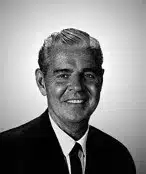
Pete Newell was one of the most influential teachers in the history of basketball, renowned for his mastery of footwork and defensive fundamentals. While he is best known for his collegiate success, Newell’s impact on the NBA was monumental; he served as the General Manager of the San Diego Rockets (drafting Elvin Hayes) and later as a scout and consultant for the Los Angeles Lakers.
However, his greatest professional contribution was the "Pete Newell Big Man Camp," an elite summer clinic where he tutored NBA superstars like Hakeem Olajuwon, Shaquille O’Neal, and Bill Walton. On the court, he is one of only three coaches to win an NCAA Championship (California, 1959), an NIT Championship (San Francisco, 1949), and an Olympic Gold Medal (1960).
For his tactical genius and his role as the "Guru of the Post," he was inducted into the Basketball Hall of Fame in 1979.
Newell's Awards and Honors
- NCAA University Division tournament (1959)
- 2 NCAA University Division Regional—Final Four (1959, 1960)
- NIT (1949)
- 3 PCC regular season (1957–1959)
- AAWU regular season (1960)
- NABC Coach of the Year (1960)
- UPI Coach of the Year (1960)
- FIBA Hall of Fame (2009)
NCAA Teams
San Francisco (1946–1950)
Michigan State (1950–1954)
California (1954–1960)
NCAA Stats
Wins:
234
Total Losses:
123
Win(%):
.655
NCAA Championships:
1 (1959)
NIT Championships:
1 (1949)
Olympic Gold Medals:
1 (1960)
Conference Titles:
4 consecutive
"Don't Just Watch the Game—Own the Look!"
Score the hottest drop of the season, from authentic Icon Edition jerseys to the latest sneaker releases and official team hoodies. High-performance gear for the ultimate basketball fan.
Get Your Gear – NBA Official Collection
NBA Hall of Fame
The NBA Hall of Fame, officially known as the Basketball Hall of Fame, is a prestigious institution that honors the greatest figures in the sport of basketball. Each year, the Induction ceremony celebrates legendary players who have made significant impacts on the game. The Hall of Fame class features basketball legends whose remarkable career achievements and iconic moments have defined the sport.
Inductees are recognized for their substantial player contributions, earning various awards and honors throughout their careers. The Hall also pays tribute to retired jerseys and acknowledges the profound impact on the game by highlighting the historic contributions of its members. With a focus on the legacy in basketball, the NBA Hall of Fame continues to celebrate excellence and inspire future generations of players through memorable speeches and recognition in sports.