

Search by the First Name of the HOFers
Pearl Moore
Inducted:
2021

Player Stats
5 ft 7 inch
Born:
March 16, 1957 (age 68)
Position:
Point guard
College:
Anderson Junior College (1975)
Francis Marion (1975-1979)
Pearl Moore is one of the most prolific scorers in basketball history. Playing for Francis Marion College in the 1970s, she scored a staggering 3,951 career points, a record that still stands as the most ever scored in a U.S. women’s college basketball career (including both AIAW and NCAA history). Moore had a lightning-quick release, excellent ball control, and unmatched consistency, averaging over 30 points per game for four straight seasons.
After college, she played professionally in the Women’s Professional Basketball League (WBL) and remained a respected ambassador for the game. Her career predated the WNBA, but her influence helped pave the way for women’s pro basketball. She was inducted into the Naismith Memorial Basketball Hall of Fame in 2021. Pearl Moore’s career set the gold standard for scoring in the women’s game — and her records still speak louder than words.
Moore's Awards and Honors
- FMU Athletic Hall of Fame in 1992
- Women's Basketball Hall of Fame in 2011
- All-time leading scorer in U.S. women’s college basketball
- Jersey retired by Francis Marion University
- Named AIAW Small College Player of the Year (1978)
WBL Teams
New York Stars (1979-1980)
St. Louis Streak (1980-1981)
WLB Draft:
1979: 1st round, 11th overall pick
New York Stars
WBL Stats
Games Played:
125
Points Scored:
3,951
Points Per Game:
32.5
Field Goal Percentage:
53%
Free Throw Percentage:
75%
Seasons Averaging 30+ PPG:
4
Pedro Ferrandiz
Inducted:
2007

Coach Stats
Born
20 November 1928
Alicante, Spain
Died
7 July 2022
Alicante, Spain
Position
Coach
College:
NA
Pedro Ferrándiz was one of the most influential coaches in international basketball history and a central figure in building Real Madrid into a global powerhouse. Coaching the club from 1959 to 1975, Ferrándiz led Real Madrid to unprecedented dominance in European basketball, combining tactical innovation with disciplined team play.
Under his leadership, Real Madrid became a continental juggernaut, winning four European Cups (now EuroLeague) and an astounding 12 Spanish League titles. He also played a major role in the development of basketball in Spain, helping elevate the country’s status on the international stage. In recognition of his extraordinary contributions to the game, Pedro Ferrándiz was inducted into the Naismith Memorial Basketball Hall of Fame in 2007.
Ferrandiz's Awards and Honors
- 7× FIBA International Christmas Tournament Champion: (1967-1970,1972-1974)
- 4× FIBA European Champions Cup (EuroLeague) Champion (1964–65, 1966–67, 1967–68, 1973–74)
- 12× Spanish League Champion (1960-1962,1965,1968-1975)
- 11× Spanish King's Cup Winner (1960-1962,1965,1967,1970-1975)
- FIBA Hall of Fame (2009)
- 50 Greatest EuroLeague Contributors (2008)
- FIBA Order of Merit (2000)
- Honorary Member of Real Madrid (2017)
Teams
Real Madrid (1959–1962,1966–1975)
Spain (1964–1965)
Stats
Seasons as Head Coach:
13 (1959–1962, 1966–1975)
Total Trophies Won:
27
European Cup Titles:
4 (1965, 1967, 1968, 1974)
Spanish League Titles:
12
Spanish Cup Titles:
11
Combined Career Record:
414–76 (.845)
Pete Carril
Inducted:
1997

Coach Stats
Born
July 10, 1930
Bethlehem, Pennsylvania, U.S.
Died
August 15, 2022
Philadelphia, Pennsylvania, U.S.
Position
Coach
College
Lafayette (1948–1952)
Pete Carril was one of basketball’s great thinkers, best known as the creator of the Princeton Offense and a coach who proved intelligence and discipline could overcome size and talent gaps. While he spent 29 years as the head coach at Princeton University, his influence extended deep into the NBA. Carril’s philosophy was built on the idea that "the ball moves faster than the man," allowing smaller, theoretically less athletic teams to systematically dismantle more talented opponents. Following his retirement from college coaching, Carril brought his expertise to the NBA, serving as an assistant coach for the Sacramento Kings for 10 years. He was inducted into the Hall of Fame in 1997.
Carril's Awards and Honors
- 8x Ivy League Coach of the Year
- National Polish-American Sports Hall of Fame (2003)
- Namesake of "Carril Court" at Princeton's Jadwin Gymnasium
- Author of "The Smart Take from the Strong" (1997)
- Creator of the Princeton Offense
NCAA/NBA Teams
Princeton (1967–1996)
Sacramento Kings (1996–2006)
NCAA/NBA Stats
Princeton Record:
525–273 (.658)
Ivy League Championships:
13
NCAA Tournament Berths:
11
NIT Championships:
1 (1975)
NBA Coaching Tenure:
10 Seasons (as Assistant)
Career Milestone:
1996 NCAA Upset over #4 UCLA
Pete Maravich
Inducted:
1987

Player Stats
6 ft 5 in (1.96 m)
197 lb (89 kg)
Born
June 22, 1947
Aliquippa, Pennsylvania, U.S.
Died
January 5, 1988
Pasadena, California, U.S.
Position
Shooting guard
College
LSU (1967–1970)
Pete “Pistol” Maravich was one of the most electrifying and creative guards in NBA history, known for his scoring flair, dazzling ball-handling, and uncanny court vision. Drafted third overall by the Atlanta Hawks in 1970, Maravich quickly became a scoring sensation and a fan favorite.
Over a 10-season career with the Atlanta Hawks, New Orleans/Utah Jazz, and briefly with the Boston Celtics, he averaged 24.2 points per game despite joining the league during an era dominated by slower-paced play. Maravich’s style, including behind-the-back passes and no-look shots, revolutionized guard play and influenced generations of players.
Although he never won an NBA championship, his individual brilliance earned five All-Star selections and seven All-NBA Team honors. Known for his charisma and fearless play, Maravich was inducted into the Naismith Memorial Basketball Hall of Fame in 1987.
Maravich's Awards and Honors
- National college player of the year (1970)
- 2× USBWA Player of the Year (1969, 1970)
- 3× Consensus first-team All-American (1968–1970)
- 3× NCAA scoring champion (1968–1970)
- 3× SEC Player of the Year (1968–1970)
- NCAA Division I Men’s all-time scoring leader
NBA Records
- 5× NBA All-Star (1973, 1974, 1977–1979)
- 2× All-NBA First Team (1976, 1977)
- 2× All-NBA Second Team (1973, 1978)
- NBA All-Rookie First Team (1971)
- NBA scoring champion (1977)
- NBA anniversary team (50th, 75th)
NBA Teams
Atlanta Hawks (1970–1974)
New Orleans / Utah Jazz (1974–1980)
Boston Celtics (1980)
NBA Draft
1970: 1st round, 3rd overall pick
Atlanta Hawks
Number Worn
44, 7
NBA Stats
Seasons:
10 (1970–1980
Game Played:
658
Points:
15,948 (24.2 ppg)
Rebounds:
2,747 (4.2 rpg)
Assists:
3,563 (5.4 apg)
Steals:
587 (1.4 spg)
Blocks:
108 (0.3 bpg)
Field Goal(%):
44.1
Free Throw(%):
82.0
Playoff Game:
26
Pete Newell
Inducted:
1979
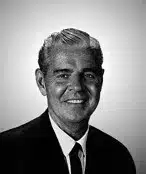
Pete Newell was one of the most influential teachers in the history of basketball, renowned for his mastery of footwork and defensive fundamentals. While he is best known for his collegiate success, Newell’s impact on the NBA was monumental; he served as the General Manager of the San Diego Rockets (drafting Elvin Hayes) and later as a scout and consultant for the Los Angeles Lakers.
However, his greatest professional contribution was the "Pete Newell Big Man Camp," an elite summer clinic where he tutored NBA superstars like Hakeem Olajuwon, Shaquille O’Neal, and Bill Walton. On the court, he is one of only three coaches to win an NCAA Championship (California, 1959), an NIT Championship (San Francisco, 1949), and an Olympic Gold Medal (1960).
For his tactical genius and his role as the "Guru of the Post," he was inducted into the Basketball Hall of Fame in 1979.
Newell's Awards and Honors
- NCAA University Division tournament (1959)
- 2 NCAA University Division Regional—Final Four (1959, 1960)
- NIT (1949)
- 3 PCC regular season (1957–1959)
- AAWU regular season (1960)
- NABC Coach of the Year (1960)
- UPI Coach of the Year (1960)
- FIBA Hall of Fame (2009)
NCAA Teams
San Francisco (1946–1950)
Michigan State (1950–1954)
California (1954–1960)
NCAA Stats
Wins:
234
Total Losses:
123
Win(%):
.655
NCAA Championships:
1 (1959)
NIT Championships:
1 (1949)
Olympic Gold Medals:
1 (1960)
Conference Titles:
4 consecutive
Phil Jackson
Inducted:
2007

Coach Stats
6 ft 8 in (2.03 m)
220 lb (100 kg)
Born
September 17, 1945
Deer Lodge, Montana, U.S.
Position:
Power forward (as a player)
Coach
College:
North Dakota (1964–1967)
Phil Jackson, widely known as the "Zen Master," is the most decorated coach in NBA history. Jackson’s coaching philosophy was a unique blend of Eastern philosophy, Native American spiritualism, and a strictly disciplined tactical system known as the Triangle Offense. He mastered the art of managing the league's biggest egos, transforming legendary talents like Michael Jordan, Scottie Pippen, Shaquille O'Neal, and Kobe Bryant into selfless championship units.
Known for his defensive hustle and intelligence, he was a key role player on the Knicks' 1973 championship team (missing the 1970 title run due to injury). Between his playing days and his historic stints with the Chicago Bulls and Los Angeles Lakers, Jackson won a total of 13 NBA rings. He was inducted into the Naismith Memorial Basketball Hall of Fame in 2007.
Jackson's Awards and Honors
- Coached two separate NBA dynasties
- Highest postseason win percentage among elite coaches
- CBA Champion & Coach of the Year (1984/1985)
- Fastest Coach to reach 900 and 1,000 wins
NBA Records
- 11x NBA Champion Head Coach (Record)
- 2x NBA Champion Player (1970, 1973)
- NBA Coach of the Year (1996)
- Top 15 Greatest Coaches in NBA History
- NBA All-Rookie First Team (1968)
NBA Teams
New Jersey Nets (1978–1981)
Chicago Bulls (1987–1998)
Los Angeles Lakers (1999–2004,2005–2011)
NBA Draft:
1967: 2nd round, 17th overall pick
New York Knicks
Number Worn:
18, 17
NBA Stats
Head coaching seasons:
1989–2011
NBA Finals appearances:
13
Total NBA Championships:
13 (11 Coach, 2 Player)
Coaching Wins (Regular Season):
1,155–485 (.704)
Playoff Winning Percentage:
.688 (NBA Record)
NBA Coach of the Year:
1996
All-Star Game Head Coach:
4 Times
Phil Knight
Inducted:
2012

Personal Stats:
Born:
February 24, 1938
Portland, Oregon, U.S.
Position:
Contributor
College:
NA
Phil Knight, born February 24, 1938, in Portland, Oregon, is best known as the co-founder of Nike, Inc., the global sportswear giant that transformed the business of athletics. Knight’s vision and leadership changed the relationship between sports, athletes, and marketing, making Nike one of the most influential companies in the world. His impact extended directly into basketball, where Nike became synonymous with innovation, style, and performance, highlighted by groundbreaking athlete endorsements such as Michael Jordan.
Knight’s ability to merge business with sports culture reshaped the way athletes are marketed and how fans connect with the game. Through Nike, he helped redefine branding in professional sports and brought global attention to basketball’s growth. In recognition of his profound influence on the sport’s global popularity and commercial reach, Knight was inducted into the Naismith Memorial Basketball Hall of Fame in 2012. His contributions stand as a lasting example of how vision and entrepreneurship can transform a sport.
Knight's Awards and Honors
- Naismith Memorial Basketball Hall of Fame induction: 2012
- Founder of one of the most influential sports brands in history
- Key figure in transforming athlete endorsements in basketball
- Instrumental in the success of the Air Jordan brand
Notable Achievements
- Revolutionized basketball through global branding and marketing
- Pioneered the athlete endorsement model, forever changing NBA player-business relationships
- Oversaw Nike’s rise as the world’s leading Sportswear Company
Occupation
CEO and Chairman of Nike
Contributions
- Co-founder of Nike, Inc. (founded 1964 as Blue Ribbon Sports, became Nike in 1971)
- Served as CEO and Chairman of Nike for decades
- Net worth built through Nike’s global expansion
- Oversaw Nike’s entry into basketball and athlete partnerships
Phil Woolpert
Inducted:
1992

Coach Stats
Born
December 15, 1915
Danville, Kentucky, U.S.
Died
May 5, 1987
Sequim, Washington, U.S.
Position
Coach
College
Los Angeles Junior College
Phil Woolpert was a courageous visionary whose defensive mastery and social leadership forever changed the landscape of basketball. Best known for his tenure at the University of San Francisco, Woolpert guided the Dons to back-to-back NCAA championships in 1955 and 1956. At just 40 years old, he became the youngest coach to win a national title, anchoring his teams with legendary players like Bill Russell and K.C. Jones.
Beyond his tactical brilliance, Woolpert was a pioneer of integration, famously starting three Black players during an era of deep-seated racial tension. Under his direction, San Francisco achieved a then-record 60-game winning streak, establishing a dynasty built on unselfish play and elite conditioning. He later coached the San Francisco Saints in the American Basketball League, bringing his disciplined approach to the professional ranks.
For his championship success and his role as a social trailblazer, Woolpert was inducted into the Basketball Hall of Fame in 1992.
Woolpert's Awards and Honors
- 2× NCAA National Champion (1955, 1956)
- 2× UPI National Coach of the Year (1955, 1956)
- 4× WCAC Coach of the Year (1955–1958)
- Youngest coach to win an NCAA title (Age 40)
- 1956 Season: Undefeated (29–0)
- Inducted into the College Basketball Hall of Fame (2006)
NCAA Teams
San Francisco (1950–1959)
San Diego (1962–1969)
NCAA Stats
Total College Wins:
243
Loses:
168
Win(%):
.500
NCAA Championships:
2
NCAA Tournament Record:
13–2
Longest Winning Streak:
60 Games
Final Four Appearances:
3
Conference Titles:
4
Phog Allen
Inducted:
1959
Stats
5 ft 8 in (1.73 m)
Born
November 18, 1885
Jamesport, Missouri, U.S.
Died:
September 16, 1974
Lawrence, Kansas, U.S.
Position:
Coach
College:
University of Kansas (1904–1909)
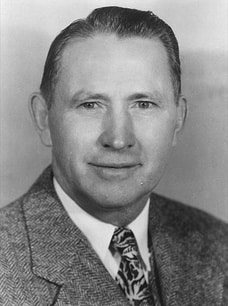
Forrest Clare “Phog” Allen was one of the most influential coaches in the history of basketball and is widely known as the “Father of Basketball Coaching.” A student and former player of James Naismith at Kansas, Allen coached at Baker University, Haskell Institute, Warrensburg Teachers College and Kansas. He spent 39 seasons as head coach at Kansas, where his teams won 24 conference championships and a 1952 NCAA championship.
Allen finished his collegiate coaching career with 746 victories, making him the winningest college coach in history at the time of his retirement. Allen also helped establish the National Association of Basketball Coaches and played a major role in basketball becoming an Olympic sport. He was inducted into the Naismith Memorial Basketball Hall of Fame in 1959 as a coach.
Allen's Awards and Honors
- 2 Helms Athletic Foundation national (1922, 1923)
- NCAA tournament (1952)
- 2 MIAA (1913, 1914)
- 24× Conference Champion with Kansas
- Co-founder and first president of the National Association of Basketball Coaches (NABC)
- 1952 Olympic Gold Medalist as a member of the U.S. coaching staff
- Known as the “Father of Basketball Coaching”
NBA Position
Kansas Jayhawks (1907–1909, 1919–1956)
NBA Stats
Coaching Career:
51 years (1905–1956)
Season Coached:
50
Kansas Tenure:
39 seasons
Career Coaching Record:
746–264
Career Win (%):
.739
National Championships:
3
NCAA Championships:
1
Pop Gates
Inducted:
1989

Player Stats
6 ft 2 in (1.88 m)
205 lb (93 kg)
Born
August 30, 1917
Decatur, Alabama, U.S.
Died
December 1, 1999
New York City, New York, U.S.
Position
Guard
Coach
College
NA
William "Pop" Gates was a true pioneer of the "cage" era and one of the most versatile athletes to ever step onto a basketball court. Known for his incredible speed, rebounding, and defensive tenacity, Gates achieved the rare feat of jumping directly from a high school championship at Benjamin Franklin in Harlem to a World Professional Championship with the New York Renaissance in 1939. He was a cornerstone of the legendary "Rens," contributing to their historic 68-game winning streak.
Beyond his physical dominance, Gates was a trailblazer for integration; in 1946—seven months before Jackie Robinson broke the color barrier in baseball—he became one of the first African American players to sign with the National Basketball League (NBL), playing for the Buffalo Bisons (later the Tri-Cities Blackhawks). He later transitioned into a player-coach role for the Dayton Rens and the Harlem Globetrotters, becoming one of the first Black coaches in major professional basketball. He was inducted into the Basketball Hall of Fame in 1989.
Gates' Awards and Honors
- NBL All-Time Team
- 2x WPBT Champion (1939, 1943)
- 2× All-WPBT Team (1940, 1943)
- ABL champion (1950)
- 8× World Tournament All-Pro Selection
- Only player to appear in every World Professional Tournament
NBL Teams
Buffalo Bisons (1946–1947)
Dayton Rens (1948–1949)
NBL Stats
NBL Games Played:
81
Points:
758 (NBL specific)
Points Per Game:
9.4 (NBL specific)
Professional Games Played:
1,500+ (Estimated total career)
Career Scoring Average:
~14.0 PPG (Across all professional play)
World Professional Tournament Appearances:
10
Radivoj Korac
Inducted:
2022

Player Stats
6 ft 5 in (1.96 m)
207 lb (94 kg)
Born:
5 November 1938
Sombor, Yugoslavia
Died:
2 June 1969
Sarajevo, SR Bosnia and Herzegovina, Yugoslavia
Position:
Power forward
College:
NA
Radivoj Korać was one of Europe’s most prolific scorers and a pioneer of international basketball. Born in Serbia in 1938, he played most of his club career with OKK Belgrade, where he won four Yugoslav League titles and led the league in scoring seven times.
Known for his soft shooting touch and high basketball IQ, Korać averaged 30.7 points per game in the Yugoslav League and once scored a record 99 points in a single EuroLeague game—an unmatched feat.
He also starred on the Yugoslav national team, winning silver medals in the Olympics and World and European Championships, and was the top scorer in multiple international tournaments.
Korać tragically died in a car accident at age 30, but his impact endures. He was posthumously inducted into the FIBA Hall of Fame in 2007 and the Naismith Memorial Basketball Hall of Fame in 2022. Serbia’s national cup competition now bears his name, honoring his lasting influence on the game.
Korac's Awards and Honors
- EuroBasket MVP (1961)
- 4× FIBA EuroBasket Top Scorer (1959, 1961, 1963, 1965)
- Best Athlete of Yugoslavia (1960)
- Yugoslav Sportsman of the Year (1962)
- 2× FIBA European Selection (1964, 1965)
- 7× Yugoslav League Top Scorer (1957, 1958, 1960, 1962–1965)
- Italian League Top Scorer (1969)
- Belgium League Top Scorer (1968)
- 4× Yugoslav League champion (1958, 1960, 1963, 1964)
- 2× Yugoslav Cup winner (1960, 1962)
- Belgium League champion (1968)
- FIBA's 50 Greatest Players
- 50 Greatest EuroLeague Contributors
Teams
As Player
OKK Beograd 1954–1967
Standard Liège 1967–1968
Petrarca Padova 1968–1969
Numbers Worn:
5, 14
Stats
Club Career (Yugoslav First League – OKK Belgrade)
Games Played:
169
Points Scored:
5,185
Points Per Game:
30.7
EuroLeague Career (with OKK Belgrade)
Points Per Game:
43.6
Best Season (1964–65):
54.8 PPG
Single-Game High:
99 points vs. Alvik BK (still a EuroLeague record)
Yugoslavia National Team
Games Played:
157
Total Points:
3,153
Points Per Game:
20.1
1960 Summer Olympics:
Points Per Game:
24.1 (Top scorer of the tournament)
Ralph Miller
Inducted:
1988

Coach Stats
Born
March 9, 1919
Chanute, Kansas, U.S.
Died
May 15, 2001
Black Butte Ranch, Oregon, U.S.
Position
Coach
College
Kansas (1937–1941)
Ralph Miller was one of the most respected college basketball coaches of the 20th century, known for his innovative offensive strategies and long-term program building. Although not an NBA head coach, Miller’s influence on the professional game came through the development of players and coaching philosophies that impacted basketball at all levels.
Miller achieved major success at Wichita State, Iowa, and especially at Oregon State, where he built nationally competitive programs. He guided teams to multiple NCAA Tournament appearances and was widely admired for his discipline, teaching ability, and emphasis on fundamentals.
Over his collegiate coaching career, Miller compiled more than 650 victories and became known as one of the game’s master tacticians. His contributions to basketball extended beyond wins and losses, shaping generations of players and coaches. Miller was inducted into the Naismith Memorial Basketball Hall of Fame in 1988.
Miller's Awards and Honors
- MVC regular season (1964)
- 2 Big Ten regular season (1968, 1970)
- 4 Pac-10 regular season (1980–1982, 1984)
- 2× AP Coach of the Year (1981, 1982)
- Henry Iba Award (1981)
- NABC Coach of the Year (1981)
- UPI Coach of the Year (1981)
- 2× Pac-10 Coach of the Year (1981, 1989)
NCAA Teams
Wichita (1951–1964)
Iowa (1964–1970)
Oregon State (1970–1989)
NCAA Stats
Seasons Coached:
38
Wins:
657
Losses:
382
Win(%):
.632
NCAA Tournament Appearances:
10
Conference Titles:
7
Ralph Morgan
Inducted:
1959
Stats
Born
March 9, 1884
Philadelphia, Pennsylvania
Died:
January 5, 1965
Wyncote, Pennsylvania
Position:
Contributor
College:
University of Pennsylvania
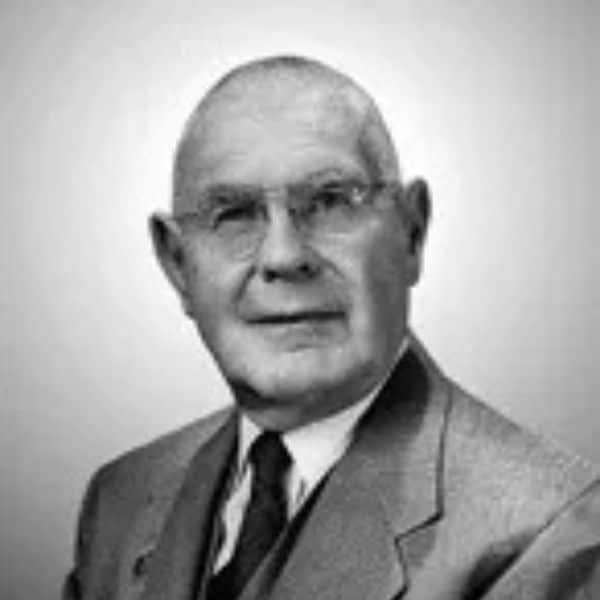
Ralph Morgan was one of the most important administrators and rules advocates in early basketball history. His influence centered on creating organized competition and establishing consistent rules as the sport expanded across the United States. Morgan began his basketball involvement as a team manager at the University of Pennsylvania in 1905, and that same year he founded the College Basketball Rules Committee. He served as its secretary and treasurer for more than 25 years, helping guide the organization until it became the National Basketball Rules Committee in 1931.
Morgan also organized the Joint Rules Committee in 1915 and continued contributing to the official basketball rulebook until 1958. Another major achievement was founding the Eastern Intercollegiate Basketball League, the predecessor of today's Ivy League. Through these efforts, Morgan helped unify basketball rules and strengthen organized college basketball along the East Coast. He was inducted into the Naismith Memorial Basketball Hall of Fame in 1959 as a Contributor
Morgan's Awards and Honors
- Helped organize the Joint Rules Committee in 1915
- Founded the College Basketball Rules Committee in 1905
- Served as the committee's secretary and treasurer for more than 25 years
- Continued contributing to the official basketball rulebook until 1958
- Founded the Eastern Intercollegiate Basketball League, which later became the Ivy League
NBA Position
Founder and Secretary (1905–1958)
NBA Stats
Basketball Involvement:
Early 20th century
Career Span:
53 Years
College Basketball Rules Committee:
Founded 1905
CBRC Secretary/Treasurer:
1905–1931
Ralph Sampson
Inducted:
2012

Player Stats
7 ft 4 in (2.24 m)
228 lb (103 kg)
Born:
July 7, 1960
Harrisonburg, Virginia, U.S.
Position:
Center
Power forward
College:
Virginia (1979–1983)
Ralph Sampson, born July 7, 1960, in Harrisonburg, Virginia, was one of the most dominant big men of his era. Standing 7-foot-4, he combined size, skill, and agility rarely seen in players of his height. After a legendary college career at Virginia, where he won three Naismith Awards, Sampson entered the NBA as the first overall pick in 1983 by the Houston Rockets. He made an immediate impact, earning Rookie of the Year honors and becoming a four-time NBA All-Star in just a few seasons. Teaming with Hakeem Olajuwon as part of the “Twin Towers,” he helped lead the Rockets to the 1986 NBA Finals.
Sampson averaged 15.4 points, 8.8 rebounds, and 1.6 blocks over his career, showcasing versatility as both a scorer and rim protector. Though injuries shortened his prime, his influence as a skilled, athletic center helped shape the modern big man. Inducted into the Naismith Memorial Basketball Hall of Fame in 2012, Sampson remains a towering figure in basketball history.
Sampson's Awards and Honors
- 4× NBA All-Star (1984–1987)
- NBA All-Star Game MVP (1985)
- All-NBA Second Team (1985)
- NBA Rookie of the Year (1984)
- NBA All-Rookie Team (1984)
NBA Records
- Helped lead Houston Rockets to the 1986 NBA Finals
- Scored game-winning buzzer-beater against Lakers in 1986 Western Conference Finals
- Among tallest and most skilled centers of his generation
NBA Teams
Houston Rockets (1983–1987)
Golden State Warriors (1987–1989)
Sacramento Kings (1989–1991)
Washington Bullets (1991–1992)
Unicaja Ronda (1992)
Rockford Lightning (1994–1995)
NBA Draft:
1983: 1st round, 1st overall pick
Houston Rockets
Number Worn:
50
NBA Stats
Seasons:
10 (1983–1992)
Games Played:
456
Game Started:
363
Assists:
861 (1.9 APG)
Points
7,039 (15.4 ppg)
Rebounds
4,011 (8.8 rpg)
Blocks
752 (1.6 bpg)
FG%
52.7
FG3%
48.6
FT%
70.0
Ray Allen
Inducted:
2018

Player Stats
6 ft 5 in (1.96 m)
205 lb (93 kg)
Born:
July 20, 1975
Merced, California, U.S.
Position:
Shooting guard
College:
UConn (1993–1996)
Ray Allen was one of the greatest shooters in NBA history and a model of longevity and professionalism. Known for his smooth shooting form, off-ball movement, and clutch performances, Allen played 18 seasons in the NBA with the Bucks, SuperSonics, Celtics, and Heat. He was a 10-time All-Star, a 2-time NBA champion, and held the record for most career 3-pointers made until 2021.
Allen hit one of the most iconic shots in NBA history—his game-tying three in Game 6 of the 2013 NBA Finals for Miami, which helped the Heat win the title. Before his NBA success, he starred at UConn and was named an All-American. Allen’s commitment to fitness, sharp shooting, and poise under pressure earned him a place in the Naismith Memorial Basketball Hall of Fame in 2018.
Allen's Awards and Honors
- 2× NBA champion (2008, 2013)
- 10× NBA All-Star (2000–2002, 2004–2009, 2011)
- All-NBA Second Team (2005)
- All-NBA Third Team (2001)
- NBA Three-Point Contest champion (2001)
- NBA All-Rookie Second Team (1997)
- NBA 75th Anniversary Team
- Consensus first-team All-American (1996)
- Big East Player of the Year (1996)
- 2× First-team All-Big East (1995, 1996)
NBA Records
- Most career 3-pointers made (at retirement): 2,973
- Most 3-pointers made in a single NBA Finals series at the time
- Most career 3-pointers made in NBA playoff history
- One of just four players in NBA history with: 24,000+ points 4,000+ assists 5,000+ rebounds & 2,900+ 3-pointers
NBA Teams
Milwaukee Bucks 1996–2003
Seattle SuperSonics 2003–2007
Boston Celtics 2007–2012
Miami Heat 2012–2014
NBA Draft:
1996: 1st round, 5th overall pick
Minnesota Timberwolves
Number Worn:
34, 20
NBA Stats
Seasons:
18 (1996–2014)
Games Played:
1,300
Points:
24,505
Points Per Game:
18.9
3-Point FG Made:
2,973
Assists:
4,361
Rebounds:
5,272
FG%:
45.2%
3P%:
40.0%
FT%:
89.4%
"Don't Just Watch the Game—Own the Look!"
Score the hottest drop of the season, from authentic Icon Edition jerseys to the latest sneaker releases and official team hoodies. High-performance gear for the ultimate basketball fan.
Get Your Gear – NBA Official Collection










NBA Hall of Fame
The NBA Hall of Fame, officially known as the Basketball Hall of Fame, is a prestigious institution that honors the greatest figures in the sport of basketball. Each year, the Induction ceremony celebrates legendary players who have made significant impacts on the game. The Hall of Fame class features basketball legends whose remarkable career achievements and iconic moments have defined the sport.
Inductees are recognized for their substantial player contributions, earning various awards and honors throughout their careers. The Hall also pays tribute to retired jerseys and acknowledges the profound impact on the game by highlighting the historic contributions of its members. With a focus on the legacy in basketball, the NBA Hall of Fame continues to celebrate excellence and inspire future generations of players through memorable speeches and recognition in sports.