

Search by the First Name of the HOFers
Dave DeBusschere
Inducted:
1983

Player Stats
6 ft 6 in (1.98 m)
220 lb (100 kg)
Born
October 16, 1940
Detroit, Michigan, U.S.
Died
May 14, 2003
New York City, New York, U.S.
Position
Power forward
Small forward
College
Detroit Mercy (1959–1962)
Dave DeBusschere was one of the toughest and most reliable forwards of his era. He played 12 NBA seasons from 1962 to 1974, beginning with the Detroit Pistons before becoming a key piece of the New York Knicks’ championship teams. Known for his strong defense, rebounding, and mid-range shooting, DeBusschere brought toughness and leadership to every lineup. He was an eight-time NBA All-Star and earned All-Defensive Team honors six times.
His impact was especially important during the Knicks’ title runs in 1970 and 1973, where his defense and clutch play stood out. DeBusschere finished his career with more than 14,000 points and 9,000 rebounds. In recognition of his consistent excellence and championship success, he was inducted into the Naismith Memorial Basketball Hall of Fame in 1983.
DeBusschere's Awards and Honors
- 2× Second-team All-American – NEA (1961, 1962)
- Second-team All-American – NABC (1961)
- 3× Third-team All-American – UPI (1960–1962)
- Third-team All-American – AP, NABC (1962)
- 22 retired by New York Knicks
NBA Records
- 2× NBA champion (1970, 1973)
- 8× NBA All-Star (1966–1968, 1970–1974)
- 6× NBA All-Defensive First Team (1969–1974)
- All-NBA Second Team (1969)
- NBA All-Rookie First Team (1963)
- NBA anniversary team (50th, 75th)
NBA Teams
Detroit Pistons (1962–1968)
New York Knicks (1968–1974)
NBA Draft
1962: territorial pick
Detroit Pistons
Number Worn
22
NBA Stats
Seasons:
12 (1962–1974)
Games Played:
875
Points:
14,053 (16.1 ppg)
Rebounds:
9,618 (11.0 rpg)
Assists:
2,497 (2.9 apg)
Steals:
67 (0.9 spg)
Blocks:
39 (0.5 bpg)
Field Goal(%):
43.2
Free Throw(%):
69.9
Playoff Game:
96
Dave Gavitt
Inducted:
2006

Stats
Born
October 26, 1937
Hartford, Connecticut, U.S.
Died
September 16, 2011
near Rumford, Rhode Island, U.S.
Position
Contributor
College
NA
Dave Gavitt was one of the primary architects of modern basketball, wielding immense influence at the collegiate, professional, and international levels. While he began his journey as a successful coach—leading Providence College to the 1973 Final Four—Gavitt is best remembered as a visionary administrator.
In 1979, he founded the Big East Conference, transforming a group of independent Eastern schools into a media powerhouse that redefined the business of college sports through a groundbreaking partnership with the then-fledgling ESPN. Gavitt's impact reached the NBA when he joined the Boston Celtics as Senior Executive Vice President and CEO in 1990, succeeding the legendary Red Auerbach as the franchise's primary decision-maker.
He was inducted into the Naismith Memorial Basketball Hall of Fame as a contributor in 2006.
Gavitt's Awards and Honors
- National Collegiate Basketball Hall of Fame (2006)
- John W. Bunn Lifetime Achievement Award (1987)
- Naismith Outstanding Contributor to Basketball (1993)
- Olympic Head Coach (1980 - U.S. Boycott year)
- 5x New England Coach of the Year
NCAA
Commissioner (Big East) 1979–1990
CEO (Boston Celtics) 1990-1994
President (NCAA Foundation) 1995-1997
Chairman (Naismith Memorial Basketball Hall of Fame) 1998-2003
NCAA Stats
Coaching career:
1966–1979
Final Four appearances:
1
Big East Conference:
Founder & First Commissioner (1979–1990)
Boston Celtics:
CEO & Vice Chairman (1990–1994)
USA Basketball:
President (1988–1992)
Providence Coaching Record:
209–84 (.713)
NCAA Tournament:
Chairman of the Men's Basketball Committee
Tournaments:
5–6 (NCAA University Division / Division I)
6–4 (NIT)
David Hixon
Inducted:
2023

Coach Stats
Born:
December 3, 1952
Position:
Head coach
College:
Amherst College
David Hixon is a legendary figure in college basketball, renowned for his transformative 42-year tenure as head coach of the Amherst College men's basketball team.
At age 24, Hixon accepted a position as the head men’s basketball coach at Amherst College. He never left his alma mater. In 42 seasons, Hixon won 826 games, eight conference titles, and two NCAA Division III national championships. In 2007, the NABC named Hixon Division III Coach of the Year for leading his squad to a 30-2 record and the national title.
Though he never coached in the NBA, his impact on the sport earned him induction into the Naismith Memorial Basketball Hall of Fame in 2023—the first NCAA Division III coach to receive this honor.
Hixon's Awards and Honors
- NABC Division III Coach of the Year: 2× (2007, 2013)
- Hall of Fame Induction: Naismith Memorial Basketball Hall of Fame
- In 2022, Amherst College honored his contributions by naming the basketball court at LeFrak Gymnasium "Hixon Court."
- He was named NABC NCAA Division III Coach of the Year in 2007 and 2013.
- Participated in the NCAA national tournament 20 times and compiled a 43-20 postseason record.
NCAA Teams
Amherst College (1977-2020)
NCAA Stats
Coaching Tenure:
1977-2020
Win:
826
Loose:
293
Winning Percentage:
.738
NCAA Division III National Championships:
2 (2007, 2013)
NCAA Tournament Appearances:
20
Final Four Appearances:
7
David Robinson
Inducted:
2009

Player Stats
7 ft 1 in (2.16 m)
250 lb (113 kg)
Born
August 6, 1965
Key West, Florida, U.S.
Position:
Center
College:
Navy (1983–1987)
David "The Admiral" Robinson was the cornerstone of the San Antonio Spurs and one of the most physically gifted centers to ever play the game. A graduate of the United States Naval Academy, Robinson honored his military commitment for two years before entering the NBA in 1989. His impact was instantaneous; he possessed the speed of a guard and the strength of a titan, leading the Spurs to the greatest single-season turnaround in NBA history at that time.
Robinson’s career was defined by elite two-way play. He is one of the few players to win an NBA MVP (1995), a Defensive Player of the Year award, and a scoring title. Later in his career, he displayed incredible leadership and humility that brought San Antonio its first two NBA Championships in 1999 and 2003. A two-time Olympic Gold Medalist and member of the 1992 "Dream Team," he was inducted into the Naismith Memorial Basketball Hall of Fame in 2009.
Robinson's Awards and Honors
- 2x Olympic Gold Medalist (1992, 1996)
- USA Basketball Male Athlete of the Year (1986)
- 1988 Olympic Bronze Medal
- 1986 FIBA World Championship Gold Medal
- 1987 Pan American Games Silver Medal
- 1992 FIBA Americas Championship Gold Medal
NBA Records
- 2x NBA Champion (1999, 2003)
- NBA MVP (1995)
- 10x NBA All-Star
- NBA Defensive Player of the Year (1992)
- NBA Scoring Champion (1994)
- 10x All-NBA Selection (4x First Team)
- 8x All-Defensive Selection (4x First Team)
- NBA Rookie of the Year (1990)
NBA Team
San Antonio Spurs (1989–2003)
NBA Draft
1987: 1st round, 1st overall pick
San Antonio Spurs
Number Worn
50
NBA Stats
Seasons:
14 (1989–2003)
Game Played:
987
Game Started:
985
Points:
20,790 (21.1 ppg)
Rebounds:
10,497 (10.6 rpg)
Blocks:
2,954 (3.0 bpg)
Field Goal %:
51.8%
FT%
73.6%
Steals (STL):
1,388 (1.4 spg)
NBA Championships:
2 (1999, 2003)
David Stern
Inducted:
2014

Stats
Born:
September 22, 1942
New York City, U.S.
Died:
January 1, 2020
New York City, U.S.
Position:
Commissioner
College:
NA
David Stern served as NBA Commissioner from 1984 to 2014, transforming the league into a global sports powerhouse. Under his leadership, the NBA expanded from 23 to 30 teams, introduced seven new franchises, and saw the creation of the WNBA and NBA Development League. Stern was instrumental in promoting the game internationally, launching broadcasts in over 200 countries and leading the NBA’s participation in the 1992 Barcelona Olympics with the “Dream Team.”
His tenure saw unprecedented growth in television deals, sponsorships, and player salaries, while implementing a strict drug policy and the NBA salary cap system. Stern also oversaw landmark labor agreements and championed community outreach programs. His vision turned basketball into a truly global sport, leaving a legacy of growth, professionalism, and innovation. Stern was inducted into the Naismith Memorial Basketball Hall of Fame in 2014.
Stern's Awards and Honors
- NBA Commissioner (1984–2014)
- Oversaw expansion from 23 to 30 teams
- Founded WNBA (1996) and NBA D-League (2001)
- Negotiated landmark TV and sponsorship deals
- Pioneered NBA global marketing and Dream Team participation in 1992 Olympics
NBA
NBA Commissioner (1984–2014)
NBA Stats
Years as NBA Commissioner:
30 (1984–2014)
NBA franchises added:
7 (expanded from 23 to 30 teams)
Championships overseen:
30 NBA Finals
New leagues created:
WNBA (1996)
NBA D-League (2001)
International broadcast reach:
200+ countries
Labor agreements negotiated:
5 Collective Bargaining Agreements
Global events launched:
NBA Global Games
Basketball Without Borders
David Thompson
Inducted:
1996

Player Stats
6 ft 4 in (1.93 m)
195 lb (88 kg)
Born
July 13, 1954
Shelby, North Carolina, U.S.
Position
Shooting guard
College
NC State (1972–1975)
David Thompson was one of the most explosive athletes the NBA has ever seen, known for his leaping ability, scoring touch, and smooth style. Nicknamed “Skywalker,” Thompson rose to national fame at NC State before becoming a star in the ABA and NBA. He joined the Denver Nuggets in 1975 and quickly became the franchise’s centerpiece, combining high-flying finishes with elite shooting and body control.
Thompson led the NBA in scoring in 1979 and was a consistent All-Star during the late 1970s, helping establish the Nuggets as a contender in the Western Conference. Despite a shortened prime, Thompson’s impact and peak performance placed him among the game’s elite. David Thompson was inducted into the Naismith Memorial Basketball Hall of Fame in 1996.
Thompson's Awards and Honors
- ABA All-Star (1976)
- ABA All-Star Game MVP (1976)
- All-ABA Second Team (1976)
- ABA Rookie of the Year (1976)
- ABA All-Rookie First Team (1976)
- ABA All-Time Team
- NCAA champion (1974)
NBA Records
- 4× NBA All-Star (1977–1979, 1983)
- NBA All-Star Game MVP (1979)
- 2× All-NBA First Team (1977, 1978)
ABA/NBA Teams
Denver Nuggets (1975–1982)
Seattle SuperSonics (1982–1984)
NBA Draft
1975: 1st round, 1st overall pick
Atlanta Hawks
Number Worn
33, 44
NBA Stats
Seasons Played:
9 (1975-1984)
Game Played:
592
Points:
13,422 (22.7 ppg)
Rebounds:
2,446 (4.1 rpg)
Assists:
1,939 (3.3 apg)
Steals:
595 (1.0 SPG)
Blocks:
509 (0.7 BPG)
Field Goal %:
50.5%
Free Throw %:
78.1%
Single-Game High:
73 Points (April 9, 1978)
ABA/NBA All-Star:
5 (1976–1979, 1983)
All-NBA First Team:
2 (1977, 1978)
NCAA Championships:
1 (1974)
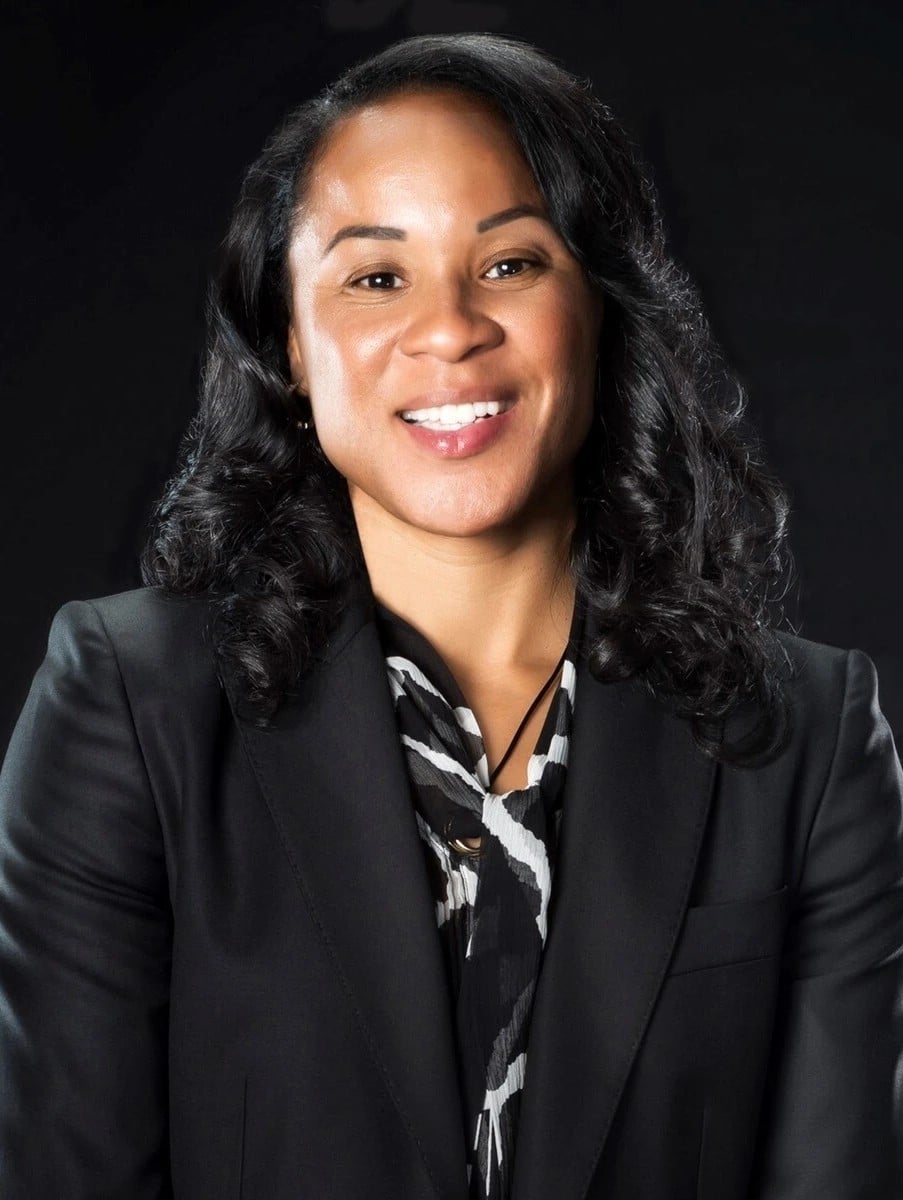
Dawn Staley
Inducted:
2013
Player Stats:
5 ft 6 in (1.68 m,60kg)
Born:
May 4, 1970
Philadelphia, Pennsylvania, U.S.
Position:
Point guard
Coach
College:
Virginia (1988–1992)
Dawn Staley (born 1970) is one of the most influential figures in basketball history, excelling as both a player and a coach. As a point guard, she was celebrated for her leadership, vision, and defensive tenacity, starring at the University of Virginia with three Final Four appearances and earning multiple National Player of the Year honors.
She went on to a distinguished professional career in the WNBA and overseas, while also representing the United States in international competition, winning three Olympic gold medals as a player. Transitioning to coaching, Staley built the University of South Carolina into a national powerhouse, capturing multiple NCAA championships and producing elite-level talent.
Known for her commitment to discipline, teamwork, and player development, she has become a role model for generations of athletes. Inducted into the Naismith Memorial Basketball Hall of Fame in 2013, Staley’s legacy as a champion and trailblazer continues to shape the game.
Staley's Awards and Honors
- 3× Olympic gold medalist (player)
- 2× NCAA champion as coach (2017, 2022)
- Multiple National Coach of the Year awards
- 2× Naismith College Player of the Year
- 6× WNBA All-Star
WNBA/NCAA Records
- One of the few to win Olympic gold as both player and coach
- Led South Carolina to multiple NCAA titles
- First African American coach to win multiple NCAA women’s basketball championships
- Regarded as one of the greatest point guards in basketball history
WNBA/NCAA Teams
As a player:
Tarbes Gespe Bigorre 1994–1995
Richmond / Philadelphia Rage 1996–1998
Charlotte Sting 1999–2005
Houston Comets 2005–2006
As a coach:
Temple 2000–2008
South Carolina 2008–present
WNBA Draft:
1999: 1st round, 9th overall pick
Charlotte Sting
Number Worn:
5
WNBA/NCAA Stats
Seasons:
8 (1999–2006)
Games Played:
263
Game Started:
256
Points:
8.5
FG %:
39.9%
3P %:
37.6%
FT(%):
82.4%
Overall Coaching Records:
647–190 (.773)
Olympic Gold Medals:
3 (1996, 2000, 2004)
Dean Smith
Inducted:
1983

Coach Stats
Born
February 28, 1931
Emporia, Kansas, U.S.
Died
February 7, 2015
Chapel Hill, North Carolina, U.S.
Position
Coach
College
University of Kansas (1949–1953)
Dean Smith was one of the most respected coaches in basketball history, best known for building a winning culture at the University of North Carolina. Although he did not coach in the NBA, his influence on the professional game was significant through the many players he developed for the league. Over 36 seasons,from 1961 to 1997, he mentored more than 50 future NBA/ABA players and finished with 879 career wins, which was an NCAA record at the time of his retirement.
His teams won two national championships and consistently competed at the highest level. Known for his discipline, innovative strategies, and focus on teamwork, Smith helped shape modern basketball systems that carried into the NBA. He was inducted into the Naismith Memorial Basketball Hall of Fame in 1983 in recognition of his outstanding coaching career and lasting impact on the sport.
Smith's Awards and Honors
- 4× National Coach of the Year (1977, 1979, 1982, 1993)
- 8× ACC Coach of the Year
- One of only three coaches to win the "Triple Crown"
- Member of the FIBA Hall of Fame (2007)
- Recipient of the Presidential Medal of Freedom (2013)
- Developed numerous future NBA players
NCAA Position
North Carolina (1961–1997)
NCAA Stats
Seasons:
10 (1967-1977)
Games Played:
742
Points:
9,217 (12.4 ppg)
Rebounds:
2,354 (3.2 rpg)
Assists:
2,533 (3.4 apg)
Field Goal %:
44.8%
Free Throw %:
84.0%
Playoff Game:
95
Del Harris
Inducted:
2022

Coach Stats
6 ft 4 in (1.93 m)
205 lb (93 kg)
Born:
June 18, 1937
Dale, Indiana, U.S.
Position:
Coach
Vice president
College:
Milligan (1955–1959)
Del Harris is a revered figure in the NBA, known for his outstanding coaching career that spanned over three decades. A former player, Harris transitioned into coaching with success, becoming one of the league’s most respected mentors.
Harris served as head coach for the Houston Rockets, Milwaukee Bucks, and Los Angeles Lakers. He’s perhaps best remembered for his time with the Lakers, where he helped develop future Hall of Famer Kobe Bryant.
Harris was also instrumental in bringing stability to the Rockets in the 1980s and early 1990s. His coaching style emphasized defense, discipline, and leadership, which earned him numerous accolades, including NBA Coach of the Year in 1995.
A respected figure in the NBA, his legacy lives on through his contributions to the sport, both as a coach and as a mentor to many.
Harris' Awards and Honors
- NBA Coach of the Year (1995)
- 2× NBA All-Star Game Head Coach (1995, 2000)
- Chuck Daly Lifetime Achievement Award (2020)
- Coach Wooden "Keys to Life" Award (2014)
- 3× Puerto Rican League champion (1973–1975)
- Coached the Los Angeles Lakers to the Western Conference Finals (1997)
- Known for his mentorship of Kobe Bryant and other young stars
- Implemented a defense-first mentality that helped reshape teams like the Lakers and Rockets
- Key contributor to the development of emerging talent during the 1980s and 1990s
NBA Teams
As Coach
Utah Stars (assistant) 1975–1976
Houston Rockets (assistant) 1976–1979
Houston Rockets 1979–1983
Milwaukee Bucks (assistant) 1986–1987
Milwaukee Bucks 1987–1991
Los Angeles Lakers 1994–1999
Dallas Mavericks (assistant) 2000–2007
Chicago Bulls (assistant) 2008–2009
New Jersey Nets (assistant) 2009–2010
Texas Legends 2011–2012
NBA Stats
NBA
Game Coached
1,013
Win
556
Lose
457
Win %
.549
D-League
Game Coached
50
Win
24
Lose
26
Win %
.480
Denise Curry
Inducted:
1997

Denise Curry is one of the most decorated and respected players in the history of women’s basketball, known for a relentless work ethic and tactical precision. At UCLA, Curry was a three-time All-American and remains the program’s all-time leading scorer (3,198 points) and rebounder. She famously led the Bruins to the 1978 AIAW National Championship, proving she could carry a team to the mountaintop on the biggest stage.
Because the WNBA did not exist during her prime, Curry took her talents to the professional leagues of Europe, where she dominated for nearly a decade. She led the French league in scoring for eight consecutive seasons and was twice named the best player in Europe. Internationally, she was a stalwart for USA Basketball, winning a Gold Medal at the 1984 Los Angeles Olympics. She was inducted into the Hall of Fame in 1997.
Curry's Awards and Honors
- Women’s Basketball Hall of Fame (Inaugural Class, 1999)
- Olympic Gold Medalist (1984)
- 3x Kodak All-American (1979, 1980, 1981)
- UCLA Jersey #12 Retired (First female athlete at UCLA so honored)
- World Championship Gold (1979)
- Pan American Games Gold (1983)
- Named USA Basketball Player of the year 1981
- Played eight professional seasons in Germany, France and Italy
- Won three national championships in Germany (1983, 1984, 1985)
Teams
United States
NCAA Stats
UCLA Total Points:
2,853 (All-time record)
UCLA Career Scoring Avg:
24.6 ppg
Total Rebounds:
1,310 (UCLA record)
Olympic Gold Medal:
1 (1984)
AIAW National Title:
1 (1978)
Games Scoring in Double Figures:
129 of 130 (UCLA record)
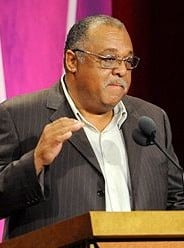
Dennis Johnson
Inducted:
2010
Player Stats
6 ft 4 in (1.93 m)
185 lb (84 kg)
Born
September 18, 1954
Los Angeles, California, U.S.
Died
February 22, 2007
Austin, Texas, U.S.
Position:
Shooting guard
Point guard
College:
LA Harbor College (1973–1975)
Pepperdine (1975–1976)
Dennis Johnson was one of the most complete and unselfish guards in NBA history, known for defense, leadership, and clutch play. Nicknamed “DJ,” he played a key role on three NBA championship teams with three different franchises, winning titles with the Seattle SuperSonics and Boston Celtics. Johnson excelled as both a scorer early in his career and a floor general later, adapting his game to winning basketball.
With Boston, he became the defensive anchor of the backcourt and a trusted closer, famously delivering critical plays during the Celtics’ 1980s dynasty. Johnson’s toughness, basketball IQ, and ability to elevate teammates made him invaluable on championship-level teams. Though often understated, his impact on winning was undeniable.
In recognition of his career achievements and lasting influence, Dennis Johnson was inducted into the Naismith Memorial Basketball Hall of Fame in 2010.
Johnson's Awards and Honors
- 3x NBA Champion (1979, 1984, 1986)
- 1979 NBA Finals MVP (Only Finals MVP in Sonics history)
- 5x NBA All-Star
- 9x NBA All-Defensive Team (6x First Team)
- All-NBA First Team (1981)
- Jersey Retired: No. 3 retired by the Boston Celtics
- One of the most versatile guards of his era
- Finals MVP with Seattle SuperSonics
NBA Teams
Seattle SuperSonics (1976–1980)
Phoenix Suns (1980–1983)
Boston Celtics (1983–1990)
NBA draft
1976: 2nd round, 29th overall pick
Seattle SuperSonics
Number Worn
24, 3
NBA Stats
Season Played:
14 (1976–1990)
Game Played:
1100
Game Started:
673
Points:
15,535 (14.1 ppg)
Assists:
5,499 (5.0 apg)
Steals:
1,477 (1.3 spg)
FG(%):
.541
FT(%):
.864
Stanley Cups:
3 (1979, 1984, 1986)
NBA Champion:
3 (1979, 1984, 1986)
Playoffs Games:
180
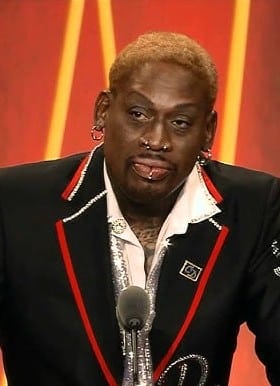
Dennis Rodman
Inducted:
2011
Player Stats
6 ft 7 in (2.01 m)
210 lb (95 kg)
Born:
May 13, 1961
Trenton, New Jersey, U.S.
Position:
Power forward
Small forward
College:
North Central Texas (1983)
Southeastern Oklahoma State (1983–1986)
Dennis Rodman, famously known as “The Worm,” was one of basketball’s fiercest defenders and most relentless rebounders. His career was defined by unmatched hustle, energy, and the ability to dominate games without scoring. Rodman led the NBA in rebounding for seven straight seasons, showcasing remarkable positioning and tenacity on both ends of the court.
He played a vital role in two NBA dynasties—helping the Detroit Pistons capture back-to-back championships and later anchoring the Chicago Bulls’ defense during their second three-peat. A two-time Defensive Player of the Year and five-time NBA champion, Rodman’s versatility allowed him to guard every position, making him one of the most unique and effective players in league history. While his colorful personality and off-court headlines drew attention, his on-court work ethic made him an icon of effort and intensity.
Inducted into the Hall of Fame in 2011, Rodman is remembered as a defensive legend and one of the greatest rebounders ever.
Rodman's Awards and Honors
- 5× NBA champion (1989, 1990, 1996–1998)
- 2× NBA All-Star (1990, 1992)
- 2× All-NBA Third Team (1992, 1995)
- 2× NBA Defensive Player of the Year (1990, 1991)
- 7× NBA All-Defensive First Team (1989–1993, 1995, 1996)
- NBA All-Defensive Second Team (1994)
- 7× NBA rebounding champion (1992–1998)
- NBA 75th Anniversary Team
NBA Records
- Averaged 18.7 rebounds per game in 1991–92, one of the highest in modern NBA history
- Defensive anchor for both Pistons’ “Bad Boys” and Bulls’ dynasty
- Regarded as one of the greatest rebounders and defenders in basketball history
NBA Teams
Detroit Pistons (1986–1993)
San Antonio Spurs (1993–1995)
Chicago Bulls (1995–1998)
Los Angeles Lakers (1999)
Dallas Mavericks (2000)
NBA Draft:
1986: 2nd round, 27th overall pick
Detroit Pistons
Number Worn:
10, 91, 73, 70
NBA Stats
Seasons:
1986–2000
Games Played:
911
Game Started:
573
Points:
6,683 (7.3 ppg)
Rebounds:
11,954 (13.1 rpg)
Assists:
1,600 (1.8 apg)Steals:
Field Goal %:
52.1
FT (%):
58.4
Point Per Game:
7.3
Denny Crum
Inducted:
1994
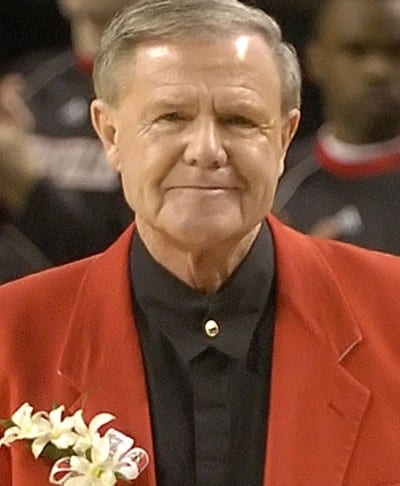
Coach Stats
6 ft 2 in (1.88 m)
180 lb (82 kg)
Born
March 2, 1937
San Fernando, California, U.S.
Died
May 9, 2023
Louisville, Kentucky, U.S.
Position
Coach
College
University of Louisville
Denzel "Denny" Crum, famously known as "Cool Hand Luke" for his unflappable composure on the sidelines, was the architect of the University of Louisville's rise to national basketball prominence. He patrolled the Louisville sidelines for 30 years, leading the Cardinals to two NCAA Championships (1980, 1986) and six Final Fours.
While Crum never coached in the NBA, his impact on the professional game was immense. His teams, known as the "Doctors of Dunk," helped usher in a high-flying, athletic style of play that bridged the gap between the collegiate game and the NBA's "Showtime" era. He was inducted into the Hall of Fame in 1994.
Crum's Awards and Honors
- 2× NCAA Division I (1980, 1986)
- 6× NCAA D-I Final Four (1972, 1975, 1980, 1982, 1983, 1986)
- 3× MVC regular season (1972, 1974, 1975)
- 2× Sporting News Coach of the Year (1983, 1986)
- MVC Coach of the Year (1973)
- 4× Metro Coach of the Year (1979, 1980, 1983, 1994)
NCAA Teams
Louisville (1971–2001)
National Team
United States
NCAA Stats
Seasons coached:
30
Games Coached:
970
Win:
675
Lose:
295
W/L(%):
.696
NCAA Tournament appearances:
20+
Final Four appearances:
6
Dick Barnett
Inducted:
2024

Player Stats
Stats:
6 ft 4 in (1.93 m)
190 lb (86 kg)
Born:
October 2, 1936
Gary, Indiana, U.S.
Position:
Shooting guard
College:
Tennessee State (1955–1959)
Dick Barnett was a key figure in NBA history, known for his unorthodox but effective jump shot and championship pedigree. A standout at Tennessee State University, he led his team to three consecutive NAIA championships before being drafted by the Syracuse Nationals in 1959.
Barnett later played for the Los Angeles Lakers before finding his true home with the New York Knicks, where he became an essential part of their success in the late 1960s and early 1970s.
Barnett was a crucial member of the Knicks' 1970 NBA championship team, playing alongside legends like Willis Reed and Walt Frazier.
His signature "fall-back baby" jump shot was nearly impossible to defend, and he provided steady scoring and leadership throughout his career. Over 14 NBA seasons, Barnett scored more than 15,000 points and was known for his intelligence both on and off the court, earning a Ph.D. after his playing days.
Barnett's Awards and Honors
- 2× NBA champion (1970, 1973)
- NBA All-Star (1968)
- ABL champion (1962)
- All-ABL First Team (1962)
- 12 retired by the New York Knicks
- 3× NAIA champion (1957–1959)
- 3× AP Little College All-American (1957–1959)
- 2× UPI Little College All-American (1958, 1959)
- 2× NAIA tournament MVP (1958, 1959)
NBA Teams
Syracuse Nationals 1959–1961
Los Angeles Lakers 1962–1965
New York Knicks 1965–1973
NBA draft:
1959: 1st round, 4th overall pick
Syracuse Nationals
Numbers Worn:
5, 12
NBA Stats
Seasons:
14
Games Played:
971
Points:
15,358 (15.0 PPG)
Rebounds:
2,812 (2.9 RPG)
Assists:
2,729 (2.8 apg)
FG%
45.6
FT%
76.1
Dick Bavetta
Inducted:
2015
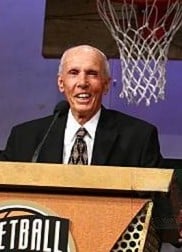
Referee Stats
6 ft 0 in (183 cm)
156 lb (71 kg)
Born:
December 10, 1939
New York City, U.S.
Position:
NBA Referee
College:
NA
Dick Bavetta was one of the most respected and enduring referees in NBA history, known for his remarkable consistency, professionalism, and longevity. Beginning his officiating career in 1975, Bavetta became an ironman of NBA refereeing, working 2,635 consecutive regular-season games without ever missing an assignment. His sharp judgment and ability to handle high-pressure situations made him a trusted figure in countless playoff and Finals matchups.
Bavetta was present for some of the league’s most iconic moments, from buzzer-beaters to historic player performances, always maintaining composure and fairness. Off the court, he became a symbol of dedication to the craft, mentoring younger officials and representing the NBA globally. Retiring in 2014 after 39 seasons, his unmatched streak and commitment to the game earned him induction into the Naismith Memorial Basketball Hall of Fame in 2015.
Bavetta's Awards and Honors
- NBA Ironman Streak: 2,635 consecutive games without absence
- Longest officiating career in NBA history (39 seasons)
- Worked 27 NBA Finals games and over 270 playoff games
- Officiated in 3 NBA All-Star Games
- Served as a mentor for new NBA referees
- Represented the NBA in numerous international games and events
- Recognized for exceptional consistency and professionalism
NBA
NBA referee (1975–2014)
NBA Stats
Seasons as Referee:
1975–2014 (39 seasons)
Regular-Season Games Officiated:
2,635 consecutive
Playoff Games Officiated:
270+
NBA Finals Games Officiated:
27
All-Star Games Officiated:
3 (1989, 1995, 2006)
Years of Consecutive Service:
39
"Don't Just Watch the Game—Own the Look!"
Score the hottest drop of the season, from authentic Icon Edition jerseys to the latest sneaker releases and official team hoodies. High-performance gear for the ultimate basketball fan.
Get Your Gear – NBA Official Collection
NBA Hall of Fame
The NBA Hall of Fame, officially known as the Basketball Hall of Fame, is a prestigious institution that honors the greatest figures in the sport of basketball. Each year, the Induction ceremony celebrates legendary players who have made significant impacts on the game. The Hall of Fame class features basketball legends whose remarkable career achievements and iconic moments have defined the sport.
Inductees are recognized for their substantial player contributions, earning various awards and honors throughout their careers. The Hall also pays tribute to retired jerseys and acknowledges the profound impact on the game by highlighting the historic contributions of its members. With a focus on the legacy in basketball, the NBA Hall of Fame continues to celebrate excellence and inspire future generations of players through memorable speeches and recognition in sports.