

Search by the First Name of the HOFers
Rick Welts
Inducted:
2018

Stats
Born:
January 21, 1953
Seattle, Washington, U.S.
Position:
CEO
League:
NBA
College:
University of Washington
Rick Welts is one of the most influential executives in NBA history, known for transforming the league’s marketing and global presence. Serving as president and CEO of the Phoenix Suns and later the Golden State Warriors, Welts helped build two of the NBA’s most successful and beloved franchises.
He was a key architect behind the creation of the NBA All-Star Weekend, the NBA’s global marketing strategies, and the growth of basketball worldwide. Welts is also recognized for his role in guiding the Warriors to multiple NBA championships in the 2010s.
In 2018, he became the first openly gay executive inducted into the Naismith Memorial Basketball Hall of Fame, celebrated for his pioneering work and leadership.
Welts' Awards and Honors
- First openly gay executive inducted into the Hall of Fame
- Architect of the NBA All-Star Weekend – a marquee global event
- Key driver in expanding the NBA’s international reach and brand
- Guided franchises to multiple NBA championships and increased fanbases
- Recognized as a trailblazer for inclusivity in professional sports
- Pioneered innovative marketing and community programs in the NBA
NBA Teams
Phoenix Suns (President, CEO) 2002-2011
Golden State Warriors (President, CEO) 2011-2021
Dallas Mavericks (CEO) 2021-Present
NBA Achievements
Years Active:
1977–present (over 40 years in NBA executive roles)
Key Contributions:
All-Star Weekend Creation
Dream Team Marketing
WNBA Launch
Advocacy for Inclusion
Executive Leadership
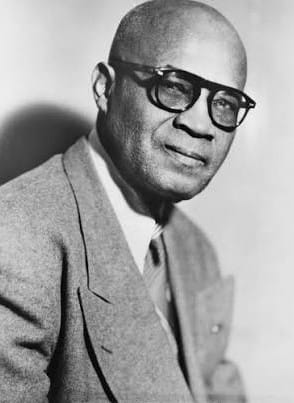
Robert Douglas
Inducted:
1972
Stats
Born
November 4, 1882
Saint Kitts, British West Indies
Died
July 16, 1979
New York, U.S.
Position
Contributor
College
NA
Robert Douglas was a pioneering figure in basketball and one of the most influential contributors to the sport's early professional era. In 1923, he founded and managed the New York Renaissance (Rens), the first all-Black fully professional basketball team owned and operated by an African American.
Under his leadership from 1923 to 1949, the Rens became one of the most dominant dynasties in basketball history, barnstorming across a segregated America and routinely defeating the best white professional teams of the era. For his tireless dedication to the game, his role in breaking down racial barriers, and his pristine executive leadership, Douglas made history in 1972 by becoming the first Black individual inducted into the Naismith Memorial Basketball Hall of Fame as a Contributor.
Douglas's Awards and Honor
- Founder of the New York Renaissance (Rens)
- First Black Inductee in the history of the Naismith Memorial Basketball Hall of Fame
- World Professional Basketball Tournament Champion (1939)
- Black Fives Foundation Honoree for pioneering African American basketball history.
NBA Teams
Founder and Owner
New York Renaissance (1923-1949)
NBA Stats
Franchise Founded:
New York Renaissance (1923)
All-Time Record:
Over 2,300 victories
Historic Winning Streak:
88 consecutive wins (1932–1933)
World Professional Basketball Tournament Champion:
1939
Robert Gruenig
Inducted:
1963

Player Stats
6 ft 8 in (2.03 m)
220 lb (100 kg)
Born:
March 12,1913
Chicago, Illinois, U.S.
Died:
August 11,1958
Del Norte, Colorado,U.S.
Position:
Center
College:
Northwestern University
Robert Gruenig, was one of basketball's first dominant big men and among the greatest Amateur Athletic Union (AAU) players in history.His playing career dominated the Amateur Athletic Union (AAU) during the 1930s and 1940s, alongside a brief professional stint in the National Basketball League (NBL) with the Denver Nuggets in 1948–49.
Standing 6-foot-8,he revolutionized the center position with his mobility, rebounding and devastating hook shot, which he could shoot effectively with either hand. Gruenig earned an incredible 10 AAU All-America selections and led the Denver Safeway, Denver Nuggets and Denver American Legion teams to three AAU National Championships.
He was inducted into the Naismith Memorial Basketball Hall of Fame in 1963 as a player.
Gruenig's Awards and Honors
- 10× AAU All-American
- 3× AAU National Champion (1937, 1939, 1942)
- Los Angeles Sports Award Medallion
- Helms Athletic Foundation Hall of Fame
- Colorado Sports Hall of Fame
NBA Teams
Denver Nuggets (1948–1949)
NBA Stats
Career/Tenor:
1932-1949
NBA Career:
1948-1949
Game:
49
Points:
558
Points per Game:
11.4
AAU National Champion:
3 (1937, 1939, 1942)
All-Star Selections:
10 (1937–1940, 1942–1946, 1948)
Robert Hughes
Inducted:
2017

Coach Stats
Born:
May 15, 1928
Bristow, Oklahoma, U.S.
Died:
June 11, 2024
Fort Worth, Texas, U.S.
Position:
Coach
College:
Texas Southern University
Robert Hughes was a trailblazing high school basketball coach whose relentless pursuit of excellence defined Fort Worth basketball for generations. Born May 15, 1928 in Oklahoma, he played college basketball at Texas Southern before a torn Achilles ended his brief pro career. Hughes began coaching in 1958 at I.M. Terrell High School, guiding them to three segregated league state titles by 1967.
In 1973 he moved to Dunbar High School and built the “Flying Wildcats” into a national powerhouse—leading them to two UIL state championships and 12 state tournament finals over three decades. By the time he retired in 2005, Hughes had amassed 1,333 wins against just 264 losses—making him the winningest boys’ high school coach ever. Known for his discipline, fiery intensity, and commitment to players’ development, he forged success despite limited resources.
His influence extended far beyond the court, earning him the Naismith Memorial Basketball Hall of Fame in 2017. Hughes is remembered as a mentor, innovator, and record-setting leader of youth basketball.
Hughes' Awards and Honors
- 5× Texas State champion (1963, 1965, 1967, 1993, 2003)
- Texas Basketball Hall of Fame inductee (2003)
- High School Basketball Hall of Fame inductee (2003)
- NHSCA National High School Coach of the Year (2003)
- Morgan Wootten Lifetime Achievement Award (2010)
- Texas Black Sports Hall of Fame (2010)
- Naismith Memorial Basketball Hall of Fame inductee: 2017
- National high school coach with most career wins (1,333)
- Morgan Wootten Lifetime Achievement Award winner (2010)
- Selected National High School Coach of the Year (NHSCA): 2003
HS Teams
As a Coach:
I.M. Terrell HS 1958–1973
Dunbar HS 1973–2005
HS Stats
Coaching Career:
1958–2005 (47 years)
Total Wins:
1,333
Total Losses:
264
Win Percentage:
~83%
State Championships:
5 (Terrell: 3 in PVIL; Dunbar: 2 UIL)
State Final Four Appearances:
12 at Dunbar
Robert Parish
Inducted:
2003

Player Stats
7 ft 1 in (2.16 m)
244 lb (111 kg)
Born
August 30, 1953
Shreveport, Louisiana, U.S.
Position
Center
College
Centenary (1972–1976)
Robert Parish was one of the most durable and reliable centers in NBA history, earning the nickname “The Chief” for his calm presence and steady excellence. Over a 21-season career, Parish became a cornerstone of the Boston Celtics’ dynasty during the 1980s, anchoring the paint with strength, touch, and quiet leadership.
Known for his remarkable durability, Parish played an NBA-record 1,611 regular-season games over 21 seasons, a testament to his fitness and discipline (which he famously attributed to martial arts and yoga). He capped his career by winning a fourth championship with the Chicago Bulls in 1997 at age 43. He was inducted into the Naismith Memorial Basketball Hall of Fame in 2003.
Parish's Awards and Honors
- 00 Retired by the Boston Celtics (1998)
- All-time NBA leader in games played
- One of the most durable players in league history
NBA Records
- 4x NBA Champion (1981, 1984, 1986, 1997)
- 9x NBA All-Star (1981–1987, 1990, 1991)
- All-NBA Second Team (1982)
- All-NBA Third Team (1989)
- NBA 50th & 75th Anniversary Teams
NBA Teams
Golden State Warriors (1976–1980)
Boston Celtics (1980–1994)
Charlotte Hornets (1994–1996)
Chicago Bulls (1996–1997)
NBA Draft
1976: 1st round, 8th overall pick
Golden State Warriors
Number Worn
00
NBA Stats
Seasons:
21 (1976-1997)
Games Played:
1,611
Assists:
2,180 (1.4 APG)
Points:
23,334 (14.5 ppg)
Rebounds:
14,715 (9.1 rpg)
Blocks:
2,361 (1.5 bpg)
FG%
53.7
FT%
72.1
Points per Game:
14.5
NBA Championships:
4 (1981, 1984, 1986, 1997)
Rod Thorn
Inducted:
2018

Player Stats
6 ft 4 in (1.93 m)
195 lb (88 kg)
Born:
May 23, 1941
Princeton, West Virginia, U.S.
Position:
Point guard
Shooting guard
Coach
Executive
College:
West Virginia (1960–1963)
Rod Thorn’s NBA legacy stretches far beyond his solid playing career. Drafted second overall in 1963, he played eight seasons as a guard-forward, known for his reliable shooting and smart play. But it was after retirement that Thorn truly shaped the league’s future. As a front office executive, he became one of the most influential figures in NBA history.
Thorn drafted Michael Jordan as the Bulls’ GM in 1984, later served as NBA Executive Vice President of Basketball Operations, and helped define modern league policy, discipline, and rule evolution. He also rebuilt the New Jersey Nets into a title contender in the early 2000s.
Thorn was inducted into the Naismith Memorial Basketball Hall of Fame in 2018 for his far-reaching contributions as a player, executive, and league architect.
Thorn's Awards and Honors
- NBA All-Rookie First Team (1964)
- 2× Consensus second-team All-American (1962, 1963)
- SoCon Player of the Year (1962)
- 44 retired by West Virginia Mountaineers
- Third-team Parade All-American (1959)
- NBA Executive of the Year (2002)
NBA Records
- Drafted 2nd overall in the 1963 NBA Draft – behind only Art Heyman
- Scored over 5,000 career points across eight NBA seasons
- Drafted Michael Jordan with the 3rd overall pick in 1984 as Chicago Bulls GM
- Led NBA Basketball Operations (2000–2011) – oversaw rules, discipline, and competition integrity
- Played key role in implementing modern rules like hand-checking limitations and instant replay
- Served as President of the New Jersey Nets during back-to-back NBA Finals runs (2002, 2003)
- One of few individuals to significantly impact the league as a player, GM, and league executive
NBA Teams
As a player:
Baltimore Bullets 1963–1964
Detroit Pistons 1964–1965
St. Louis Hawks 1965–1967
Seattle SuperSonics 1967–1971
As a coach:
Seattle SuperSonics (assistant) 1971–1972
New York Nets (assistant) 1973–1975
Spirits of St. Louis 1975–1976
New York / New Jersey Nets (assistant) 1976–1978
Chicago Bulls (interim) 1981–1982
NBA Executive:
Vice President of Basketball Operations (2000-2011)
NBA Draft:
1963: 1st round, 2nd overall pick
Baltimore Bullets
Number Worn:
44, 10, 22
NBA Stats
Seasons:
8 (1963–1971)
Games Played:
466
Points:
5,012
Rebounds:
1,463
Assists:
1,214
Points Per Game:
10.8
Rebounds Per Game:
3.1
Assists Per Game:
2.6
FG(%):
.433
FT(%):
.723
Roger Brown
Inducted:
2013

Player Stats
6 ft 5 in (1.96 m)
205 lb (93 kg)
Born:
May 22, 1942
Brooklyn, New York, U.S.
Died:
March 4, 1997
Indianapolis, Indiana, U.S.
Position:
Small forward
College:
University of Dayton
Roger Brown, nicknamed “The Rajah”, was a silky-smooth small forward who became one of the ABA’s greatest clutch scorers. Known for his effortless mid-range jumper, pinpoint passing, and unshakable poise under pressure, Brown shined brightest in big games. Playing his entire professional career with the Indiana Pacers (1967–1975), he helped lead the franchise to three ABA Championships (1970, 1972, 1973).
Brown’s 1970 ABA Playoffs performance—where he scored 53, 39, and 45 points in consecutive Finals games—cemented his reputation as a postseason legend. Though barred from college and early NBA play due to an unproven point-shaving accusation, Brown’s talent found a home in the ABA, where he became a four-time All-Star and 1970 Playoffs MVP.
Inducted into the Naismith Memorial Basketball Hall of Fame in 2013, Brown is remembered as a pure scorer, a selfless teammate, and one of basketball’s most underrated stars.
Brown's Awards and Honors
- 3× ABA Champion (1970, 1972, 1973)
- ABA Playoffs MVP (1970)
- 4× ABA All-Star
- All-ABA First Team (1971)
- Hall of Fame Inductee (2013)
ABA Records
- One of the highest scoring performances (53 points) in ABA/NBA Finals history
- 137 points over three consecutive Finals games (1970)
- Only player in ABA history to score 50+ points in a Finals game
- Pacers franchise record for most points in a Finals game (53)
ABA Teams
As a player:
Indiana Pacers (1967–1974)
Memphis Sounds (1974)
Utah Stars (1974–1975)
Indiana Pacers (1975)
As a coach:
Indiana Pacers (assistant) (1979–1980)
Number Worn:
35, 19, 1
ABA Stats
Season:
8 (1967–1975)
Games Played:
605
Points:
10,498 (17.4 ppg)
Rebounds:
3,758 (6.2 rpg)
Assists:
2,315 (3.8 apg)
Field Goal %:
46.9%
Free Throw %:
79.1%
Roy Williams
Inducted:
2007

Coach Stats
Born
August 1, 1950
Marion, North Carolina, U.S.
Position:
Coach
College:
North Carolina (1968–1969)
Roy Williams is a pillar of college basketball history, renowned for his unwavering loyalty, high-octane "secondary break" offense, and his emotional connection to his players. Over 33 seasons as a head coach, Williams achieved what no other coach in NCAA history has: winning 400 or more games at two different storied programs—the University of Kansas and the University of North Carolina.
In 15 years, he restored the Jayhawks to national prominence, reaching four Final Fours. In 2003, he "returned home" to North Carolina, where he cemented his legacy by winning three NCAA National Championships (2005, 2009, 2017). Known for his "dad-gum" Southern charm and fierce competitiveness, he retired in 2021 with 903 career wins. He was inducted into the Naismith Memorial Basketball Hall of Fame in 2007.
Williams' Awards and Honors
- 3x NCAA National Champion (2005, 2009, 2017)
- Naismith Memorial Basketball Hall of Fame (2007)
- National Collegiate Basketball Hall of Fame (2006)
- 9x National Coach of the Year (Various Outlets)
- 9x Conference Coach of the Year (Big 8, Big 12, ACC)
- AP Coach of the Decade (2000–2009)
- Fastest Coach to 900 Wins (Fewest games/seasons)
NCAA Teams
Kansas (1988–2003)
North Carolina (2003–2021)
NCAA Stats
Seasons as Head Coach:
33 (1988–2021)
Career Record:
903–264 (.774)
National Championships:
3 (2005, 2009, 2017)
Final Four Appearances:
9 (4 at Kansas, 5 at UNC)
NCAA Tournament Wins:
79 (2nd all-time)
30-Win Seasons:
12
Rudy Tomjanovich
Inducted:
2020

Coach Stats
6 ft 8 in (2.03 m)
228 lb (103 kg)
Born:
November 24, 1948
Hamtramck, Michigan, U.S.
Position:
Coach
College:
University of Michigan
Rudy Tomjanovich was a five-time NBA All-Star and one of the most beloved figures in Houston Rockets history. Drafted second overall in 1970 by the San Diego Rockets, he became a cornerstone of the franchise during its move to Houston. Known for his smooth mid-range jumper and rebounding grit, Rudy T averaged 17.4 points and 8.1 rebounds per game across 11 NBA seasons—all with the Rockets.
His playing career was cut short in 1977 after a violent on-court incident, but he returned to basketball and built an even greater legacy as a head coach. He led the Rockets to back-to-back NBA championships in 1994 and 1995 and later coached Team USA to Olympic gold in 2000. Tomjanovich was inducted into the Naismith Basketball Hall of Fame in 2020 for his achievements as both a player and coach. His jersey (#45) was the first ever retired by the Rockets, solidifying his place as a franchise icon.
Tomjanovich's Awards and Honors
- 2× NBA champion (1994, 1995)
- NBA All-Star Game head coach (1997)
- Chuck Daly Lifetime Achievement Award (2024)
- Led Rockets to 8 playoff appearances in 11 full seasons
- Olympic Gold Medal – Head Coach, Team USA (2000)
- Bronze Medal – Head Coach, Team USA (1998 FIBA World Championship)
- Inducted into Naismith Memorial Basketball Hall of Fame (2020)
- Transitioned to coach, becoming Rockets’ winningest coach
- Back-to-back NBA championships (1994, 1995)
- Lowest seed (6th) to win a title
- NBA Coach of the Year (Sporting News, 1993)
- Head coach of Team USA, won bronze (1998) and gold (2000 Olympics)
NBA Teams
As a player:
San Diego / Houston Rockets 1970–1981
As a coach:
Houston Rockets (assistant) 1983–1992
Houston Rockets 1992–2003
Los Angeles Lakers 2004–2005
NBA Draft
1970: 1st round, 2nd overall pick
San Diego
Number Worn
45
NBA Stats
As Player
Games played
768
Minutes per game
33.5
Points per game
17.4
Rebounds per game
8.1
FG(%)
.501
FT(%)
.784
3P(%)
.262
Points
13,383 (17.4 ppg)
Rebounds
6,198 (8.1 rpg)
Assists
1,573 (2.0 apg)
As Coach
Career Wins–Losses
503-397
Win(%)
.559
Russ Granik
Inducted:
2013

Stats
Born:
July 10, 1948
Spring Valley, New York U.S.
Position:
Contributor
College:
NA
Russ Granik, born in 1947, played a pivotal role in shaping modern professional basketball as an executive and leader. Serving as NBA Deputy Commissioner for 22 years, he was instrumental in expanding the league’s global reach and strengthening its competitive structure. Granik played a key role in negotiating television contracts, labor agreements, and the landmark decision to allow NBA players to compete in the Olympics, leading to the 1992 “Dream Team.” He also oversaw the league’s expansion, draft policies, and marketing strategies, helping the NBA become a truly international sport.
Known for his legal expertise, steady leadership, and ability to build consensus, Granik’s influence extended beyond the NBA to international basketball governance. His visionary contributions helped transform the league into one of the most popular sports organizations in the world. In recognition of his extraordinary service to the game, he was inducted into the Naismith Memorial Basketball Hall of Fame in 2013.
Granik's Awards and Honors
- Negotiated multiple landmark NBA television deals
- Facilitated NBA player participation in the Olympics
- Helped guide NBA expansion and international growth
- Longest-serving Deputy Commissioner in NBA history at the time of his retirement
Notable Achivements
- Architect of NBA’s entry into the global market
- Key figure in creating the “Dream Team” era of international basketball
- Oversaw major labor agreements that ensured league stability
- Helped set a model for sports league governance worldwide
NBA
NBA Deputy Commissioner (1990–2006)
Contributions
Years As NBA Deputy Commissioner:
22
Years with NBA:
Over 30
Olympics Basketball Integration:
1992
"Don't Just Watch the Game—Own the Look!"
Score the hottest drop of the season, from authentic Icon Edition jerseys to the latest sneaker releases and official team hoodies. High-performance gear for the ultimate basketball fan.
Get Your Gear – NBA Official Collection
NBA Hall of Fame
The NBA Hall of Fame, officially known as the Basketball Hall of Fame, is a prestigious institution that honors the greatest figures in the sport of basketball. Each year, the Induction ceremony celebrates legendary players who have made significant impacts on the game. The Hall of Fame class features basketball legends whose remarkable career achievements and iconic moments have defined the sport.
Inductees are recognized for their substantial player contributions, earning various awards and honors throughout their careers. The Hall also pays tribute to retired jerseys and acknowledges the profound impact on the game by highlighting the historic contributions of its members. With a focus on the legacy in basketball, the NBA Hall of Fame continues to celebrate excellence and inspire future generations of players through memorable speeches and recognition in sports.