
Search by the First Name of the HOFers
Pete Maravich
Inducted:
1987

Player Stats
6 ft 5 in (1.96 m)
197 lb (89 kg)
Born
June 22, 1947
Aliquippa, Pennsylvania, U.S.
Died
January 5, 1988
Pasadena, California, U.S.
Position
Shooting guard
College
LSU (1967–1970)
Pete “Pistol” Maravich was one of the most electrifying and creative guards in NBA history, known for his scoring flair, dazzling ball-handling, and uncanny court vision. Drafted third overall by the Atlanta Hawks in 1970, Maravich quickly became a scoring sensation and a fan favorite.
Over a 10-season career with the Atlanta Hawks, New Orleans/Utah Jazz, and briefly with the Boston Celtics, he averaged 24.2 points per game despite joining the league during an era dominated by slower-paced play. Maravich’s style, including behind-the-back passes and no-look shots, revolutionized guard play and influenced generations of players.
Although he never won an NBA championship, his individual brilliance earned five All-Star selections and seven All-NBA Team honors. Known for his charisma and fearless play, Maravich was inducted into the Naismith Memorial Basketball Hall of Fame in 1987.
Maravich's Awards and Honors
- National college player of the year (1970)
- 2× USBWA Player of the Year (1969, 1970)
- 3× Consensus first-team All-American (1968–1970)
- 3× NCAA scoring champion (1968–1970)
- 3× SEC Player of the Year (1968–1970)
- NCAA Division I Men’s all-time scoring leader
NBA Records
- 5× NBA All-Star (1973, 1974, 1977–1979)
- 2× All-NBA First Team (1976, 1977)
- 2× All-NBA Second Team (1973, 1978)
- NBA All-Rookie First Team (1971)
- NBA scoring champion (1977)
- NBA anniversary team (50th, 75th)
NBA Teams
Atlanta Hawks (1970–1974)
New Orleans / Utah Jazz (1974–1980)
Boston Celtics (1980)
NBA Draft
1970: 1st round, 3rd overall pick
Atlanta Hawks
Number Worn
44, 7
NBA Stats
Seasons:
10 (1970–1980
Game Played:
658
Points:
15,948 (24.2 ppg)
Rebounds:
2,747 (4.2 rpg)
Assists:
3,563 (5.4 apg)
Steals:
587 (1.4 spg)
Blocks:
108 (0.3 bpg)
Field Goal(%):
44.1
Free Throw(%):
82.0
Playoff Game:
26
Pete Newell
Inducted:
1979
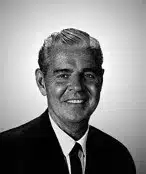
Pete Newell was one of the most influential teachers in the history of basketball, renowned for his mastery of footwork and defensive fundamentals. While he is best known for his collegiate success, Newell’s impact on the NBA was monumental; he served as the General Manager of the San Diego Rockets (drafting Elvin Hayes) and later as a scout and consultant for the Los Angeles Lakers.
However, his greatest professional contribution was the "Pete Newell Big Man Camp," an elite summer clinic where he tutored NBA superstars like Hakeem Olajuwon, Shaquille O’Neal, and Bill Walton. On the court, he is one of only three coaches to win an NCAA Championship (California, 1959), an NIT Championship (San Francisco, 1949), and an Olympic Gold Medal (1960).
For his tactical genius and his role as the "Guru of the Post," he was inducted into the Basketball Hall of Fame in 1979.
Newell's Awards and Honors
- NCAA University Division tournament (1959)
- 2 NCAA University Division Regional—Final Four (1959, 1960)
- NIT (1949)
- 3 PCC regular season (1957–1959)
- AAWU regular season (1960)
- NABC Coach of the Year (1960)
- UPI Coach of the Year (1960)
- FIBA Hall of Fame (2009)
NCAA Teams
San Francisco (1946–1950)
Michigan State (1950–1954)
California (1954–1960)
NCAA Stats
Wins:
234
Total Losses:
123
Win(%):
.655
NCAA Championships:
1 (1959)
NIT Championships:
1 (1949)
Olympic Gold Medals:
1 (1960)
Conference Titles:
4 consecutive
Phil Jackson
Inducted:
2007

Coach Stats
6 ft 8 in (2.03 m)
220 lb (100 kg)
Born
September 17, 1945
Deer Lodge, Montana, U.S.
Position:
Power forward (as a player)
Coach
College:
North Dakota (1964–1967)
Phil Jackson, widely known as the "Zen Master," is the most decorated coach in NBA history. Jackson’s coaching philosophy was a unique blend of Eastern philosophy, Native American spiritualism, and a strictly disciplined tactical system known as the Triangle Offense. He mastered the art of managing the league's biggest egos, transforming legendary talents like Michael Jordan, Scottie Pippen, Shaquille O'Neal, and Kobe Bryant into selfless championship units.
Known for his defensive hustle and intelligence, he was a key role player on the Knicks' 1973 championship team (missing the 1970 title run due to injury). Between his playing days and his historic stints with the Chicago Bulls and Los Angeles Lakers, Jackson won a total of 13 NBA rings. He was inducted into the Naismith Memorial Basketball Hall of Fame in 2007.
Jackson's Awards and Honors
- Coached two separate NBA dynasties
- Highest postseason win percentage among elite coaches
- CBA Champion & Coach of the Year (1984/1985)
- Fastest Coach to reach 900 and 1,000 wins
NBA Records
- 11x NBA Champion Head Coach (Record)
- 2x NBA Champion Player (1970, 1973)
- NBA Coach of the Year (1996)
- Top 15 Greatest Coaches in NBA History
- NBA All-Rookie First Team (1968)
NBA Teams
New Jersey Nets (1978–1981)
Chicago Bulls (1987–1998)
Los Angeles Lakers (1999–2004,2005–2011)
NBA Draft:
1967: 2nd round, 17th overall pick
New York Knicks
Number Worn:
18, 17
NBA Stats
Head coaching seasons:
1989–2011
NBA Finals appearances:
13
Total NBA Championships:
13 (11 Coach, 2 Player)
Coaching Wins (Regular Season):
1,155–485 (.704)
Playoff Winning Percentage:
.688 (NBA Record)
NBA Coach of the Year:
1996
All-Star Game Head Coach:
4 Times
Phil Knight
Inducted:
2012

Personal Stats:
Born:
February 24, 1938
Portland, Oregon, U.S.
Position:
Contributor
College:
NA
Phil Knight, born February 24, 1938, in Portland, Oregon, is best known as the co-founder of Nike, Inc., the global sportswear giant that transformed the business of athletics. Knight’s vision and leadership changed the relationship between sports, athletes, and marketing, making Nike one of the most influential companies in the world. His impact extended directly into basketball, where Nike became synonymous with innovation, style, and performance, highlighted by groundbreaking athlete endorsements such as Michael Jordan.
Knight’s ability to merge business with sports culture reshaped the way athletes are marketed and how fans connect with the game. Through Nike, he helped redefine branding in professional sports and brought global attention to basketball’s growth. In recognition of his profound influence on the sport’s global popularity and commercial reach, Knight was inducted into the Naismith Memorial Basketball Hall of Fame in 2012. His contributions stand as a lasting example of how vision and entrepreneurship can transform a sport.
Knight's Awards and Honors
- Naismith Memorial Basketball Hall of Fame induction: 2012
- Founder of one of the most influential sports brands in history
- Key figure in transforming athlete endorsements in basketball
- Instrumental in the success of the Air Jordan brand
Notable Achievements
- Revolutionized basketball through global branding and marketing
- Pioneered the athlete endorsement model, forever changing NBA player-business relationships
- Oversaw Nike’s rise as the world’s leading Sportswear Company
Occupation
CEO and Chairman of Nike
Contributions
- Co-founder of Nike, Inc. (founded 1964 as Blue Ribbon Sports, became Nike in 1971)
- Served as CEO and Chairman of Nike for decades
- Net worth built through Nike’s global expansion
- Oversaw Nike’s entry into basketball and athlete partnerships
Phil Woolpert
Inducted:
1992

Coach Stats
Born
December 15, 1915
Danville, Kentucky, U.S.
Died
May 5, 1987
Sequim, Washington, U.S.
Position
Coach
College
Los Angeles Junior College
Phil Woolpert was a courageous visionary whose defensive mastery and social leadership forever changed the landscape of basketball. Best known for his tenure at the University of San Francisco, Woolpert guided the Dons to back-to-back NCAA championships in 1955 and 1956. At just 40 years old, he became the youngest coach to win a national title, anchoring his teams with legendary players like Bill Russell and K.C. Jones.
Beyond his tactical brilliance, Woolpert was a pioneer of integration, famously starting three Black players during an era of deep-seated racial tension. Under his direction, San Francisco achieved a then-record 60-game winning streak, establishing a dynasty built on unselfish play and elite conditioning. He later coached the San Francisco Saints in the American Basketball League, bringing his disciplined approach to the professional ranks.
For his championship success and his role as a social trailblazer, Woolpert was inducted into the Basketball Hall of Fame in 1992.
Woolpert's Awards and Honors
- 2× NCAA National Champion (1955, 1956)
- 2× UPI National Coach of the Year (1955, 1956)
- 4× WCAC Coach of the Year (1955–1958)
- Youngest coach to win an NCAA title (Age 40)
- 1956 Season: Undefeated (29–0)
- Inducted into the College Basketball Hall of Fame (2006)
NCAA Teams
San Francisco (1950–1959)
San Diego (1962–1969)
NCAA Stats
Total College Wins:
243
Loses:
168
Win(%):
.500
NCAA Championships:
2
NCAA Tournament Record:
13–2
Longest Winning Streak:
60 Games
Final Four Appearances:
3
Conference Titles:
4
Pop Gates
Inducted:
1989

Player Stats
6 ft 2 in (1.88 m)
205 lb (93 kg)
Born
August 30, 1917
Decatur, Alabama, U.S.
Died
December 1, 1999
New York City, New York, U.S.
Position
Guard
Coach
College
NA
William "Pop" Gates was a true pioneer of the "cage" era and one of the most versatile athletes to ever step onto a basketball court. Known for his incredible speed, rebounding, and defensive tenacity, Gates achieved the rare feat of jumping directly from a high school championship at Benjamin Franklin in Harlem to a World Professional Championship with the New York Renaissance in 1939. He was a cornerstone of the legendary "Rens," contributing to their historic 68-game winning streak.
Beyond his physical dominance, Gates was a trailblazer for integration; in 1946—seven months before Jackie Robinson broke the color barrier in baseball—he became one of the first African American players to sign with the National Basketball League (NBL), playing for the Buffalo Bisons (later the Tri-Cities Blackhawks). He later transitioned into a player-coach role for the Dayton Rens and the Harlem Globetrotters, becoming one of the first Black coaches in major professional basketball. He was inducted into the Basketball Hall of Fame in 1989.
Gates' Awards and Honors
- NBL All-Time Team
- 2x WPBT Champion (1939, 1943)
- 2× All-WPBT Team (1940, 1943)
- ABL champion (1950)
- 8× World Tournament All-Pro Selection
- Only player to appear in every World Professional Tournament
NBL Teams
Buffalo Bisons (1946–1947)
Dayton Rens (1948–1949)
NBL Stats
NBL Games Played:
81
Points:
758 (NBL specific)
Points Per Game:
9.4 (NBL specific)
Professional Games Played:
1,500+ (Estimated total career)
Career Scoring Average:
~14.0 PPG (Across all professional play)
World Professional Tournament Appearances:
10
Radivoj Korac
Inducted:
2022

Player Stats
6 ft 5 in (1.96 m)
207 lb (94 kg)
Born:
5 November 1938
Sombor, Yugoslavia
Died:
2 June 1969
Sarajevo, SR Bosnia and Herzegovina, Yugoslavia
Position:
Power forward
College:
NA
Radivoj Korać was one of Europe’s most prolific scorers and a pioneer of international basketball. Born in Serbia in 1938, he played most of his club career with OKK Belgrade, where he won four Yugoslav League titles and led the league in scoring seven times.
Known for his soft shooting touch and high basketball IQ, Korać averaged 30.7 points per game in the Yugoslav League and once scored a record 99 points in a single EuroLeague game—an unmatched feat.
He also starred on the Yugoslav national team, winning silver medals in the Olympics and World and European Championships, and was the top scorer in multiple international tournaments.
Korać tragically died in a car accident at age 30, but his impact endures. He was posthumously inducted into the FIBA Hall of Fame in 2007 and the Naismith Memorial Basketball Hall of Fame in 2022. Serbia’s national cup competition now bears his name, honoring his lasting influence on the game.
Korac's Awards and Honors
- EuroBasket MVP (1961)
- 4× FIBA EuroBasket Top Scorer (1959, 1961, 1963, 1965)
- Best Athlete of Yugoslavia (1960)
- Yugoslav Sportsman of the Year (1962)
- 2× FIBA European Selection (1964, 1965)
- 7× Yugoslav League Top Scorer (1957, 1958, 1960, 1962–1965)
- Italian League Top Scorer (1969)
- Belgium League Top Scorer (1968)
- 4× Yugoslav League champion (1958, 1960, 1963, 1964)
- 2× Yugoslav Cup winner (1960, 1962)
- Belgium League champion (1968)
- FIBA's 50 Greatest Players
- 50 Greatest EuroLeague Contributors
Teams
As Player
OKK Beograd 1954–1967
Standard Liège 1967–1968
Petrarca Padova 1968–1969
Numbers Worn:
5, 14
Stats
Club Career (Yugoslav First League – OKK Belgrade)
Games Played:
169
Points Scored:
5,185
Points Per Game:
30.7
EuroLeague Career (with OKK Belgrade)
Points Per Game:
43.6
Best Season (1964–65):
54.8 PPG
Single-Game High:
99 points vs. Alvik BK (still a EuroLeague record)
Yugoslavia National Team
Games Played:
157
Total Points:
3,153
Points Per Game:
20.1
1960 Summer Olympics:
Points Per Game:
24.1 (Top scorer of the tournament)
Ralph Miller
Inducted:
1988

Coach Stats
Born
March 9, 1919
Chanute, Kansas, U.S.
Died
May 15, 2001
Black Butte Ranch, Oregon, U.S.
Position
Coach
College
Kansas (1937–1941)
Ralph Miller was one of the most respected college basketball coaches of the 20th century, known for his innovative offensive strategies and long-term program building. Although not an NBA head coach, Miller’s influence on the professional game came through the development of players and coaching philosophies that impacted basketball at all levels.
Miller achieved major success at Wichita State, Iowa, and especially at Oregon State, where he built nationally competitive programs. He guided teams to multiple NCAA Tournament appearances and was widely admired for his discipline, teaching ability, and emphasis on fundamentals.
Over his collegiate coaching career, Miller compiled more than 650 victories and became known as one of the game’s master tacticians. His contributions to basketball extended beyond wins and losses, shaping generations of players and coaches. Miller was inducted into the Naismith Memorial Basketball Hall of Fame in 1988.
Miller's Awards and Honors
- MVC regular season (1964)
- 2 Big Ten regular season (1968, 1970)
- 4 Pac-10 regular season (1980–1982, 1984)
- 2× AP Coach of the Year (1981, 1982)
- Henry Iba Award (1981)
- NABC Coach of the Year (1981)
- UPI Coach of the Year (1981)
- 2× Pac-10 Coach of the Year (1981, 1989)
NCAA Teams
Wichita (1951–1964)
Iowa (1964–1970)
Oregon State (1970–1989)
NCAA Stats
Seasons Coached:
38
Wins:
657
Losses:
382
Win(%):
.632
NCAA Tournament Appearances:
10
Conference Titles:
7
Ralph Sampson
Inducted:
2012

Player Stats
7 ft 4 in (2.24 m)
228 lb (103 kg)
Born:
July 7, 1960
Harrisonburg, Virginia, U.S.
Position:
Center
Power forward
College:
Virginia (1979–1983)
Ralph Sampson, born July 7, 1960, in Harrisonburg, Virginia, was one of the most dominant big men of his era. Standing 7-foot-4, he combined size, skill, and agility rarely seen in players of his height. After a legendary college career at Virginia, where he won three Naismith Awards, Sampson entered the NBA as the first overall pick in 1983 by the Houston Rockets. He made an immediate impact, earning Rookie of the Year honors and becoming a four-time NBA All-Star in just a few seasons. Teaming with Hakeem Olajuwon as part of the “Twin Towers,” he helped lead the Rockets to the 1986 NBA Finals.
Sampson averaged 15.4 points, 8.8 rebounds, and 1.6 blocks over his career, showcasing versatility as both a scorer and rim protector. Though injuries shortened his prime, his influence as a skilled, athletic center helped shape the modern big man. Inducted into the Naismith Memorial Basketball Hall of Fame in 2012, Sampson remains a towering figure in basketball history.
Sampson's Awards and Honors
- 4× NBA All-Star (1984–1987)
- NBA All-Star Game MVP (1985)
- All-NBA Second Team (1985)
- NBA Rookie of the Year (1984)
- NBA All-Rookie Team (1984)
NBA Records
- Helped lead Houston Rockets to the 1986 NBA Finals
- Scored game-winning buzzer-beater against Lakers in 1986 Western Conference Finals
- Among tallest and most skilled centers of his generation
NBA Teams
Houston Rockets (1983–1987)
Golden State Warriors (1987–1989)
Sacramento Kings (1989–1991)
Washington Bullets (1991–1992)
Unicaja Ronda (1992)
Rockford Lightning (1994–1995)
NBA Draft:
1983: 1st round, 1st overall pick
Houston Rockets
Number Worn:
50
NBA Stats
Seasons:
10 (1983–1992)
Games Played:
456
Game Started:
363
Assists:
861 (1.9 APG)
Points
7,039 (15.4 ppg)
Rebounds
4,011 (8.8 rpg)
Blocks
752 (1.6 bpg)
FG%
52.7
FG3%
48.6
FT%
70.0
Ray Allen
Inducted:
2018

Player Stats
6 ft 5 in (1.96 m)
205 lb (93 kg)
Born:
July 20, 1975
Merced, California, U.S.
Position:
Shooting guard
College:
UConn (1993–1996)
Ray Allen was one of the greatest shooters in NBA history and a model of longevity and professionalism. Known for his smooth shooting form, off-ball movement, and clutch performances, Allen played 18 seasons in the NBA with the Bucks, SuperSonics, Celtics, and Heat. He was a 10-time All-Star, a 2-time NBA champion, and held the record for most career 3-pointers made until 2021.
Allen hit one of the most iconic shots in NBA history—his game-tying three in Game 6 of the 2013 NBA Finals for Miami, which helped the Heat win the title. Before his NBA success, he starred at UConn and was named an All-American. Allen’s commitment to fitness, sharp shooting, and poise under pressure earned him a place in the Naismith Memorial Basketball Hall of Fame in 2018.
Allen's Awards and Honors
- 2× NBA champion (2008, 2013)
- 10× NBA All-Star (2000–2002, 2004–2009, 2011)
- All-NBA Second Team (2005)
- All-NBA Third Team (2001)
- NBA Three-Point Contest champion (2001)
- NBA All-Rookie Second Team (1997)
- NBA 75th Anniversary Team
- Consensus first-team All-American (1996)
- Big East Player of the Year (1996)
- 2× First-team All-Big East (1995, 1996)
NBA Records
- Most career 3-pointers made (at retirement): 2,973
- Most 3-pointers made in a single NBA Finals series at the time
- Most career 3-pointers made in NBA playoff history
- One of just four players in NBA history with: 24,000+ points 4,000+ assists 5,000+ rebounds & 2,900+ 3-pointers
NBA Teams
Milwaukee Bucks 1996–2003
Seattle SuperSonics 2003–2007
Boston Celtics 2007–2012
Miami Heat 2012–2014
NBA Draft:
1996: 1st round, 5th overall pick
Minnesota Timberwolves
Number Worn:
34, 20
NBA Stats
Seasons:
18 (1996–2014)
Games Played:
1,300
Points:
24,505
Points Per Game:
18.9
3-Point FG Made:
2,973
Assists:
4,361
Rebounds:
5,272
FG%:
45.2%
3P%:
40.0%
FT%:
89.4%
Ray Meyer
Inducted:
1979
Coach Stats
Born
December 18, 1913
Chicago, Illinois, U.S.
Died
March 17, 2006
Wheeling, Illinois, U.S.
Position
Coach
College
University of Notre Dame
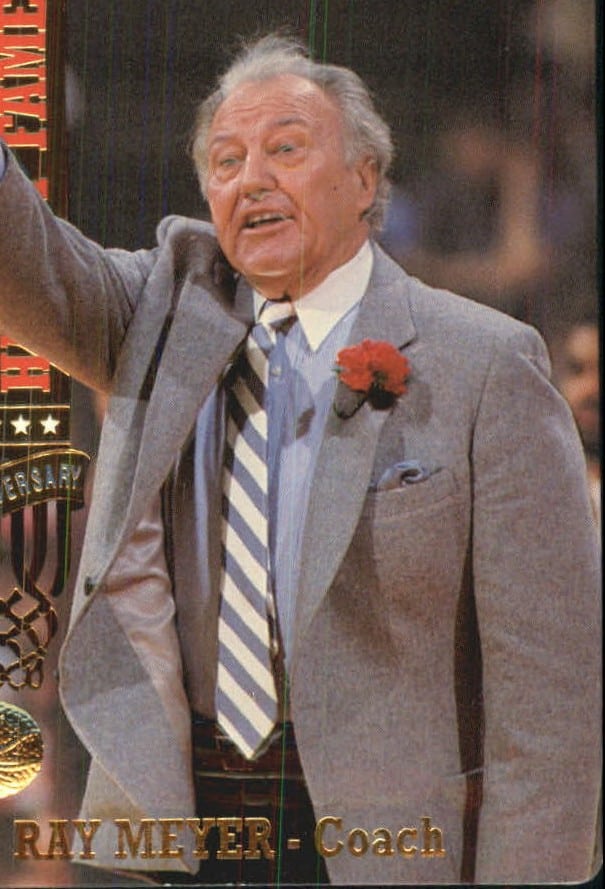
Ray Meyer was a Chicago institution and one of the most beloved figures in college basketball history. While he famously turned down multiple offers to coach in the NBA because he "hated change," his impact on the professional game was foundational.
Coaching at DePaul University for 42 seasons (1942–1984), Meyer is credited with developing George Mikan, basketball's first dominant "big man," into a superstar who would go on to define the early NBA. Meyer transformed DePaul from a local program into a national powerhouse, recording 724 wins and leading the Blue Demons to the 1945 NIT Championship (then the premier national title) and two NCAA Final Fours.
For his legendary consistency and his role in evolving the "big man" archetype, he was inducted into the Basketball Hall of Fame in 1979.
Meyer's Awards and Honors
- 2 NCAA Regional—Final Four (1943, 1979)
- NIT (1945)
- 2× AP Coach of the Year (1980, 1984)
- 2x Henry Iba Award (1978, 1980)
- NABC Coach of the Year (1979)
- 2× UPI Coach of the Year (1980, 1984)
- hn Bunn Award for Lifetime Achievement (1981)
NCAA Teams
DePaul (1942–1984)
NCAA Stats
Wins:
724
Losses:
354
Win(%):
.671
NCAA Final Fours:
2 (1943, 1979)
NIT Championships:
1 (1945)
Postseason Appearances:
21 (13 NCAA, 8 NIT)
20-Win Seasons:
12
Rebecca Lobo
Inducted:
2017

Player Stats
6 ft 4 in (1.93 m)
185 lb (84 kg)
Born:
October 6, 1973
Hartford, Connecticut, U.S.
Position:
Center
Contributor
College:
UConn (1991–1995)
Rebecca Lobo helped transform women’s basketball with her collegiate brilliance and early WNBA leadership. Born in 1973 in Hartford, Connecticut, she starred at UConn, leading the Huskies to an undefeated national championship in 1995. She earned every major player-of-the-year award and was named Final Four Most Outstanding Player. Lobo then became a founding member of the WNBA in 1997, playing for the New York Liberty, Houston Comets, and Connecticut Sun until 2003.
Though injuries shortened her pro career, she was an All-Star and helped establish the WNBA as a national league. A gold medalist at the 1996 Atlanta Olympics, Lobo shifted to broadcasting after retiring, becoming a respected ESPN analyst. Her impact on and off the court earned her induction into both the Women’s Basketball Hall of Fame (2010) and the Naismith Memorial Basketball Hall of Fame (2017). Lobo remains honored for pioneering women’s professional basketball and advocating for the next generation.
Lobo's Awards and Honors
- WNBA All-Star (1999)
- All-WNBA Second Team (1997)
- NCAA champion (1995)
- NCAA Tournament MOP (1995)
- 2x All-American – Kodak, USBWA (1994, 1995)
- First-team All-American – AP (1995)
- 2x Big East Player of the Year (1994, 1995)
- Big East Tournament MOP (1994)
- 3x First-team All-Big East (1993–1995)
- Big East Freshman of the Year (1992)
WNBA Records
- All-WNBA Second Team (1997)
- WNBA Eastern Conference All-Star selection (1999)
- Career averages: 6.7 PPG, 4.1 RPG, 1.0 APG across 121 games
- First player allocated to the New York Liberty in 1997 as part of the WNBA’s inaugural player distribution
WNBA Teams
New York Liberty 1997–2001
Houston Comets 2002
Springfield Spirit 2002–2003
Connecticut Sun 2003
WNBA Draft:
1997: Allocated
New York Liberty
Number Worn:
50
WNBA Stats
Playing career:
1997–2003
Game Played:
121
Game Started:
72
FG(%):
.407
3P(%):
.295
FT(%):
.628
Points:
715
Rebounds:
425
Olympics:
Gold Medal with USA Basketball
Arnold J. "Red" Auerbach
Inducted:
1996
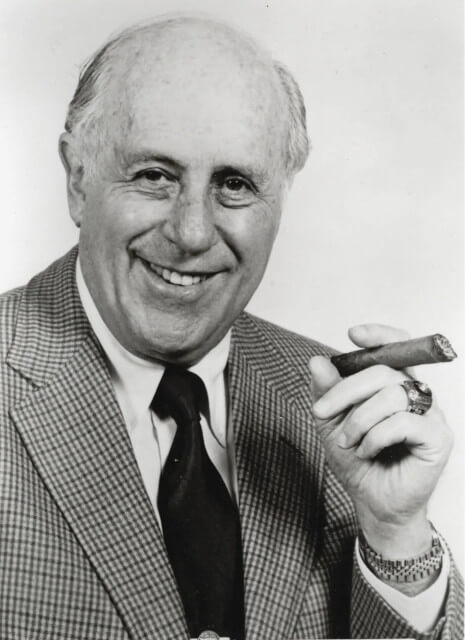
Coach Stats
Born:
September 20, 1917
Brooklyn, New York
Position:
Coach
Auerbach's Awards and Honors
- 9× NBA champion (1957, 1959–1966)
- NBA Coach of the Year (1965)
- 11× NBA All-Star Game head coach (1957–1967)
- NBA anniversary team (25th, 35th)
- Top 10 Coaches in NBA History
- Top 15 Coaches in NBA History
- No. 2 retired by the Boston Celtics
As Executive:
- 7× NBA champion (1968, 1969, 1974, 1976, 1981, 1984, 1986)
- NBA Executive of the Year (1980)
NBA Teams
1946–1949 Washington Capitols
1949–1950 Tri-Cities Blackhawks
1950–1966 Boston Celtics
NBA Stats
Seasons:
20
Games Managed:
938
Coaching Record:
938–479
Winning %:
.662
NBA Championship:
9
Red Auerbach
Inducted:
1969
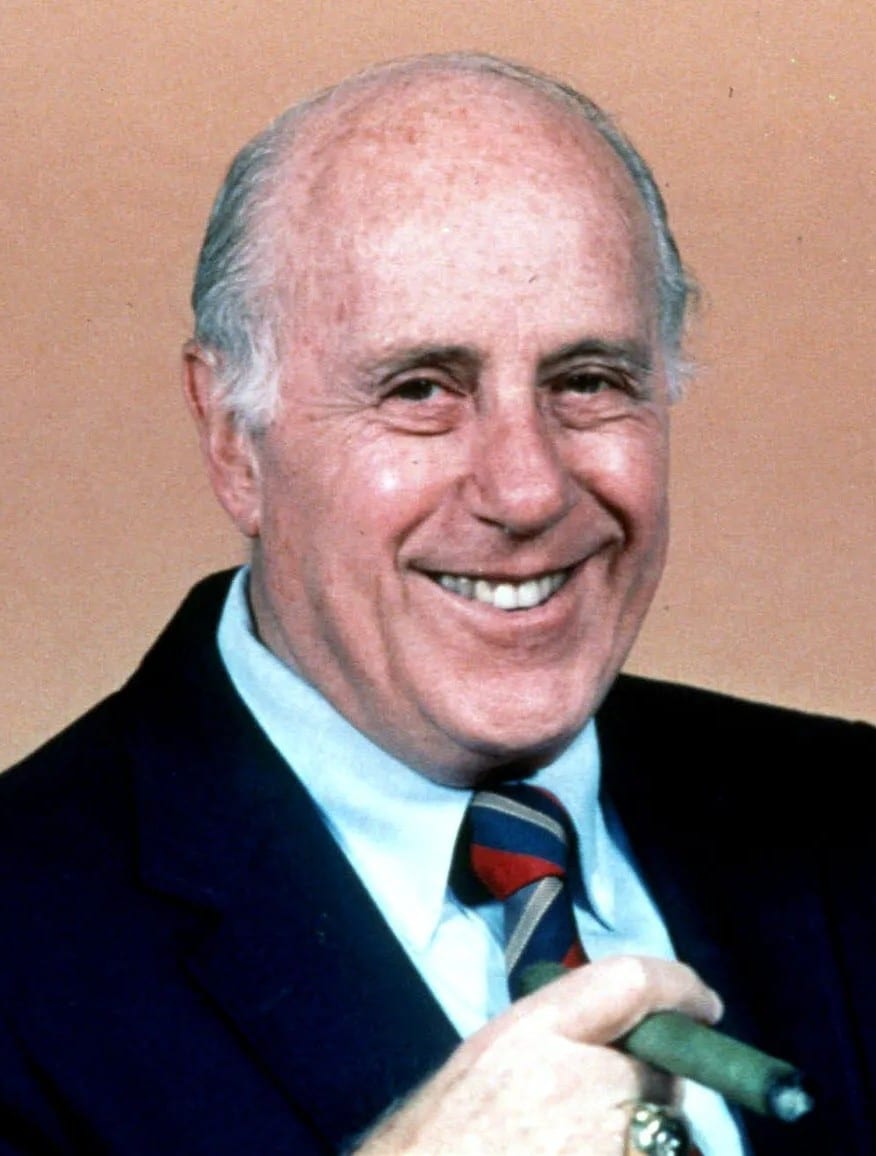
Stats
5 ft 10 in (1.78 m)
170 lb (77 kg)
Born
September 20, 1917
Brooklyn, New York, U.S.
Died
October 28, 2006
Washington, D.C., U.S.
Position
Coach
College
Seth Low JC (1936–1937)
George Washington (1937–1940)
Red Auerbach was one of the most influential coaches in NBA history, building the Boston Celtics into the league's first great dynasty. Known for his leadership, innovation, and ability to develop talent, he coached the Celtics from 1950 to 1966 and guided the franchise to nine NBA championships, including an unprecedented eight consecutive titles from 1959 to 1966. Auerbach revolutionized the game by emphasizing fast breaks, unselfish teamwork, and strong defense. He revolutionized the sport by developing the modern fast break and creating the strategic concept of the "Sixth Man."
He also played a major role in breaking racial barriers, becoming the first NBA coach to start an all-Black lineup and helping appoint Bill Russell as the league's first Black head coach. After leaving the bench, he remained a successful executive, adding more championships to Boston's legacy. His lasting impact on basketball earned him induction into the Naismith Memorial Basketball Hall of Fame in 1969 as a coach.
Auerbach's Awards and Honor
- First NBA coach to start an all-Black lineup
- Helped make Bill Russell the NBA's first Black head coach
- Coached the Boston Celtics to nine NBA titles (most by any head coach)
- Led the Celtics to an NBA-record eight consecutive championships
NBA Records
- 9× NBA champion (1957, 1959–1966)
- 8 consecutive NBA championships (1959–1966)
- NBA Coach of the Year (1965)
- 11× NBA All-Star Game head coach (1957–1967)
- NBA anniversary team (25th, 35th)
- Top 10 Coaches in NBA History
- Top 15 Coaches in NBA History
NBA Teams
Washington Capitols (1946–1949)
Tri-Cities Blackhawks (1949–1950)
Boston Celtics (1950–1966)
NBA Records
Coaching career:
1946–1966
NBA Seasons:
20
Game Coached:
1,147
Wins:
938
Losses (NCAA):
479
Win(%):
.662
Playoff Record:
99–69
NBA Championships:
9
Red Holzman
Inducted:
1986

Coach Stats
5 ft 10 in (1.78 m)
175 lb (79 kg)
Born
August 10, 1920
New York City, U.S.
Died
November 13, 1998
New Hyde Park, New York, U.S.
Position
Coach
College
Baltimore (1939–1940)
CCNY (1940–1942)
Red Holzman was one of the most successful and respected coaches in NBA history, best known for leading the New York Knicks to two NBA championships in 1970 and 1973. A former player turned coach, Holzman emphasized teamwork, discipline, and unselfish basketball, creating a style that maximized the strengths of his roster.
He led a roster of future Hall of Famers—including Willis Reed, Walt Frazier, and Earl Monroe—to the franchise's only two NBA Championships in 1970 and 1973. His 1970 squad famously set a then-record with an 18-game winning streak and is still revered today as one of the most unselfish teams to ever play the game.
Over his coaching career, Holzman compiled over 600 NBA wins, leaving a legacy of integrity, leadership, and basketball intelligence. He was inducted into the Naismith Memorial Basketball Hall of Fame in 1986.
Holzman's Awards and Honors
- 3× BSN champion (1964–1966)
- Top 10 Coaches in NBA History
- Top 15 Coaches in NBA History
- Coached multiple Hall of Fame players to peak performance
NBA Records
- 2× NBA champion (1970, 1973)
- NBA Coach of the Year (1970)
- 2× NBA All-Star Game Coach (1970, 1971)
- NBA 50th and 75th Anniversary Teams (Selected Coach)
NBA Teams
Milwaukee / St. Louis Hawks (1953–1957)
New York Knicks (1967–1982)
NBA Stats
Seasons as Head Coach:
14 (1953–1957,1967–1982)
Games Coached:
1,300
Wins:
696
Losses:
604
Win(%):
.535
Playoff Wins:
58
Playoff Appearances:
10
Knicks Franchise Wins:
613
NBA Championships:
2 (1970, 1973)
"Don't Just Watch the Game—Own the Look!"
Score the hottest drop of the season, from authentic Icon Edition jerseys to the latest sneaker releases and official team hoodies. High-performance gear for the ultimate basketball fan.
Get Your Gear – NBA Official Collection
NBA Hall of Fame
The NBA Hall of Fame, officially known as the Basketball Hall of Fame, is a prestigious institution that honors the greatest figures in the sport of basketball. Each year, the Induction ceremony celebrates legendary players who have made significant impacts on the game. The Hall of Fame class features basketball legends whose remarkable career achievements and iconic moments have defined the sport.
Inductees are recognized for their substantial player contributions, earning various awards and honors throughout their careers. The Hall also pays tribute to retired jerseys and acknowledges the profound impact on the game by highlighting the historic contributions of its members. With a focus on the legacy in basketball, the NBA Hall of Fame continues to celebrate excellence and inspire future generations of players through memorable speeches and recognition in sports.