The UNC Wilmington Seahawks hold a strong place in collegiate athletics with a history of determination and success. From the rise of UNC Wilmington Seahawks basketball to the excitement of every UNC Wilmington game, the program has earned respect nationally. Their loyal fan base and achievements continue to shape the legacy of Seahawks athletics.
College Sports Established
1947
Location
Wilmington, North Carolina
College Name
University of North Carolina Wilmington
Collegiate History
1984 - Present / NCAA Division I
Conference History
1984 - Present / Coastal Athletic Association
Nickname
Seahawks - Welcome, Seahawks sports fans! Are you curious about the origins of our beloved team's nickname? Well, you've come to the right place. Today, we'll explore the history of the UNC Wilmington Seahawks and how they got their unique moniker.
UNC Wilmington Seahawks Origin
The University of North Carolina Wilmington (UNCW) first adopted the Seahawks as its official mascot in 1972. However, the nickname's origins can be traced back to the early 1960s, when the school was known as Wilmington College. At that time, the school's athletic teams were known as the Wilmington Seahawks, and the name stuck even after the school's name change in 1969.
But why the Seahawks, you may ask? The answer lies in the school's coastal location. UNCW is situated on the beautiful shores of the Atlantic Ocean, and the area is known for its thriving seafaring and fishing communities. The maritime lifestyle is deeply ingrained in the culture of Wilmington, making the Seahawks an apt representation of the school and its surrounding community.
The university's first official logo featured a seagull, later replaced by a more fierce-looking seahawk in the 1990s. The new logo, designed by a local artist, featured a bold blue and gold design, reflecting the school's colors. The seahawk was depicted with a determined look, ready to take on any opponent, representing the spirit and determination of the UNCW athletes.
In addition to the coastal connection, the seahawk also has a deeper meaning for the UNCW community. The bird is known for its intelligence, agility, and adaptability, all qualities the university strives to instill in its students and athletes. The seahawk's ability to soar high in the sky symbolizes the university's commitment to academic excellence and success.
Over the years, the Seahawks' nickname has become synonymous with UNCW and embraced by students, alumni, and fans. The name has also inspired a sense of pride and unity within the university community, with students and athletes proudly sporting the Seahawk logo on their t-shirts, hats, and other merchandise.
NCAA Championships
Baseball 0
Men's Basketball 0
Women's Basketball 0
Football 0
Soccer 0
- 1963
- 1973
- 2002
- 2018
-
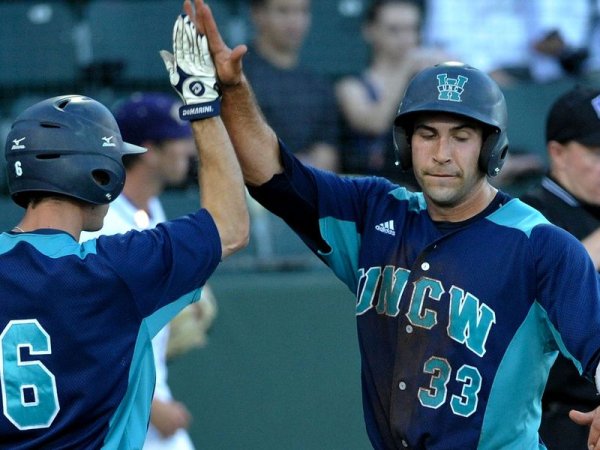
UNC Heritage & Records
UNC Wilmington won the Colonial Athletic Association’s automatic bid to play in the NCAA regional playoffs in 2004, 2006, 2012, 2015, 2023 and 2024. In addition, the program received at-large bids to the NCAA Tournament in 2003, 2008 and 2016. UNCW set a Colonial Athletic Association record with four consecutive 40-win seasons from 2003–06 and set a school record with ... -

Women’s Basketball Commencement
The UNC Wilmington women’s basketball program completed its 37th season of competition in 2010-11, including the last 25 as a member of the NCAA Division I ranks. The Seahawks began as a member of the Association for Intercollegiate Athletics for Women in 1973-74 and spent 10 years as a member until the association’s disbandment following the 1982-83 season. The Seahawks ... -
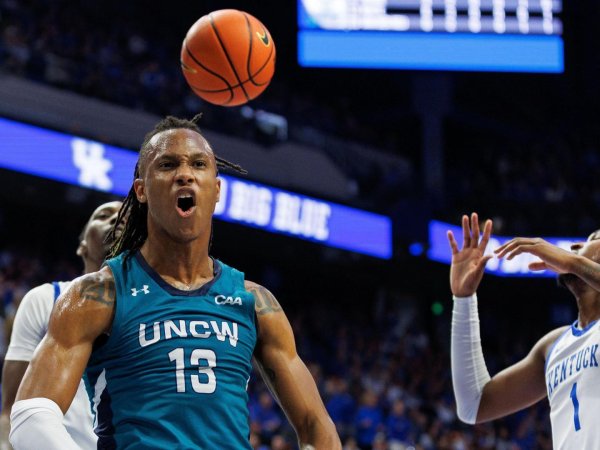
UNC Basketball Through back
The UNC Wilmington basketball program moved to Division I in 1976-77. In 1984, the Seahawks joined the ECAC-South Conference (also known as the Colonial Athletic Association). In their first conference home game at Trask Coliseum the Seahawks defeated George Mason. The first appearance in a Colonial Athletic Association championship game came in 1987, just their third season of league play ... -
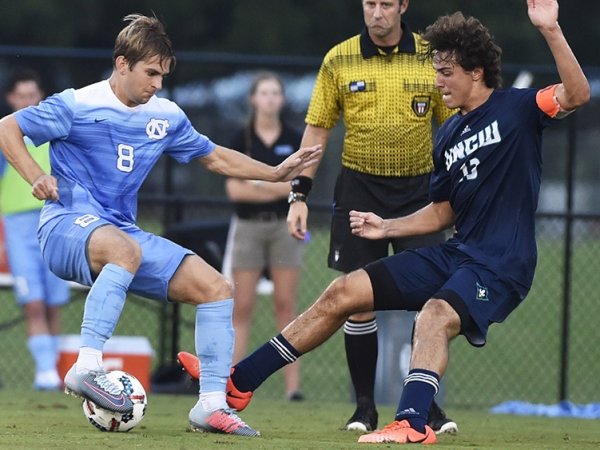
Men’s soccer NCAA appearances
The UNCW Seahawks men’s soccer team is a member of the Colonial Athletic Association, which is part of the National Collegiate Athletic Association’s Division I. UNCW’s first men’s soccer team was fielded in 1966. UNCW has appeared in four NCAA Tournaments. Its first appearance came in 2009. Their most recent came in 2018.
To qualify as the greatest player for this team, the player must have played one season for this team. If not, we will remove the player.
* verifies that player has played for this team as an added player by a fan.
UNC Wilmington Seahawks History
The UNC Wilmington Seahawks have built a proud tradition in collegiate athletics, especially highlighted by their rivalry with the William & Mary Tribe. Representing the University of North Carolina Wilmington, founded in 1947, the athletic program officially began in the 1960s and adopted the Seahawks mascot in the 1970s. Since then, the school has grown into a respected competitor across multiple sports, earning recognition for both athletic and academic excellence.
The UNC Wilmington Seahawks basketball program is one of the university’s most celebrated teams. Under head coach Jerry Wainwright, the Seahawks claimed their first Colonial Athletic Association (CAA) championship in 2000. Buzz Peterson later led the team to an impressive stretch, capturing three consecutive CAA titles from 2002–2004. During that run, the Seahawks reached the NCAA Tournament, advancing to the second round in 2002 after a stunning upset over USC. Additional tournament appearances came in 2003 and 2006, further establishing the program as a rising power in mid-major basketball.
The UNC Wilmington game atmosphere is known for its passionate fan support, especially during basketball season. Seahawks fans pack Trask Coliseum, creating an electric environment that has helped the team secure crucial victories in conference play. This home-court advantage has become a cornerstone of the basketball program’s success.
Beyond basketball, the UNC Wilmington Seahawks have enjoyed success in multiple sports. The men’s soccer team has won four CAA championships and earned six NCAA Tournament appearances. The women’s soccer team has added three CAA titles, along with five trips to the NCAA Tournament, cementing the Seahawks as a consistent soccer presence.
The baseball program has also made history, claiming six CAA championships and advancing to the NCAA Tournament on multiple occasions. In 2016, the team posted 41 wins and reached the NCAA Super Regionals for the first time, marking one of the greatest UNC Wilmington game moments in program history.
The women’s basketball team has contributed to the school’s athletic reputation, capturing six CAA championships and making six NCAA Tournament appearances. Meanwhile, the volleyball team has added multiple CAA championships of its own, with postseason runs showcasing the school’s broad athletic strength.
In addition to athletic success, the UNC Wilmington Seahawks have been recognized nationally for academic achievement. In 2018, the NCAA awarded the athletic program the President’s Award for Academic Excellence, placing UNCW in the top tier of Division I institutions for student-athlete success in the classroom.
Seahawks Achievements
The UNC Wilmington Seahawks basketball program added to its legacy in 2017 by winning the CAA championship and returning to the NCAA Tournament. That season, the Seahawks posted a school-record 29 wins, showing how the program continues to build on its tradition.
In football, while the university does not currently compete at the Division I level, the UNC Wilmington Seahawks community continues to rally around every UNC Wilmington game, from basketball to baseball, with unmatched pride. This loyal support fuels the athletes’ determination to bring championships home.
The achievements of the UNC Wilmington Seahawks across sports highlight a program that combines winning tradition, academic excellence, and community pride. With a strong foundation, the Seahawks are poised to continue their rise, making every UNC Wilmington game a moment to remember for fans, athletes, and the university alike.